
Mental arithmetic skills Multiplication Worksheets for Ages 6-8
4 filtered results
Difficulty Level
Grade
Age
-
From - To
Subject
Activity
Standards
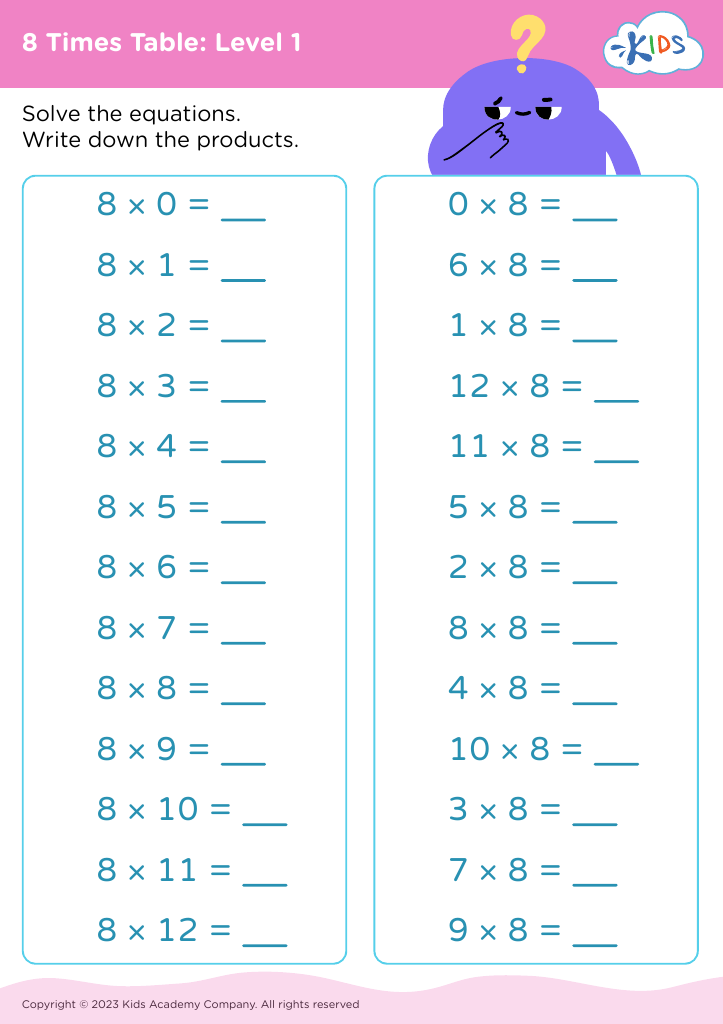
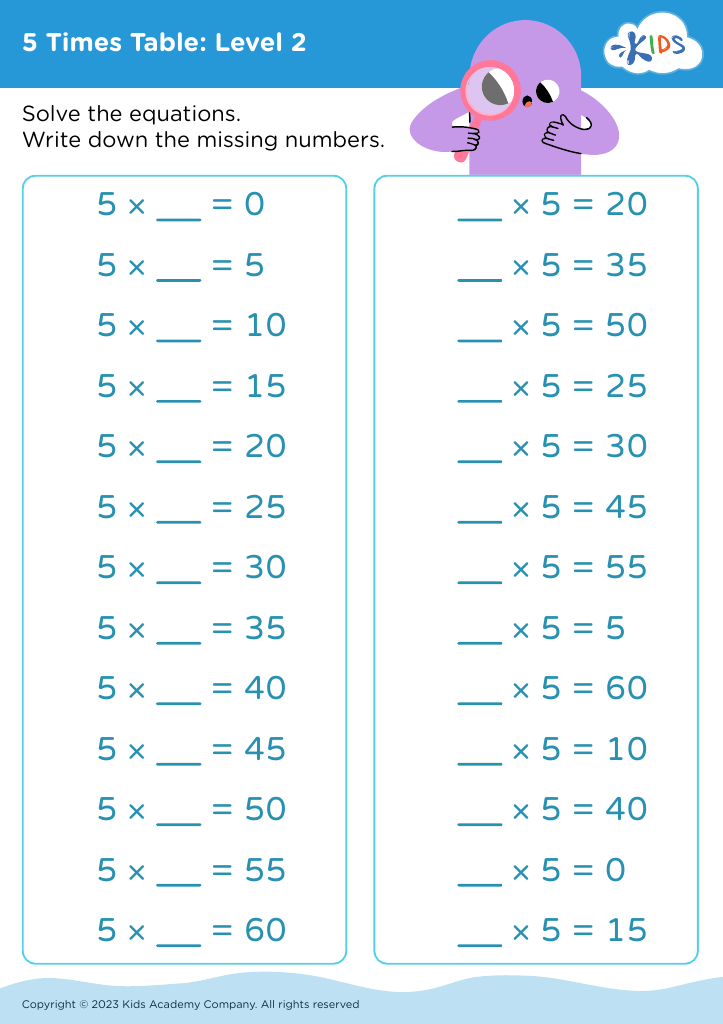
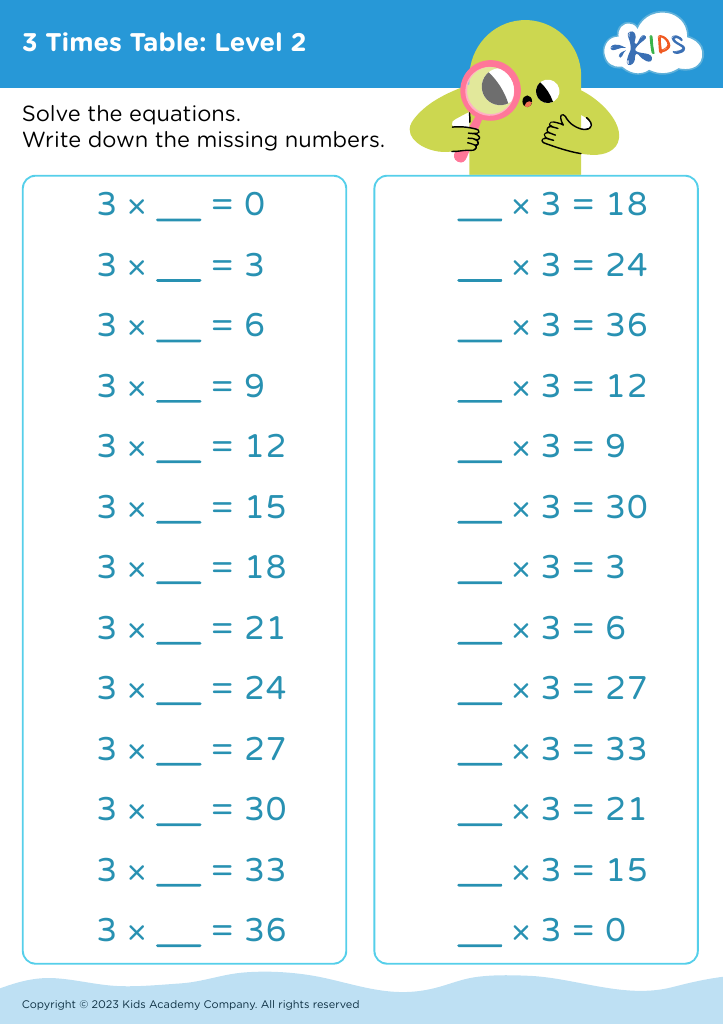
Boost your child's mental arithmetic skills with our engaging multiplication worksheets designed for ages 6-8. These worksheets are perfect for young learners to practice and enhance their multiplication abilities while building confidence in math. Tailored to support various learning styles, our activities utilize colorful illustrations and fun problem sets that encourage independent thinking. Explore a variety of exercises that progressively increase in difficulty, helping children solidify their understanding of multiplication concepts. With our Mental Arithmetic Skills Multiplication Worksheets, parents and educators can foster a strong math foundation in a playful and supportive environment. Transform math practice into an enjoyable learning experience today!
Favorites
With answer key
Interactive
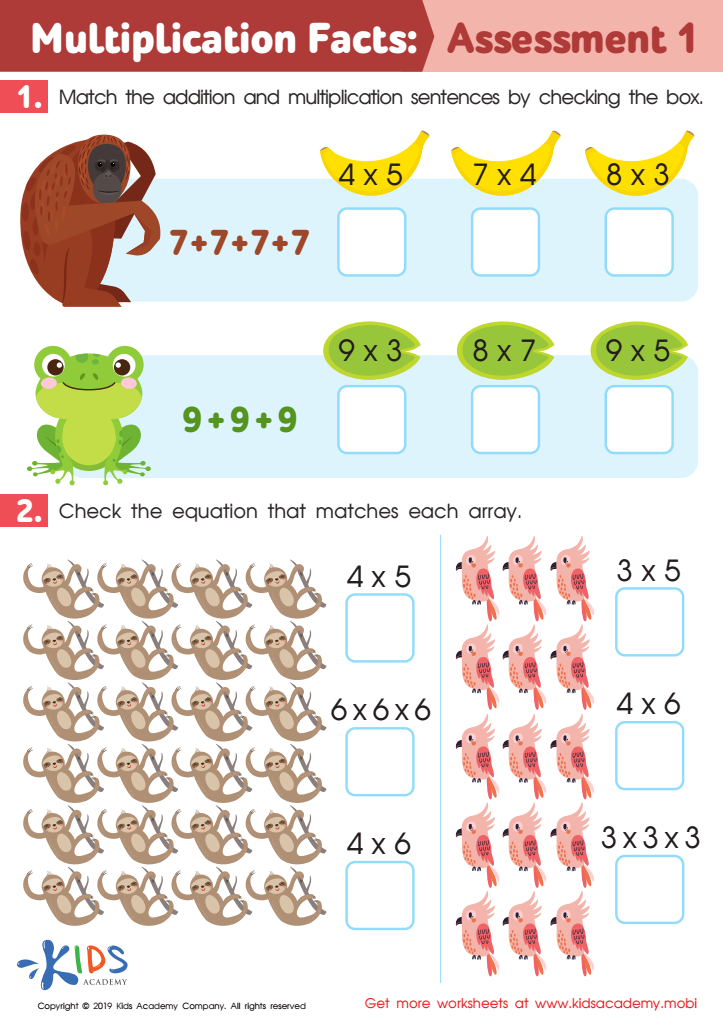
Multiplication Facts: Assessment 1 Worksheet
Teach your kids math with diligence, patience and practice. This colorful worksheet helps by matching addition and multiplication sentences, then checking the equation that matches each array. Perfect for kids having difficulty or to give extra practice. Help your little ones master mathematics with this printout.
 Assign to My Students
Multiplication Facts: Assessment 1 Worksheet
Worksheet
Join Kids Academy for Free
Who is primarily going to use this learning content?


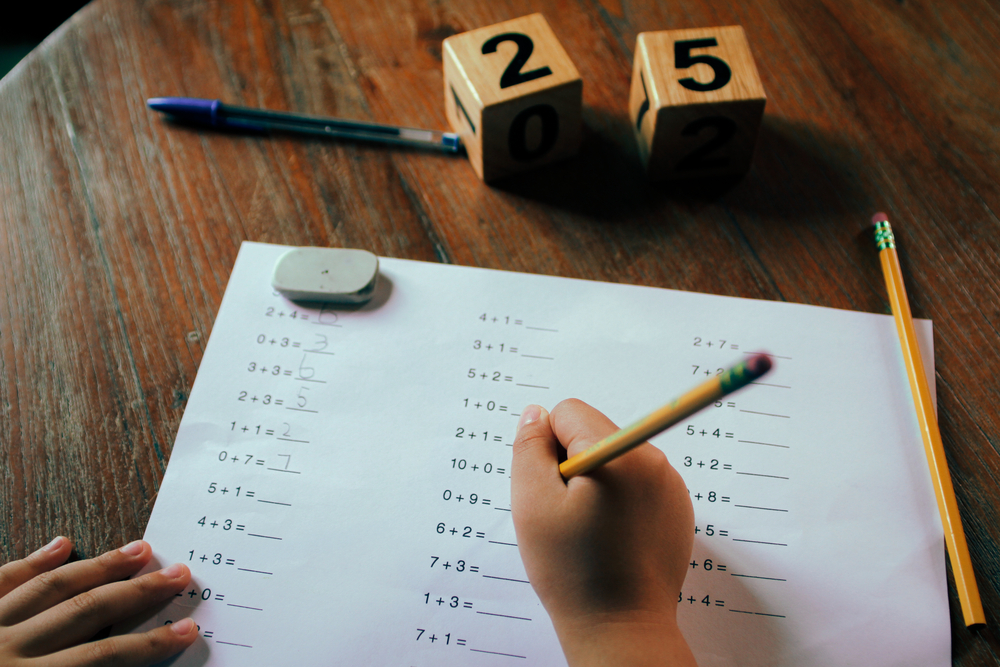





Parents and teachers should prioritize mental arithmetic skills, specifically multiplication, for children aged 6-8 for several compelling reasons. Firstly, mastering multiplication mentally sets the foundation for more complex mathematical concepts, including division, fractions, and decimals. Early competence in these skills fosters a sense of confidence in young learners, making them more willing to tackle challenging math problems as they advance in their education.
Moreover, mental multiplication cultivates critical thinking and problem-solving abilities. Children learn to recognize patterns and relationships between numbers, which enhances their overall mathematical reasoning. This cognitive development extends beyond mathematics, benefiting their academic performance across various subjects.
In addition to cognitive benefits, mental arithmetic also supports emotional and social growth. Children who excel in math often experience lower anxiety during assessments and collaborative school activities. Encouraging mental multiplication can stimulate a growth mindset, teaching children that persistence leads to improvement.
Parents and teachers play a vital role in creating engaging learning experiences, ensuring that multiplication becomes an enjoyable and integral part of a child's daily routine. By fostering these skills early on, they lay the groundwork for future success, promoting lifelong learning and a positive attitude towards mathematics.








