Filters

6 filtered results

Clear all filters
Favorites
With answer key
Interactive

6 filtered results

Difficulty Level

Grade


Enhance your child's numeracy and animal recognition skills with our engaging Animal Recognition Numbers 0–10 Worksheets, designed for ages 6-8! These printable worksheets creatively integrate cute animal illustrations with number recognition, helping young learners connect counting with familiar animals. Each worksheet encourages kids to practice counting, matching, and identifying animals while fostering essential math skills. Perfect for home or classroom use, these activities are aligned with educational standards and provide a fun way to reinforce learning. Boost your child’s confidence in numbers and enhance their understanding of the animal kingdom today! Download and start the adventure of learning with animals!

Check out this FREE Trial Lesson on Numbers 0–10 for age 6-8!

Farm Animals and Pets

Favorites
With answer key
Interactive
  • 6-8
  • Animal recognition
  • Numbers 0–10
Counting Pets Worksheet

Counting Pets Worksheet

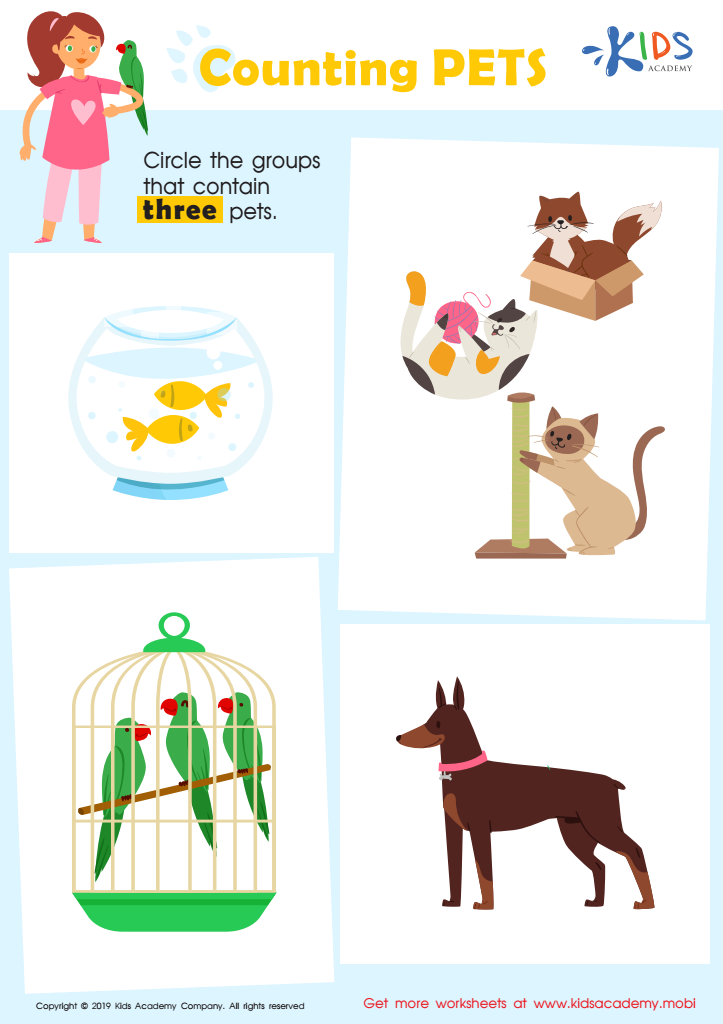
Kids adore their pets, making this free pet counting worksheet the perfect way to combine something they love with math skills. They'll count the number of pets, circle the pictures with three pets, and use one-to-one picture representation to help. This exercise will cultivate their learning and reinforce their love of animals!
Counting Pets Worksheet
Worksheet
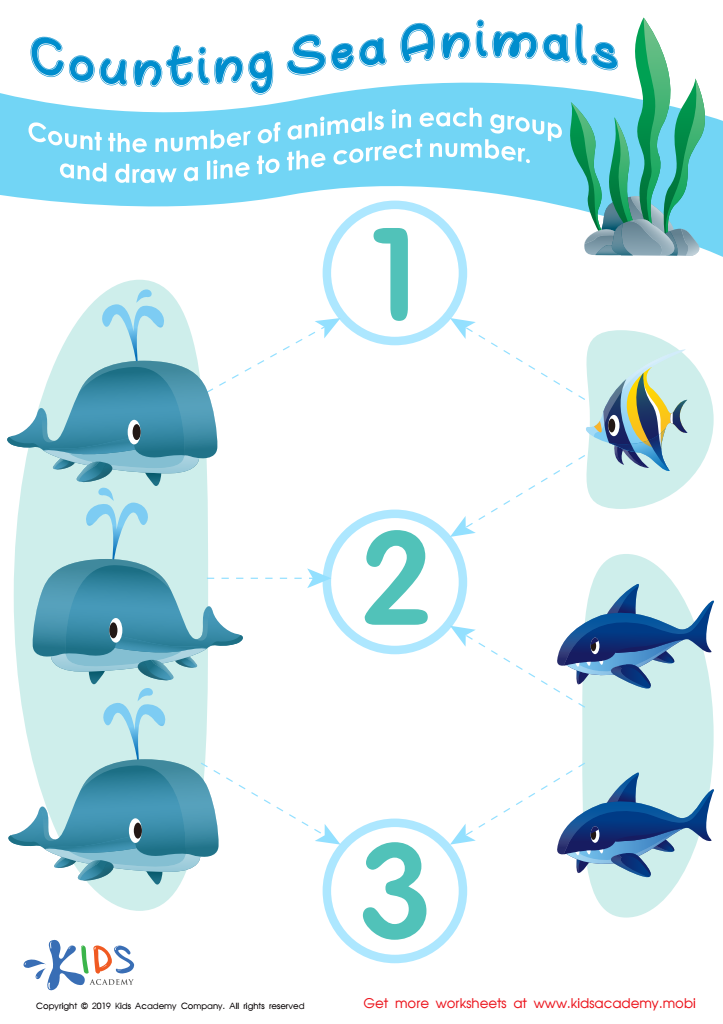
Counting Sea Animals Worksheet

Counting Sea Animals Worksheet

Kids adore sea creatures for their captivating, unknown nature. Let them use this free worksheet to practice counting, where they match numbers to groups of animals. Through traceable lines, they'll easily connect numbers to sea creatures and learn math with vibrant, underwater fun!
Counting Sea Animals Worksheet
Worksheet
Dot to Dot Numbers 1-10

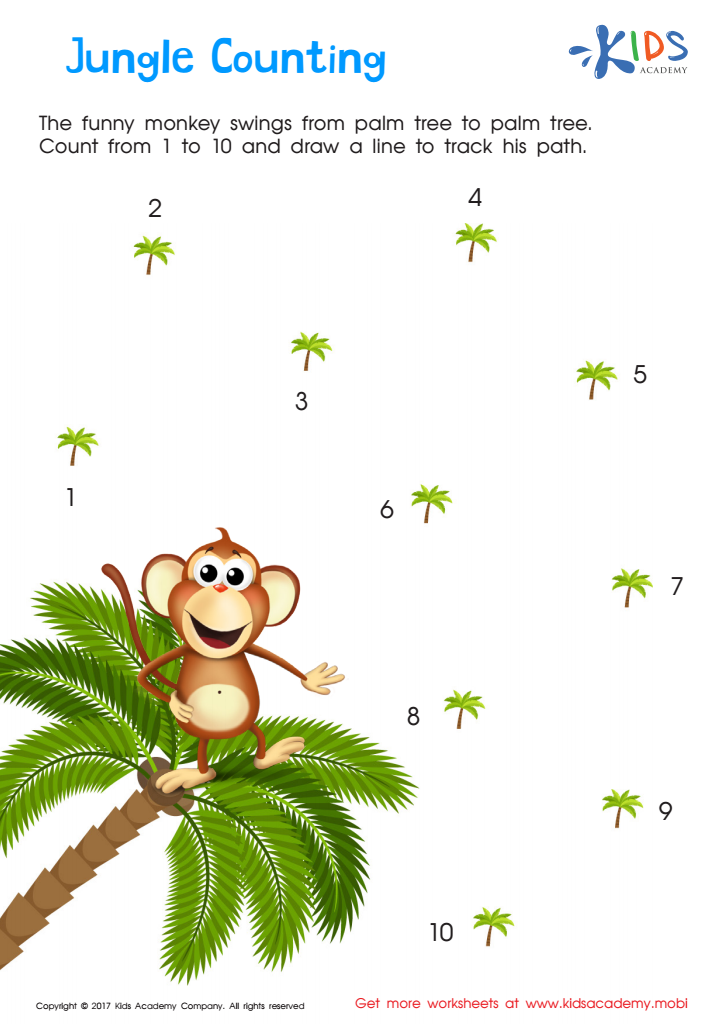
Jungle Counting Connect Dots Worksheet
Help your child count from 1-10 and practice problem solving skills with this dot to dot worksheet. Your child will enjoy helping the cute monkey swing from tree to tree while honing their math skills. Let them have a jungle-themed counting adventure!
Jungle Counting Connect Dots Worksheet
Worksheet
Count and Match: Feed the Animals Worksheet

Count and Match: Feed the Animals Worksheet

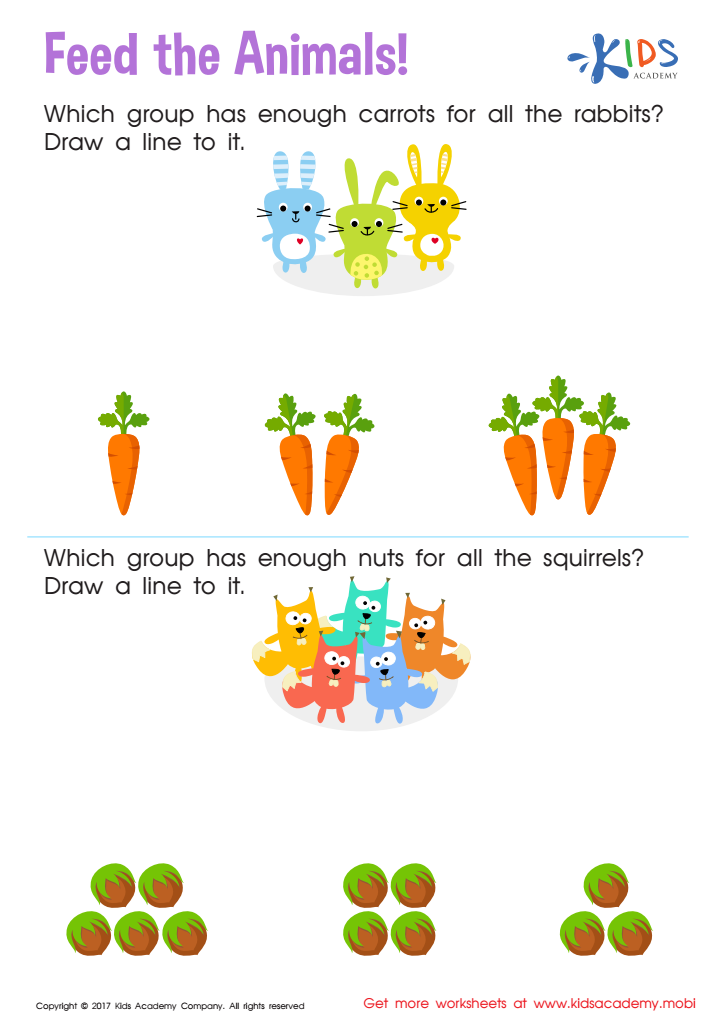
Learning and growing involves more than just numbers, phonics and comparison. This Feed the Animals worksheet helps kids to exercise their reasoning skills. They must work out how many rabbits and carrots there are, and then repeat the process for the squirrels. This encourages problem solving and counting skills.
Count and Match: Feed the Animals Worksheet
Worksheet
Counting Birds Worksheet

Counting Birds Worksheet

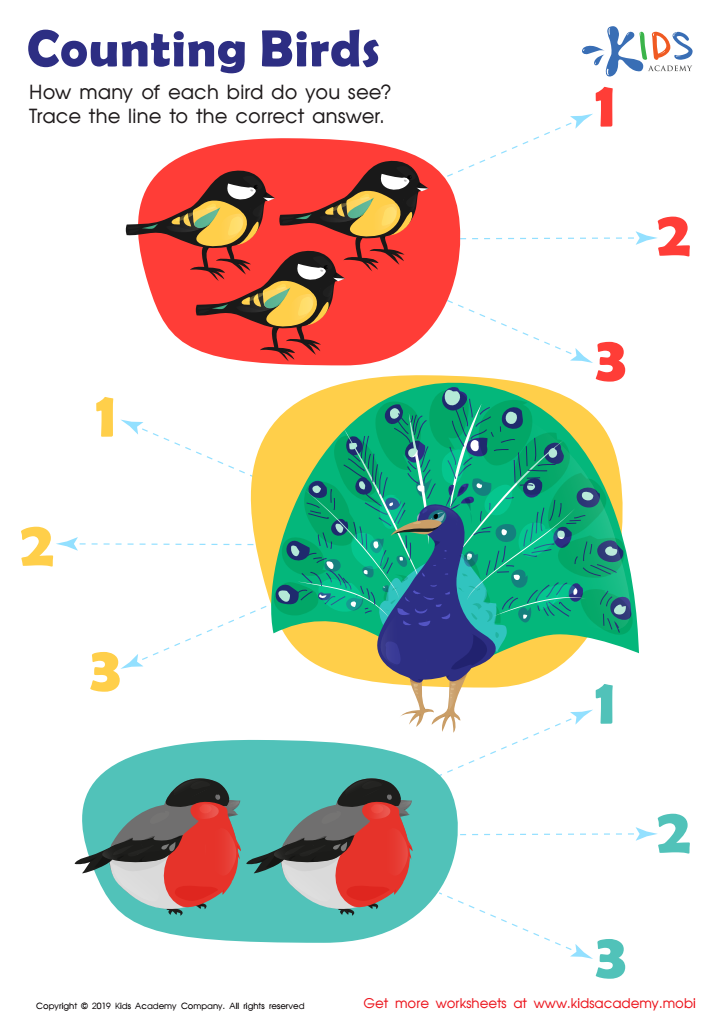
Kids love counting! With each number they learn, they can make a one-to-one representation with an item. The more practice they get, the better. Try this counting worksheet with traceable lines, to give your children practice and work on their fine motor skills. They will enjoy connecting the picture to the right number, and will feel like mathematicians with each success!
Counting Birds Worksheet
Worksheet
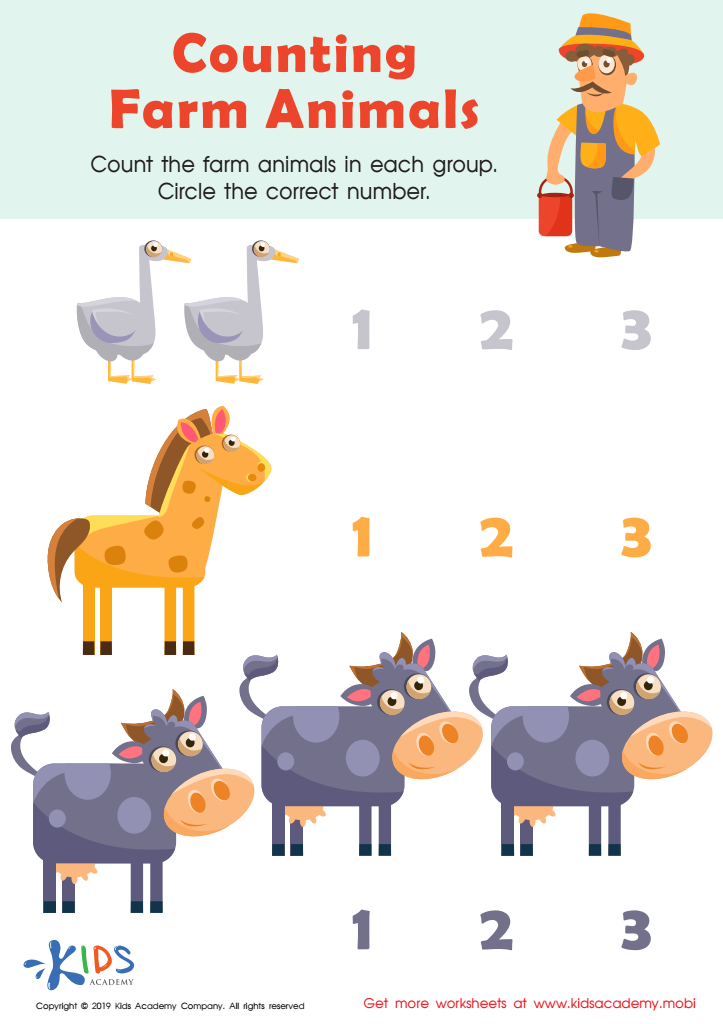
Counting Farm Animals Worksheet


Counting Farm Animals Worksheet

Kids love farms! That's why this free farm animals counting worksheet is great for building number sense and counting skills. Have your young mathematician count the pictures, then circle the corresponding number. It's a fun and meaningful way to practice counting.
Counting Farm Animals Worksheet

Worksheet


Animal recognition of numbers 0-10 is crucial for children aged 6-8, as it intertwines foundational math skills with engaging content that fosters a love of learning. Firstly, introducing animal-themed number recognition helps children associate numbers with tangible, relatable objects, enhancing their understanding of numerical concepts. This visual and contextual association is vital, as it helps deepen comprehension in an age where imaginative thinking is at its peak.

Parents and teachers should care because, during these formative years, children are developing cognitive skills, memory, and reasoning abilities. By relating numbers to animals, educators can make math relatable and fun, which maintains engagement and motivation. This approach supports various learning styles, catering to visual and auditory learners, and can significantly boost a child's self-esteem and enthusiasm for learning.

Moreover, discussing animals alongside number recognition encourages curiosity and storytelling, promoting language development. Parents and teachers can also reinforce social skills through collaborative activities, where children can share their favorite animals and the corresponding numbers. Recognizing animal numbers not only lays the groundwork for future math proficiency but also nurtures comprehensive cognitive, social, and emotional growth, essential for overall development.