Number comparison Numbers 0–10 Worksheets for Ages 6-8
4 filtered results
-
From - To
Explore our engaging "Number Comparison Worksheets" for children aged 6-8, designed to enhance their understanding of numbers 0-10. These printable resources encourage young learners to compare numbers through fun and interactive activities, boosting their mathematical skills and confidence. With colorful illustrations and easy-to-follow exercises, your child will practice identifying greater than, less than, and equal to relations in a playful way. Ideal for classroom or home learning, these worksheets provide the perfect balance of challenge and enjoyment, making math learning an exciting adventure. Watch your child develop essential foundational skills that will set them up for success in their academic journey!
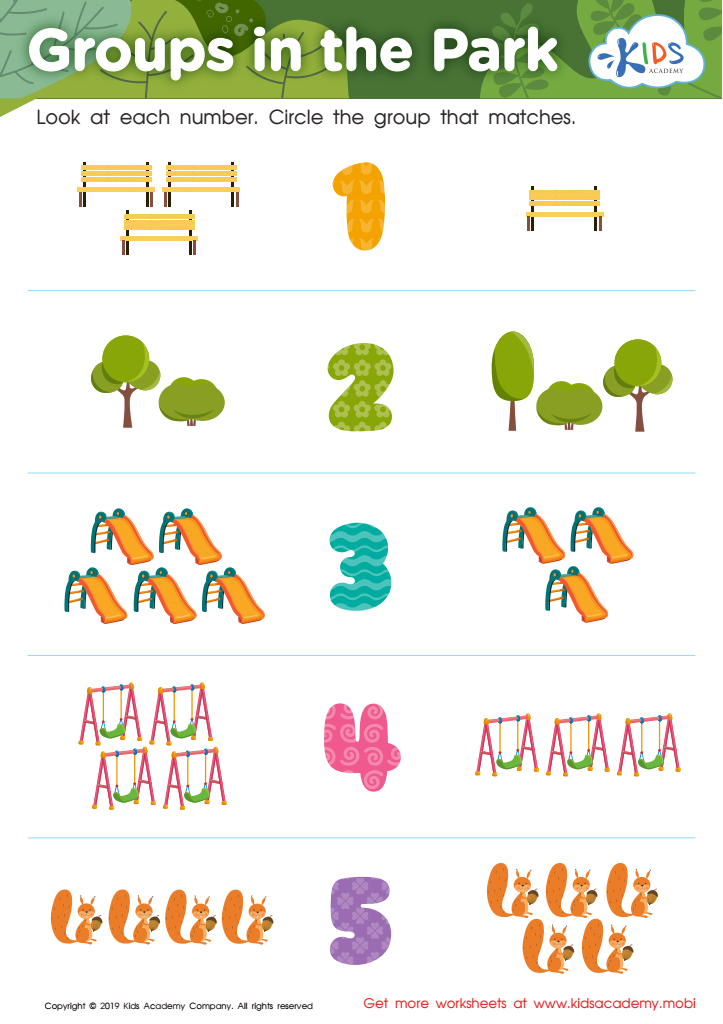
Groups in the Park Worksheet
 Assign to My Students
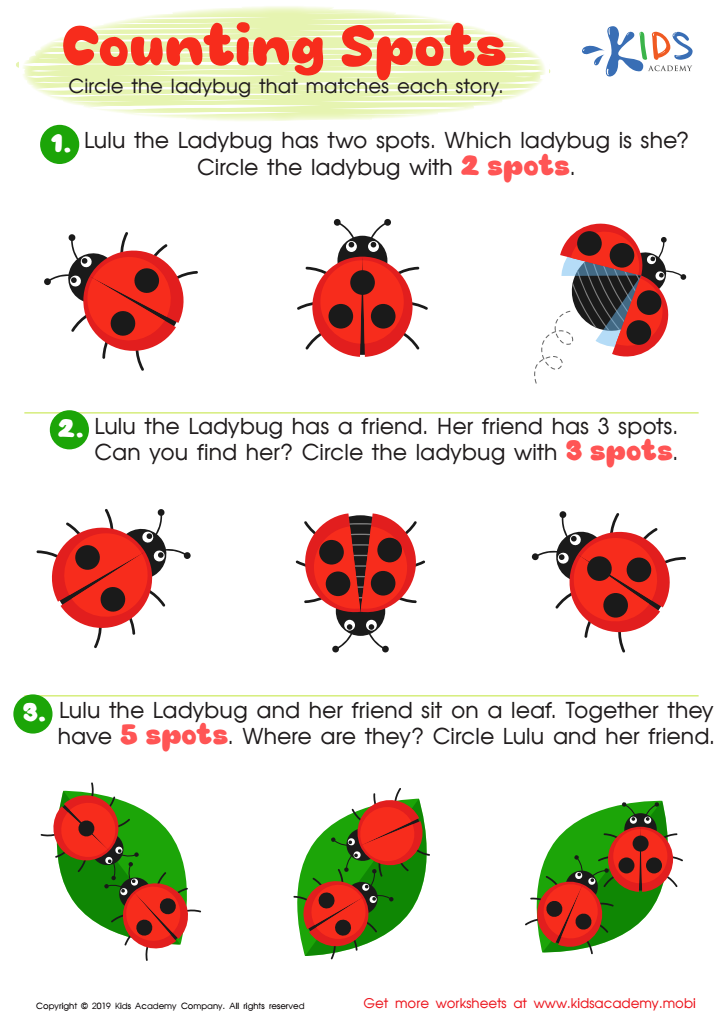
Counting Spots Worksheet
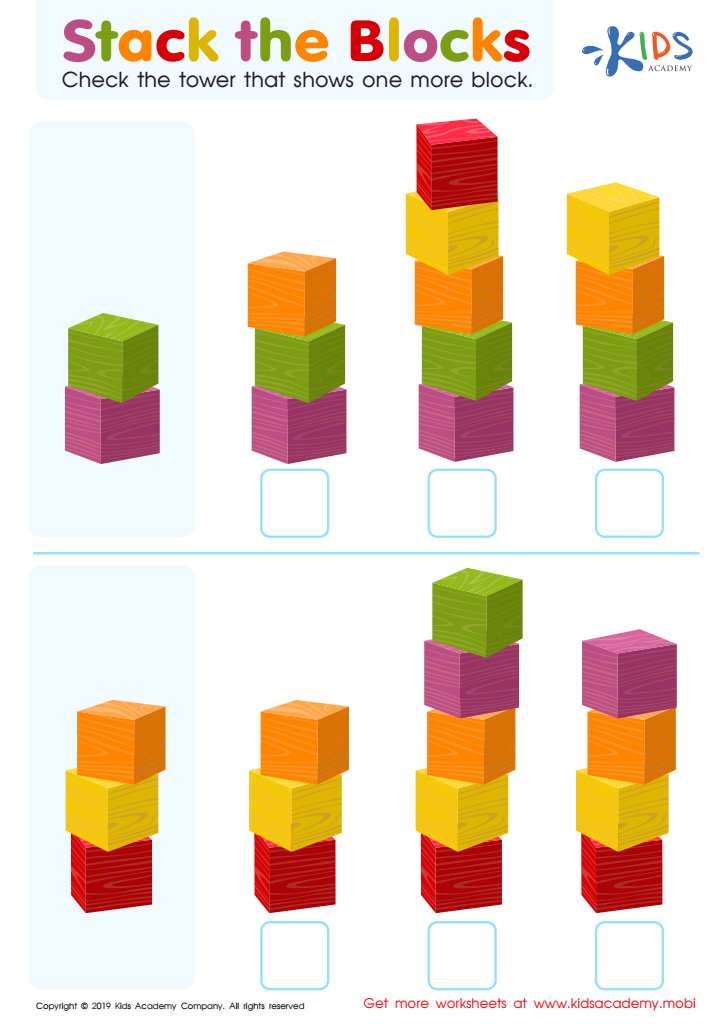
Stack the Blocks Worksheet
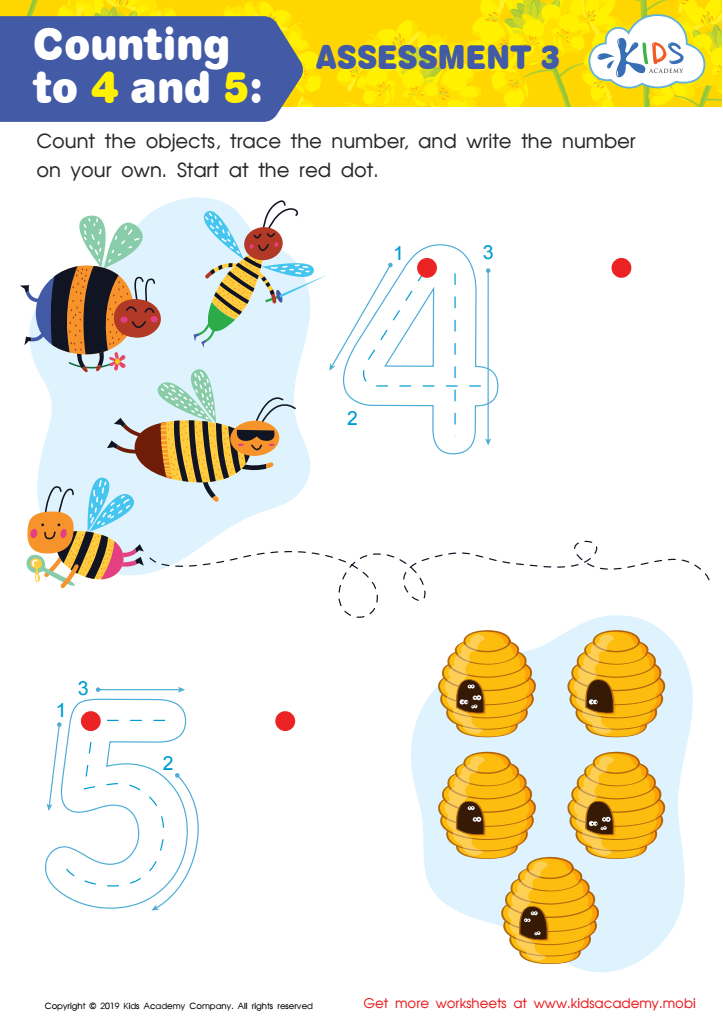
Counting to 4 and 5: Assessment 3 Worksheet








Parents and teachers should care about number comparison for children ages 6-8 as it lays a critical foundation for mathematical understanding and everyday problem-solving. Mastering number comparison—understanding which number is greater, lesser, or equal between 0 and 10—develops essential early numeracy skills. At this age, children are building the cognitive neurological skills necessary for more complex math concepts in the future, such as addition, subtraction, and eventually, multiplication and division.
Moreover, number comparison nurtures logical thinking and reasoning abilities. By analyzing quantities and engaging in discussions around numbers, children learn to express their strategies and reasoning, which supports their communicative and social skills. Additionally, using number comparison in everyday scenarios, like sharing candies or comparing scores in games, helps children make real-world connections and understand the value of numbers in daily life.
Furthermore, proficiency in comparing numbers can boost confidence and motivation in young learners. It empowers them to tackle problems independently and fosters a positive attitude toward mathematics. Therefore, instilling these skills at early stages is vital for establishing a well-rounded mathematical foundation that enables children to thrive academically and personally. Auditing and encouraging practices around number comparison contribute significantly to this developmental phase.