Sorting skills Numbers 0–10 Worksheets for Ages 6-8
3 filtered results
-
From - To
Enhance your child's mathematical ability with our "Sorting Skills Numbers 0–10 Worksheets" designed for ages 6-8. These engaging and educational worksheets help children develop a strong foundation in number recognition and order. Through fun sorting activities, kids can practice placing numbers 0-10 in sequential order while improving their problem-solving and logical reasoning skills. Ideal for young learners, these worksheets make learning an enjoyable experience. Boost your child's confidence and abilities in math; download and start practicing today! Explore a variety of challenges that will keep your child motivated and on the path to numerical proficiency.
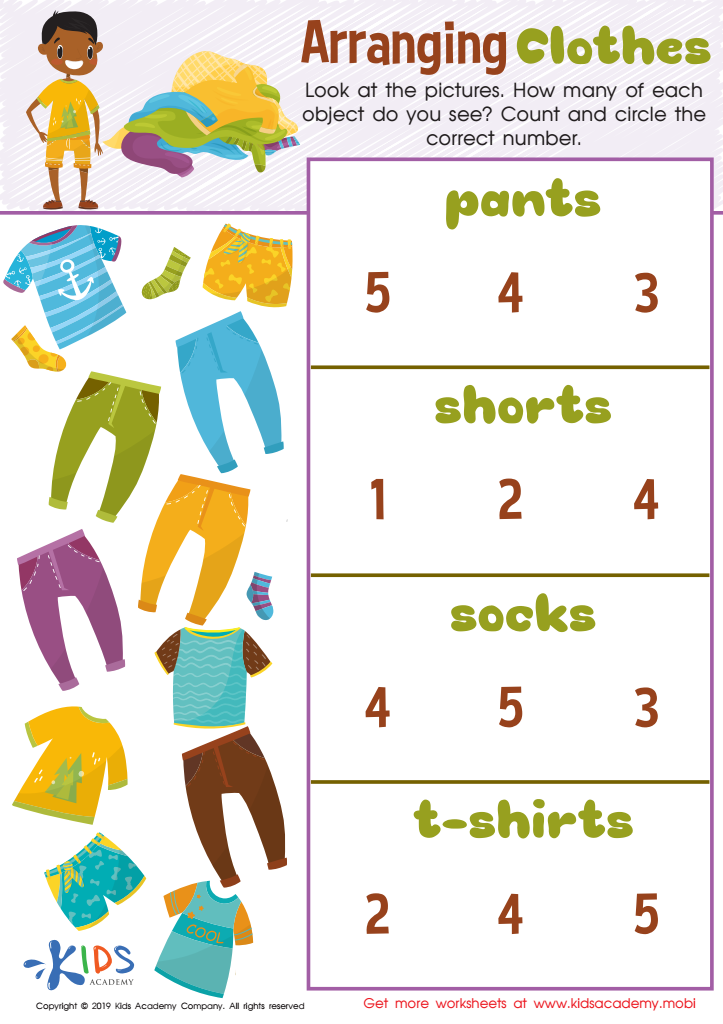
Arranging Clothes Worksheet
 Assign to My Students
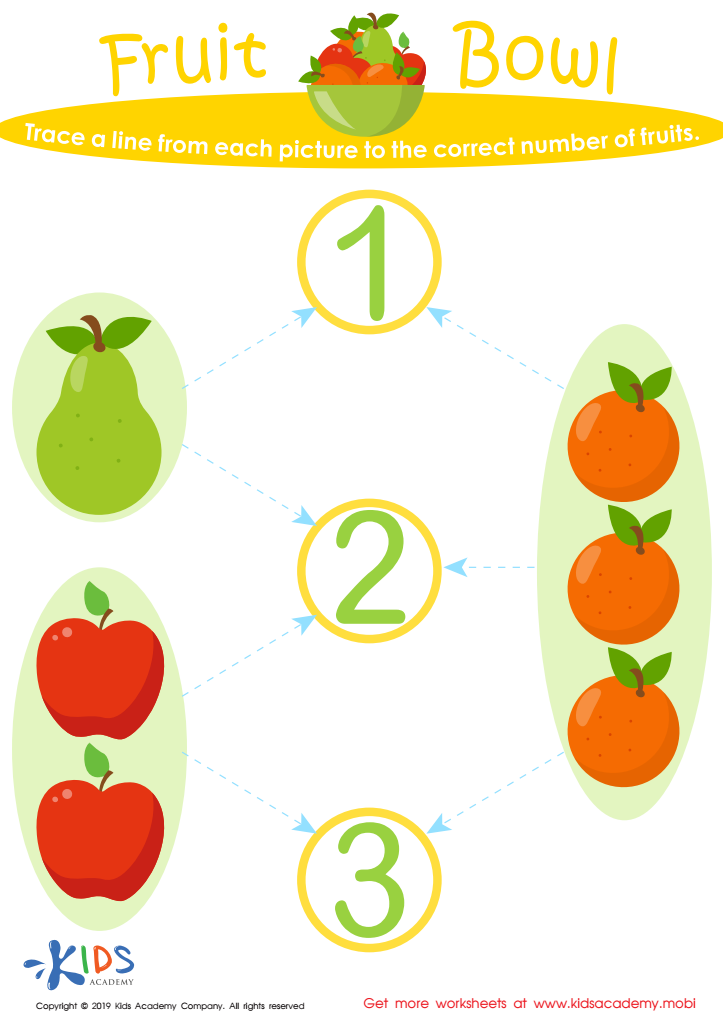
Fruit Bowl Worksheet
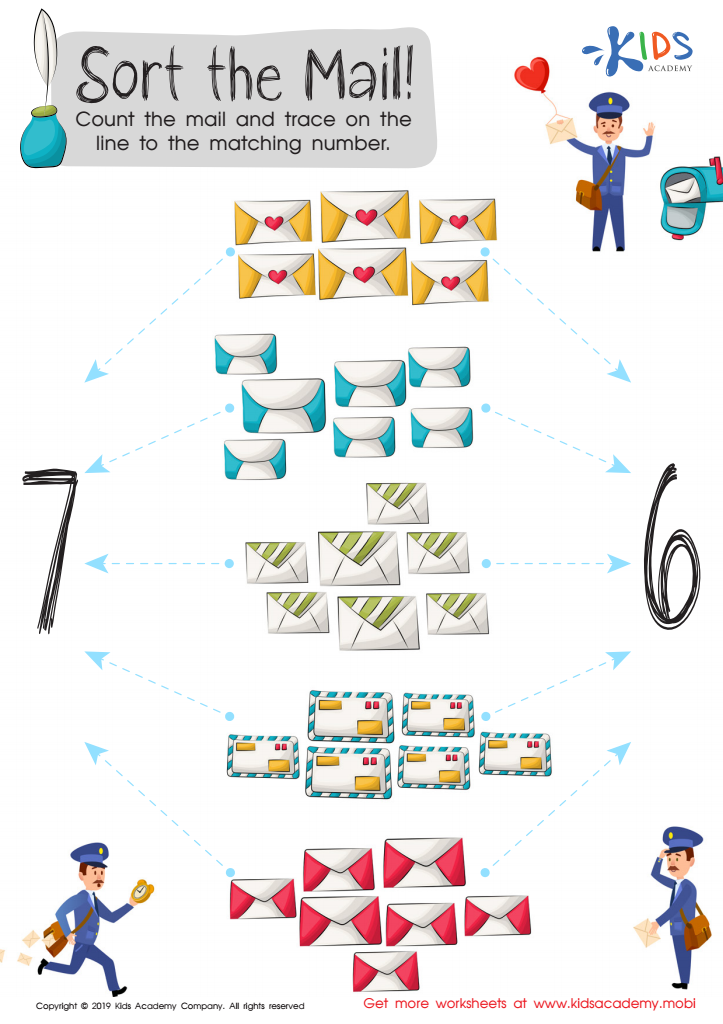
Sort the Mail Worksheet








Sorting skills and understanding numbers 0–10 are foundational for children aged 6-8, providing critical building blocks for more complex math and cognitive skills. At this stage, children are moving beyond basic counting and starting to grasp patterns, sequences, and relationships between numbers.
First, sorting develops logical thinking. As children categorize items based on specific attributes—such as size, shape, or color—they enhance their ability to make sense of the world in an organized way. This skill extends to numerical sorting, where ordering numbers helps solidify their understanding of numerical sequences and the concept of quantity.
Second, it enhances problem-solving abilities. Encountering and resolving basic sorting tasks can teach persistence and methodical thinking. These skills are directly transferable to many other academic areas and daily life scenarios, fostering a versatile and resilient mindset.
Lastly, early competency in sorting and number comprehension promotes future success in mathematics. Recognizing differences, understanding properties, and identifying numerical order are all foundational skills crucial for grasping more complex mathematical concepts like addition, subtraction, and eventually, multiplication and division.
In summary, prioritizing sorting skills and numerical order for young children cultivates essential cognitive functions and sets the stage for advanced learning, making it a critical focus for both parents and teachers.