Categorization skills Sorting Worksheets for Ages 6-8
3 filtered results
-
From - To
Unlock your child’s potential with our engaging Categorization Skills Sorting Worksheets, designed specifically for ages 6-8. These interactive activities help young learners build crucial cognitive skills by organizing and categorizing various objects, numbers, and letters. Through colorful visuals and relatable themes, children enhance their ability to recognize similarities and differences, laying the foundation for critical thinking and problem-solving. Ideal for classroom or home learning, our worksheets foster creativity while making sorting fun. Encourage your child's academic growth today with these thoughtfully crafted resources that promote active participation and skill development in a playful way! Download your worksheets now and watch the learning unfold!
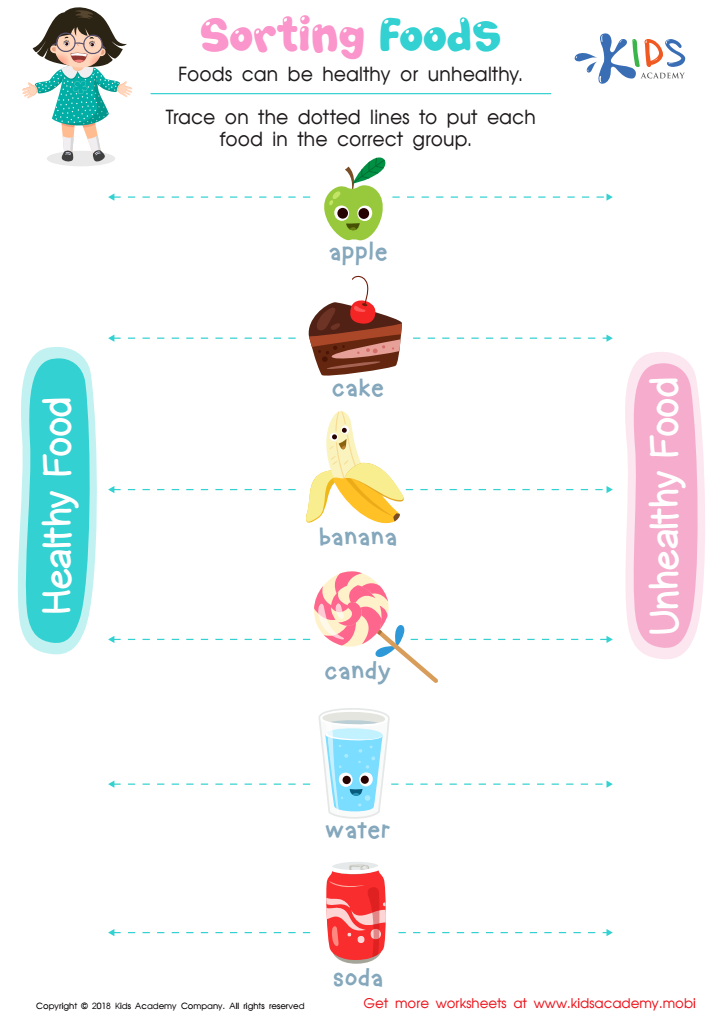
Sorting Food Worksheet
 Assign to My Students
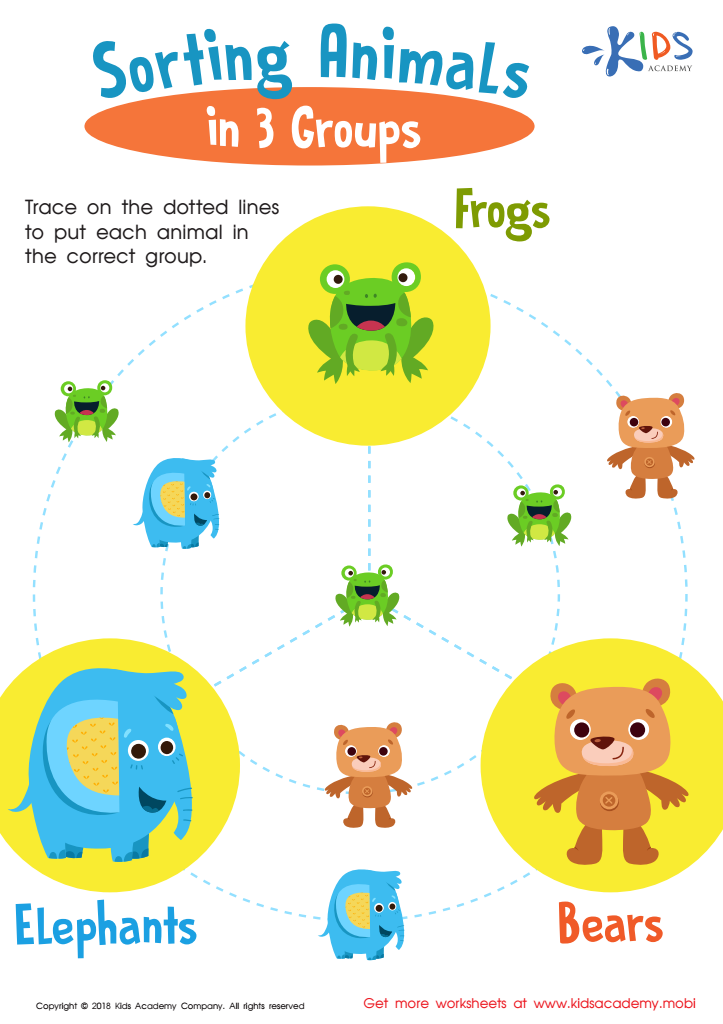
Sorting Animals in 3 Groups Worksheet
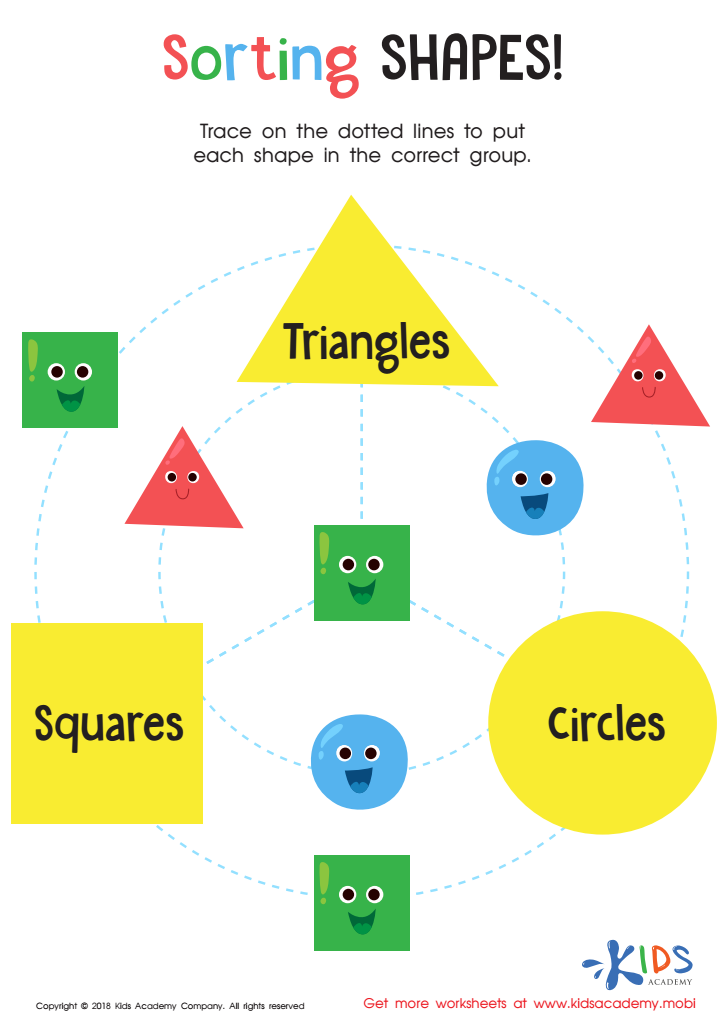
Sorting Shapes - Part 3 Worksheet








Categorization skills, particularly sorting, are crucial for children aged 6-8 as they form the foundation for critical thinking, problem-solving, and effective organizational abilities. During these formative years, children are developing cognitive skills and learning how to make sense of the world around them. Sorting activities help them recognize similarities and differences, aiding in the understanding of categories, which is essential for later skills in math and language arts.
Engaging in sorting tasks foster essential developmental milestones, including enhanced memory, improved attention, and greater focus. By categorizing objects based on color, size, shape, or functions, children practice logical reasoning and begin to draw conclusions by highlighting relationships between different items.
Moreover, sorting encourages children to express thoughts verbally, bolstering communication skills. It provides a platform for collaboration when working in groups, enhancing social skills as they discuss their sorting criteria with peers. This foundational skill also links directly to future academic success, laying the groundwork for complex subjects in science, math, and reading. Parents and teachers should prioritize categorization skills because nurturing them helps children navigate their learning environments, fostering independence and confidence in their abilities.








