Cognitive Development Subtraction Worksheets for Ages 6-8
5 filtered results
-
From - To
Enhance your child's cognitive development with our engaging Subtraction Worksheets designed for ages 6-8. These worksheets are created to build essential subtraction skills while promoting critical thinking and problem-solving abilities. Children will enjoy fun and challenging activities that reinforce their learning through practice and repetition. Each worksheet is crafted to align with your child's learning pace, ensuring they grasp foundational math concepts with ease. Perfect for classroom use or at-home practice, our subtraction sheets help kids boost their confidence and excel in math. Download now and give your child the tools they need to succeed in their educational journey!
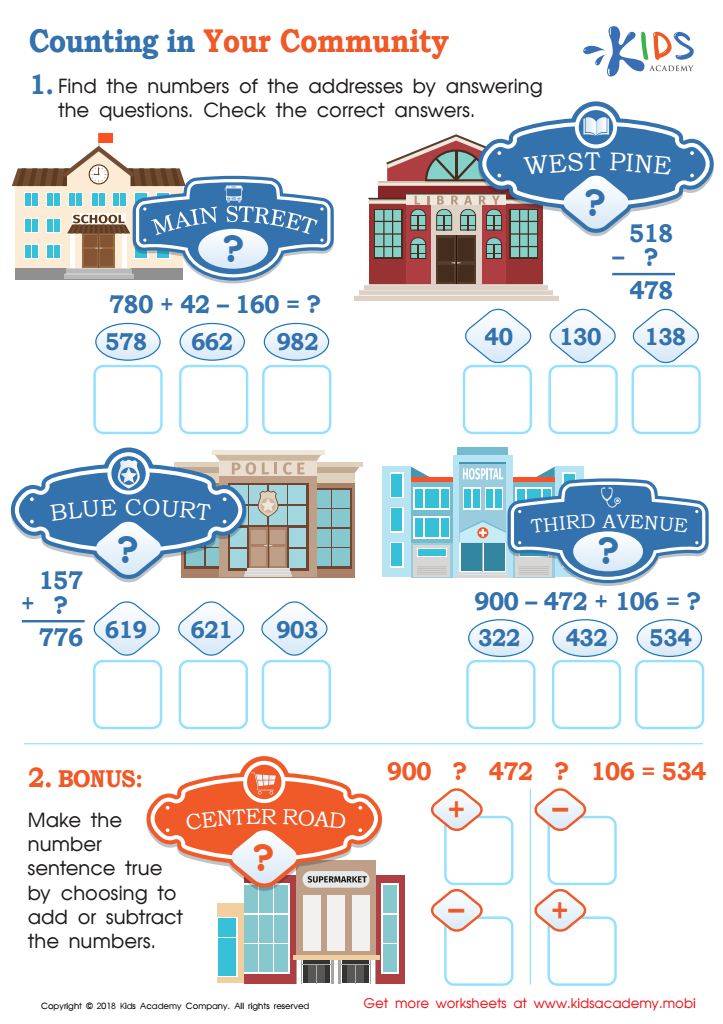
Counting in Your Community Worksheet
 Assign to My Students
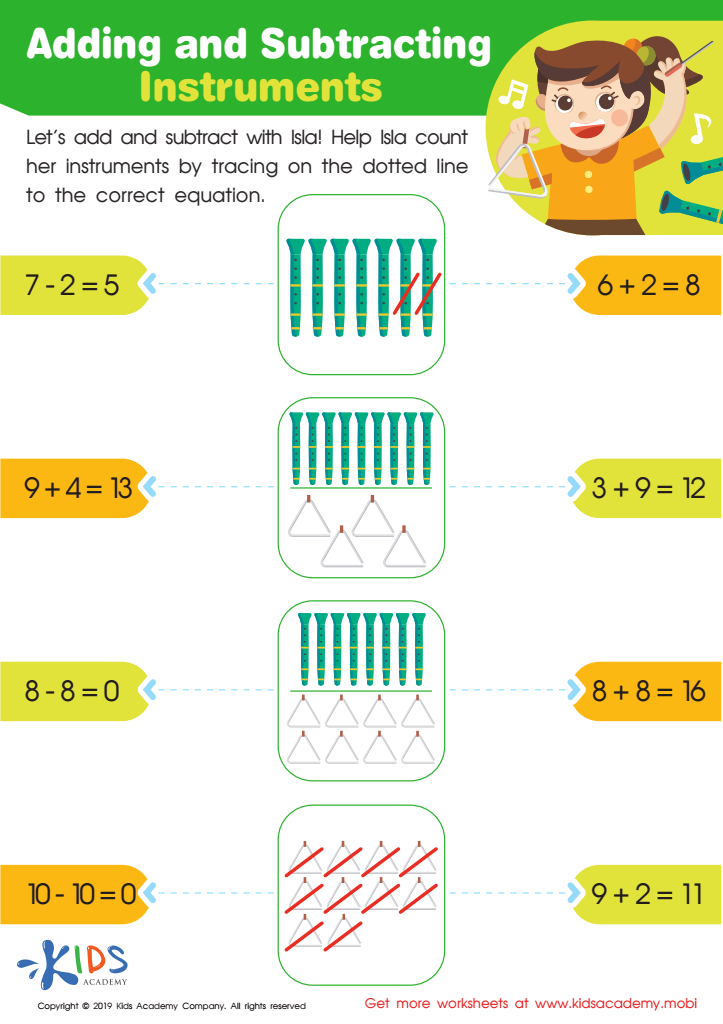
Adding and Subtracting: Instruments Worksheet
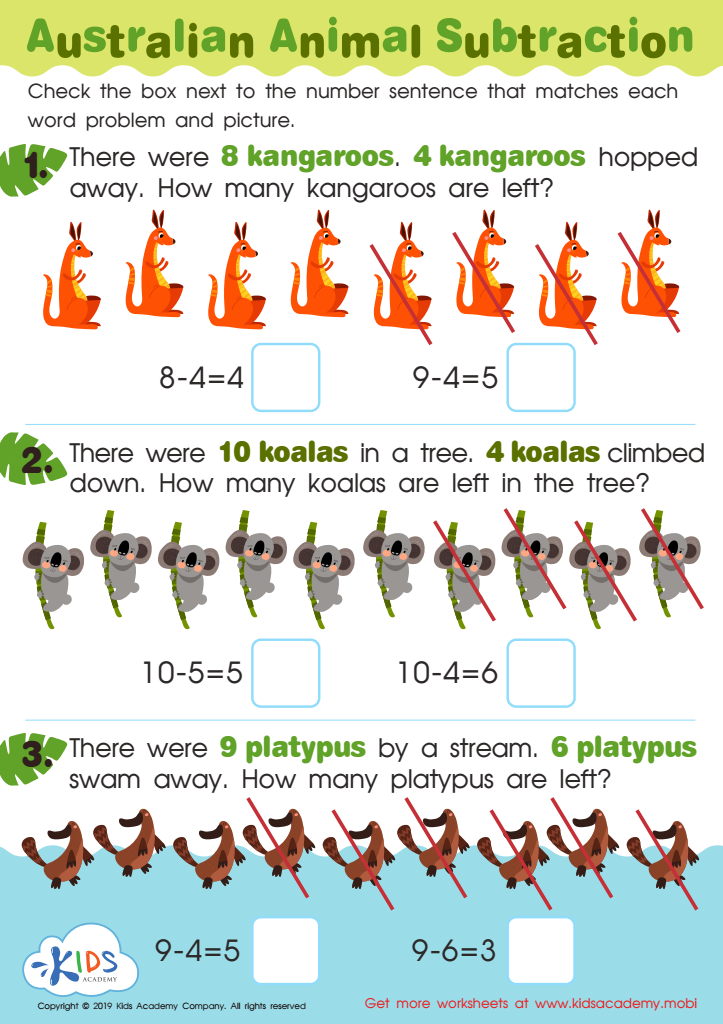
Australian Animal Subtraction Worksheet
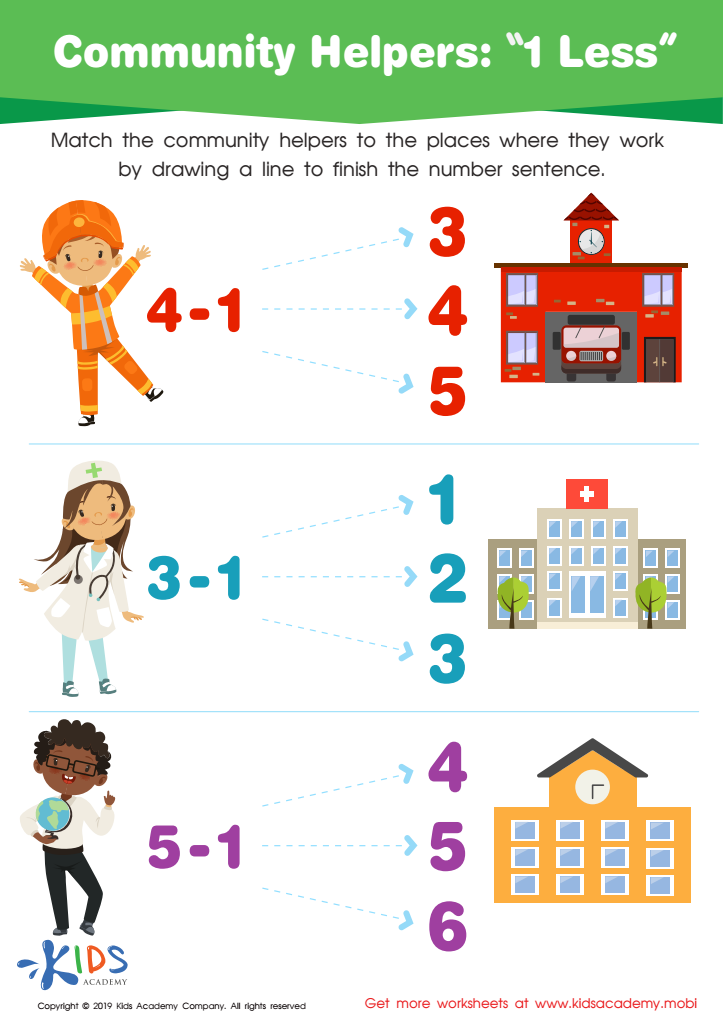
Community Helpers: 1 less Worksheet
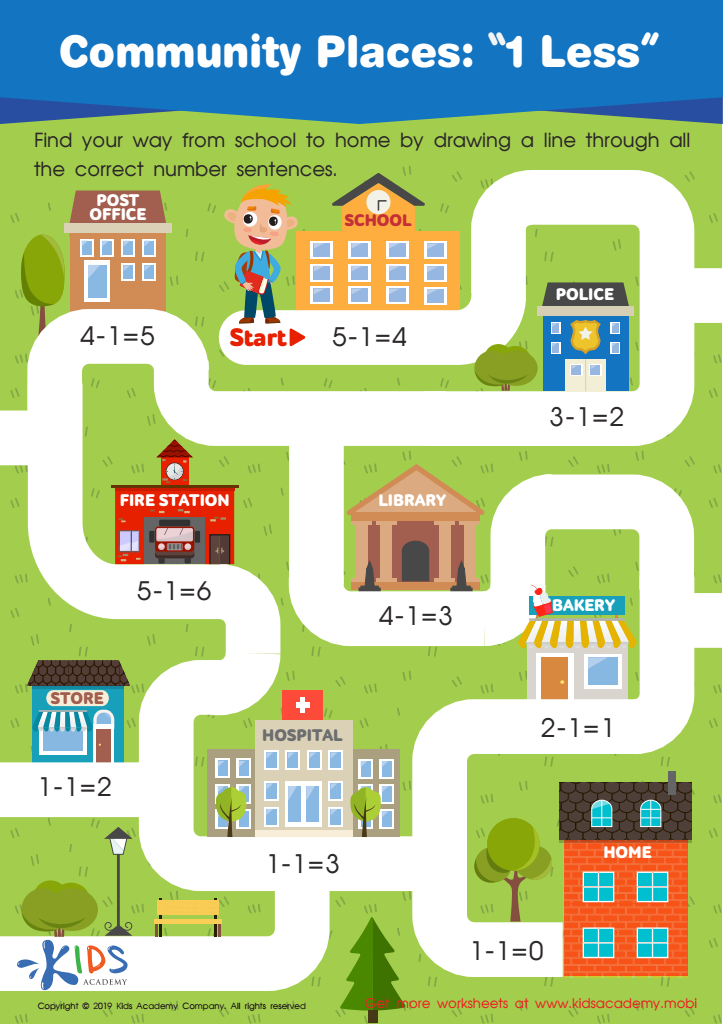
Community Places: 1 Less Worksheet








Cognitive development during ages 6-8 is crucial, as it is a period when children transition from concrete to more abstract forms of thinking. Subtraction is a key component of this developmental stage and plays a pivotal role in arithmetic proficiency and overall cognitive growth.
First, mastering subtraction helps children build foundational math skills critical for future academic success. This arithmetic operation enhances logical thinking and improves problem-solving abilities. When children practice subtraction, they learn to approach problems methodically, fostering critical thinking.
Second, subtraction supports the development of number sense, which is a fundamental understanding of numbers and their relationships. Number sense is essential not only for further mathematical concepts but also for everyday activities, such as handling money or measuring ingredients in a recipe.
Additionally, by promoting independent thinking and persistence, subtraction tasks enhance children's perseverance. Students often need to try different strategies to arrive at the correct answer, encouraging resilience and flexible thinking.
Fostering skills in subtraction helps children gain confidence in their abilities. This building of confidence is key to a positive attitude toward learning and academic endeavors. Engaged and confident learners are more likely to participate actively in class, helping them achieve a sense of competence and pride in their achievements.
In summary, subtraction for ages 6-8 is integral to cognitive development, paving the way for future academic and real-life success through enhanced critical thinking, number sense, and problem-solving abilities.








