Improving math skills Subtraction Worksheets for Ages 6-8
3 filtered results
-
From - To
Enhance your child's math skills with our engaging subtraction worksheets designed specifically for ages 6-8. These worksheets focus on improving understanding of subtraction concepts through interactive exercises and fun problem-solving activities. Young learners will gain confidence and proficiency while exploring various techniques, including visual representations and hands-on practice. Our comprehensive resources cater to different skill levels, ensuring that every child can progress at their own pace. Perfect for homeschooling or classroom use, these subtraction worksheets make learning enjoyable and effective. Visit our site to access a variety of printable worksheets that help foster a strong mathematical foundation through subtraction mastery!
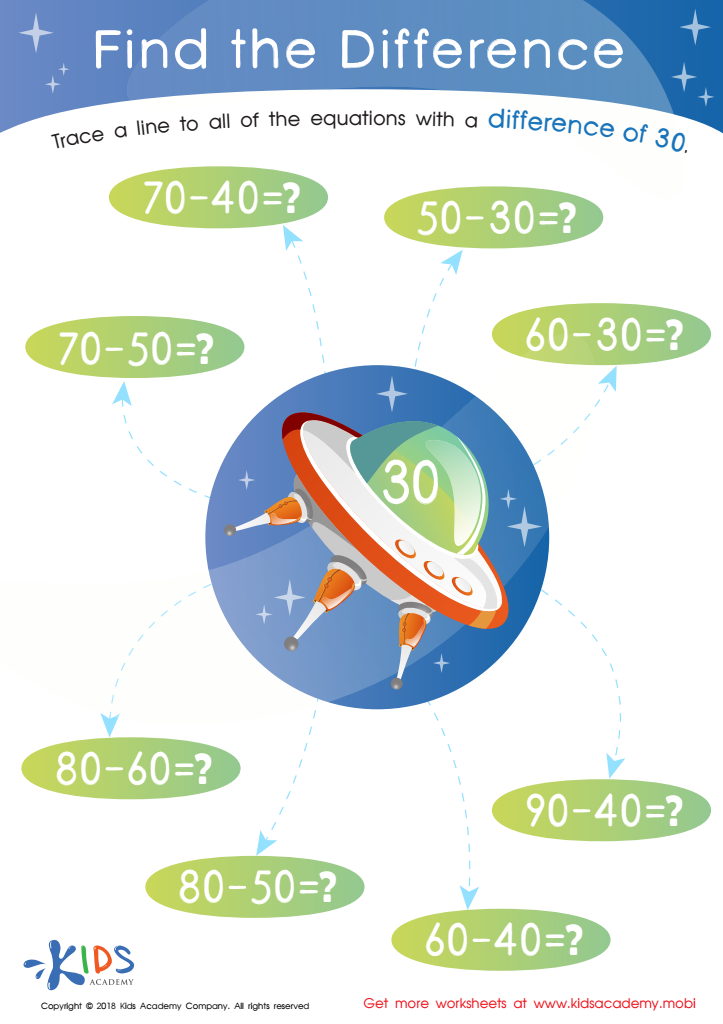
Find The Difference Worksheet
 Assign to My Students
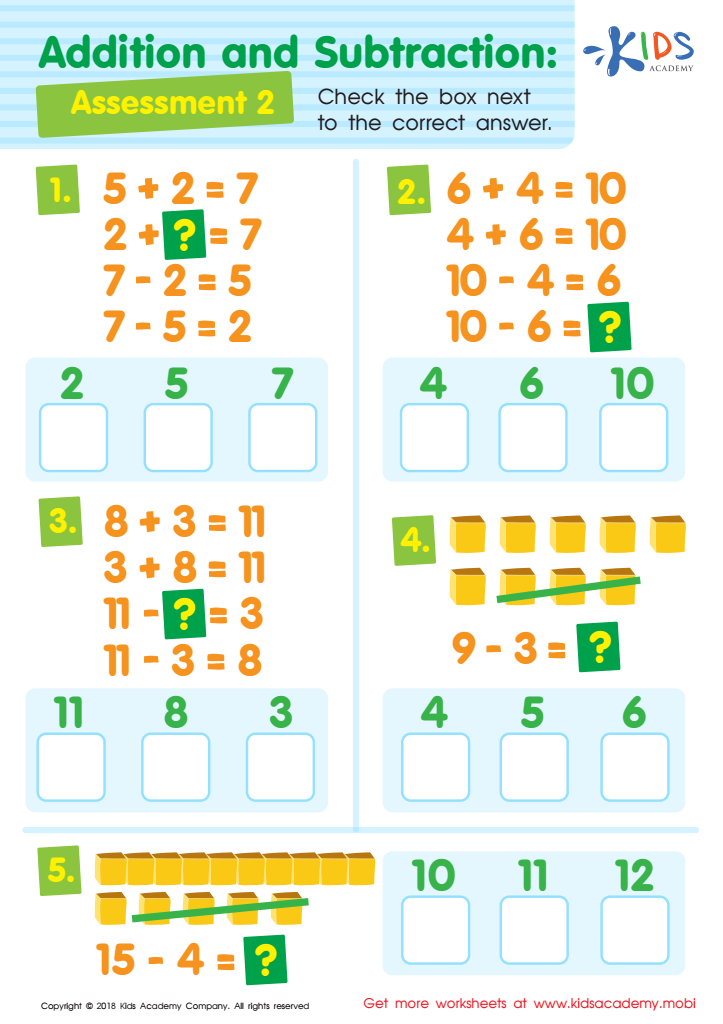
Addition and Subtraction Assessment 2 Worksheet
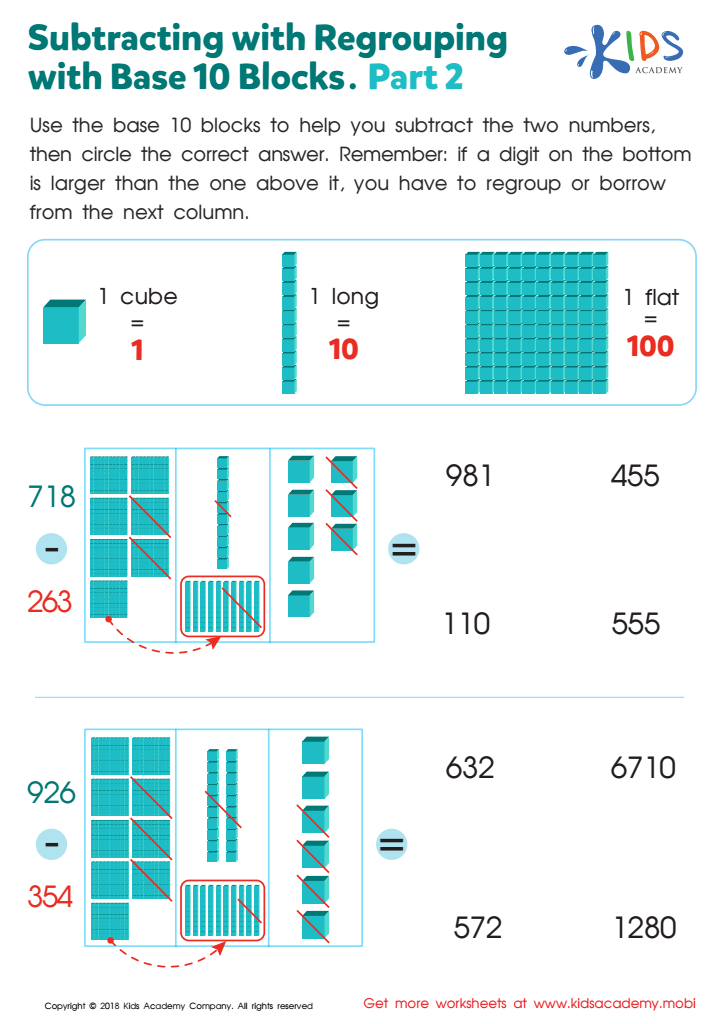
Subtracting with Regrouping with Base 10 Blocks. Part 2 Worksheet








Improving subtraction skills for children aged 6-8 is crucial for several reasons. First, mastery of subtraction forms the foundation for future math concepts, including larger number operations, problem-solving, and critical thinking. During this developmental stage, children begin building essential numeracy skills that will support their academic trajectory across all subjects.
Moreover, proficiency in subtraction enhances children’s confidence. When they can successfully tackle math challenges, it fosters a positive attitude towards learning and builds a love for the subject. This confidence translates not only to math but also encourages a growth mindset in other disciplines. Enhanced subtraction skills also improve logical thinking and reasoning, skills vital for effective decision-making.
In addition, consistent practice at home or school can highlight areas needing further encouragement, allowing for individualized support strategies. Understanding and applying subtraction skills in real-life contexts, such as budgeting or sharing, instills practical math relevance that children will appreciate as they grow.
Ultimately, a solid grounding in subtraction during these formative years leads to greater competence in math overall, setting children up for success in higher learning and everyday situations. Parents and teachers play a critical role in nurturing these skills, ensuring a well-rounded education for their children.








