Time reading skills Time Worksheets for Ages 6-8
9 filtered results
-
From - To
Help your 6-8 year old master time reading skills with expertly crafted worksheets from Kids Academy! Designed to enhance comprehension of clocks, these engaging exercises introduce young learners to telling time, from hours to minutes. Through a variety of fun and interactive drills, children develop accuracy and confidence in reading both analog and digital clocks. Perfectly suited for early elementary students, these worksheets cater to varied learning styles to reinforce classroom learning. With colorful visuals and progressive challenges, our time reading skills worksheets make learning to tell time an exciting adventure. Unlock your child's potential with Kids Academy today!
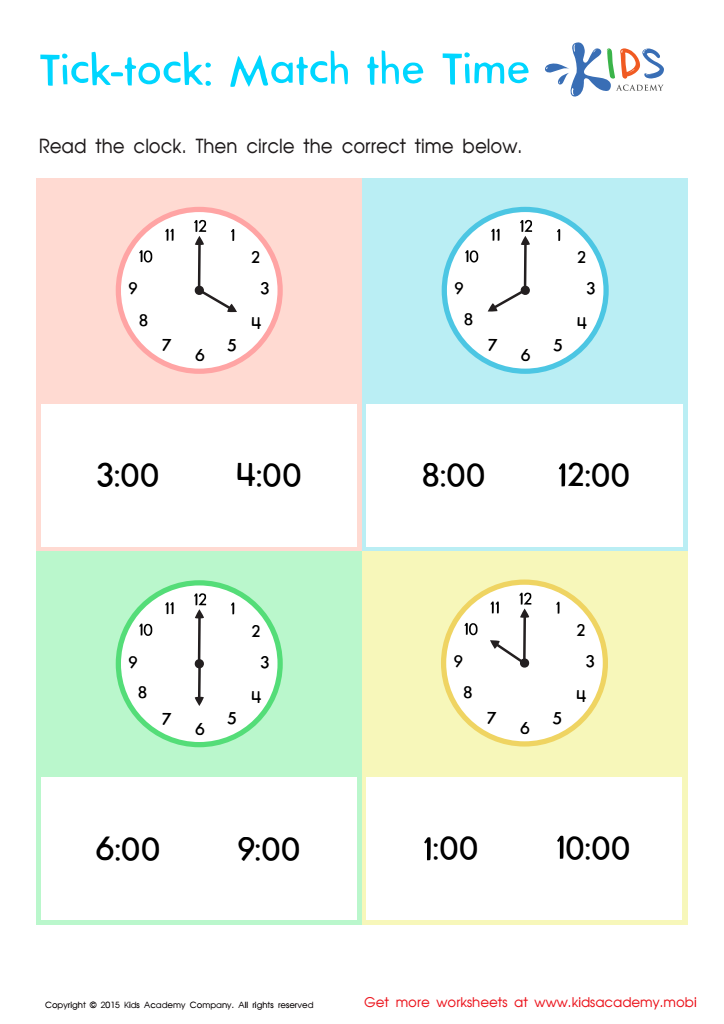
Telling The Time Worksheet: Part 4
 Assign to My Students
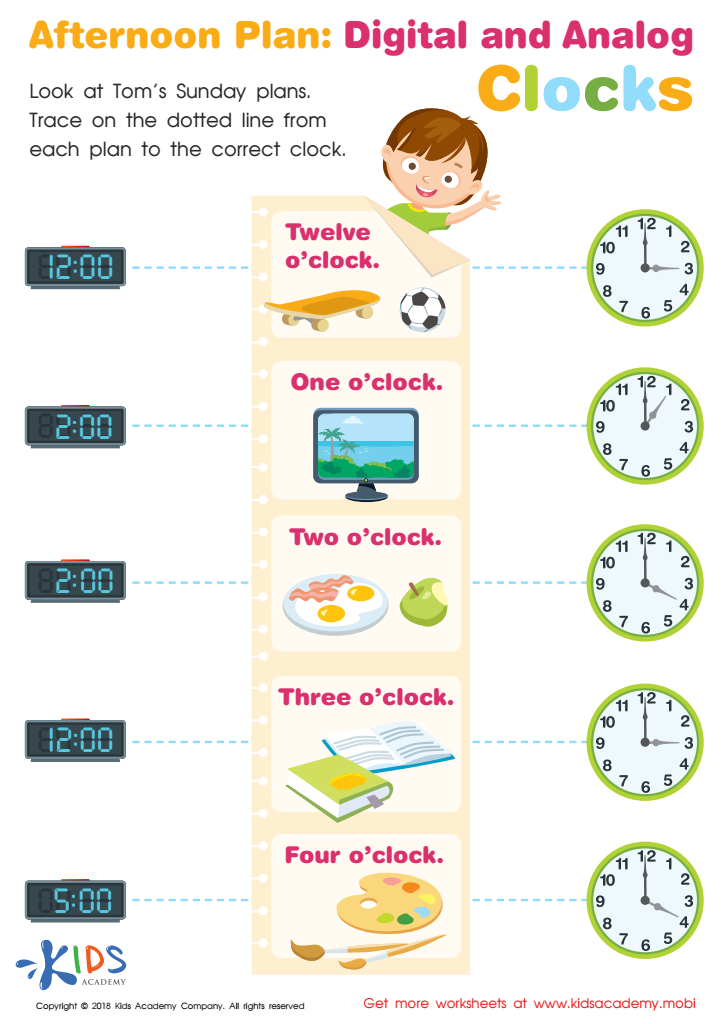
Afternoon Plan: Digital and Analog Clocks Worksheet
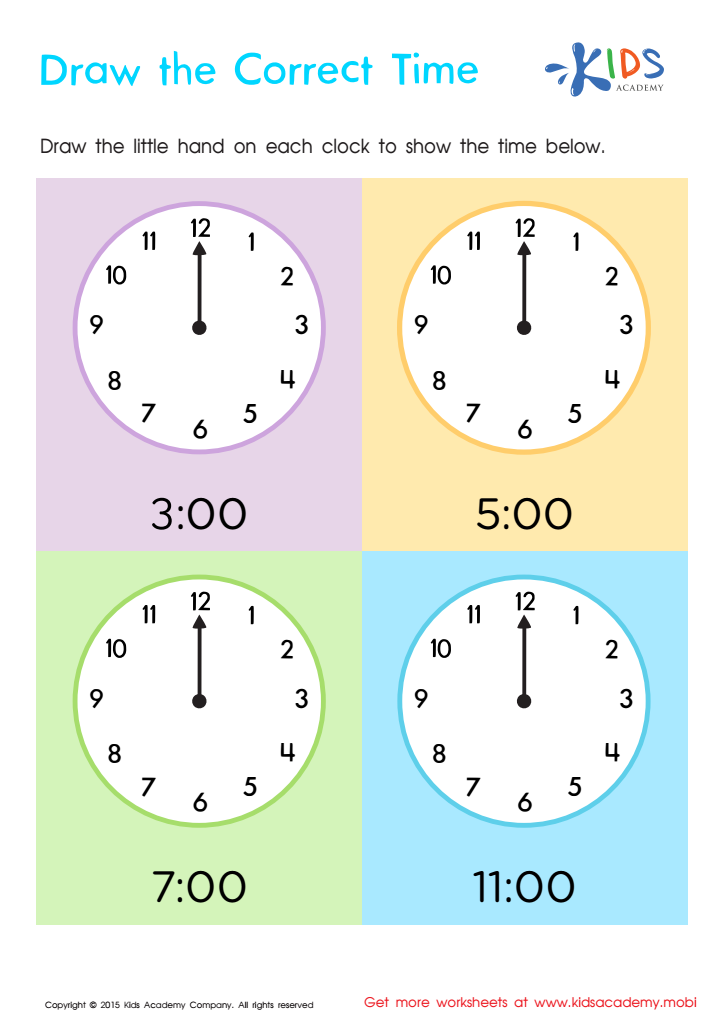
Telling The Time Worksheet: Part 1
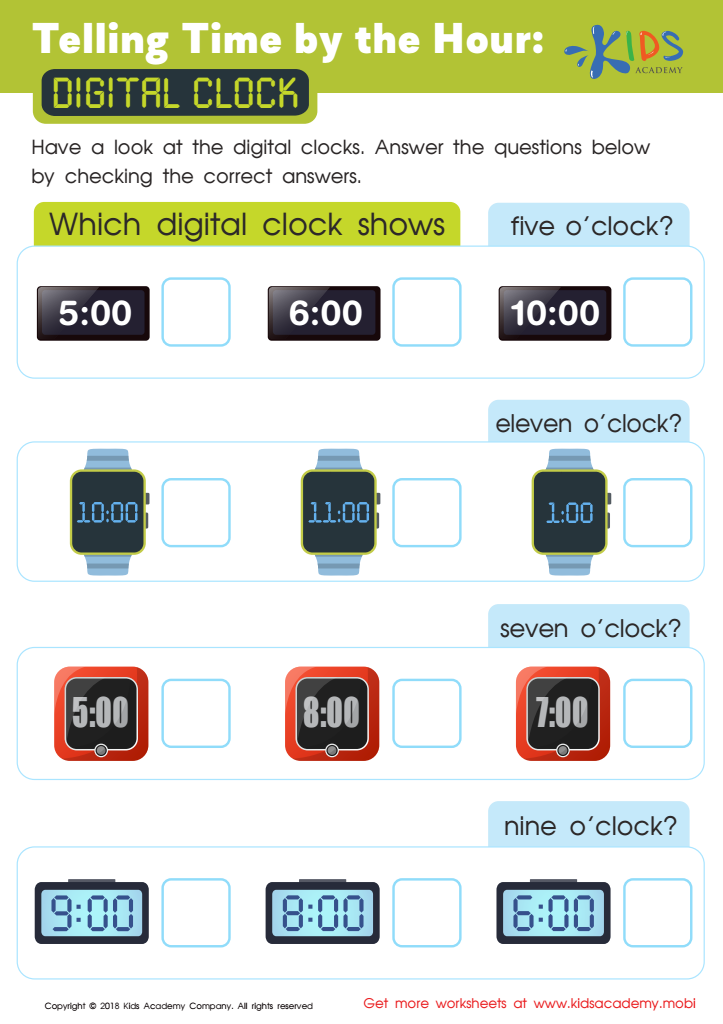
Telling Time by the Hour: Digital Clock Worksheet
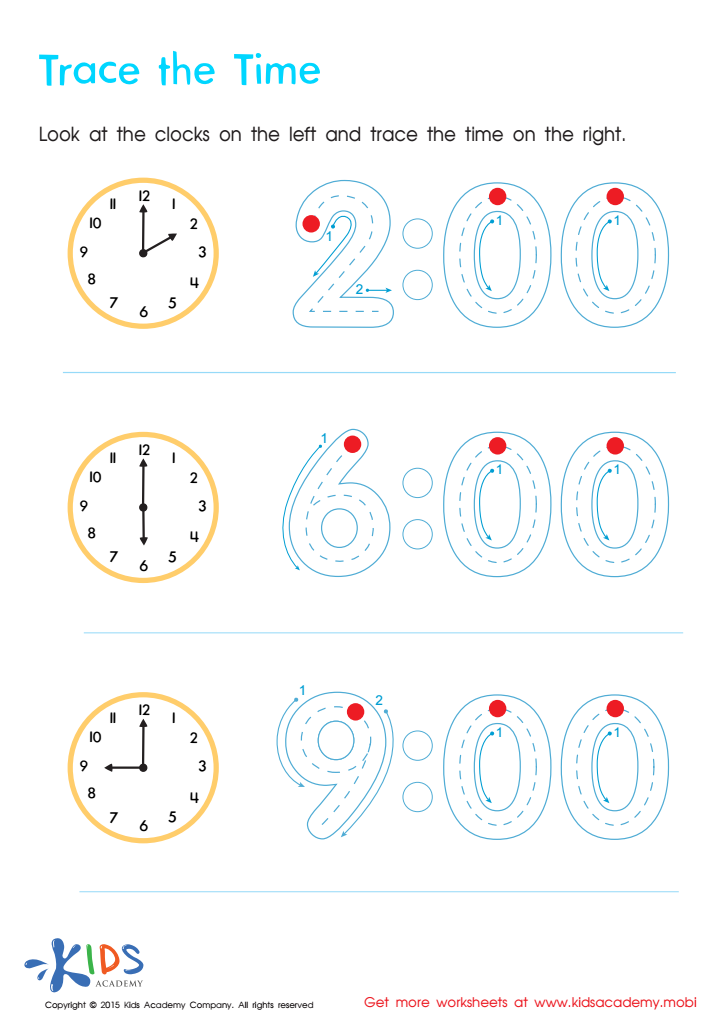
Telling The Time Worksheet: Part 2
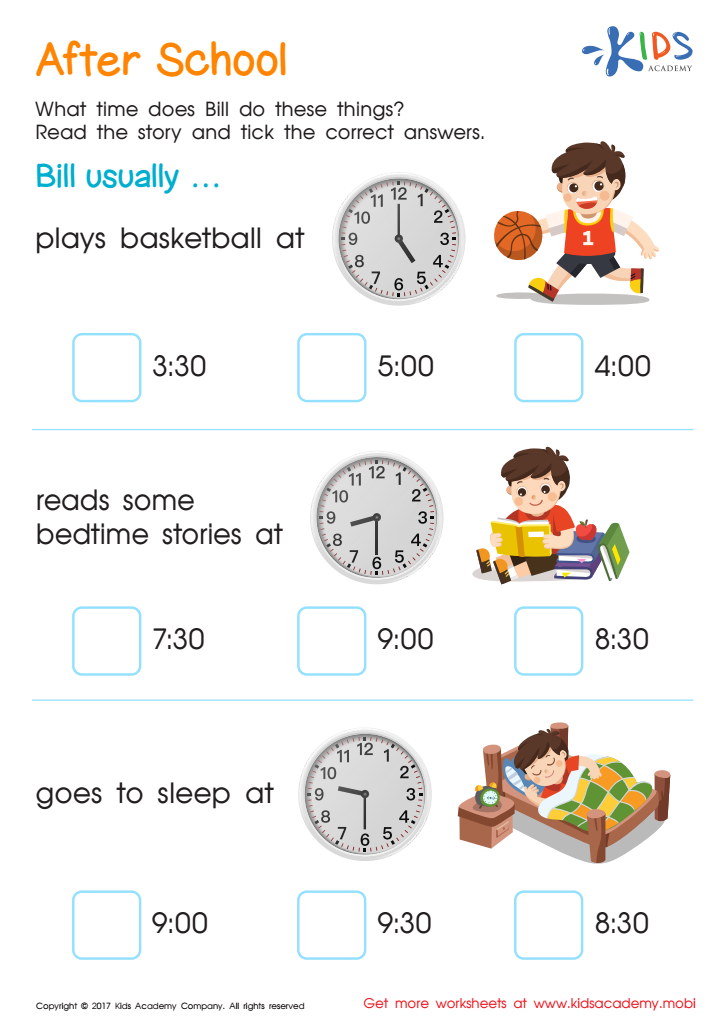
After School Time Printable
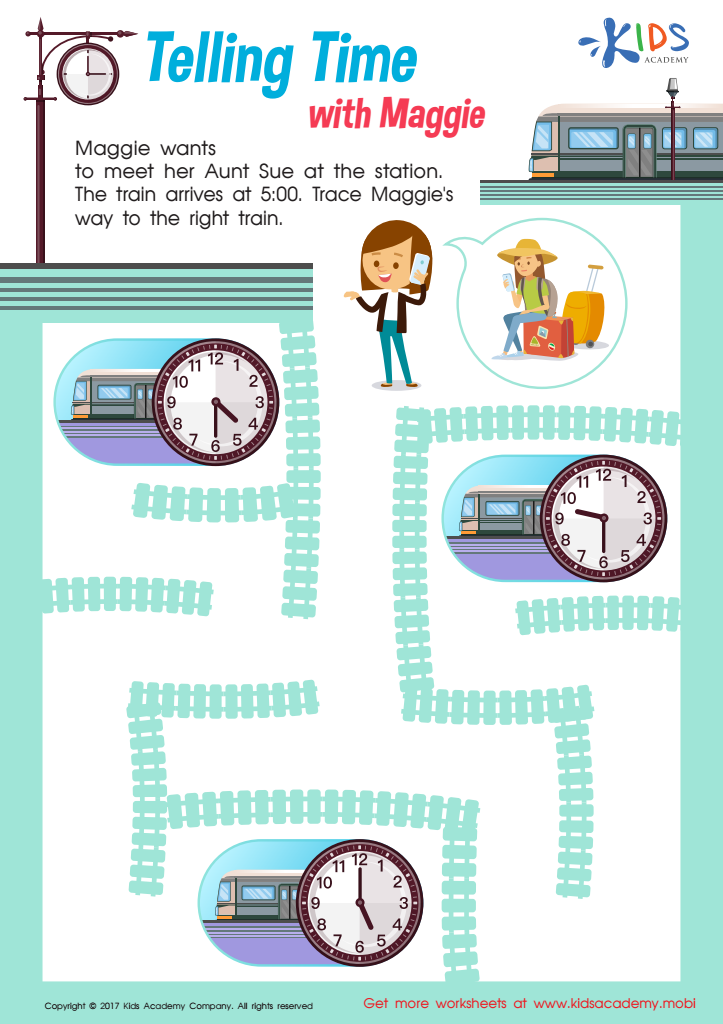
Telling Time With Maggie Time Worksheet
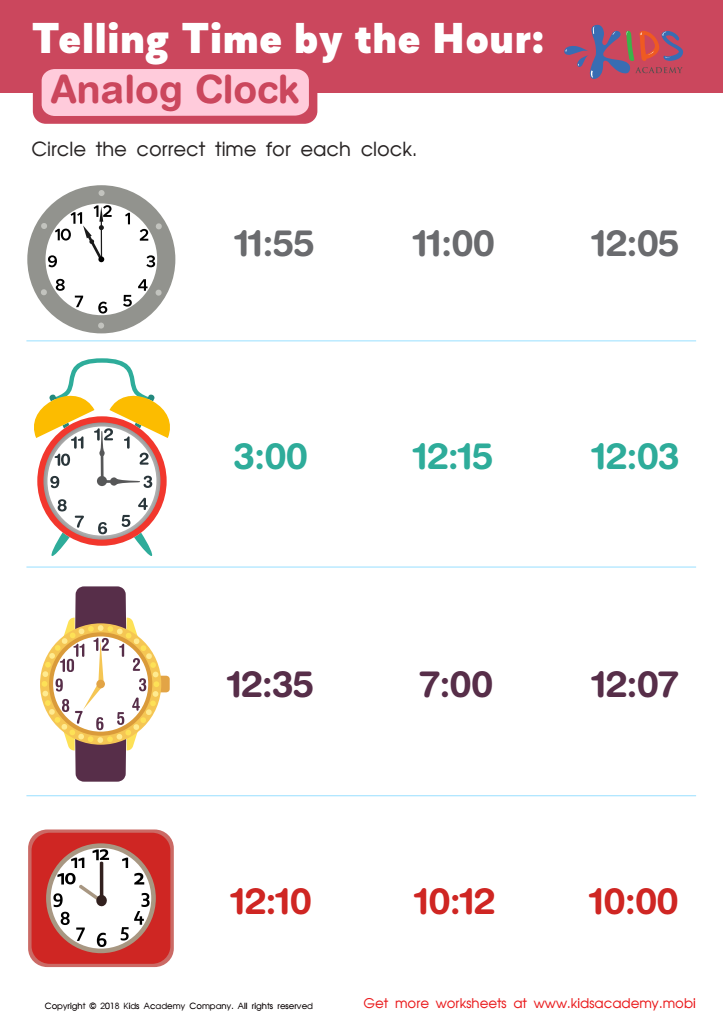
Telling Time by the Hour: Analog Clock Worksheet
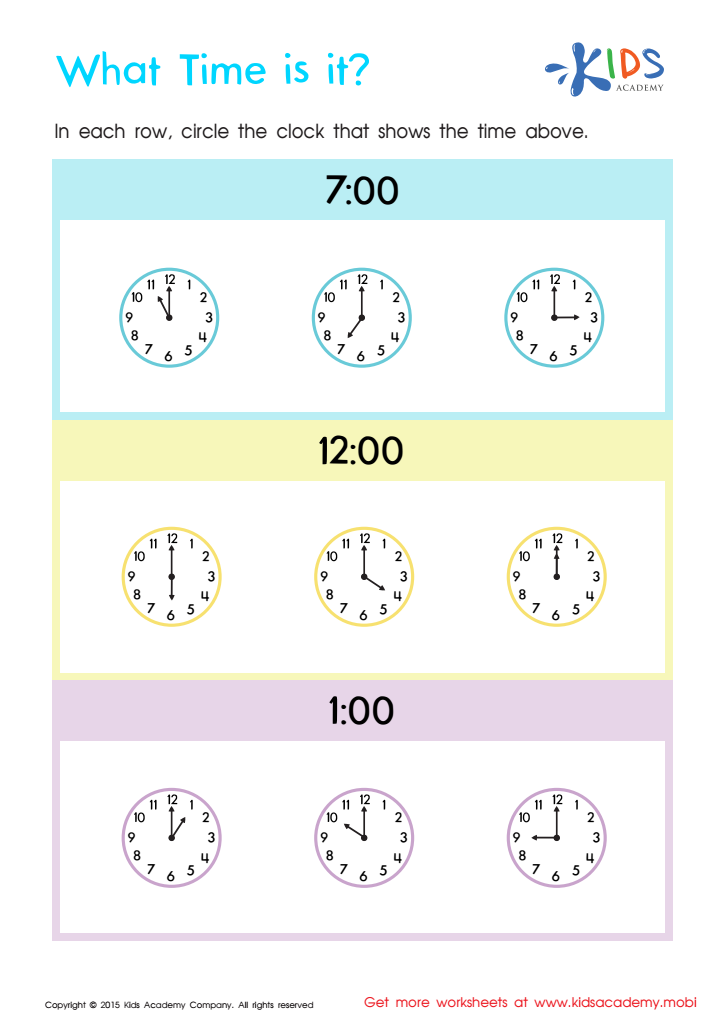
Telling The Time Worksheet: Part 3








Time reading skills are essential for children aged 6-8 as they foster independence and enhance academic performance. At this developmental stage, learning to read a clock empowers children to manage their day more effectively. It teaches them the important concepts of punctuality and time management, which are crucial life skills. Furthermore, understanding time is fundamental in organizing their activities, which instills a sense of responsibility and discipline.
Academically, time-reading skills intersect with various subjects. For instance, mathematics benefits as children learn to interpret minutes and hours, which is the foundation for understanding more complex mathematical concepts such as intervals and schedules. Reading comprehension can also be strengthened through story problems involving time.
Additionally, time-telling can improve problem-solving skills. When children grasp the concept of time, they are better equipped to follow a sequence of events, whether in storytelling or in day-to-day activities, contributing to cognitive development.
Lastly, time reading enhances social interactions. Children begin to understand the structure of the day, which sets a pattern for routines and activities both in school and family life. This synchronization enables smoother transitions and reduces stress for everyone involved.
Therefore, prioritizing time-telling skills during these formative years is critical for children's holistic growth and success.








