Logical thinking development Word Problems Worksheets for Ages 6-8
3 filtered results
-
From - To
Enhance your child's critical thinking and problem-solving skills with our “Logical Thinking Development Word Problems Worksheets for Ages 6-8.” These engaging and educational worksheets challenge young minds to apply logic, analyze information, and arrive at solutions through carefully designed word problems. Each worksheet encourages independent thinking and nurtures mathematical reasoning, covering a range of topics suited for early learners. Perfect for use both at home and in the classroom, our worksheets support the development of essential cognitive skills in a fun and interactive manner. Foster a love for learning and watch your child’s confidence soar!
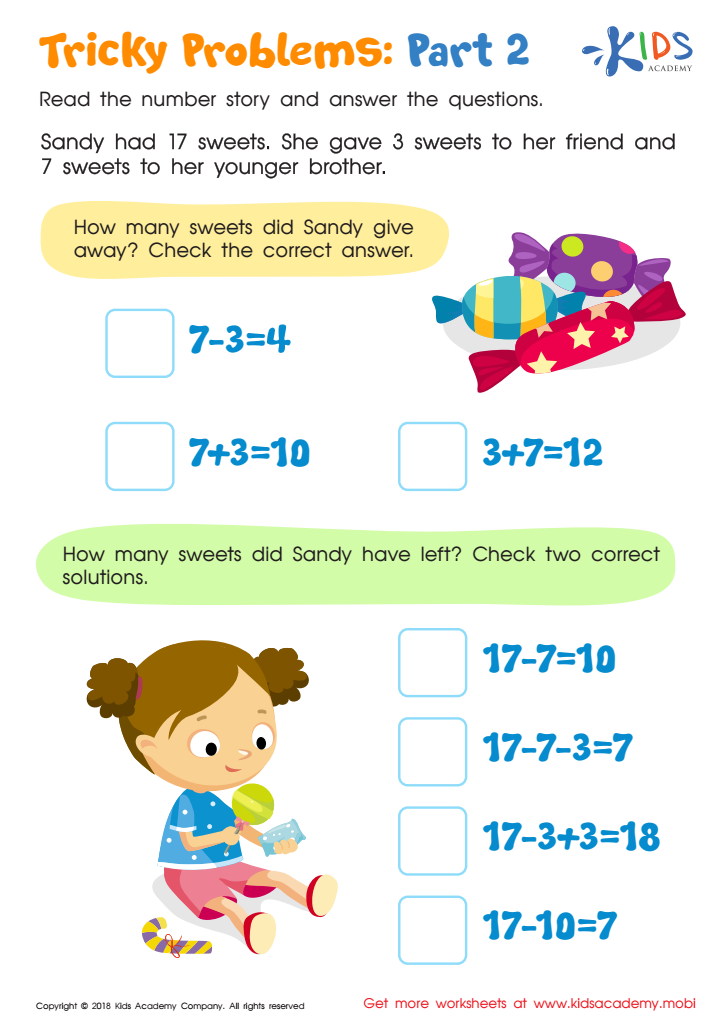
Tricky Problems Worksheet: Part 2
 Assign to My Students
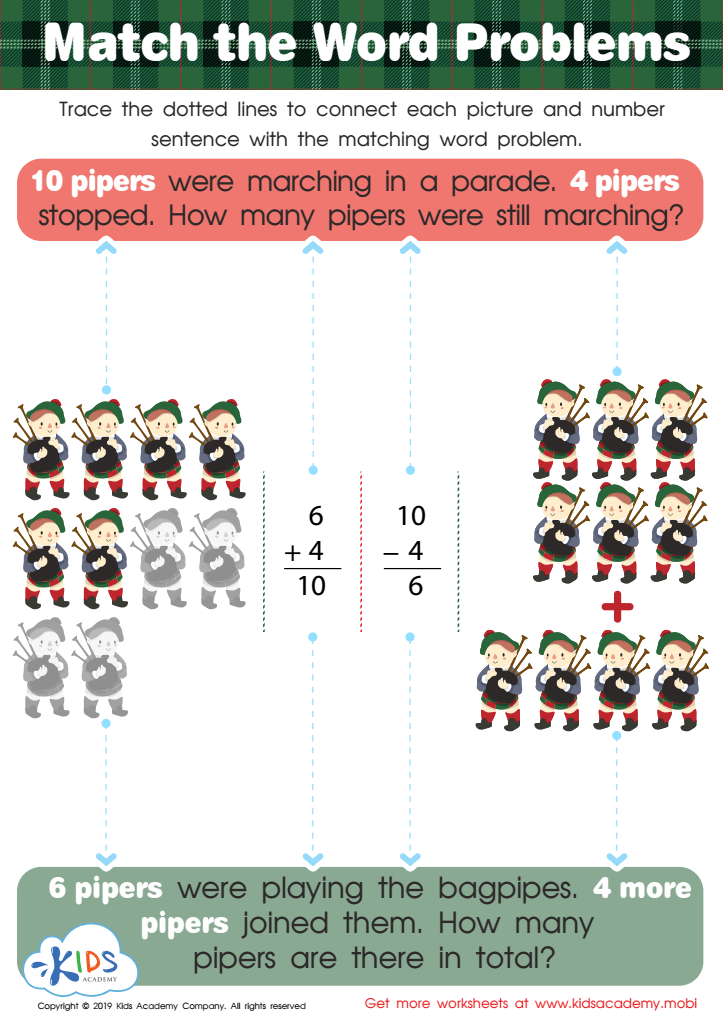
Match the Word Problems Worksheet
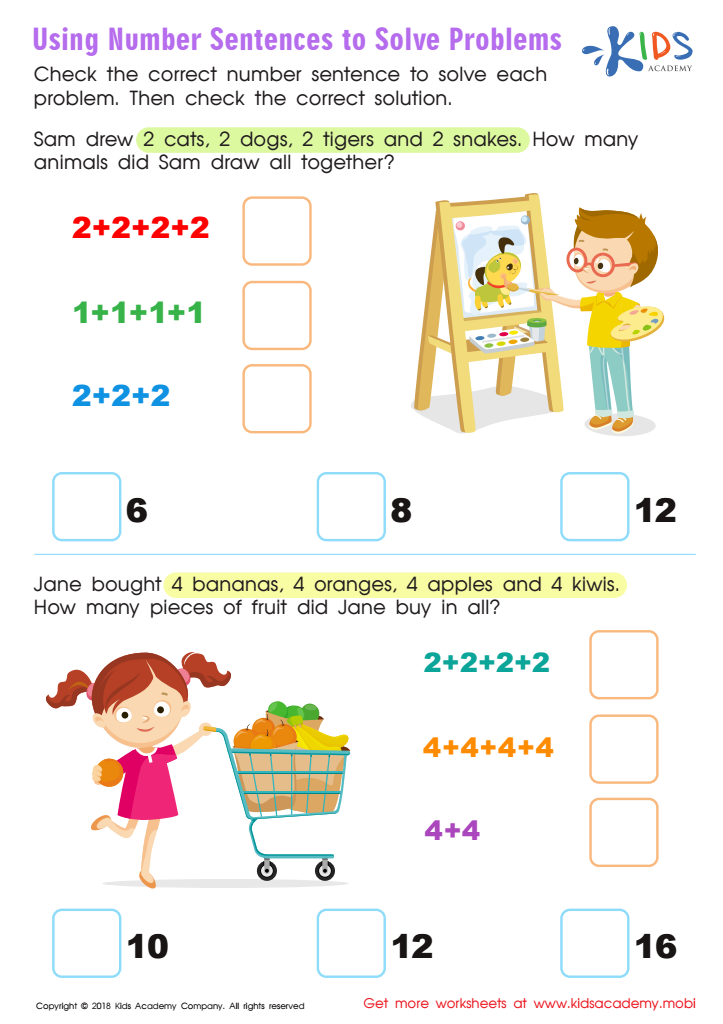
Using Number Sentences to Solve Problems Worksheet








Parents and teachers should prioritize the development of logical thinking through word problems for children ages 6-8 because these skills form the cornerstone of effective problem-solving and critical thinking, essential for everyday life. Engaging children in logical thinking word problems enhances their cognitive abilities by requiring them to analyze information methodically, recognize patterns, make inferences, and devise solutions.
Furthermore, developing these skills early helps build a strong mathematical foundation. Logical thinking is not isolated to math but intricately linked to other academic disciplines and real-life scenarios. When children practice word problems, they learn to understand questions carefully, identify pertinent information, and discard irrelevant details. This nurturance promotes a structured approach to thinking that will benefit them in varied subjects and situations.
Moreover, early development of logical thinking fosters self-confidence and a growth mindset. Successfully solving problems provides a sense of achievement and encourages perseverance when faced with challenges. Interacting with word problems also promotes linguistic skills as children interpret, discuss, and explain their reasoning. This collaborative approach between parents, teachers, and children creates a supportive learning environment, making education an interactive and enjoyable experience.
By incorporating logical thinking word problems into early education, we equip children with the tools needed for lifelong learning and adaptability in an ever-evolving world.








