Fraction comparison Building Vocabulary Worksheets for Ages 6-8
10 filtered results
-
From - To
Unlock your child's potential with our Fraction Comparison Building Vocabulary Worksheets for ages 6-8! Designed to merge math and reading skills, these engaging worksheets make learning fractions fun and accessible. Kids will delight in comparing fractions while expanding their vocabulary. Our meticulously crafted activities foster critical thinking and holistic development, ensuring that young learners build a strong foundation in both numerical and linguistic concepts. Perfect for the classroom or at-home learning, these printable worksheets offer colorful and interactive exercises that captivate and educate. Start your child's journey towards mastering fractions and vocabulary with our expertly designed resources!
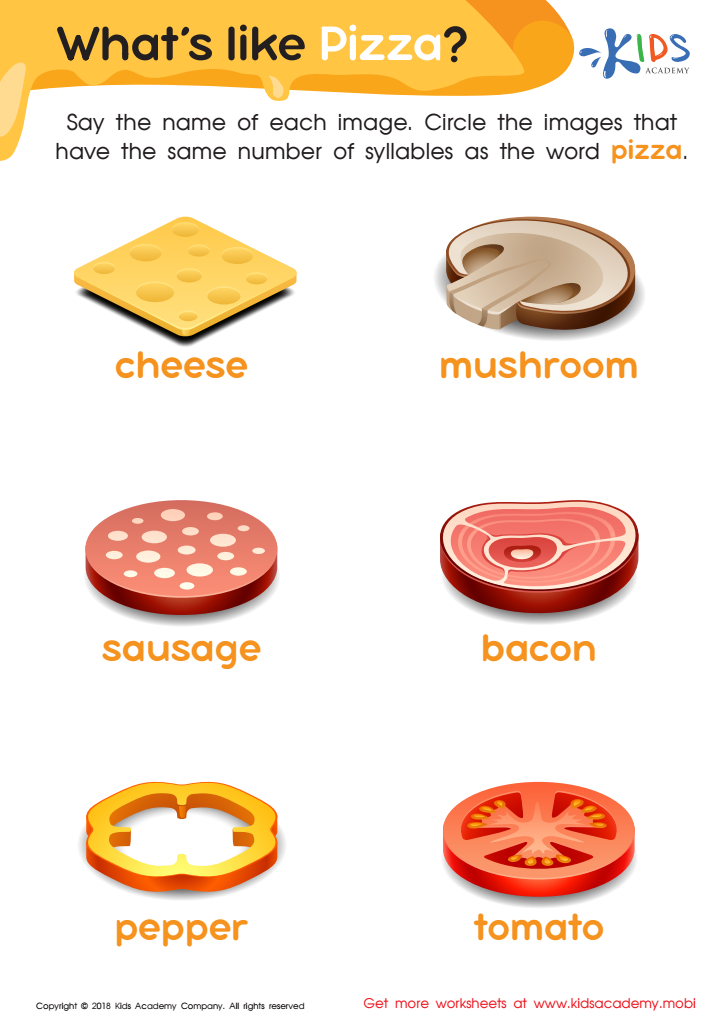
What's Like Pizza? Worksheet
 Assign to My Students
















.jpg)


Building a strong vocabulary for fraction comparison in children ages 6-8 is essential for several reasons. At this developmental stage, children are just beginning to grasp foundational mathematical concepts. Understanding fractions and their relationships is not only a stepping stone for more advanced math but also hones critical thinking and problem-solving skills.
First, a robust vocabulary allows children to communicate mathematical ideas more precisely and confidently. Words like "numerator," "denominator," "greater than," "less than," and "equal to" help children describe and compare fractions effectively. This fluency fosters better classroom discussions and peer learning, both crucial for cognitive development.
Second, recognizing and comparing fractions in everyday contexts (like dividing a pizza or sharing toys) makes math meaningful, improving their motivation and interest. As children explain these real-life scenarios using proper terminology, they develop a deeper, practical understanding of fractions.
Moreover, a good foundation in fractions correlates with future success in mathematics. Many advanced topics, such as algebra and geometry, rely heavily on this understanding. Early mastery ensures that children will face fewer challenges as they progress through their education.
In summary, fraction comparison vocabulary isn't just academic jargon—it's a toolkit for logical reasoning, better math comprehension, and effective communication. Thus, parents and teachers should prioritize it to foster a well-rounded mathematical foundation.








