Understanding prepositions Building Vocabulary Worksheets for Ages 6-8
4 filtered results
-
From - To
Enhance your child's vocabulary with our "Understanding Prepositions" worksheets, specifically designed for ages 6-8. These engaging materials help young learners grasp the concept of prepositions through fun activities and exercises. By illustrating their relationship to nouns and pronouns, kids will learn how to express location, direction, and time effectively. Our interactive worksheets foster exploration and creativity, allowing children to develop essential language skills at their own pace. Perfect for home or classroom use, these resources are a great way to boost your child's confidence in reading and writing. Start building a strong foundation in language today!
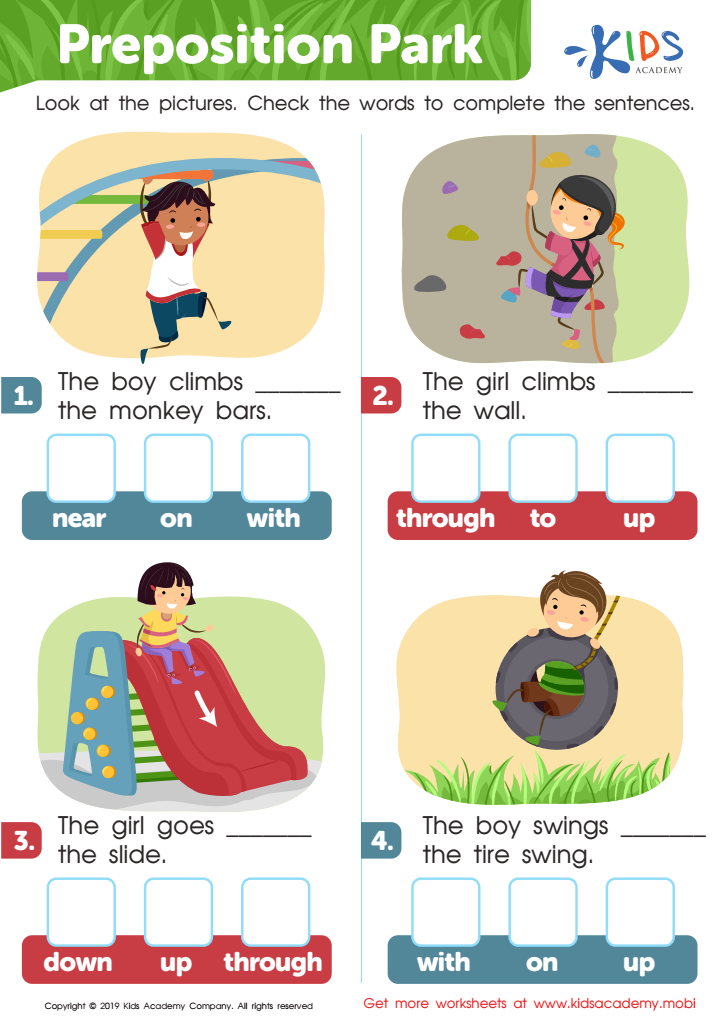
Preposition Park Worksheet
 Assign to My Students











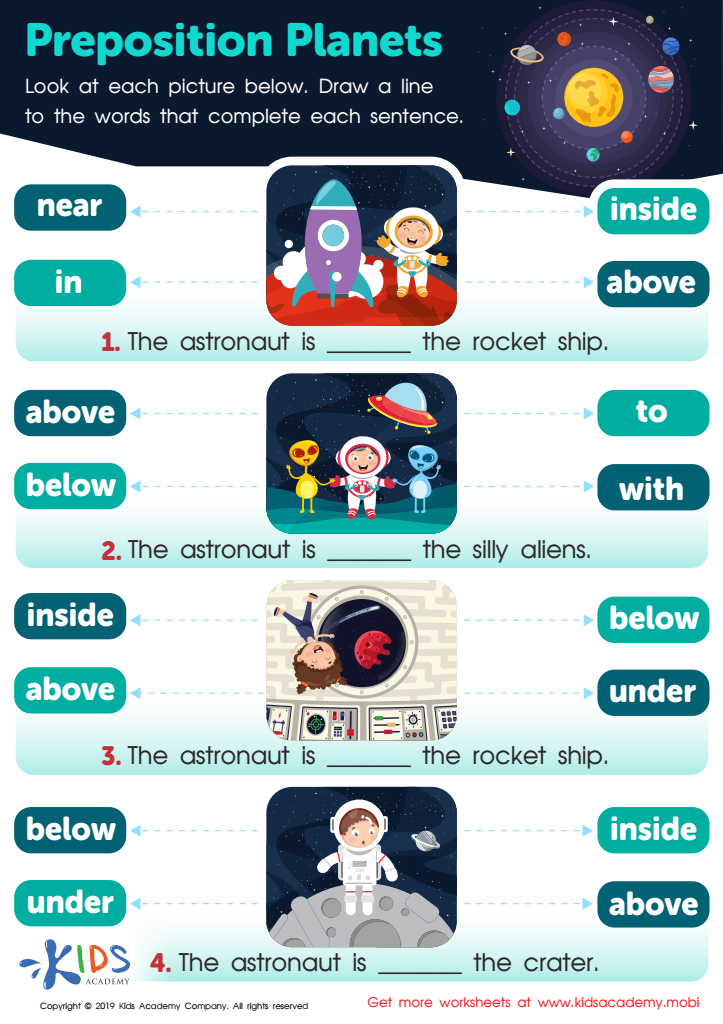
Preposition Planets Worksheet
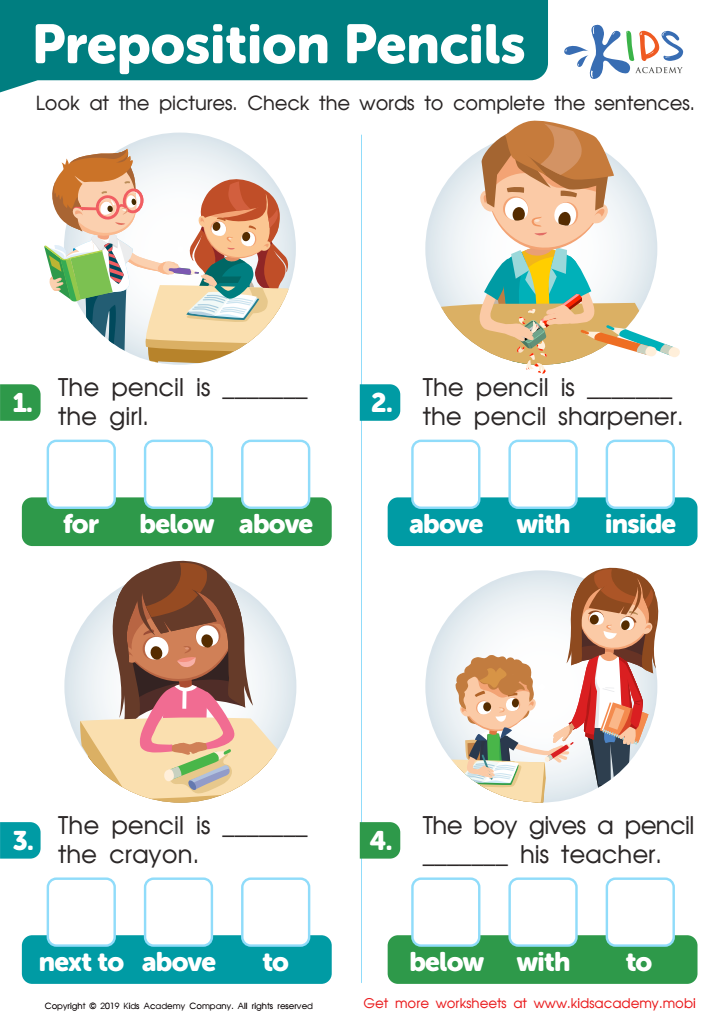
Preposition Pencils Worksheet
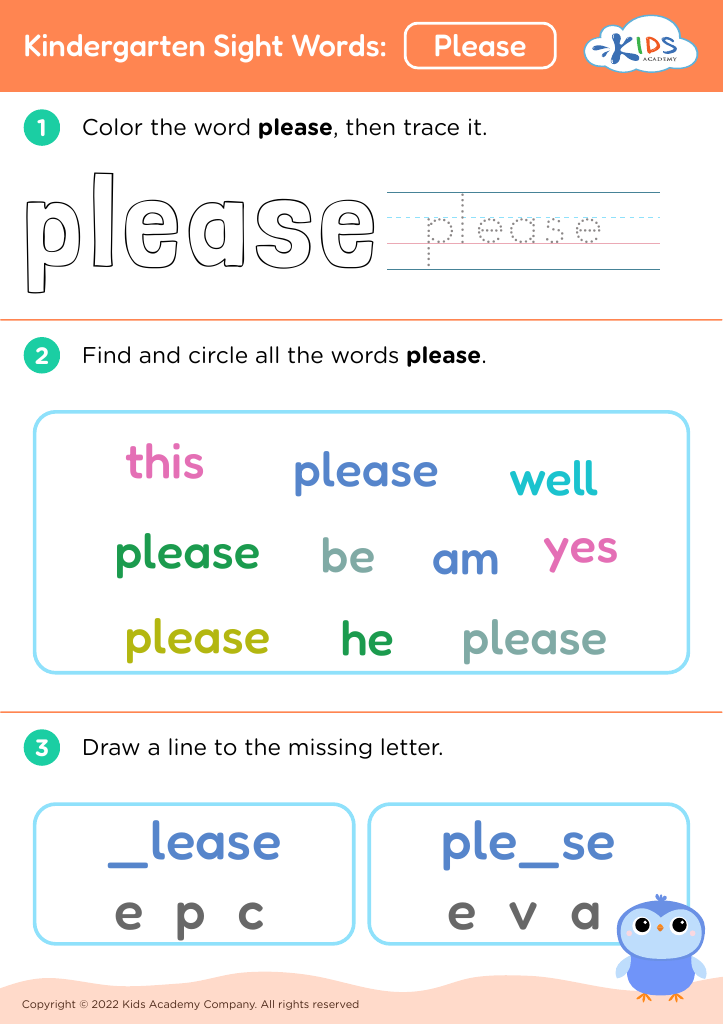






.jpg)

Understanding prepositions is vital for building vocabulary in children aged 6-8, and both parents and teachers play crucial roles in fostering this skill. Prepositions are words that show relationships between nouns and other elements in a sentence, such as "in," "on," "under," and "between." Mastering these small but significant words helps children form clear, coherent sentences, allowing them to express thoughts and ideas more effectively.
As children learn prepositions, they also expand their vocabulary; they begin to understand spatial and temporal relationships, enhancing their reading and comprehension skills. This foundational knowledge is essential for later academic success. Parents and teachers can support this learning through engaging conversations, storytelling, and interactive activities that incorporate prepositions.
Encouraging children to use prepositions in context not only improves their language skills but also boosts confidence in their communication abilities. Furthermore, strong language skills contribute to improved performance across subjects, including math and science, where understanding spatial concepts is important.
Investing time to build this skill early ensures that children have the tools they need for effective communication and learning throughout their educational journey. By supporting their vocabulary development, parents and teachers are setting the stage for lifelong language proficiency.








