Shape Recognition Reading Fiction Worksheets for Ages 6-8
3 filtered results
-
From - To
Discover engaging Shape Recognition Reading Fiction Worksheets designed specifically for children ages 6-8! These worksheets combine fun narratives with shape identification, helping young learners enhance their reading skills while improving their understanding of geometric shapes. Each worksheet features captivating stories that encourage kids to identify and circle various shapes within the text, promoting active learning. Perfect for supplementing classroom activities or for at-home practice, these resources foster creativity and critical thinking. Ideal for early grade teachers and parents, our Shape Recognition Worksheets provide an effective and enjoyable way for children to develop essential literacy skills while exploring the world of shapes.
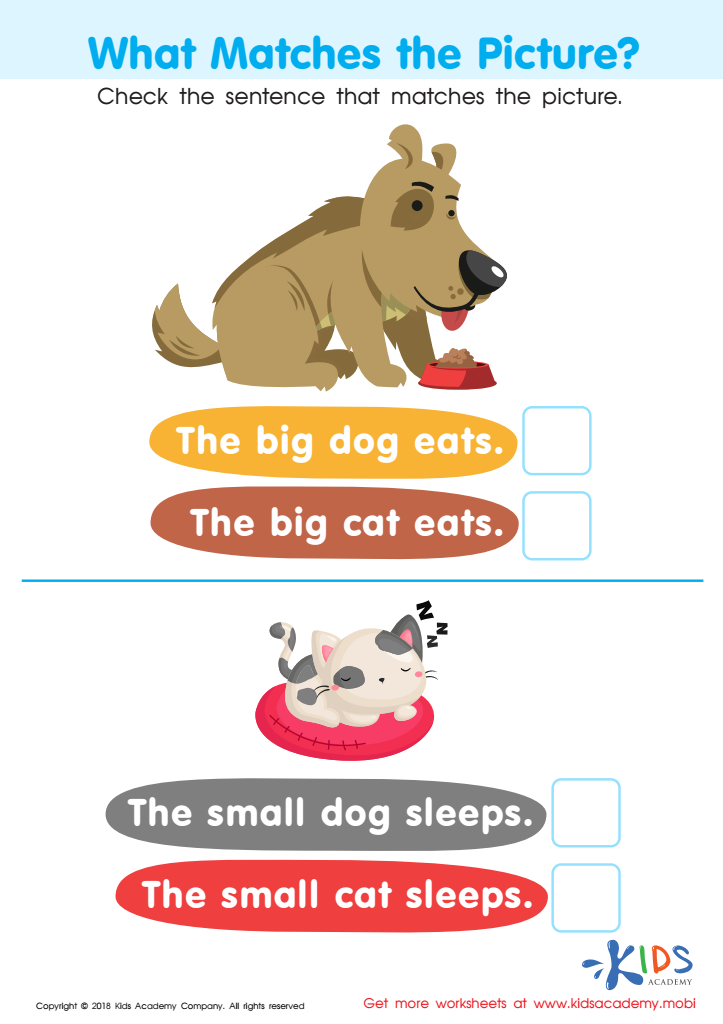
What Matches the Picture? Worksheet
 Assign to My Students
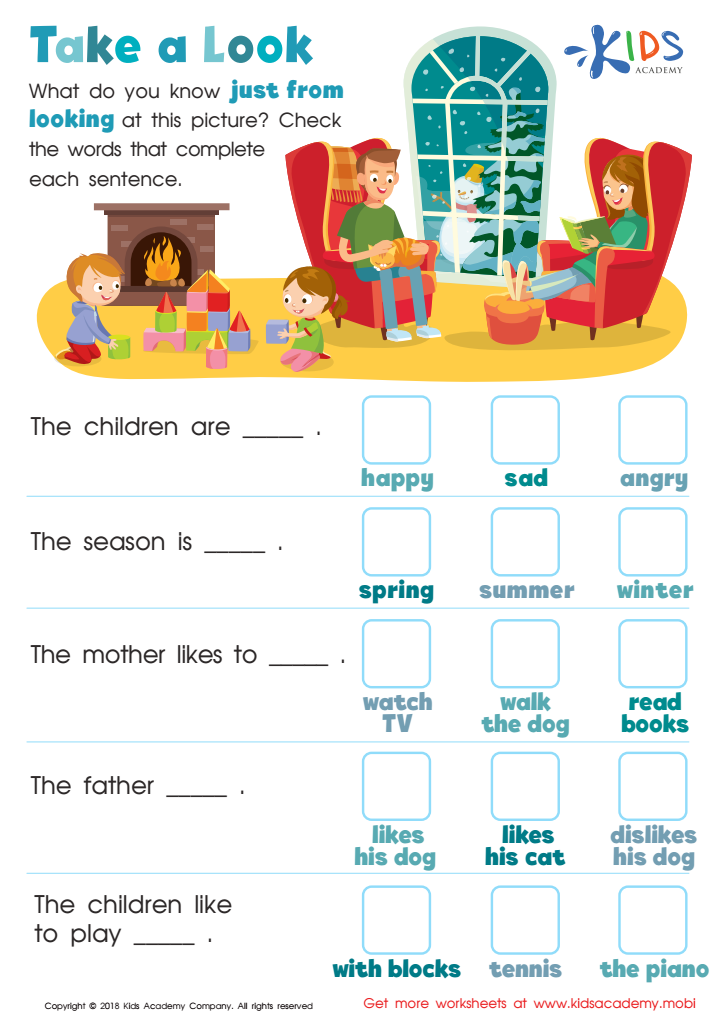
Take a Look - Part 1 Worksheet
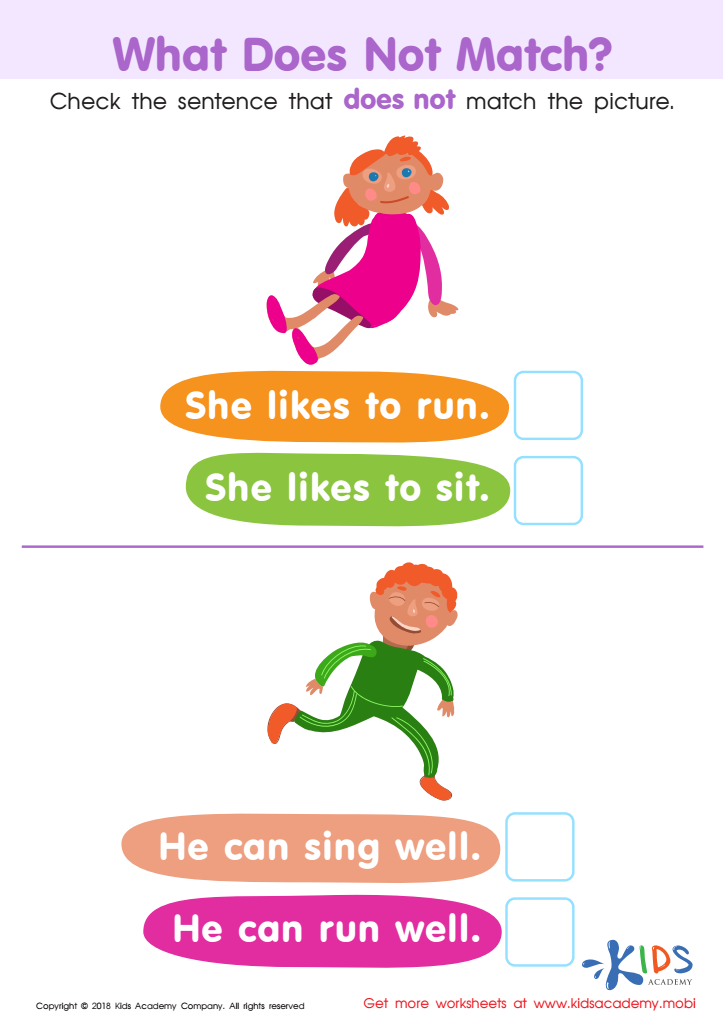
What Does Not Match? Worksheet







Shape recognition is a fundamental skill that intersects with early literacy development, making it critical for parents and teachers to prioritize in reading fiction for ages 6-8. During this developmental stage, children begin to connect letters with sounds, forming the basis for reading fluency. Recognizing shapes—whether they are geometric forms or the shapes of letters and words—enhances visual literacy, helping students discern and differentiate characters, settings, and plot elements in stories.
Incorporating shape recognition into reading fiction encourages creative thinking and enhances comprehension skills. As children visualize story elements, they engage actively with the narrative, fostering a deeper connection to the material. This interaction supports language development by enriching vocabulary and narrative skills, essential for effective communication. Furthermore, when parents and teachers emphasize the importance of shapes in books, they stimulate curiosity and exploration, motivating children to engage with texts more profoundly.
Ultimately, nurturing shape recognition during this critical age aids cognitive development and sets a sturdy foundation for future learning. By integrating shape analysis into reading, caregivers can cultivate resilient readers with a penchant for analysis and interpretation in both literature and real world contexts.








