Animal identification Reading Non-Fiction Worksheets for Ages 6-8
4 filtered results
-
From - To
Explore the fascinating world of animals with our engaging Animal Identification Reading Non-Fiction Worksheets, designed specifically for children aged 6-8. These worksheets help young learners develop essential reading skills while discovering diverse species from around the globe. Through informative passages and interactive questions, kids will enhance their comprehension, vocabulary, and critical thinking abilities. Ideal for classrooms or home use, our resources make learning fun and encourage curiosity about wildlife. Help your child become a confident reader and a knowledgeable animal enthusiast with these captivating worksheets that combine education and exploration in one exciting package!
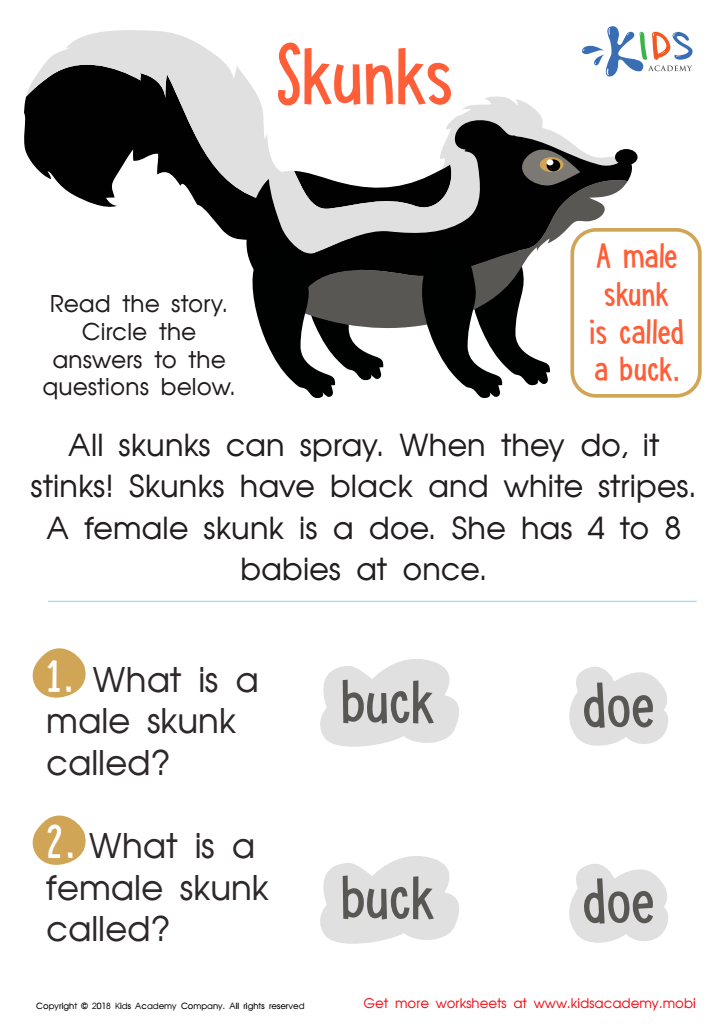
Skunks Worksheet
 Assign to My Students
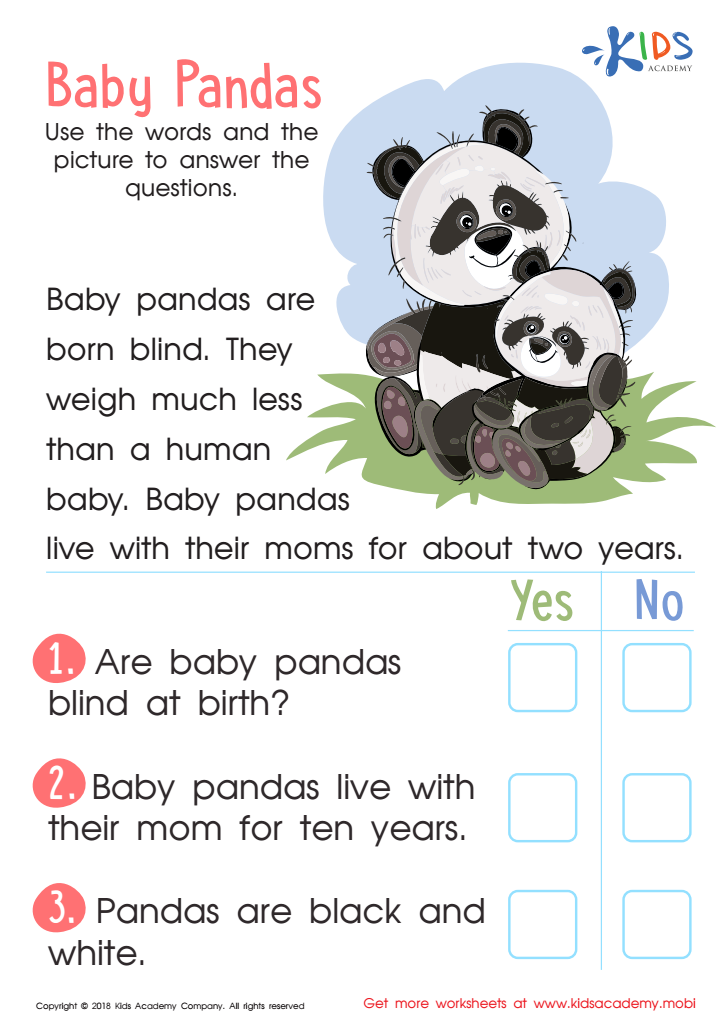
Baby Pandas Worksheet
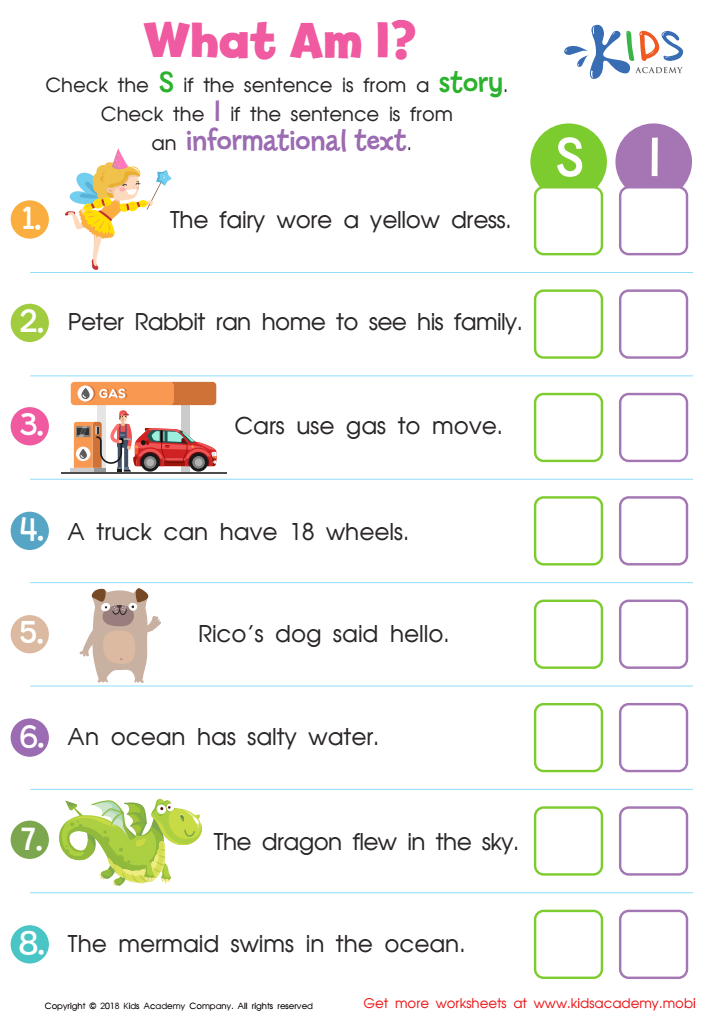
What Am I? Worksheet
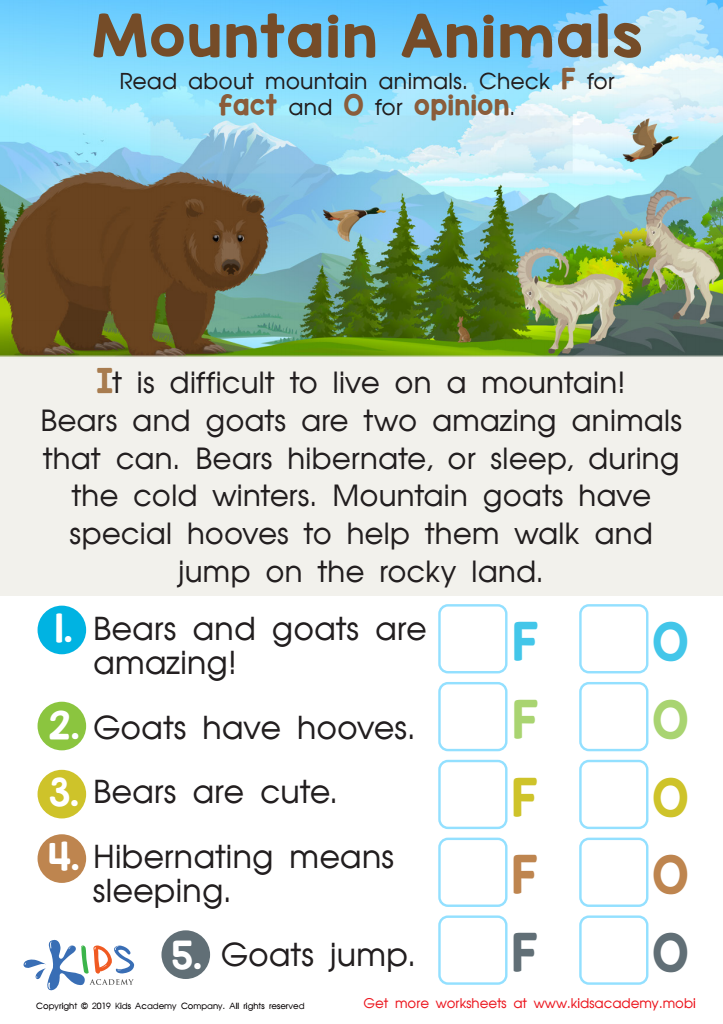
Mountain Animals Worksheet








Animal identification reading non-fiction is crucial for children aged 6-8 as it enhances their understanding of the natural world while developing essential literacy skills. For parents and teachers, fostering a child's familiarity with various animal species can ignite curiosity and a love for learning. At this age, children are naturally inquisitive, and providing them with engaging non-fiction texts allows them to explore topics related to wildlife, habitats, and behaviors in an informative yet enjoyable way.
Moreover, reading about animal identification promotes critical thinking and observational skills. As children learn to recognize different animals, they enhance their ability to compare and categorize, which are foundational skills in science and mathematics. This age group usually finds animals fascinating, which enhances motivation and engagement in reading, making it easier to instill a habit of reading.
Additionally, understanding biodiversity can foster a sense of responsibility and empathy towards animals and the environment. This knowledge is vital as children grow, encouraging them to become informed and environmentally conscious citizens. Thus, parents and teachers play a vital role in this developmental stage—you can provide meaningful experiences and activities focusing on animal identification through non-fiction texts, reinforcing both literacy and a love for the natural world.








