Fine Motor Skills Sight Words Worksheets for Ages 6-8
8 filtered results
-
From - To
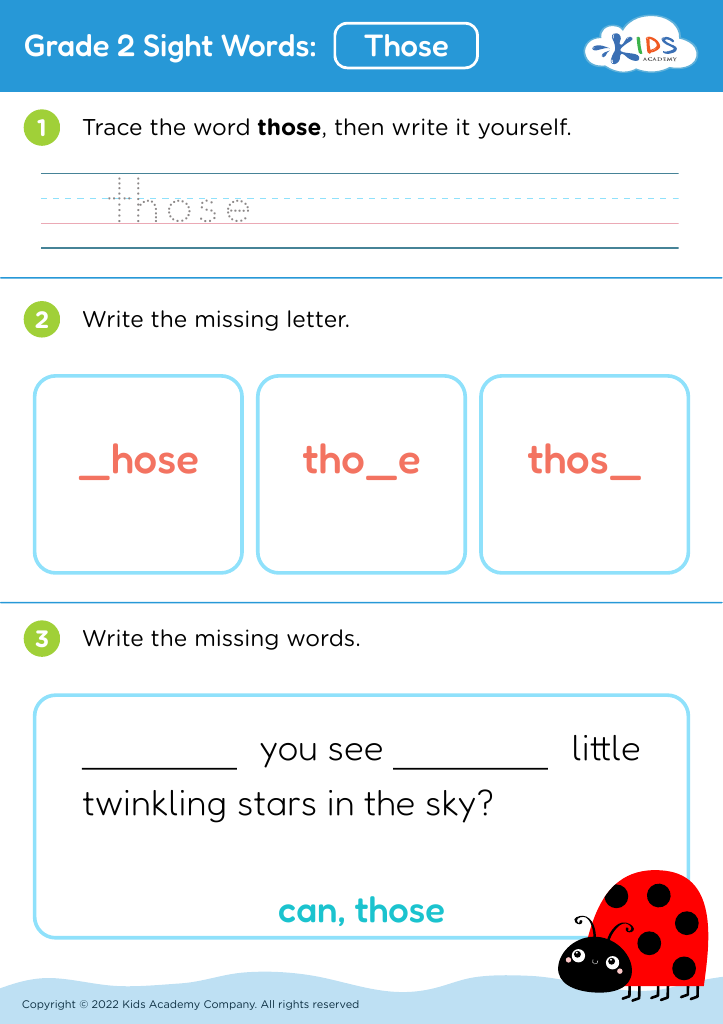
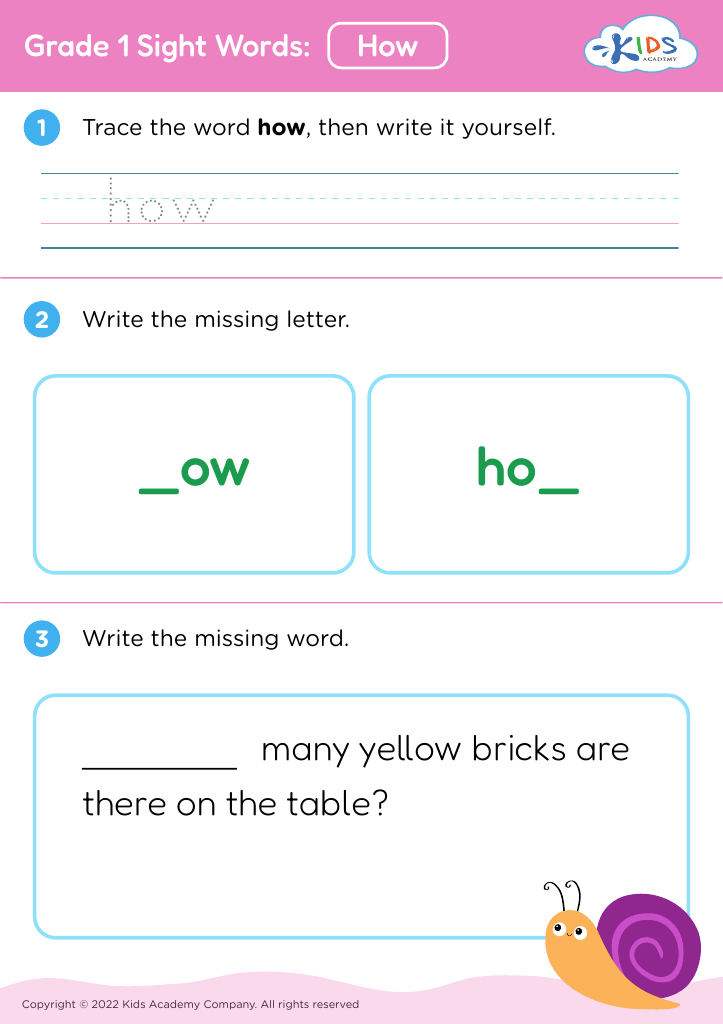
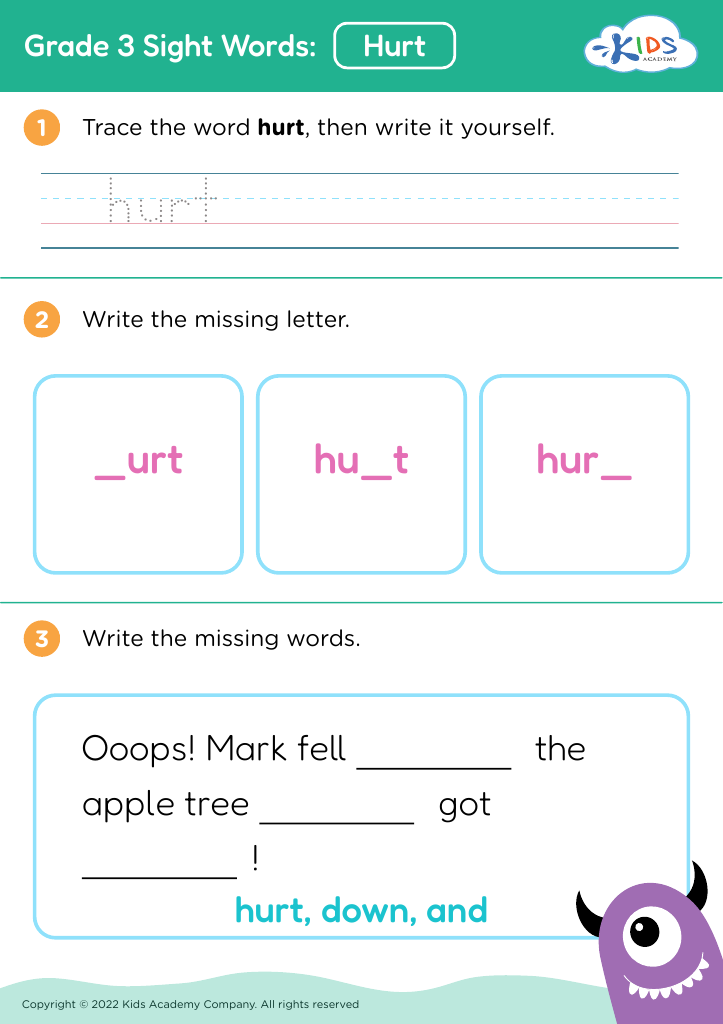
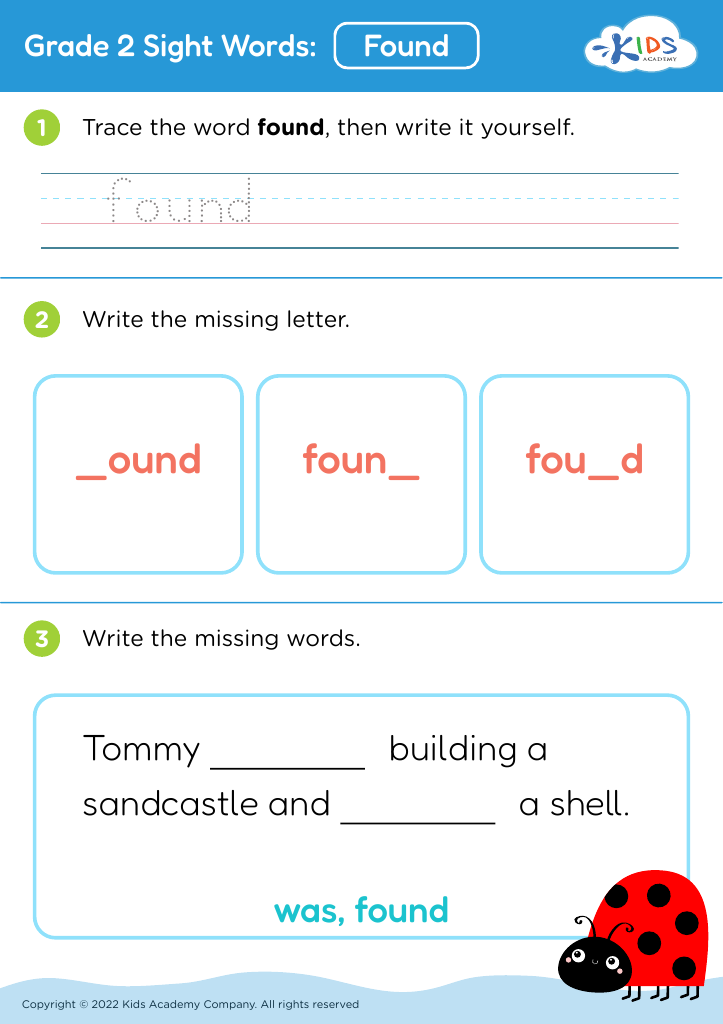
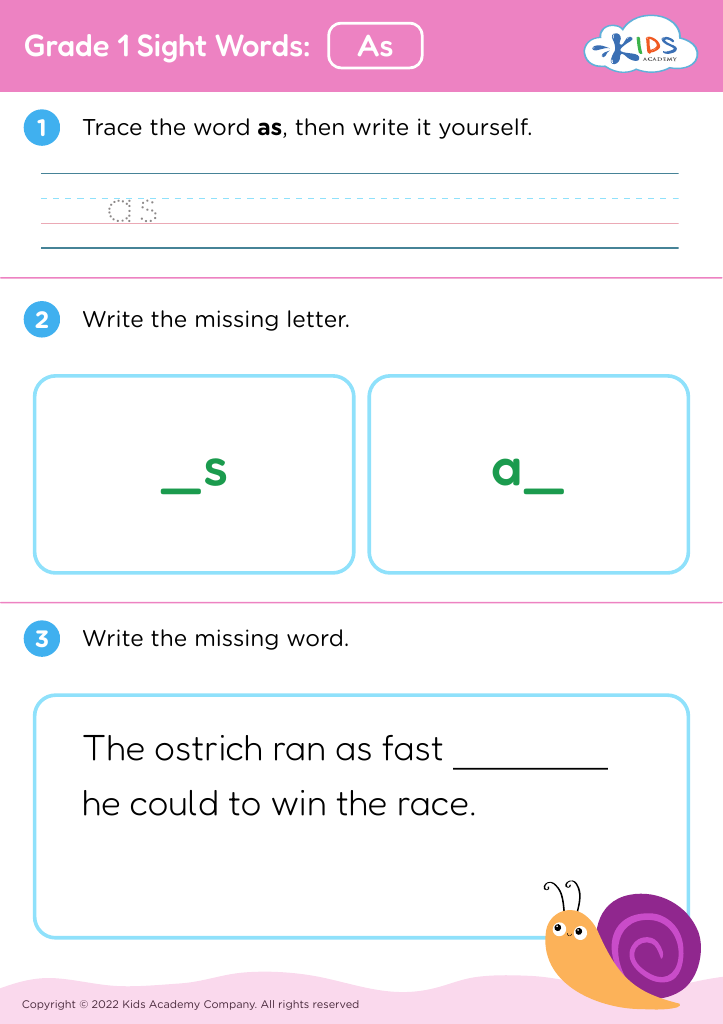
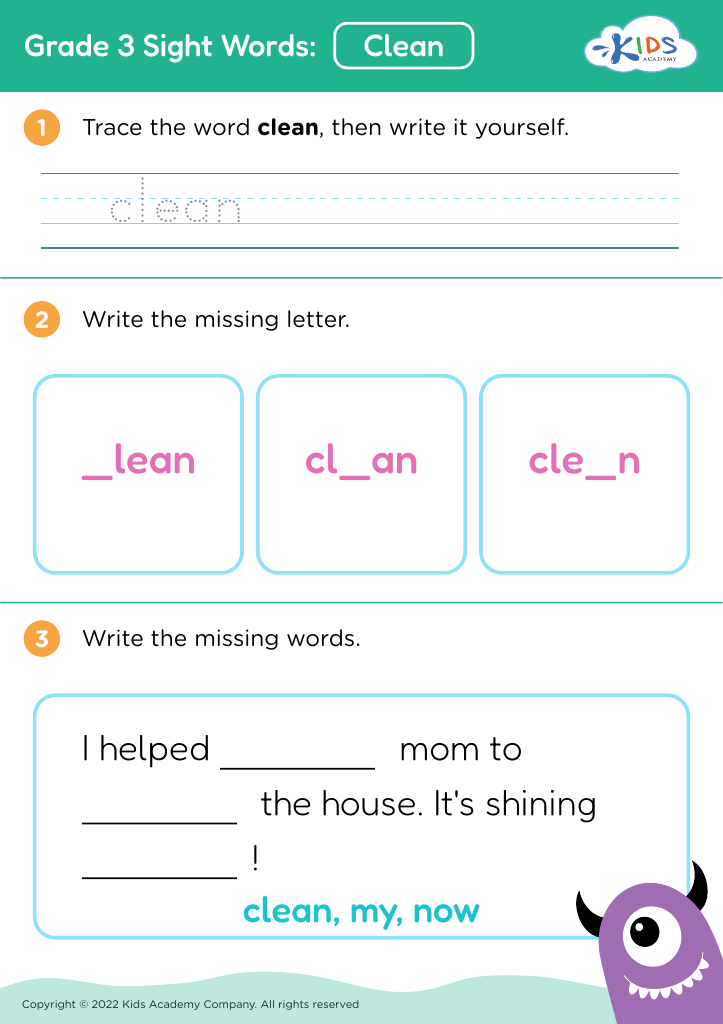
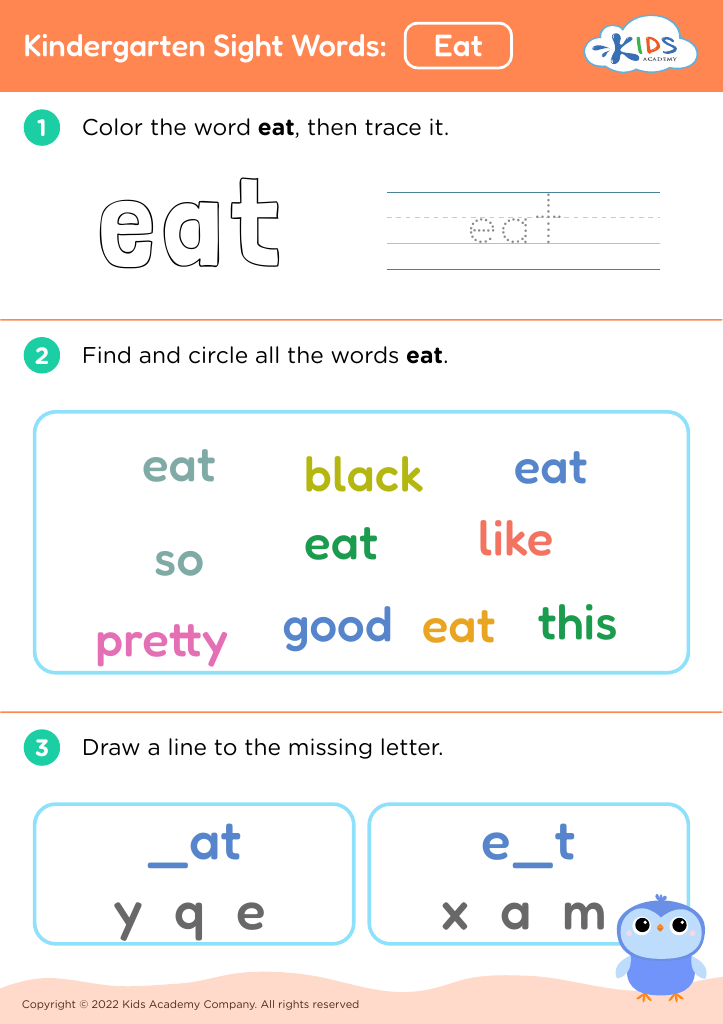
Explore our engaging Fine Motor Skills Sight Words Worksheets designed specifically for children aged 6-8. These interactive worksheets combine essential sight word practice with fun fine motor activities, helping young learners develop their writing and grasping skills while reinforcing their reading abilities. Each worksheet is thoughtfully crafted to capture children's interest, featuring creative exercises like tracing, coloring, and cutting. By integrating fine motor skill development with sight word recognition, our resources ensure a well-rounded educational experience. Perfect for classroom use or at-home learning, these worksheets are a valuable tool for early educators and parents striving to enhance their child's literacy journey.
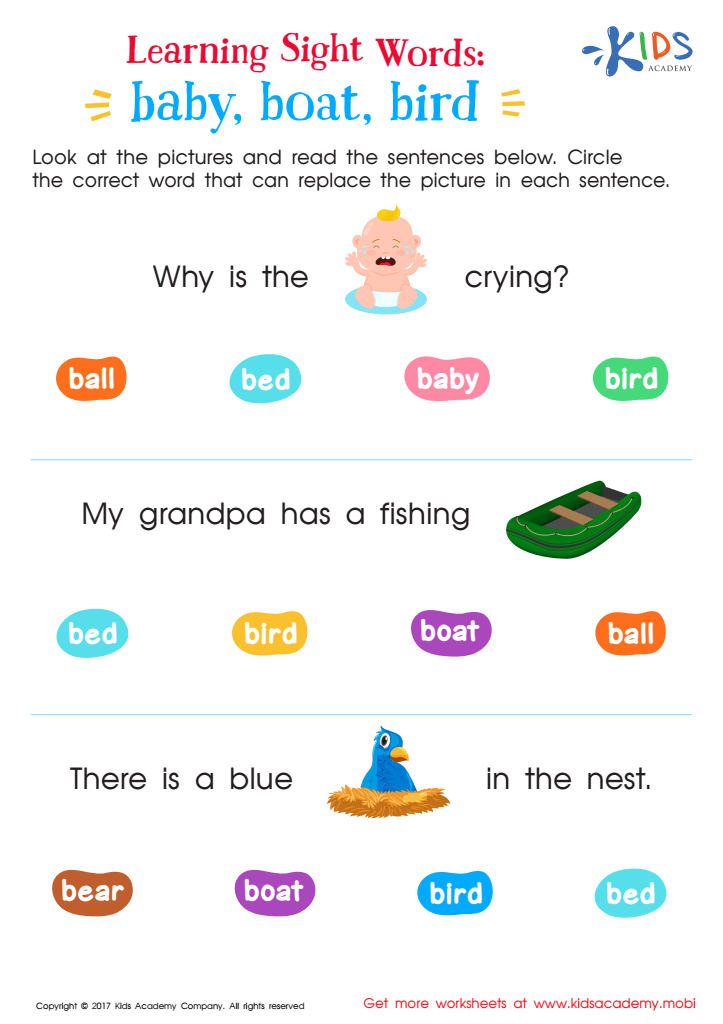
Baby, Boat, Bird Worksheet Sight Words Worksheet
 Assign to My Students













.jpg)

Fine motor skills and sight words are crucial for children aged 6 to 8 as they lay the foundation for effective communication and successful learning. Fine motor skills involve the coordination of small muscles in the hands and fingers, which are essential for tasks like writing, drawing, and even manipulating objects. By fostering these skills, parents and teachers ensure children can hold pencils, use scissors, and perform everyday tasks with confidence, which directly impacts their academic success.
Sight words are the most frequently used words in reading and writing, allowing children to quickly recognize them without having to sound them out. Proficiency in sight words enhances fluency, comprehension, and confidence in early readers. When children can recognize these words instantaneously, they are better able to focus on understanding the meaning of sentences rather than getting bogged down by decoding.
Together, fine motor skills and sight words are intertwined in the learning process. Well-developed motor skills support the physical act of writing sight words, fostering a positive association with reading and writing. Consequently, by prioritizing these areas, parents and teachers help cultivate a generation of motivated, capable readers and writers ready to tackle more complex literacy tasks in the future.