Handwriting improvement ABC Letters Worksheets for Ages 6-9
3 filtered results
-
From - To
Enhance your child's handwriting skills with our "Handwriting Improvement ABC Letters Worksheets" designed specifically for ages 6-9! Our engaging worksheets provide fun and interactive ways for young learners to practice writing both uppercase and lowercase letters. Each worksheet focuses on letter formation, stroke order, and proper spacing, helping students build confidence in their writing abilities. With a variety of activities, including tracing and creative exercises, children will develop essential motor skills while discovering the joy of writing. Perfect for home or classroom use, these worksheets make handwriting practice easy and enjoyable! Start your child's writing journey today!
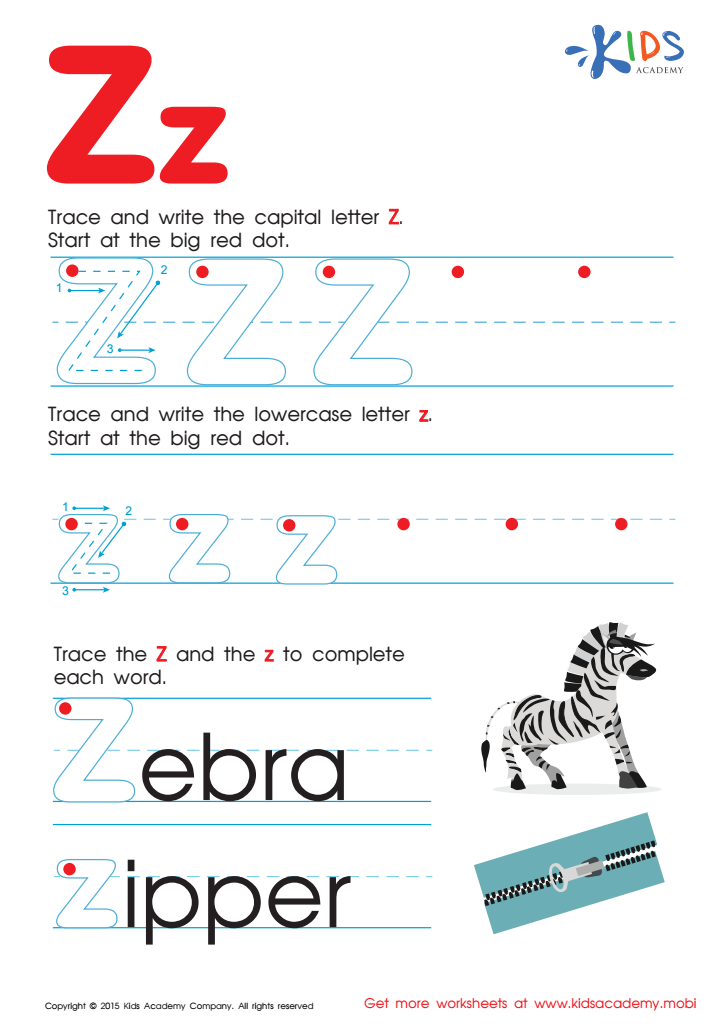
Letter Z Tracing Page
 Assign to My Students







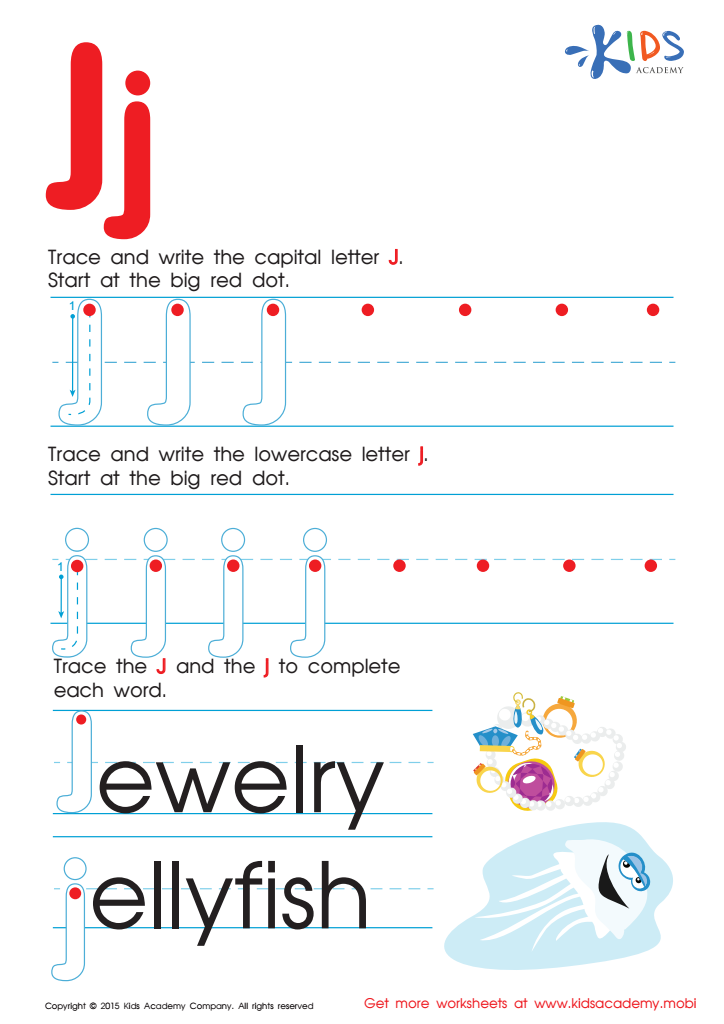
Letter J Tracing Page
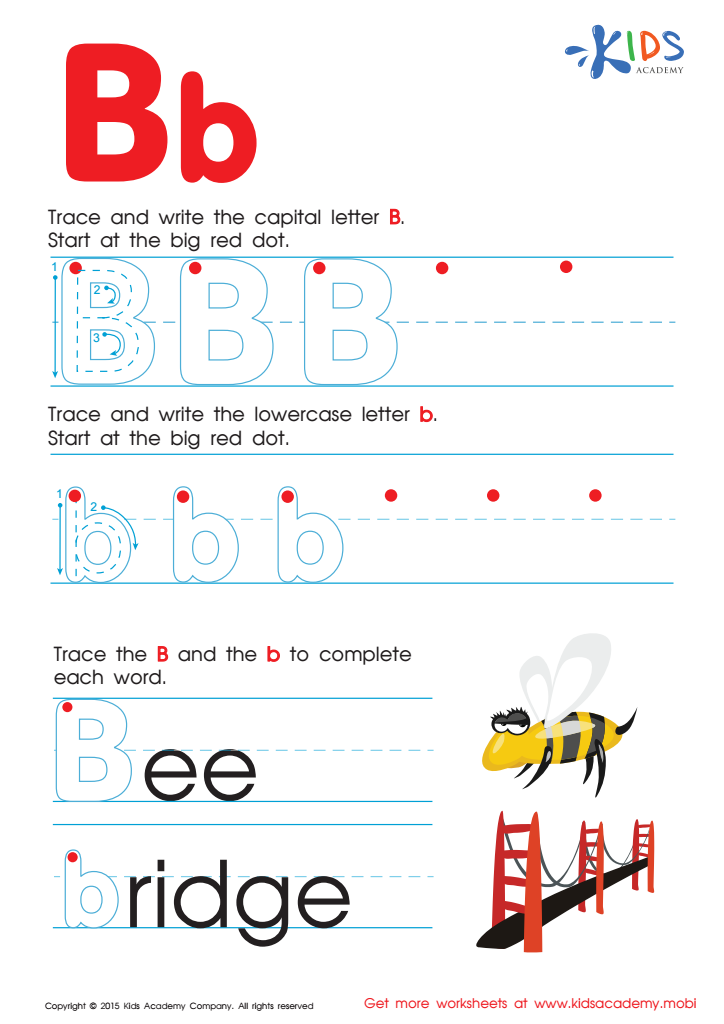
Letter B Tracing Page







Handwriting improvement for children aged 6-9 is critical for several reasons, making it a priority for parents and teachers alike. First, developing proficient handwriting skills boosts a child's confidence and encourages self-expression. As children learn to form letters clearly and legibly, they feel more capable in their schoolwork and comfortable sharing their ideas through writing.
Moreover, effective handwriting is linked to overall academic success. Legible writing aids in the communication of thoughts, which is essential in assignments and assessments. When children struggle with handwriting, it can hinder their ability to focus on the content of their writing, leading to frustration and lower academic performance.
Additionally, developmentally, this age is crucial for fine motor skills growth. Practicing handwriting helps enhance these skills, which are important not just for writing but for various day-to-day tasks. Improved handwriting supports children in becoming effective communicators and learners as they transition into more complex academic settings.
Finally, meaningful engagement from parents and teachers in handwriting practice encourages a collaborative approach to learning. It helps foster a positive attitude towards writing, making it an enjoyable and enriching experience for children. Prioritizing handwriting skills lays the foundation for strong literacy development in the future.







