Sound Association Consonants Worksheets for Ages 6-9
3 filtered results
-
From - To
Explore our engaging "Sound Association Consonants Worksheets" designed for children ages 6-9. These worksheets focus on enhancing phonemic awareness by helping young learners identify and associate consonant sounds with corresponding words and images. Through a variety of interactive activities, children will practice recognizing consonant sounds and their role in vocabulary development. Our resources support early reading skills, encouraging creativity and curiosity. Perfect for home or classroom use, these worksheets make learning fun and effective. Join us in making phonics memorable and enjoyable for your child with our thoughtfully designed activities that promote sound recognition and language growth!
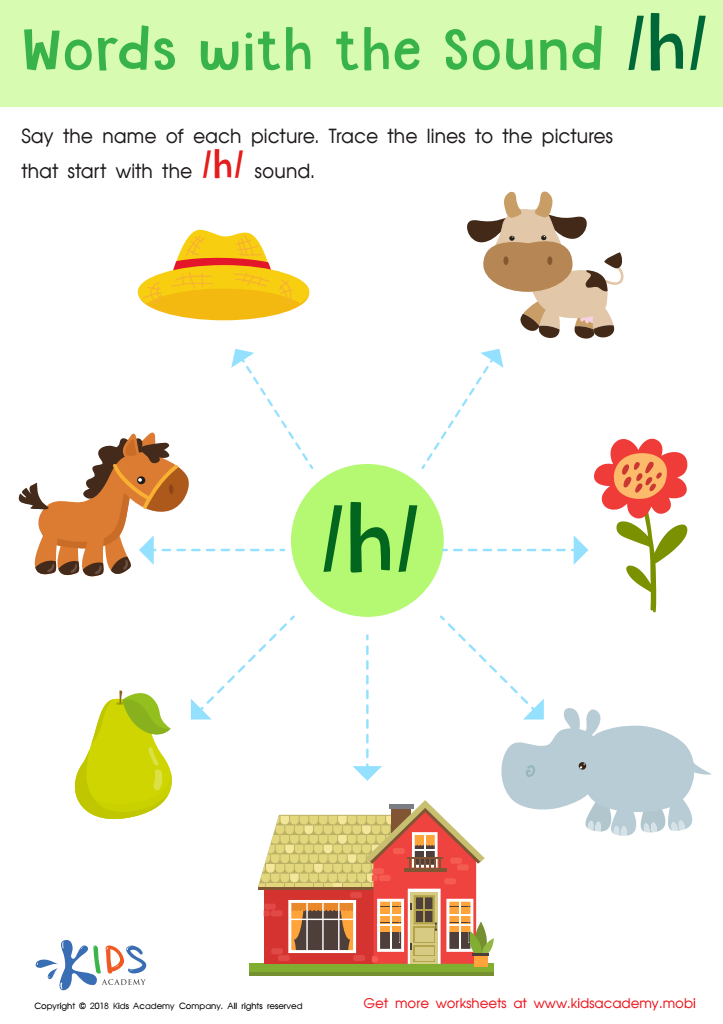
Words with sound h Reading Worksheet
 Assign to My Students
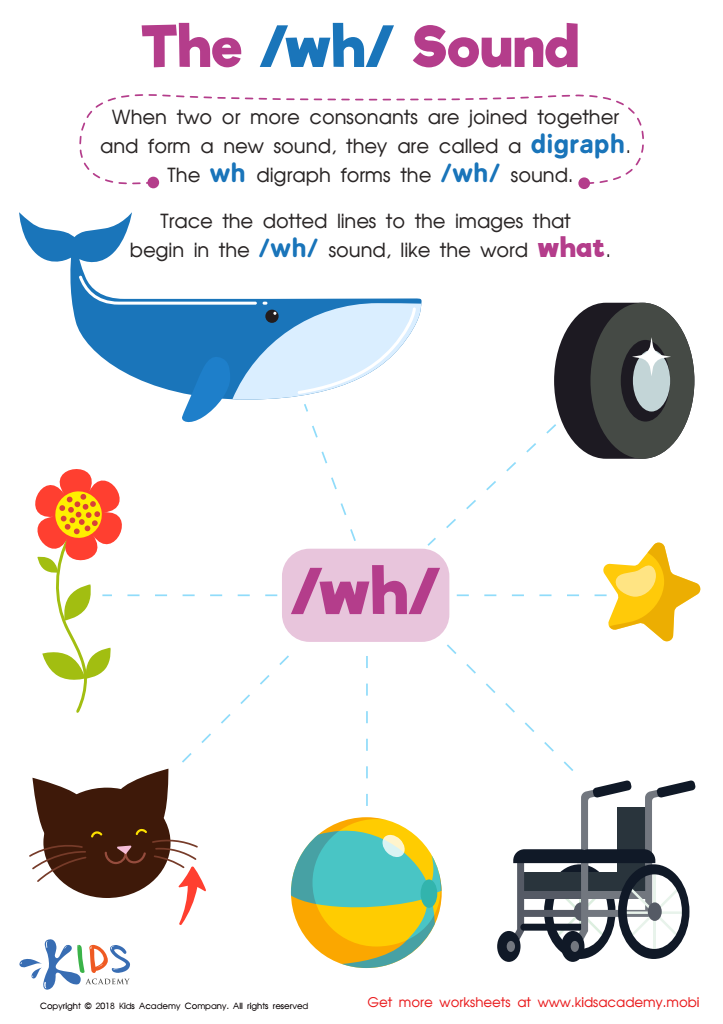
The /wh/ Sound Worksheet
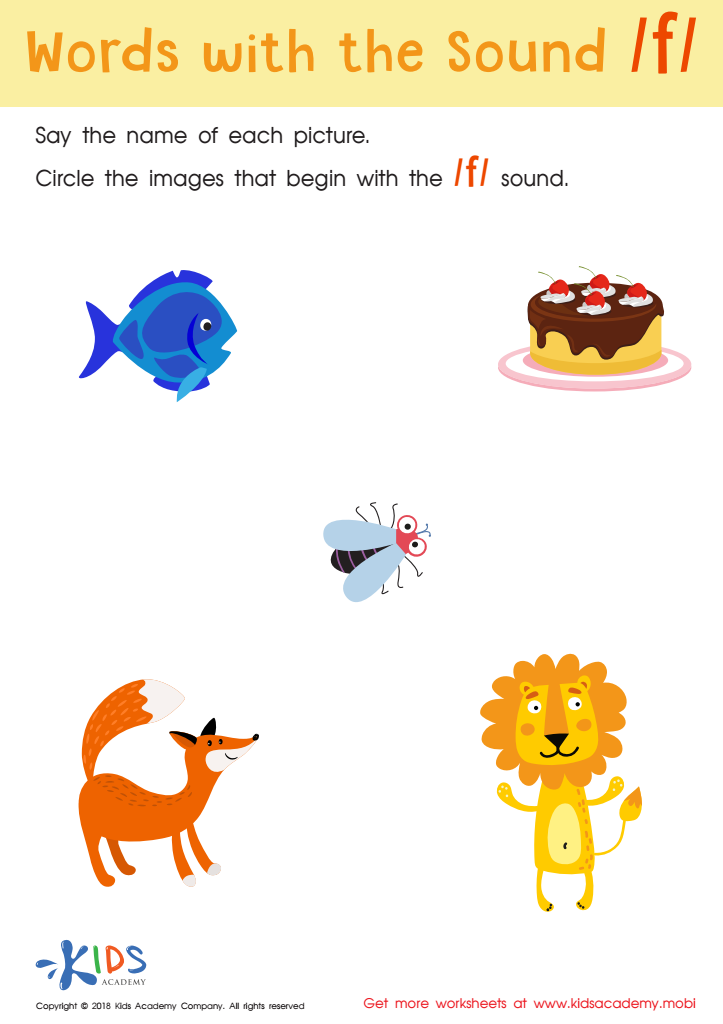
Words with sound f Reading Worksheet



Sound association consonants are crucial for children aged 6-9 as they lay the foundation for literacy development. At this age, children are developing skills in phonics, which involves recognizing sounds and understanding how they correspond to letters and letter combinations. Strong sound association skills enable kids to decode new words, enhancing their reading fluency and comprehension.
Teachers and parents should care about consonant sound association because it directly impacts children's ability to read and write effectively. By learning sounds associated with consonants, children can sound out unfamiliar words, improving their confidence and motivation in language activities. This foundational skill is particularly important as it supports vocabulary growth, allowing children to express themselves clearly.
Moreover, mastering consonant sounds can help identify learning difficulties early on, allowing for timely intervention. Supporting sound association through fun activities, songs, and games makes learning enjoyable, fostering a positive attitude toward literacy.
Ultimately, investing time and resources in teaching sound association enhances communication skills, supports educational success, and sets the stage for lifelong learning. Thus, both parents and teachers play a vital role in encouraging and nurturting these essential skills, ensuring that children are well-prepared for future academic challenges.







