Word identification Elementary Phonics Worksheets for Ages 6-9
3 filtered results
-
From - To
Help your child boost their reading skills with our Word Identification Elementary Phonics Worksheets for Ages 6-9! These engaging, printable worksheets are designed to strengthen early literacy by improving phonemic awareness and alphabetic understanding. Each activity focuses on key learning skills like recognizing sound patterns, blending phonemes, and identifying sight words. Perfect for home or classroom use, our worksheets provide fun, educational practice that supports your child's journey to becoming a confident, proficient reader. Discover the joy of learning with expertly crafted materials tailored specifically for young learners in kindergarten to 3rd grade!
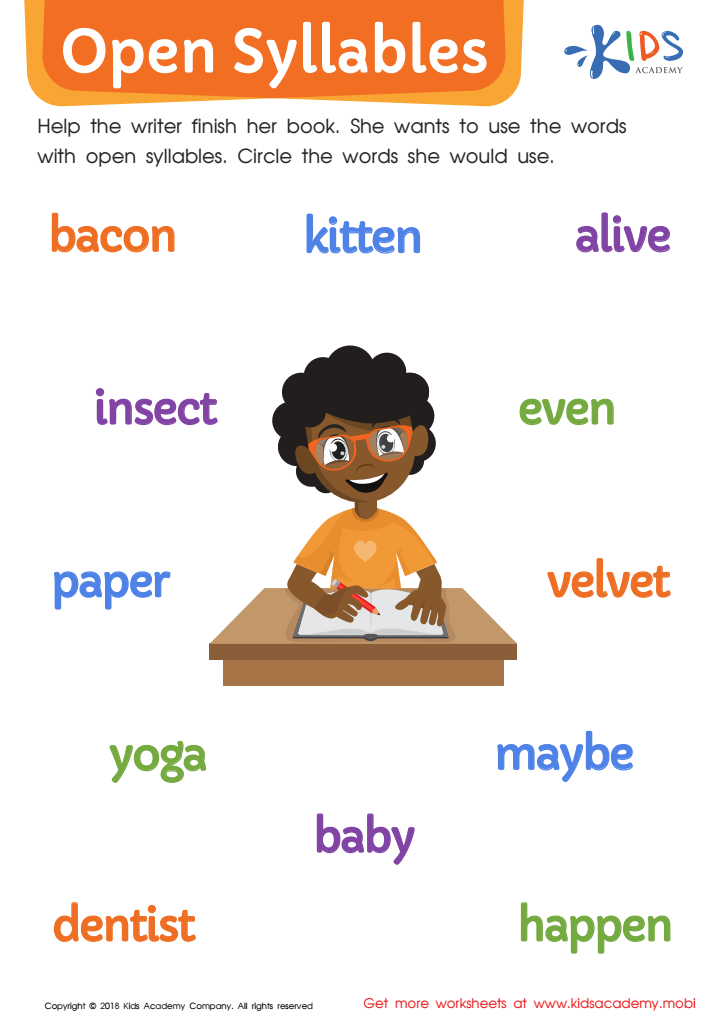
Open Syllables Worksheet
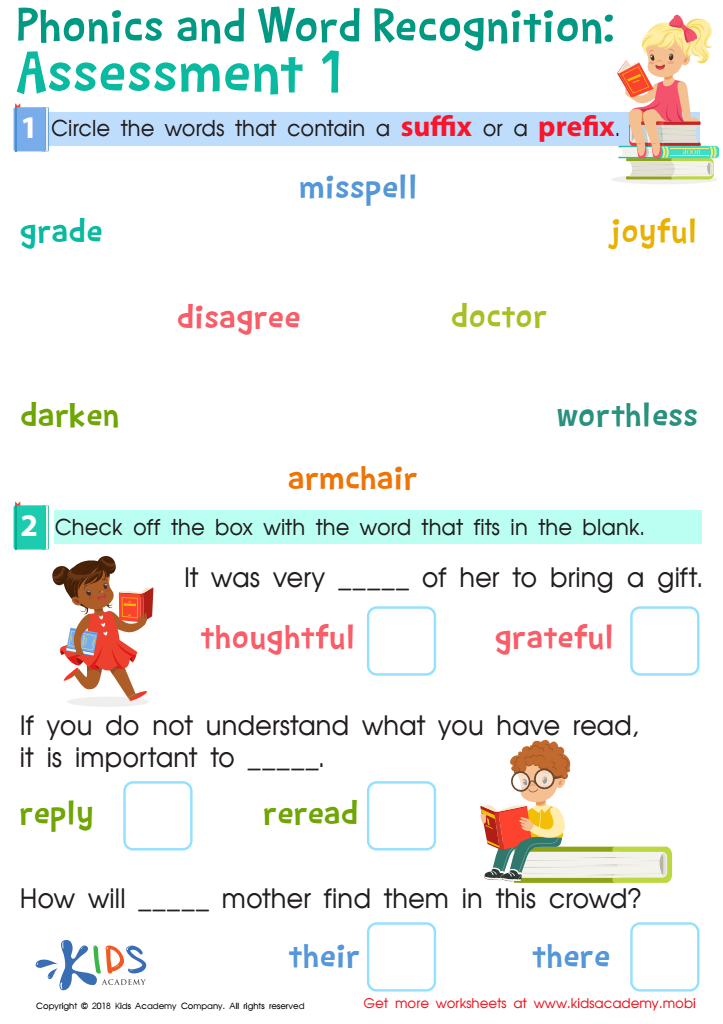
Phonics and Word Recognition: Assessment 1 Worksheet
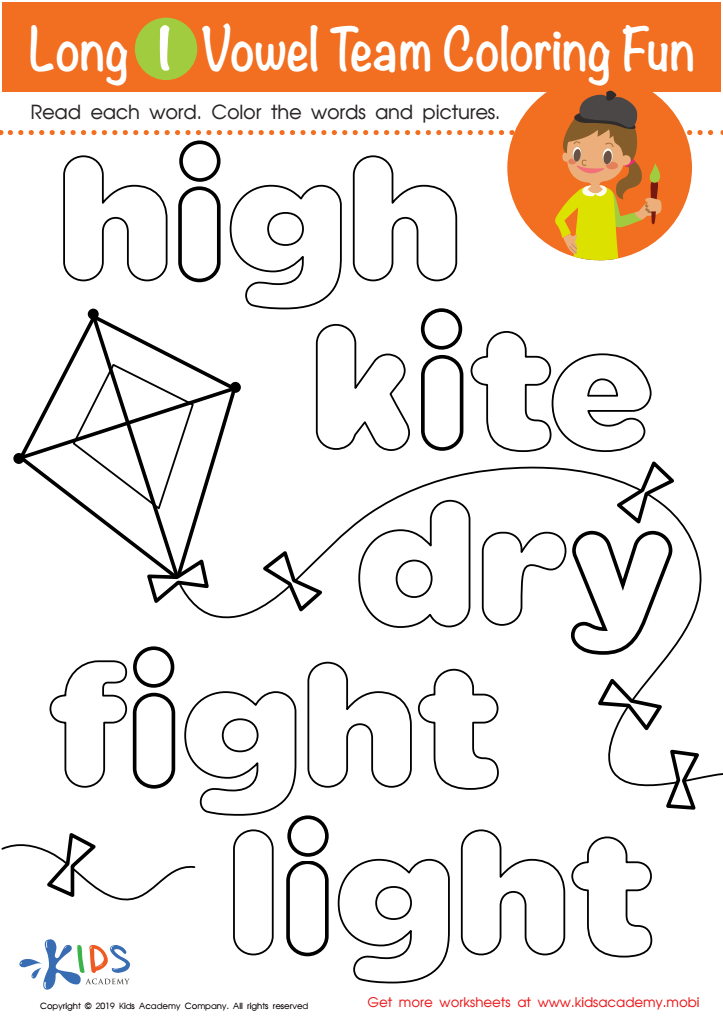
Long I Vowel Team Coloring Worksheet
 Assign to My Students




Ensuring young children aged 6-9 master word identification and elementary phonics is vital for their overall academic success. Word identification, the ability to recognize and understand words quickly, is foundational for reading fluency, which deeply influences a child's capability to absorb new information and enjoy reading. Phonics, which involves the relationship between sounds and their written forms, enables children to decode unfamiliar words, greatly expanding their vocabulary and enabling autonomous learning.
Early competence in these areas sets the stage for future literacy development. Children who struggle with word identification and phonics may experience frustration and develop a negative attitude toward reading, which can lead to wider academic difficulties. As reading improves, so does comprehension in all subject areas, including math, science, and social studies, since these subjects rely on good reading skills.
Parents and teachers play a key role. Parents can reinforce these skills at home through reading practices, engaging phonics games, and encouraging a love of books. Teachers can provide structured, targeted instruction using engaging materials and differentiated strategies tailored to individual learning needs. By focusing on word identification and phonics, we lay the foundation for a child's lifelong learning, ensuring a more confident, competent, and enthusiastic learner.







