
Phonics skills development Alphabet Worksheets for Ages 6-9
7 filtered results
Difficulty Level
Grade
Age
-
From - To
Subject
Activity
Standards
Enhance your child's reading and writing abilities with our Phonics Skills Development Alphabet Worksheets designed for ages 6-9. These engaging and educational printables focus on key phonics skills, helping children recognize letter sounds, blends, and digraphs. Each worksheet is thoughtfully crafted to support foundational literacy, making learning fun and interactive. Through activities like matching, tracing, and decoding, young learners will build phonemic awareness and confidence in their reading abilities. Perfect for classroom use or at-home practice, these worksheets are a valuable resource for parents and educators aiming to foster strong phonics skills in children.
Favorites
With answer key
Interactive
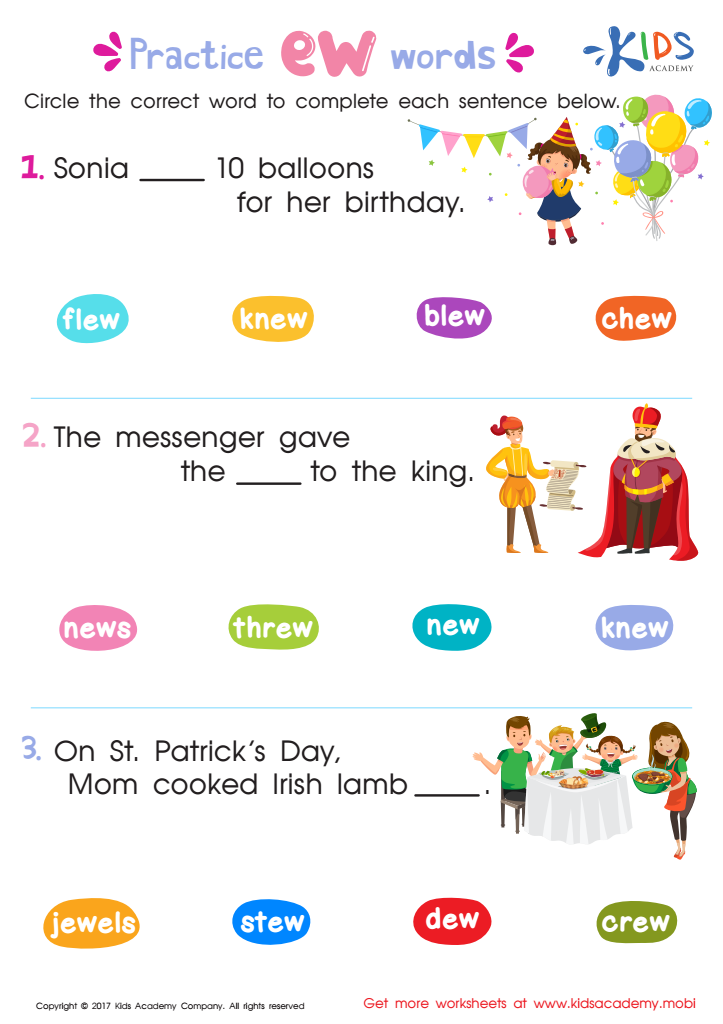
EW Words Worksheet
Practice the diphthong ew and boost your child's vocabulary with this fun ew words worksheet! Filled with illustrations, it will help your child hone their reading and spelling skills. Plus, the tricky words will make it both enjoyable and rewarding!
EW Words Worksheet
Worksheet
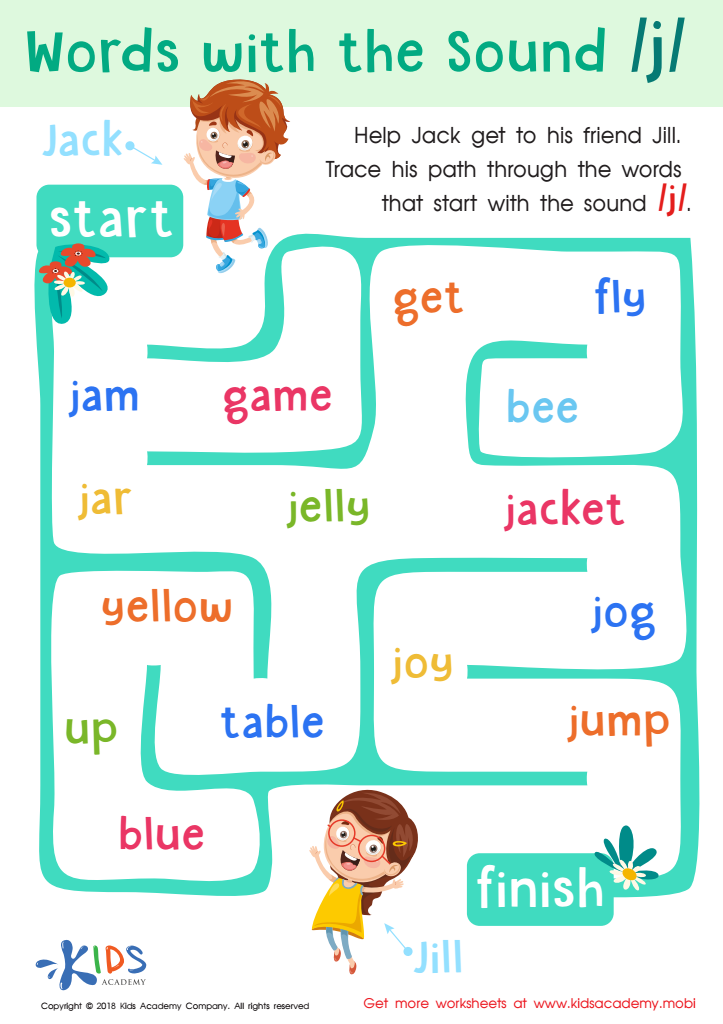
Words with sound j Reading Worksheet
Don't be fooled: The letter J sounds like G in this letter sounds maze! Kids will enjoy helping Jack find Jill by listening to beginning sounds and tracing a path to the exit. Choose words that start with the letter J sound to complete the challenging maze!
Words with sound j Reading Worksheet
Worksheet
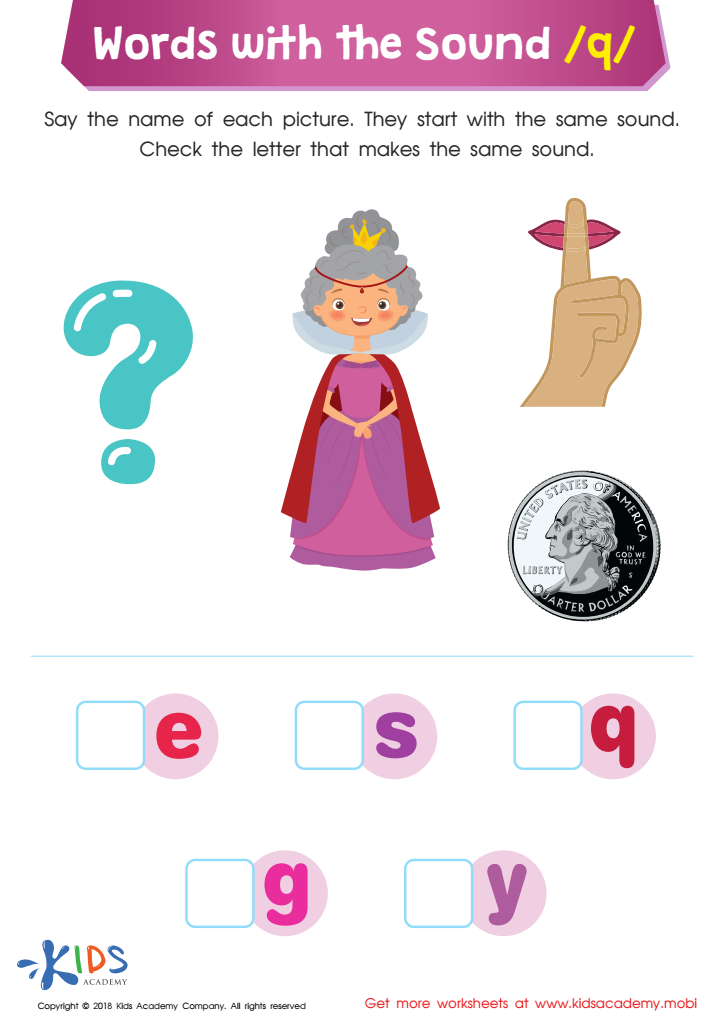
Words with Sound Q Reading Worksheet
Beginning readers will love this free PDF worksheet! Bright colors and familiar pictures make it fun, as they say the name of each image and work on fine motor skills. Letters “q” is featured among others, helping to recognize and isolate its sound, which is often seen with a “u” behind it.
Words with Sound Q Reading Worksheet
Worksheet
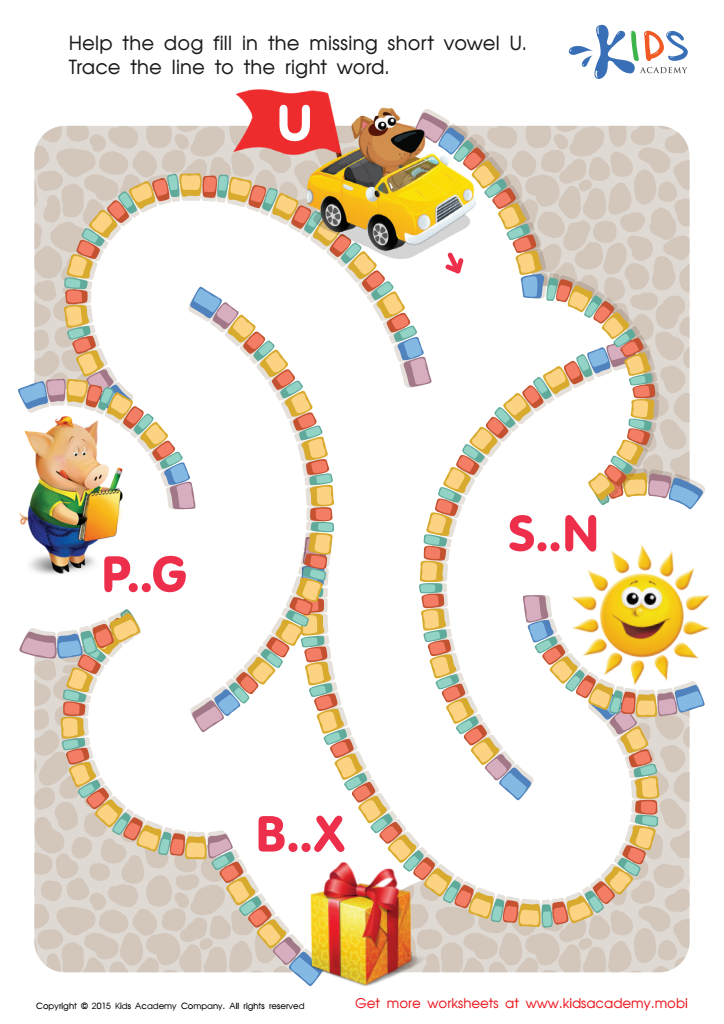
Short Vowel Sound U Worksheet
Practice abc phonics to help young learners link sounds to letters. This free printable phonics worksheet helps your kid learn the short vowel sound U. Guide them through the maze to help the dog complete the word "sun". Make sure they say the word out loud to emphasize the short U sound. Check out more phonics worksheets with mazes here.
Short Vowel Sound U Worksheet
Worksheet
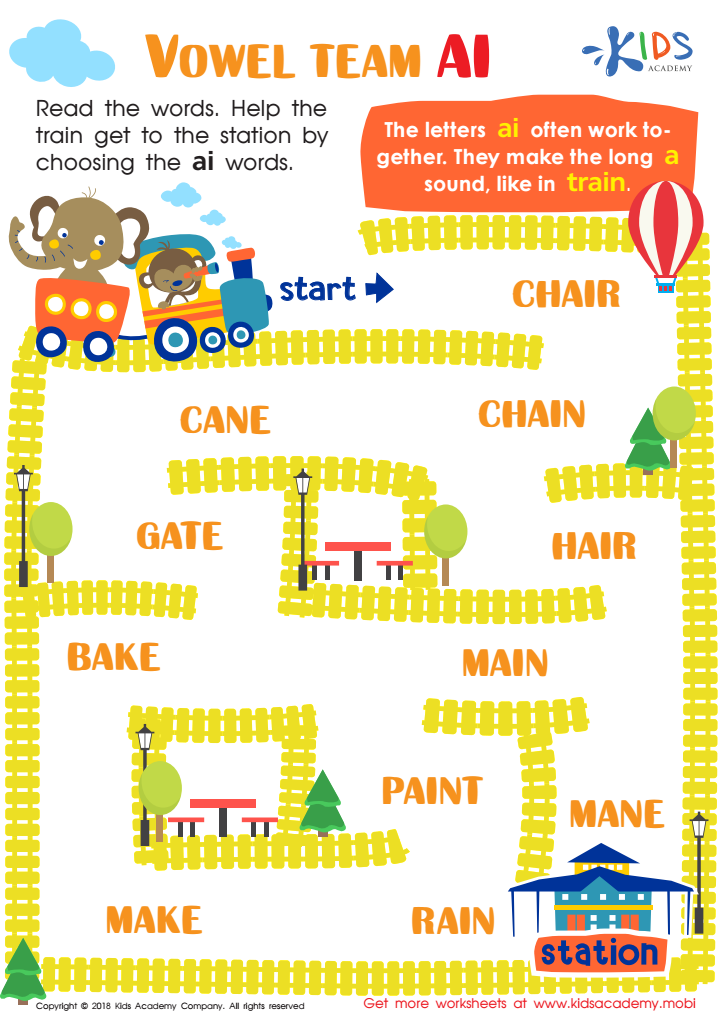
Vowel team ai Worksheet
Kids will have a blast learning about the -ai digraph with this fun worksheet. They'll read words with it and practice their motor skills as they help the animal duo get back to the train station. With success, they'll smile and enjoy the activity!
Vowel team ai Worksheet
Worksheet
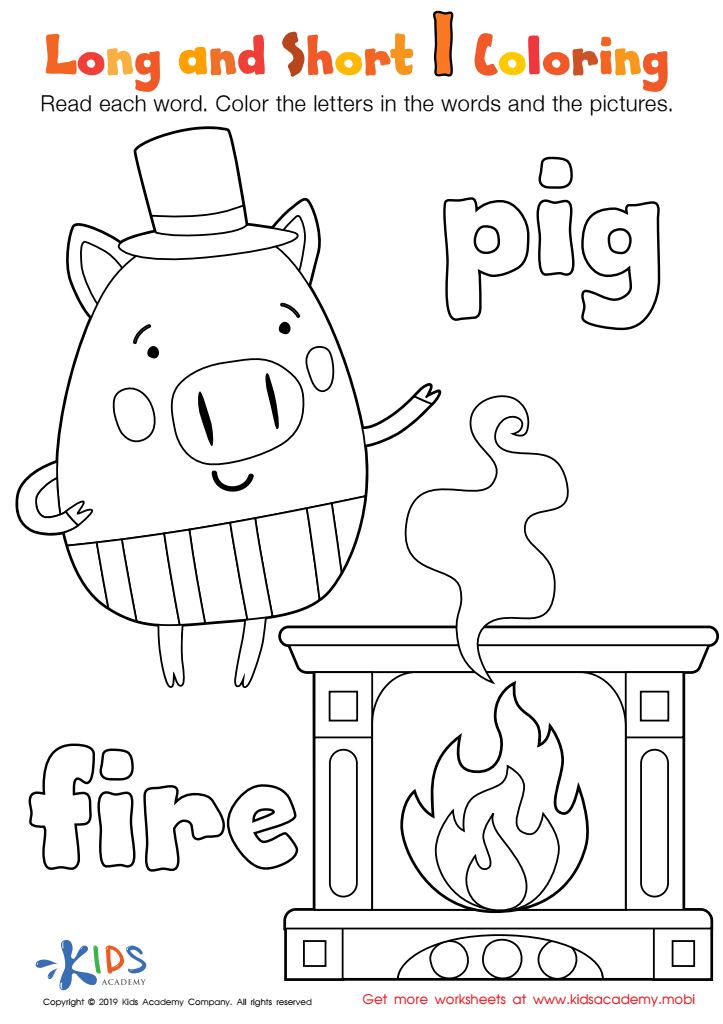
Long and Short I Worksheet
Print the worksheet and have the students read "pig" and "fire". Check for understanding the difference between long and short vowels. Color in words and pictures to make learning phonics fun! This exercise is perfect for introducing the topic to your students.
Download (PDF)
 Assign to My Students
Assign to My Students
Long and Short I Worksheet
Worksheet
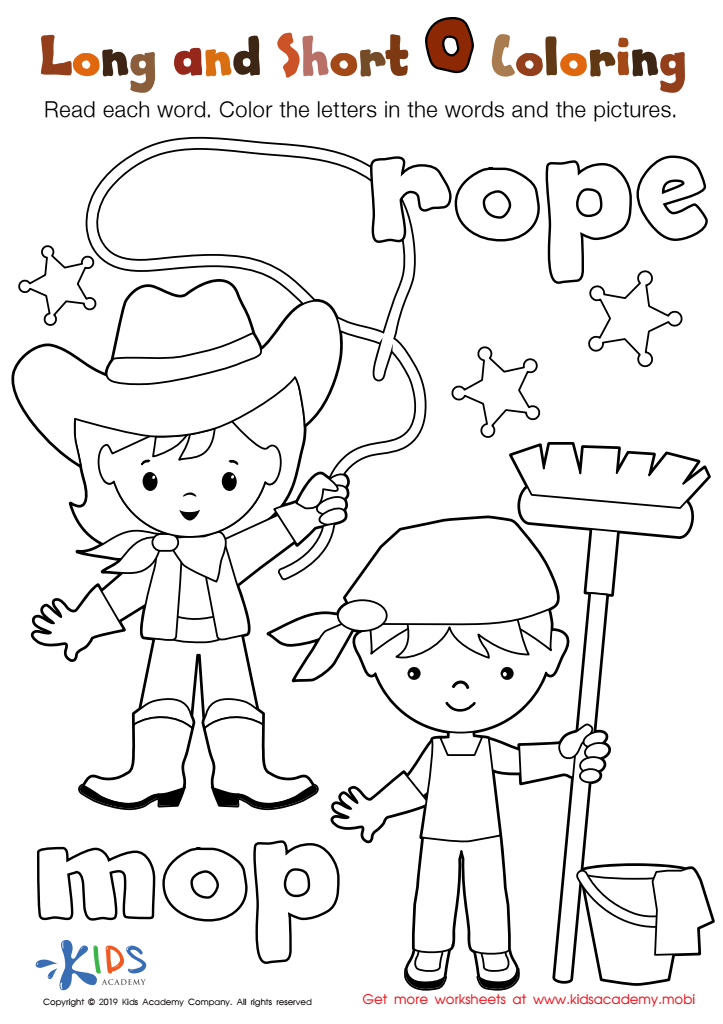
Long and Short O Worksheet
Help your students recognize the difference between long and short «Os» with this fun printout. Let them read and color-in "rope" and "mop" simultaneously. Listen to the different sounds, then color the words and pictures. Great for classes, it'll make your phonics lesson memorable and enjoyable.
Download (PDF)
Assign to My Students
Assign to My Students
Long and Short O Worksheet
Worksheet
Join Kids Academy for Free
Who is primarily going to use this learning content?








Phonics skills development is crucial for children ages 6-9, as it lays a foundational stone for their reading and writing abilities. For parents and teachers, focusing on phonics—understanding the relationship between letters and sounds—can transform a child's literacy journey. First and foremost, phonics helps children decode words, enabling them to read with greater fluency and accuracy. This process boosts their language comprehension and fosters a love for reading, essential for lifelong learning.
Scientific research underscores that strong phonics skills can significantly reduce the incidence of reading difficulties such as dyslexia. Early intervention in teaching phonics can detect and mitigate these challenges. For teachers, implementing phonics in the curriculum aligns with educational standards, ensuring all students have the support they need to succeed. Parents, on the other hand, can support at home by practicing phonics through engaging activities, reinforcing what is taught in the classroom.
Moreover, developing phonics skills promotes confidence in young learners. When children recognize their ability to read and write, their sense of achievement grows, positively impacting their overall academic performance. In essence, prioritizing phonics skills development equips children with the tools required not just for academic success but for effective communication throughout their lives.







