Sound differentiation Alphabet Worksheets for Ages 6-9
3 filtered results
-
From - To
Explore our engaging Sound Differentiation Alphabet Worksheets designed specifically for children aged 6-9! These worksheets help young learners develop essential phonemic awareness by focusing on distinguishing the sounds of letters. Through fun activities and visual aids, kids will enhance their listening skills while improving their reading and writing abilities. Perfect for homeschool families or classroom environments, our resources cater to various learning styles. Boost your child's confidence in recognizing sounds with interactive exercises that promote literacy. Discover the joy of learning as your child masters sound differentiation with our thoughtfully crafted worksheets! Start their phonics journey today!
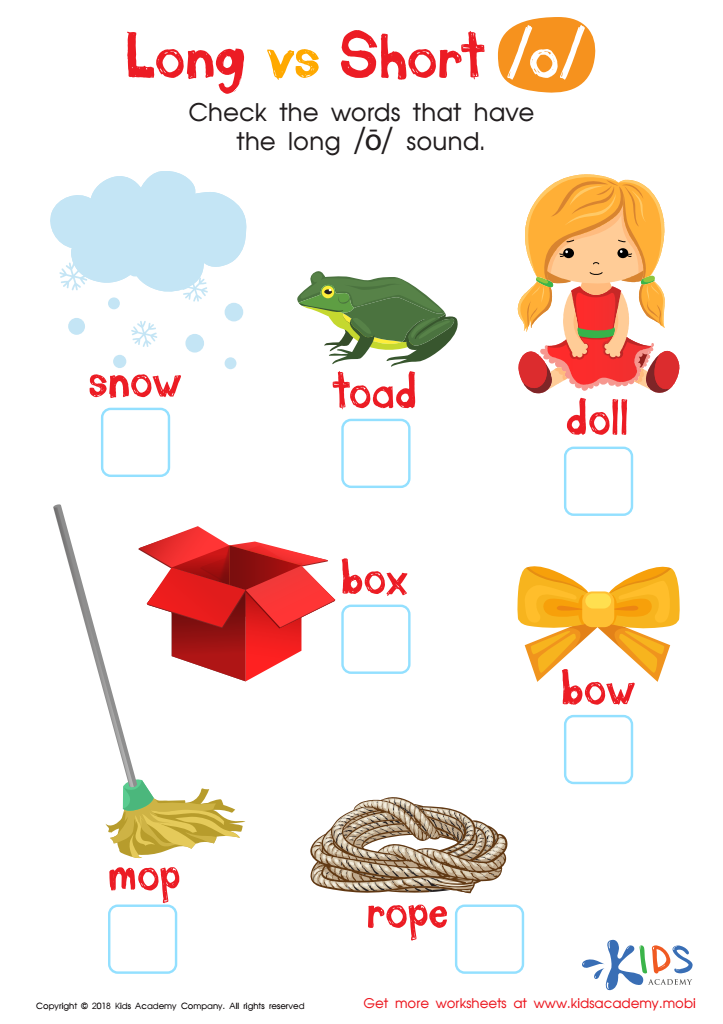
Long vs Short O Reading Worksheet
 Assign to My Students
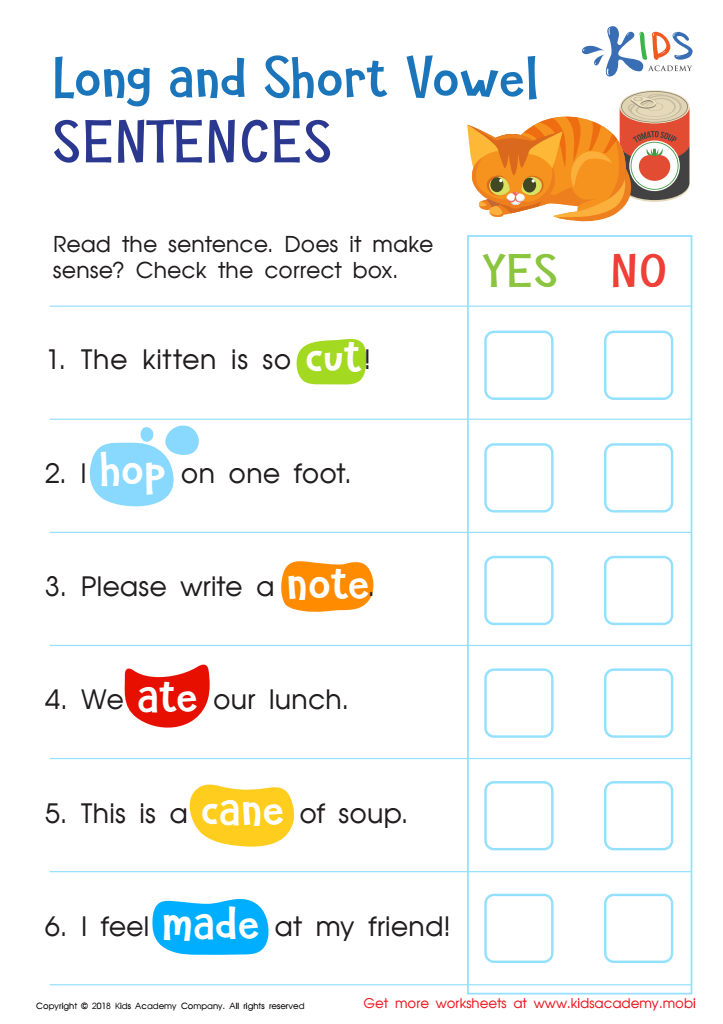
Long and Short Vowel Sentences: Assessment Worksheet
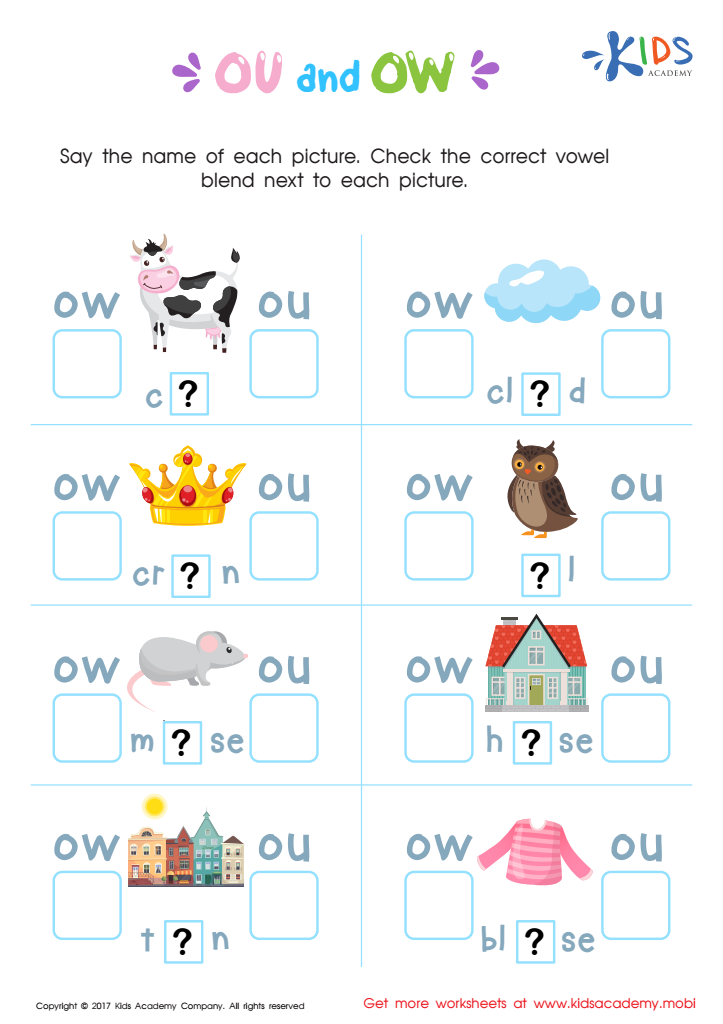
OU and OW Words Worksheet








Sound differentiation is crucial in developing literacy skills for children aged 6-9, as it lays the foundation for reading and writing. During this stage, children begin to grasp phonemic awareness, the ability to identify and manipulate sounds in spoken words, which directly influences their reading and spelling capabilities.
Parents and teachers should care about sound differentiation because it enhances children's understanding of the relationship between written letters and spoken sounds—a critical skill known as phonics. Mastering sound differentiation helps children decode new words, aiding in their overall reading fluency. This ultimately boosts their confidence and enthusiasm for reading.
Additionally, sound differentiation activities can be embedded into everyday learning through games, songs, and interactive exercises, making it a fun and engaging process. These activities foster critical thinking and problem-solving skills, crucial for the child’s academic growth.
By emphasizing sound differentiation, parents and teachers can ensure that children not only improve their literacy skills but also gain the tools needed for lifelong learning. Encouraging early phonemic skills promotes better communication, reading comprehension, and a love for learning, which benefits children's future educational journeys.







