Alphabet familiarity Letter Recognition Worksheets for Ages 6-9
7 filtered results
-
From - To
Enhance your child's letter recognition skills with our engaging alphabet familiarity worksheets designed specifically for ages 6-9. These interactive activities provide fun and effective ways for young learners to identify and memorize letters. Our carefully crafted worksheets include colorful illustrations, tracing exercises, and matching games that cater to diverse learning styles, making the experience enjoyable. By practicing with these resources, children will develop a strong foundation in recognizing uppercase and lowercase letters, essential for their literacy journey. Explore our collection of Alphabet Familiarity Letter Recognition Worksheets, and empower your child to gain confidence in their reading and writing abilities today!
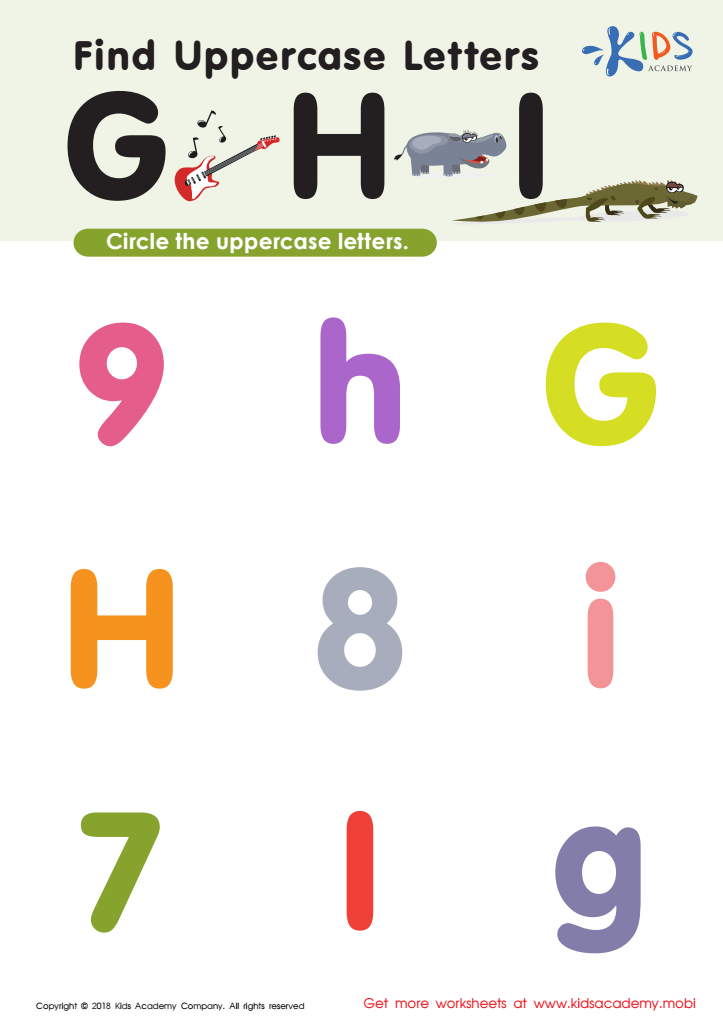
Find Uppercase Letters G, H, and I Worksheet
 Assign to My Students
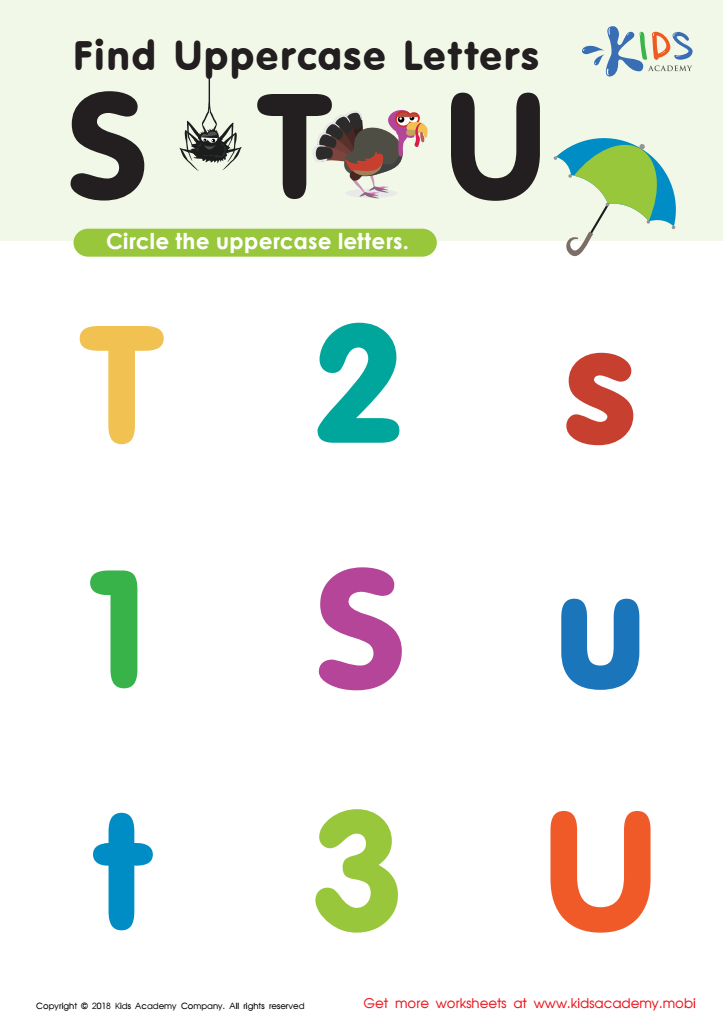
Find Uppercase Letters Worksheet
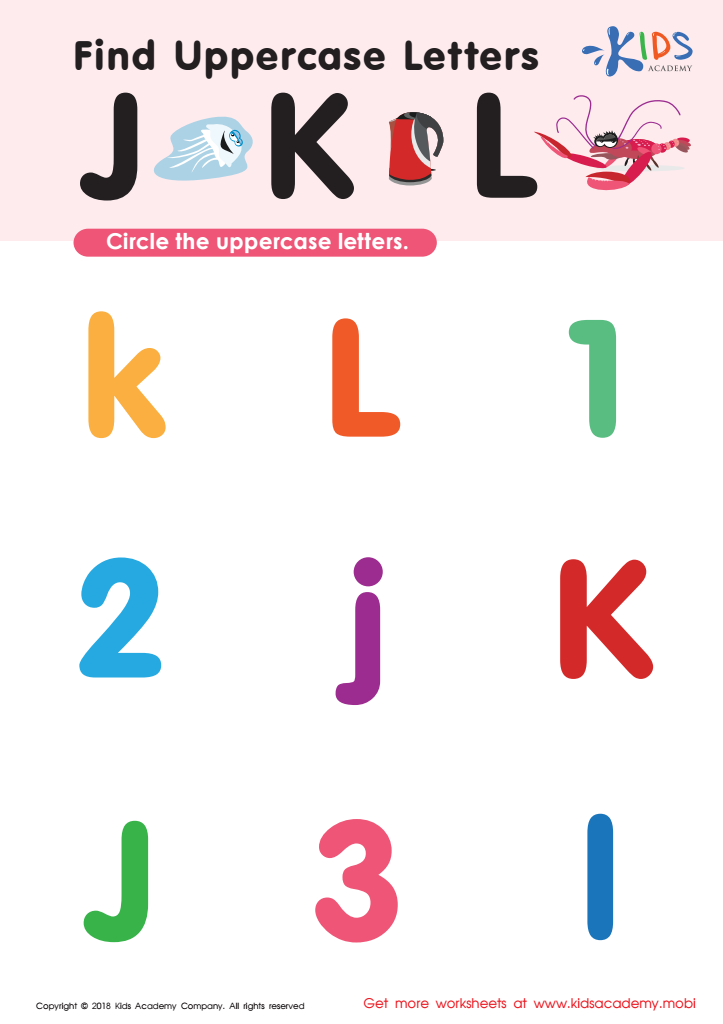
Find Uppercase Letters J, K, and L Worksheet
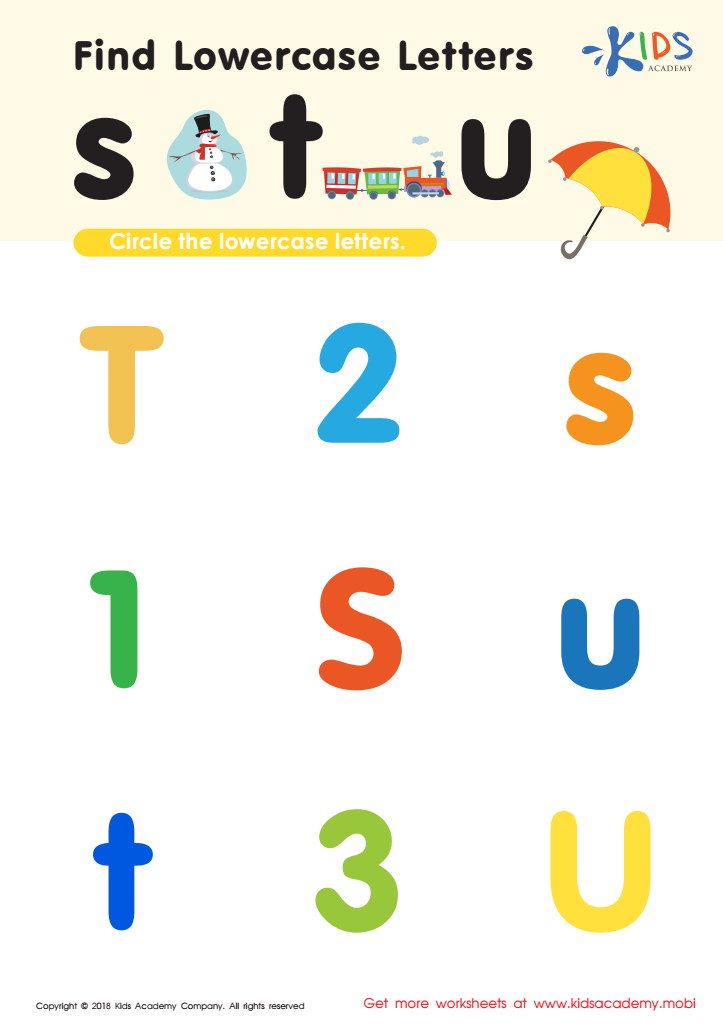
Find lowercase Letters s t u Worksheet

Find Uppercase Letters A, B, and C Worksheet
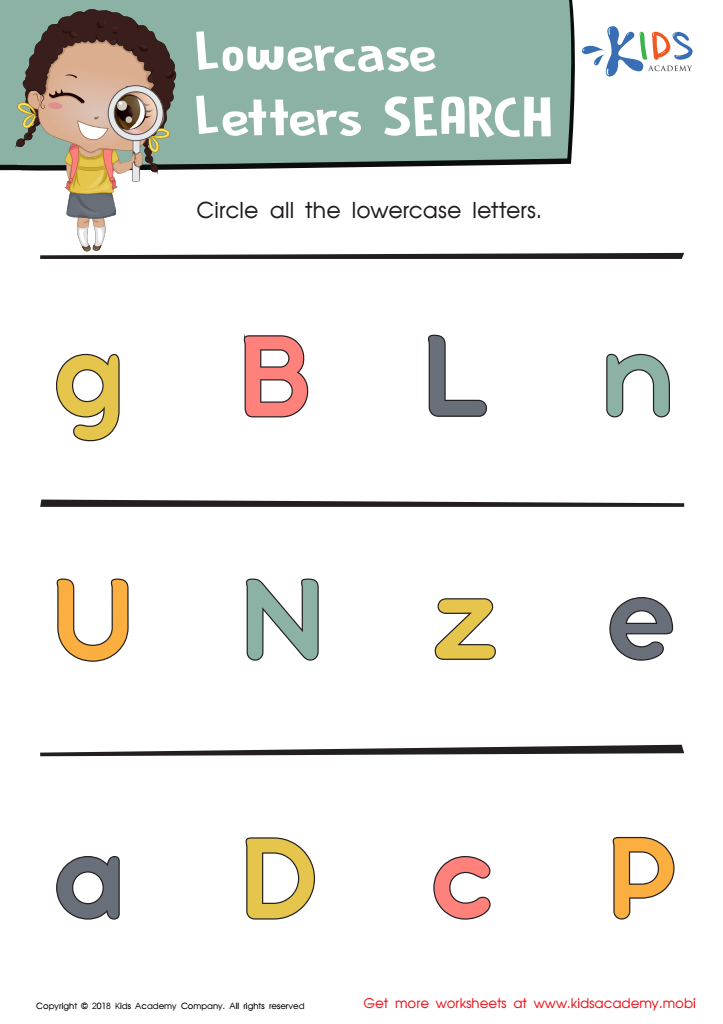
Lowercase Letters Search: Assessment Worksheet
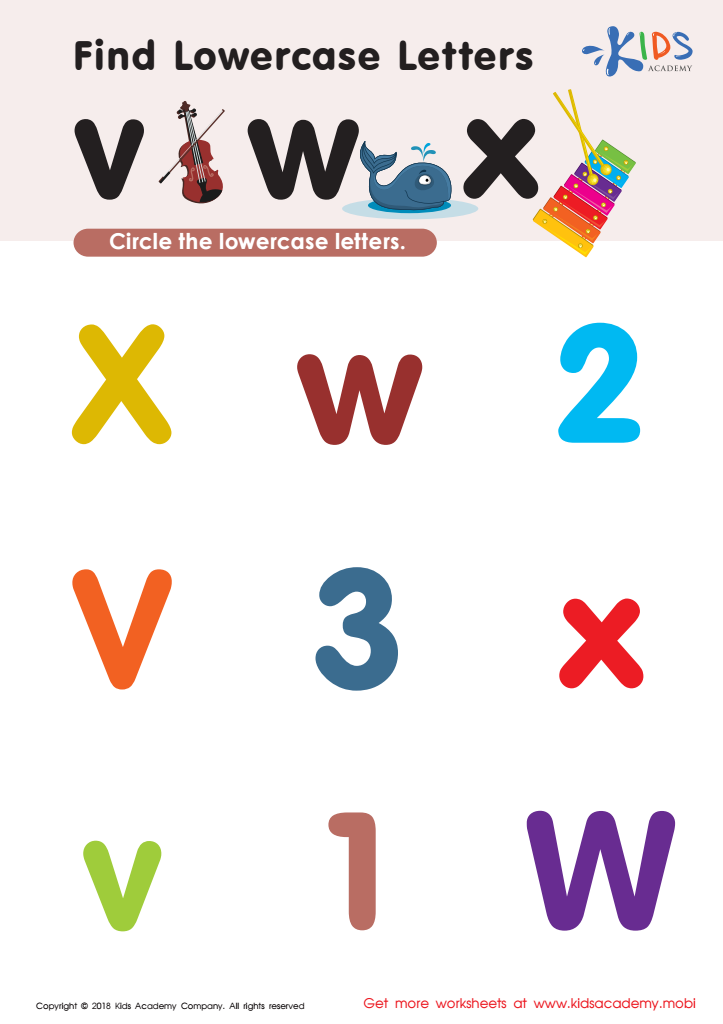
Find Lowercase Letters v w x Worksheet








Alphabet familiarity and letter recognition are crucial components of early literacy development for children aged 6-9. During this stage, children transition from basic awareness of letters to developing skills necessary for reading and writing. Parents and teachers play a vital role in nurturing this growth.
Understanding alphabet familiarity supports children in decoding words, which is essential for reading comprehension. As they start to blend sounds and recognize letters, they gain the confidence to read independently. This skill affects their academic performance across subjects, as literacy is foundational for understanding instructions and engaging with learning materials.
Moreover, strong letter recognition fosters a love for reading. When children feel competent in identifying letters and words, their interest in books increases, leading to exploration and discovery. Conversely, a lack of enthusiasm or proficiency can hinder their motivation and learning journey.
Additionally, supporting letter recognition at home and in school creates a collaborative learning environment. Engaging parents in literacy activities, such as reading aloud or interactive games, strengthens the bond with their children and reinforces classroom learnings. In summary, promoting alphabet familiarity and letter recognition is essential for building a strong foundation in literacy, paving the way for academic success and lifelong learning.







