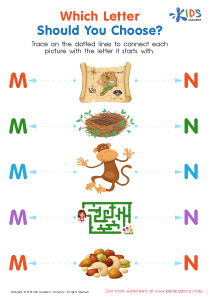
Lowercase identification Lowercase/Small Letters Worksheets for Ages 6-9
5 filtered results
-
From - To
Explore our engaging Lowercase Identification Worksheets designed specifically for children aged 6-9! These fun and interactive resources help young learners recognize and differentiate between small letters. Each worksheet offers a variety of activities, including matching, tracing, and coloring, to reinforce letter identification skills. Perfect for both classroom and home use, these worksheets promote necessary early literacy skills while keeping children excited about learning. Whether your child is just starting their journey with letters or looking to strengthen their understanding, our Lowercase Identification Worksheets make mastering small letters enjoyable and effective. Start enhancing your child's reading and writing foundation today!
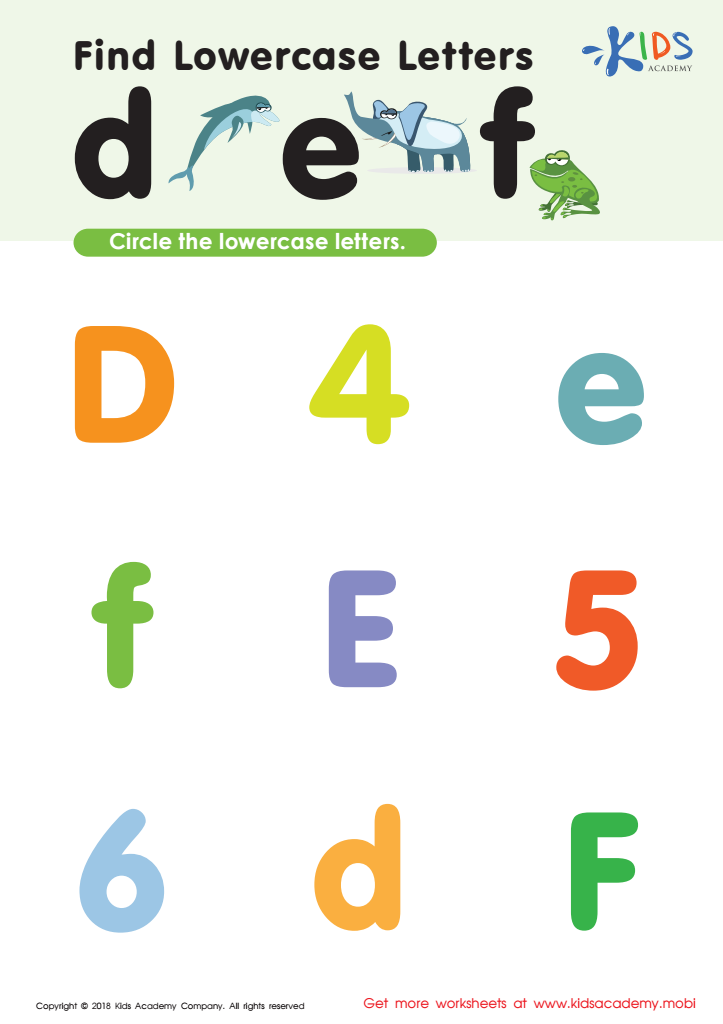
Find Lowercase Letters d e f Worksheet
 Assign to My Students
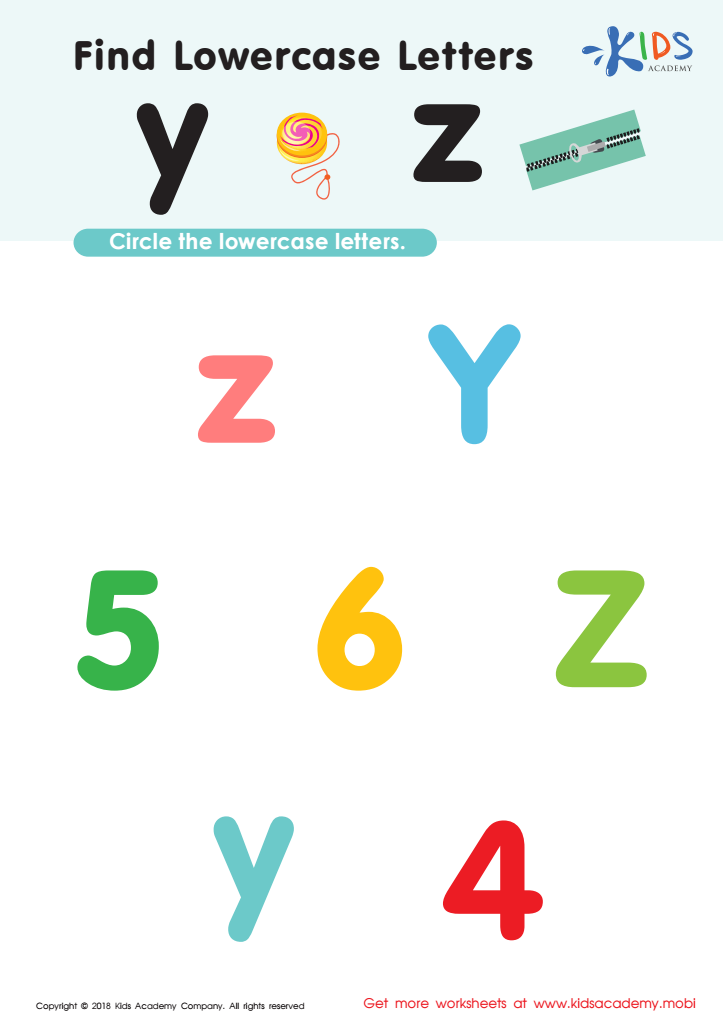
Find Lowercase Letters y z Worksheet
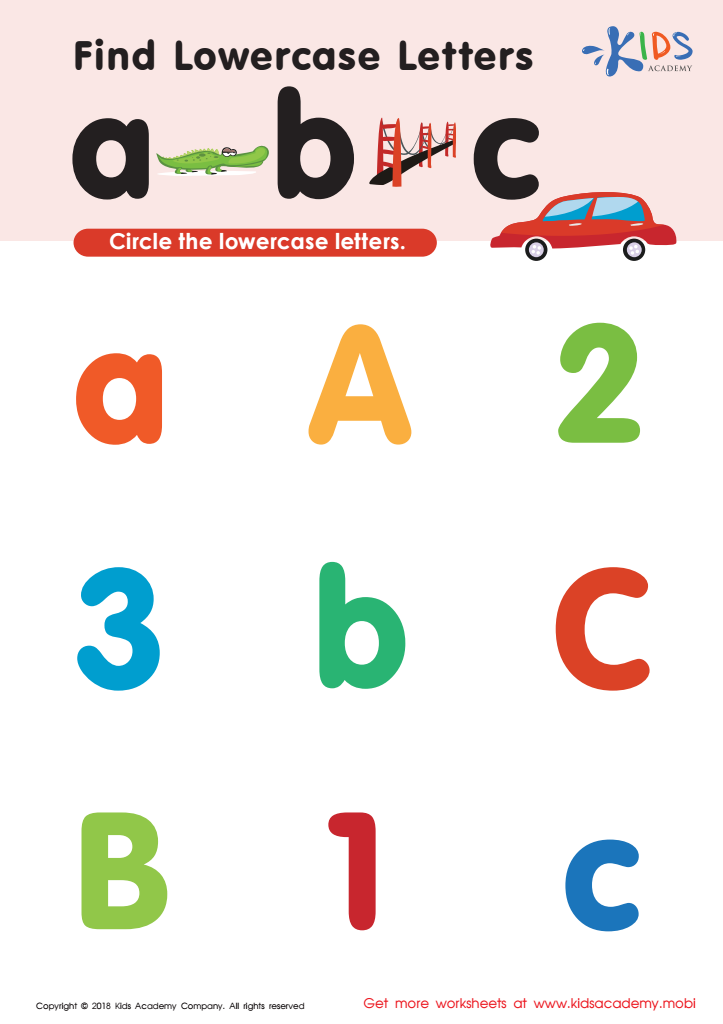
Find lowercase letters a b c Worksheet
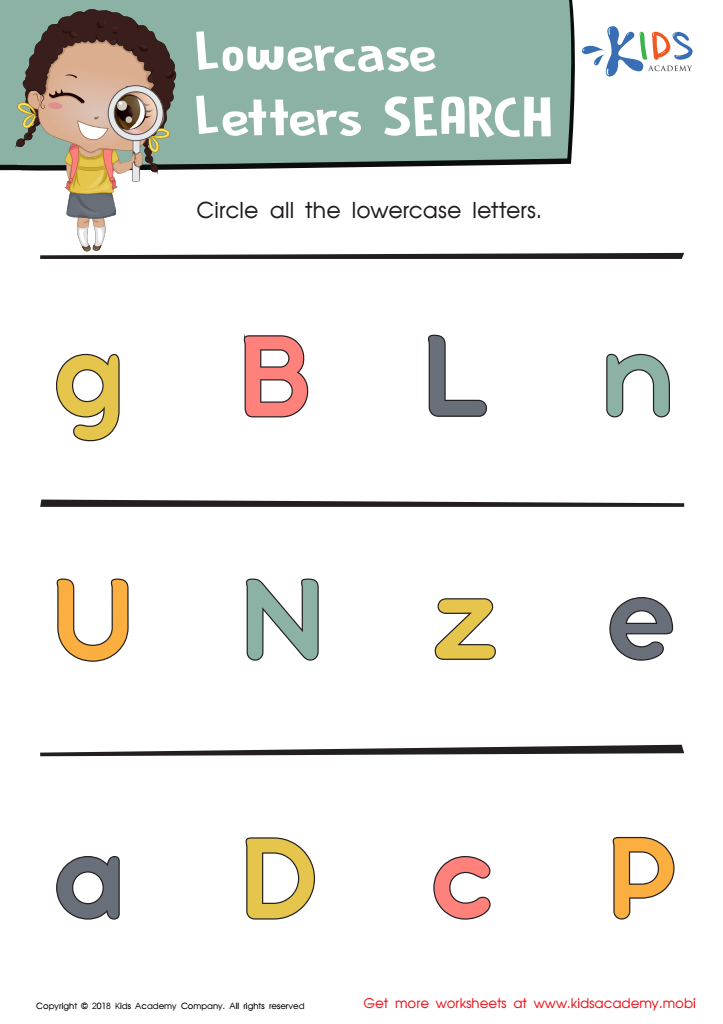
Lowercase Letters Search: Assessment Worksheet
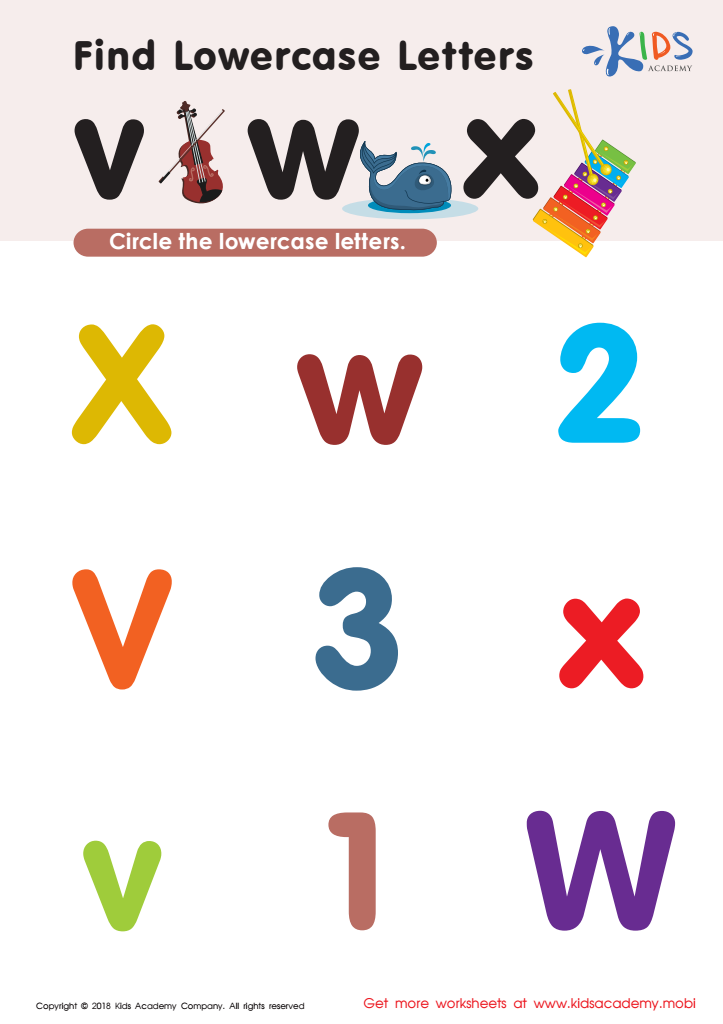
Find Lowercase Letters v w x Worksheet


Lowercase letter identification is crucial for children aged 6-9 as they develop foundational reading and writing skills. At this stage, children transition from recognizing uppercase letters to understanding the significance of lowercase letters, which are more frequently used in text. Mastery of lowercase letters enhances their ability to decode words, contributing to fluency and comprehension.
Recognizing lowercase letters allows children to read independently and effectively engage with written materials, from books to digital texts. It fosters confidence in their literacy skills and encourages a love for reading, which is an essential component of lifelong learning. Moreover, as children begin to write sentences, the ability to correctly use lowercase letters helps them convey their thoughts clearly, aiding in their overall communication development.
Parents and teachers should prioritize lowercase letter identification through interactive activities, discussions, and reading exercises. Early mastery in this area can prevent future frustrations in learning, making literacy experiences more enjoyable. Supportive environments where children feel encouraged to explore language help cultivate resilience and curiosity. Overall, understanding lowercase letters is a critical step in a child’s academic journey, facilitating a smoother progression into more complex literacy skills and ensuring successful educational outcomes.