Improving reading skills Phonics Worksheets for Ages 6-9
3 filtered results
-
From - To
Boost your child's reading abilities with our phonics worksheets, designed for ages 6-9. These engaging activities focus on building essential reading skills by teaching sound-letter correspondence, blending sounds, and decoding words. Our expertly crafted worksheets cater to various learning styles, ensuring every child grasps the fundamental concepts of phonics. With a variety of fun, interactive exercises, your child will gain confidence and improve their reading fluency. Perfect for classroom use or additional home practice, these worksheets provide the tools needed for successful reading development. Take the first step towards enhancing your child's reading journey today!
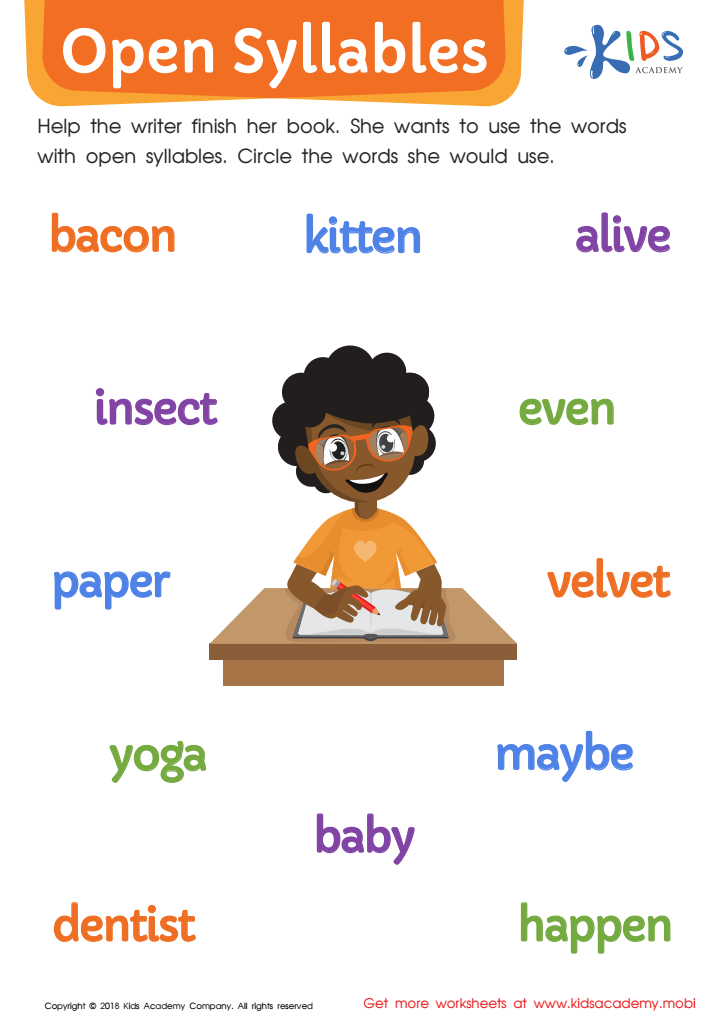
Open Syllables Worksheet
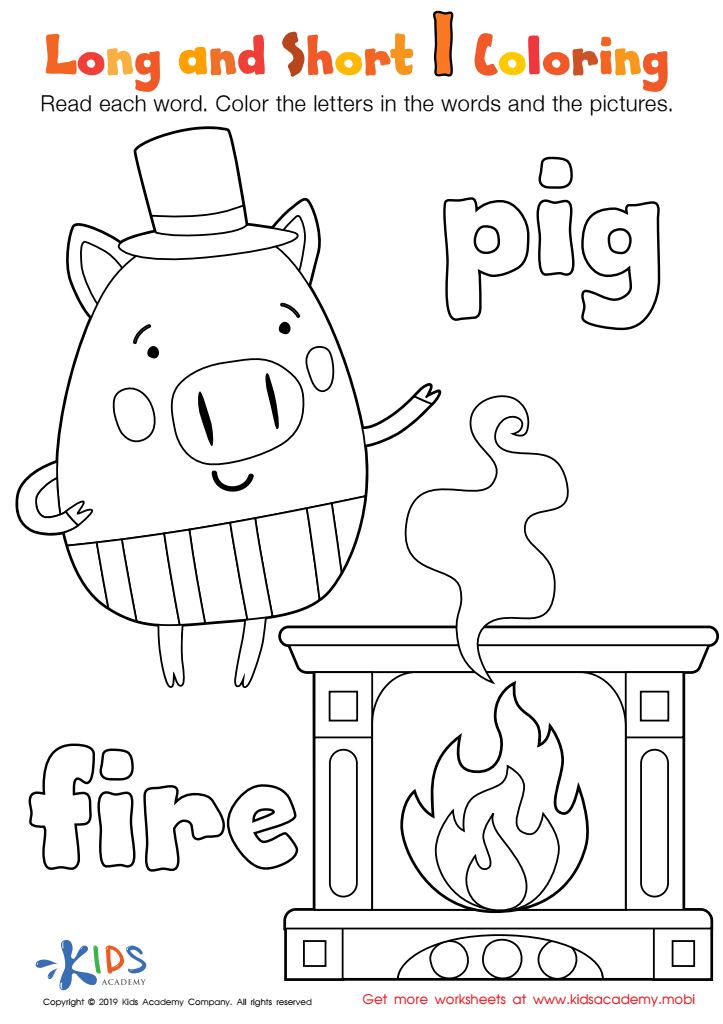
Long and Short I Worksheet
 Assign to My Students
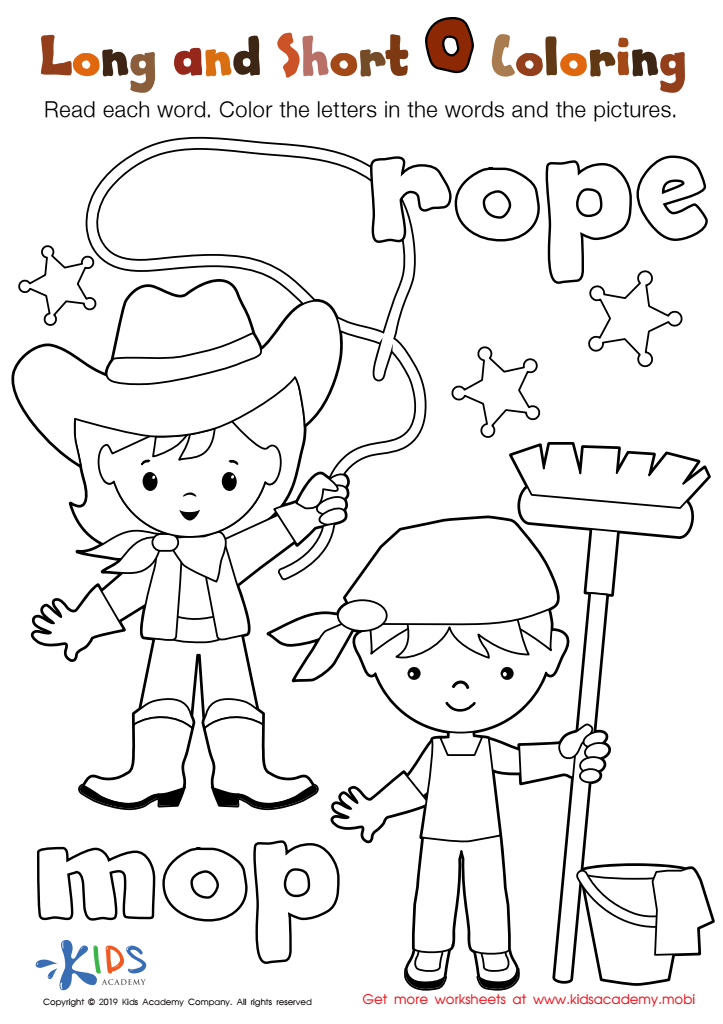
Long and Short O Worksheet
Assign to My Students








Improving reading skills through phonics for children aged 6-9 is crucial as it lays the foundation for their educational journey and overall development. Phonics, which focuses on the relationship between letters and sounds, equips children with the essential tools to decode words, boosting both their reading proficiency and confidence. During these formative years, mastering the fundamentals of phonics facilitates smoother transitions to more complex literacy tasks, such as comprehension, vocabulary building, and critical analysis.
Enhancing phonics skills for young learners not solamente about academic success—it also fosters a love for reading by making the process more enjoyable and less cumbersome. When children can read effortlessly, they're more likely to engage with a variety of texts, accumulating knowledge and expanding their imagination. Additionally, strong reading skills support other academic areas like math, science, and social studies, creating a virtuous cycle of learning.
In a world that increasingly values information and literacy, giving children a strong phonics foundation is akin to providing lifelong learning skills. Parents and teachers must prioritize this aspect of education to help children become confident, enthusiastic, and independent readers. This early investment yields dividends across a child’s entire lifelong learning.







