Vocabulary expansion Phonics Worksheets for Ages 6-9 - Page 3
52 filtered results
-
From - To
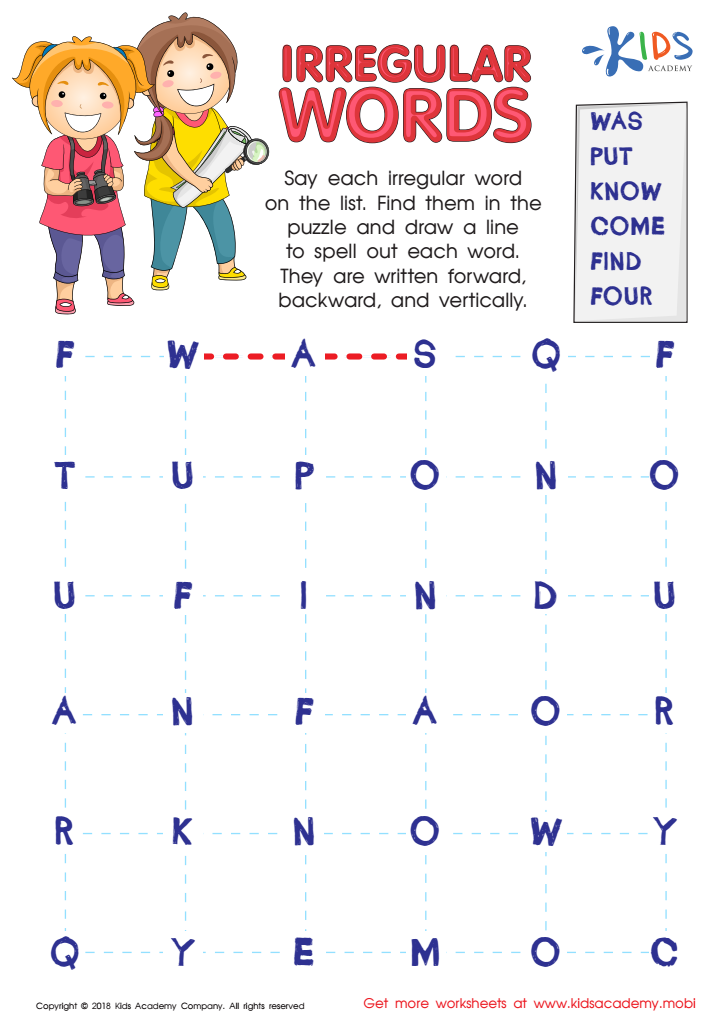
Irregular Words Worksheet
 Assign to My Students
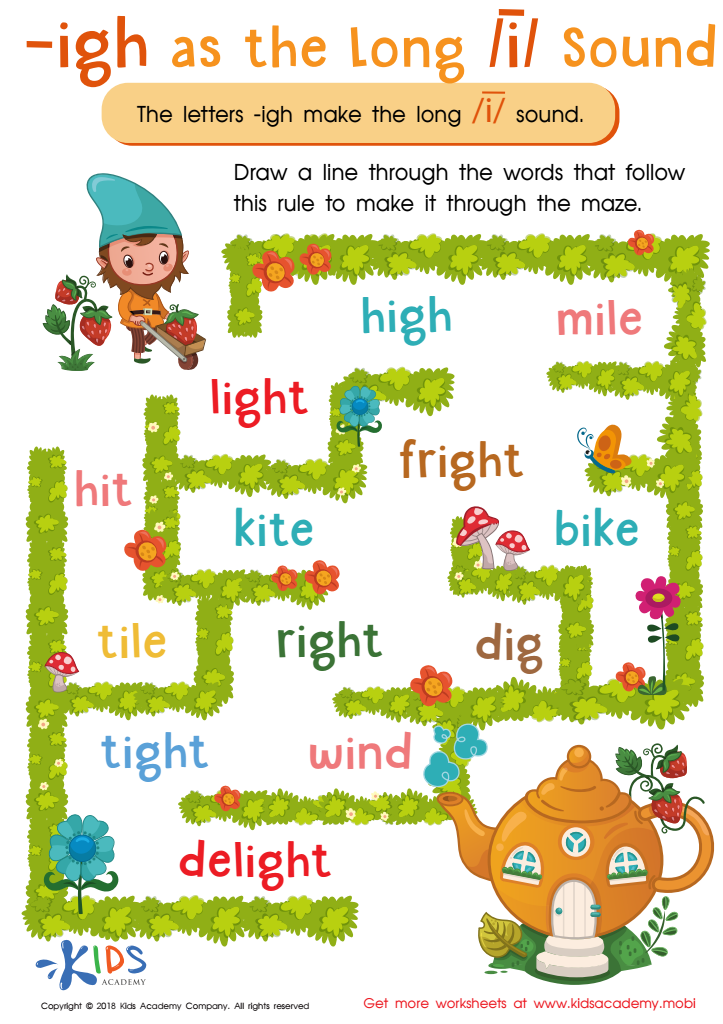
Reading: IGH as Long I Worksheet
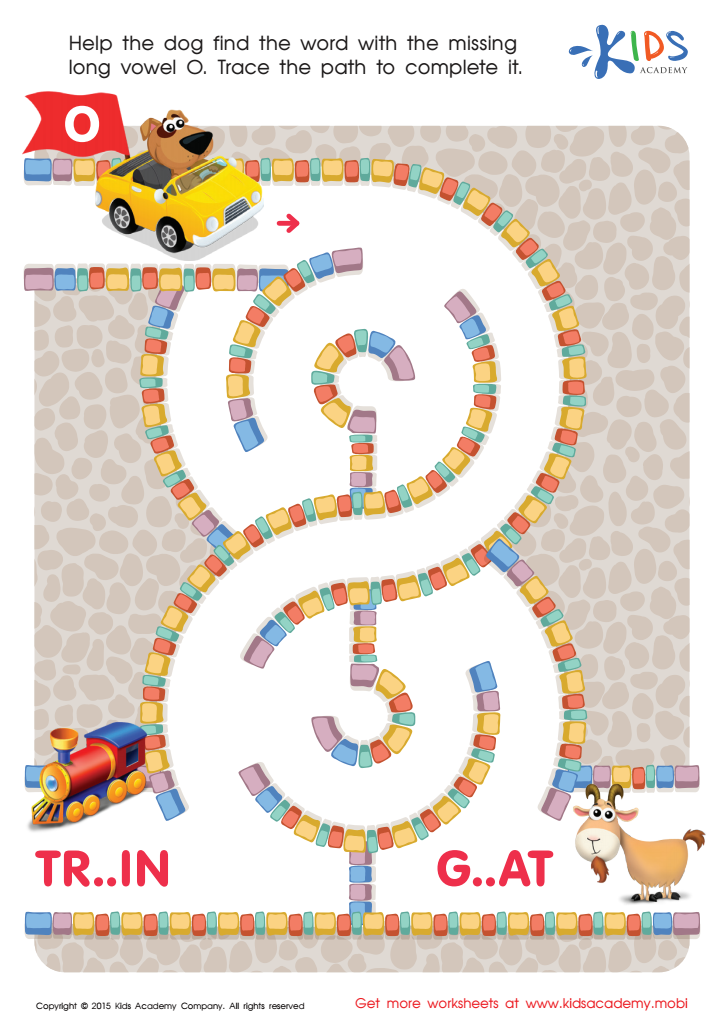
Long Vowel Sound O Worksheet
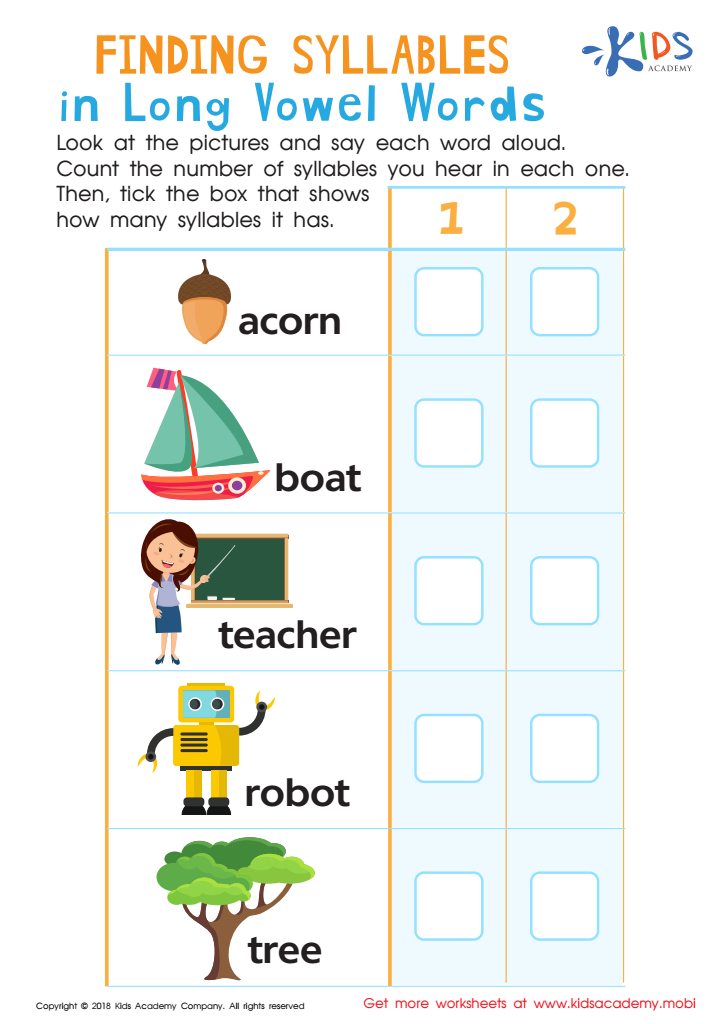
Finding Syllables in Long Vowel Words Worksheet








Parents and teachers should prioritize vocabulary expansion and phonics for children aged 6-9 because these early years are crucial for establishing foundational literacy skills. During this developmental window, children's brains are highly receptive to language acquisition. Vocabulary expansion enriches their ability to express themselves, understand complex instructions, and build critical thinking skills. A broad vocabulary also enhances reading comprehension, enabling children to grasp a wider array of texts, thereby fueling their overall academic achievement.
Phonics, on the other hand, is the system of relationships between letters and sounds. Mastery in phonics helps children decode words, making reading a more accessible and enjoyable activity. When children decode efficiently, they expend less energy on word recognition and can focus on the meaning of the text. This fluency paves the way for improved comprehension and a greater love for reading. Furthermore, both strong vocabulary and phonics skills are linked to better spelling and writing abilities, which are fundamental for academic success across various subjects.
Ignoring these aspects can lead to reading difficulties, diminished confidence, and a lack of enthusiasm for learning. Thus, investing time and resources in vocabulary and phonics helps create competent, confident, and enthusiastic young readers, setting a strong groundwork for their future educational journeys.







