Visual discrimination skills Upper & Lowercase Letters Worksheets for Ages 6-9
4 filtered results
-
From - To
Enhance your child’s literacy journey with our engaging Visual Discrimination Skills Worksheets, specifically designed for children ages 6-9. These worksheets focus on differentiating between uppercase and lowercase letters, building essential visual recognition skills necessary for reading and writing. Through fun activities tailored for young learners, kids will develop their ability to identify, compare, and contrast letter forms. This foundational skill not only boosts their confidence but also prepares them for more advanced literacy tasks. Ideal for home or classroom learning, our printable resources make education enjoyable, allowing children to practice essential skills in a visually stimulating environment. Start their adventure today!
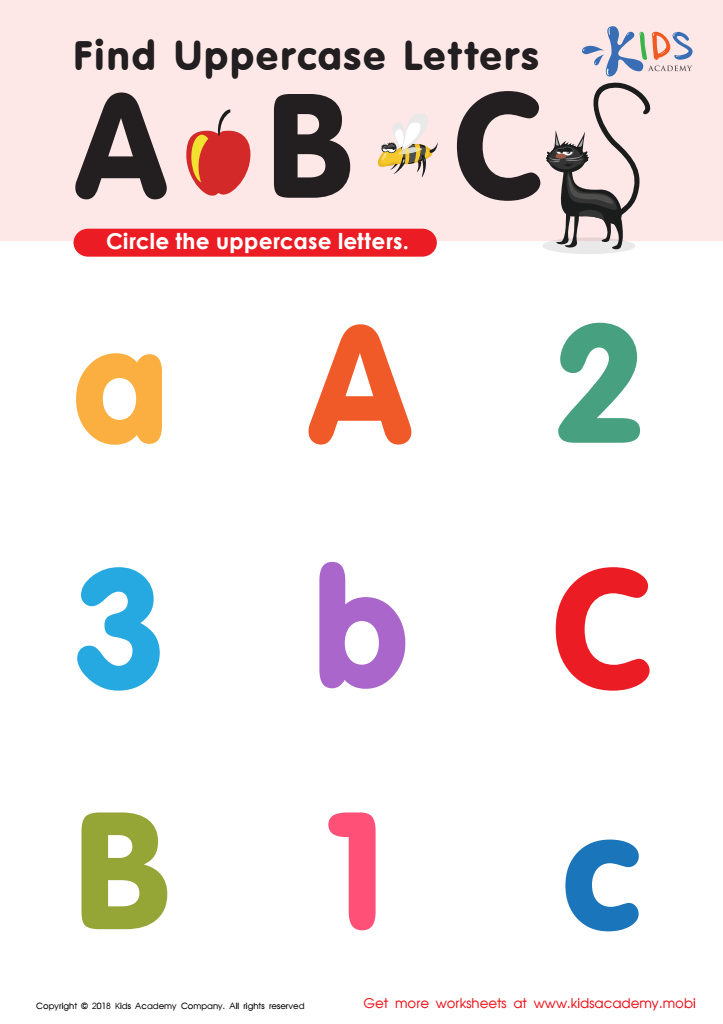
Find Uppercase Letters A, B, and C Worksheet
 Assign to My Students


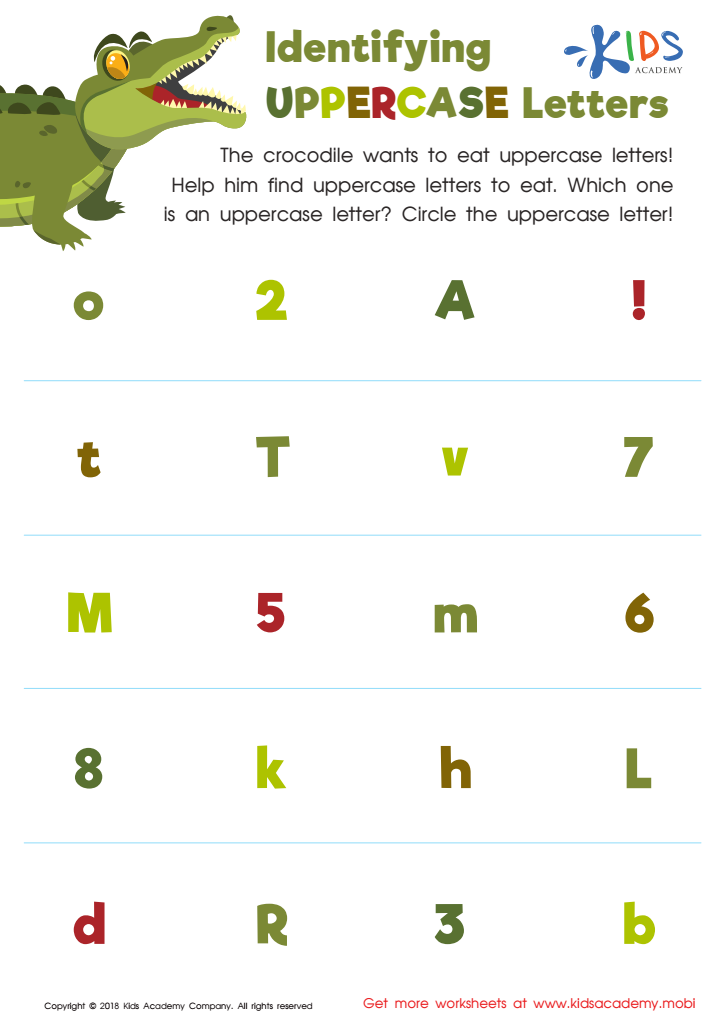
Identifying Uppercase Letters Worksheet
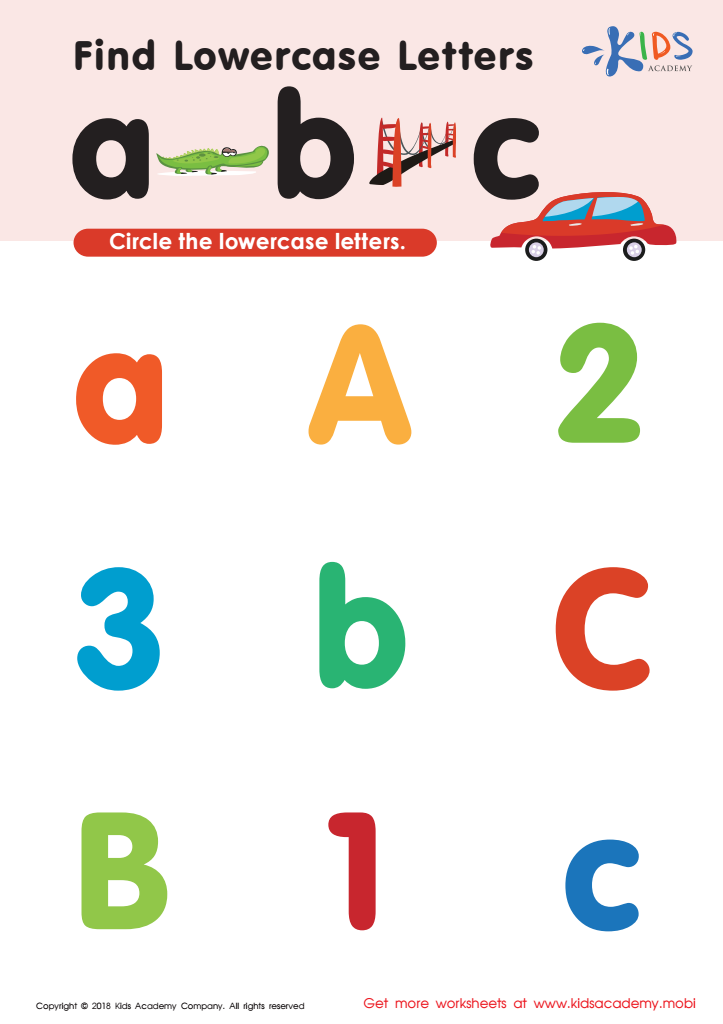
Find lowercase letters a b c Worksheet
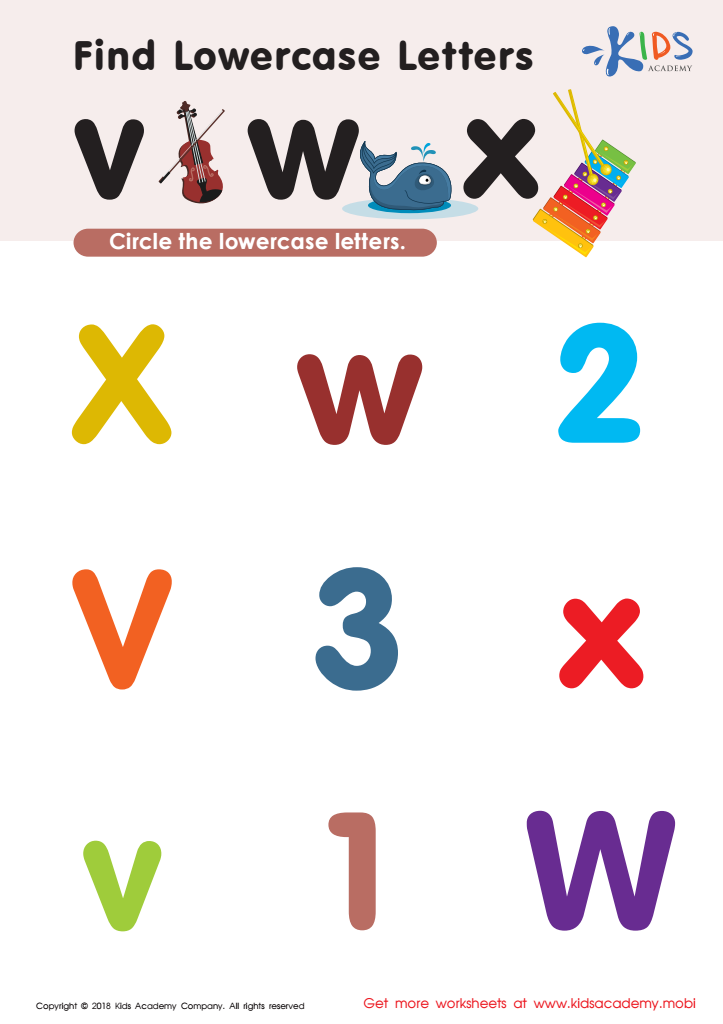
Find Lowercase Letters v w x Worksheet






Visual discrimination skills, particularly regarding uppercase and lowercase letters, are crucial for children aged 6-9 as they form the foundation for reading and writing proficiency. During these formative years, children are refining their ability to distinguish between similar letters, such as 'b' and 'd' or 'p' and 'q'. This skill directly impacts their phonemic awareness, spelling, and overall literacy development.
Parents and teachers should prioritize fostering visual discrimination skills because these abilities can influence a child's confidence and motivation in academic settings. Struggles with letter recognition may lead to frustrations that hinder a child's enthusiasm for reading and writing, crucial skills that affect future learning experiences.
Additionally, improved visual discrimination enables children to decode words more efficiently, contributing to better comprehension as they progress to more complex texts. By supporting these skills through targeted activities and playful learning, caregivers and educators can lay the groundwork for successful literacy acquisition. Creating a rich environment for practicing letter recognition through games, puzzles, and engaging reading materials will encourage children to develop a love for reading and learning that serves them in all academic areas. Ultimately, enhancing visual discrimination contributes to a child's overall success and lifelong learning journey.







