Sound differentiation Vowels Worksheets for Ages 6-9
3 filtered results
-
From - To
Enhance your child's understanding of vowel sounds with our engaging "Sound Differentiation Vowels Worksheets" designed for ages 6-9. These worksheets aim to help young learners distinguish between different vowel sounds through fun and interactive activities. Each worksheet is thoughtfully crafted to include colorful visuals and enjoyable tasks that reinforce phonetic awareness and early reading skills. As children practice, they build confidence in their ability to identify and manipulate vowel sounds, laying a strong foundation for literacy. Perfect for homeschooling or classroom use, these worksheets offer a dynamic way to cultivate essential language skills in your child. Download and start learning today!
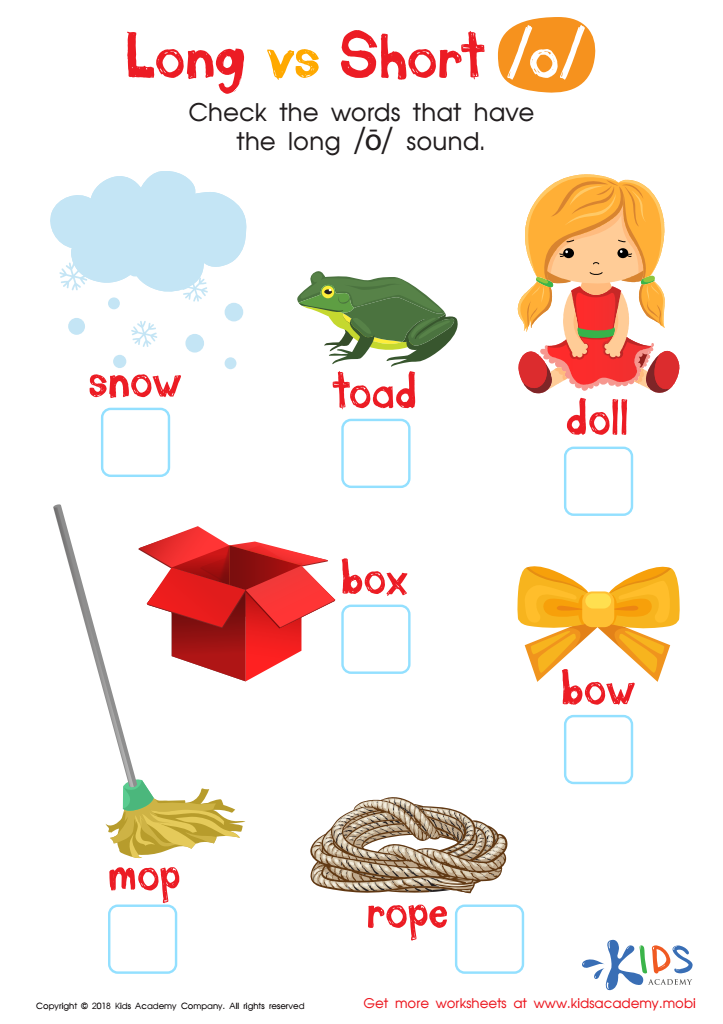
Long vs Short O Reading Worksheet
 Assign to My Students
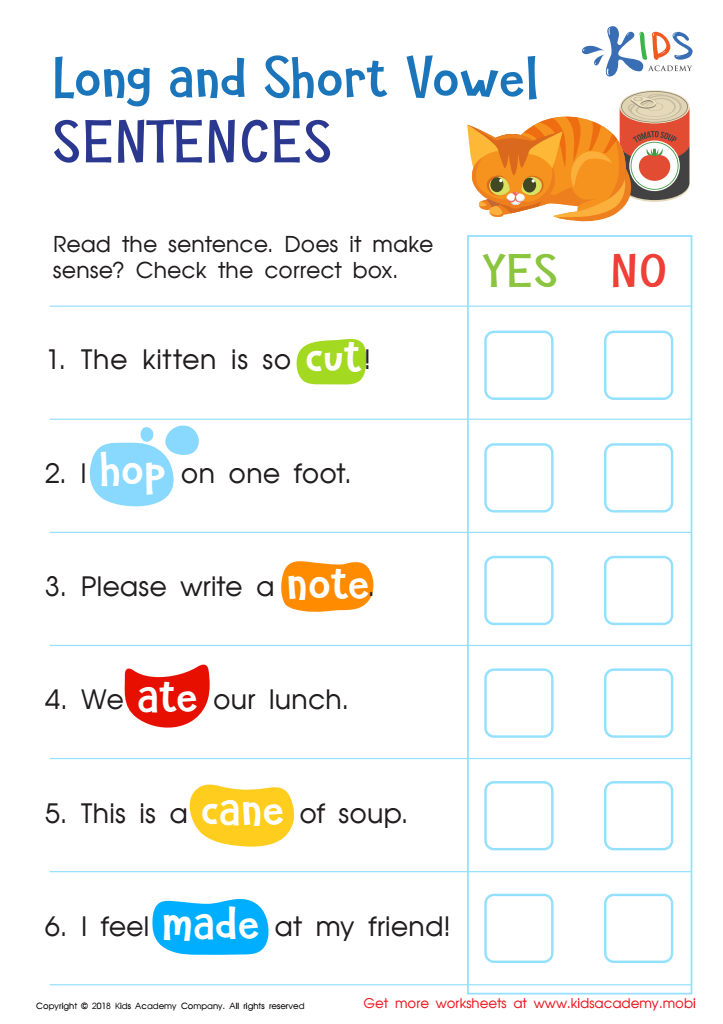
Long and Short Vowel Sentences: Assessment Worksheet
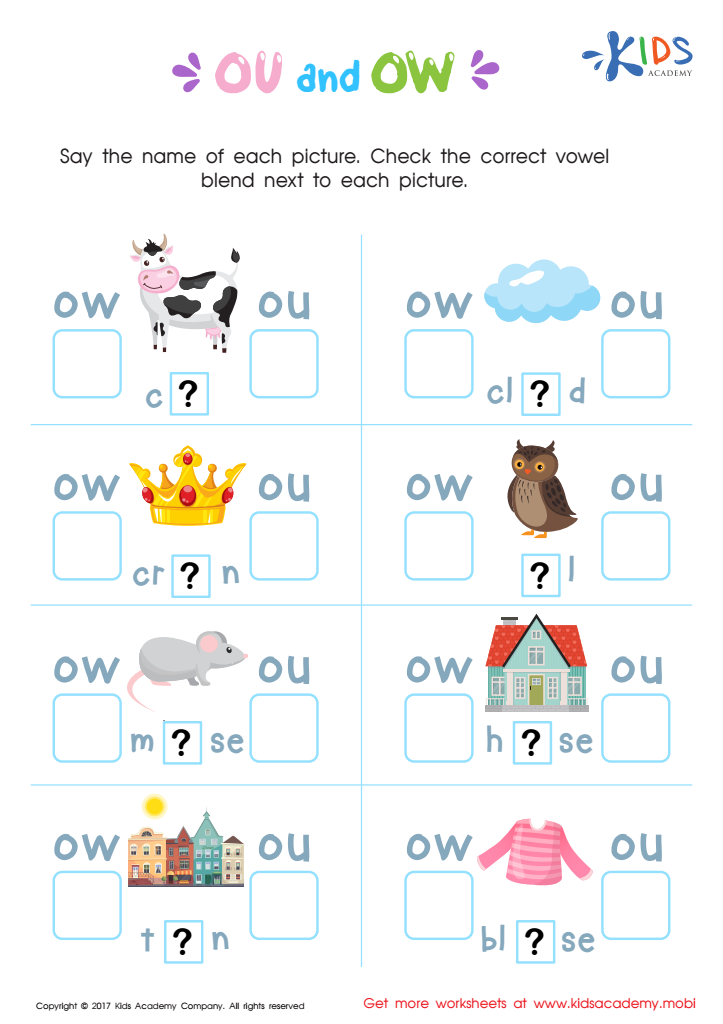
OU and OW Words Worksheet





Sound differentiation of vowels is crucial for children aged 6-9 as it directly impacts their literacy development and overall communication skills. At this stage, children are beginning to read and write independently, and a strong understanding of vowel sounds lays the foundation for these skills. Vowels are integral in forming words and help decode texts; grasping their sounds enables children to sound out unfamiliar words, enhancing their reading fluency and comprehension.
Moreover, sound differentiation assists in spelling, as many spelling rules revolve around vowel sounds. When children can differentiate between long and short vowels, they are better equipped to follow phonetic rules, improving their writing accuracy.
Understanding vowel sounds also fosters better speech and language skills, enabling clearer communication with peers and adults. Consequently, teachers and parents who emphasize this aspect of language development can nurture confident readers and effective communicators.
In a digital age where literacy is fundamental to access information and opportunities, ensuring that children grasp sound differentiation equips them with essential skills that will serve them throughout life. Investing time in these early language foundations ultimately supports their academic journey and personal growth, making it vital for educators and parents to prioritize this area of learning.







