Logical thinking improvement Chess Worksheets for Ages 6-9
3 filtered results
-
From - To
Boost your child's logical thinking skills with our engaging chess worksheets designed specifically for ages 6-9! These interactive resources seamlessly blend fun and education, helping young learners develop critical thinking, problem-solving, and strategic planning abilities through the game of chess. Each worksheet presents age-appropriate challenges that encourage kids to explore different scenarios, recognize patterns, and make decisions. Crafted by education experts, our materials promote cognitive growth while captivating children's imaginations. Perfect for both home and classroom settings, our logical thinking improvement worksheets will inspire a love for chess and enhance your child's mental agility. Unlock their potential today!
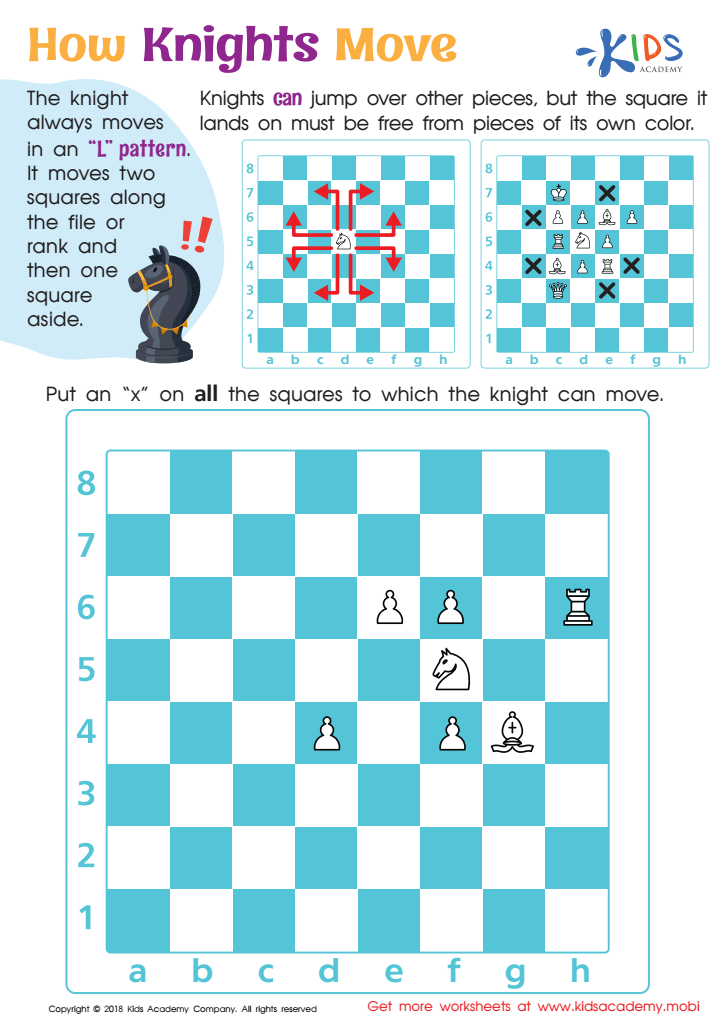
How Knights Move Worksheet
 Assign to My Students
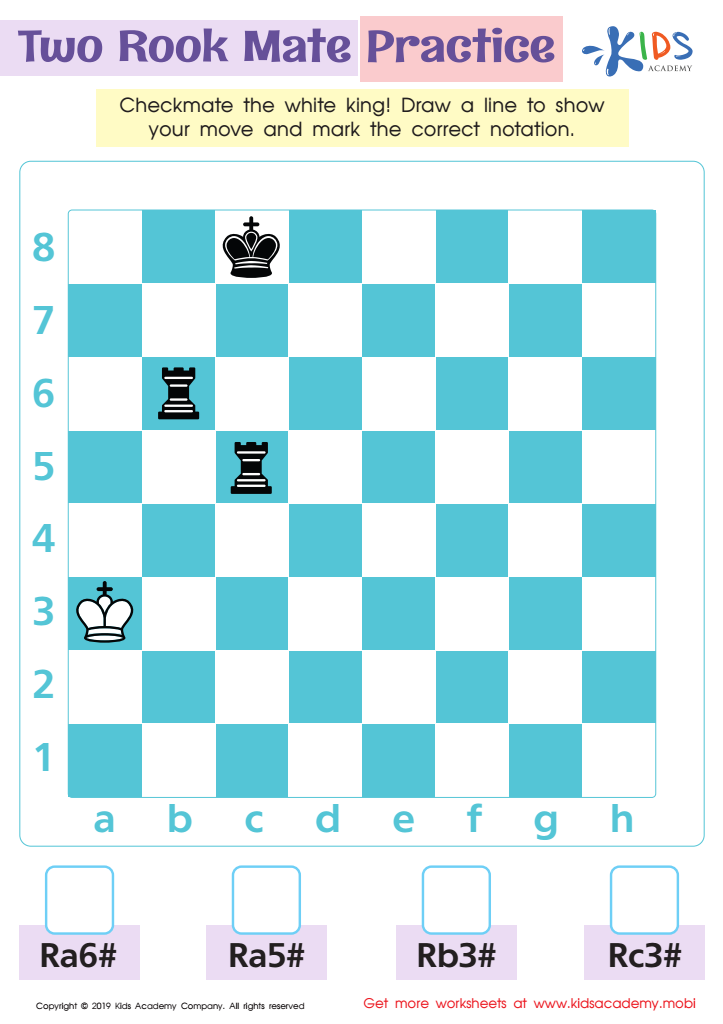
Two Rook Mate Practice Worksheet
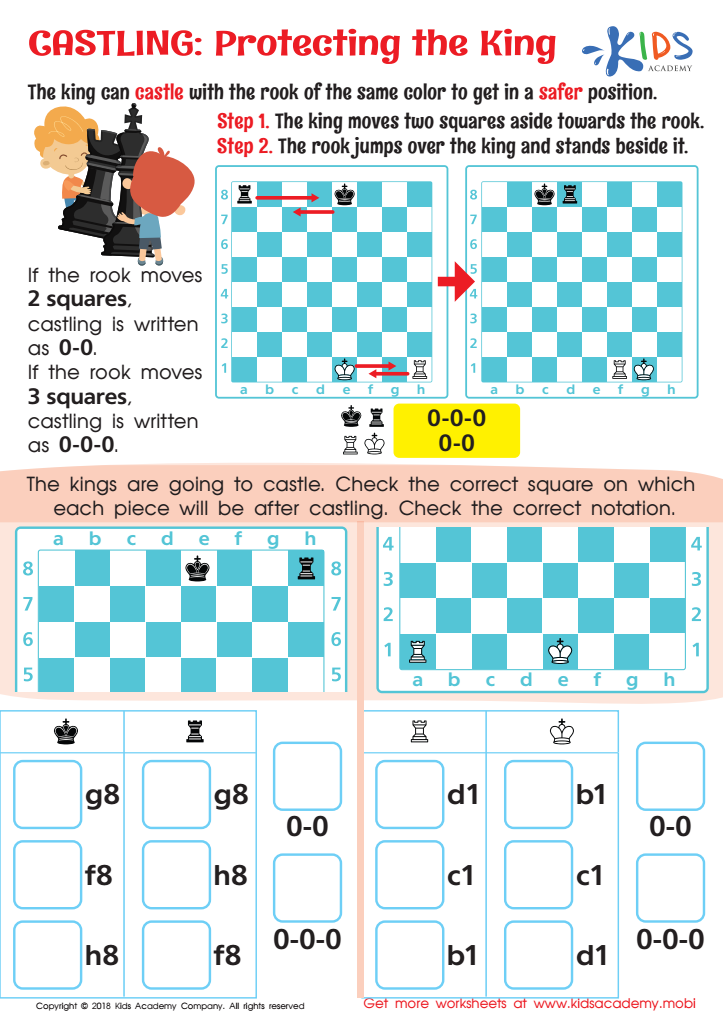
Castling: Protecting the King Worksheet








Logical thinking is a crucial skill that underpins a child's ability to reason, problem-solve, and make decisions. Introducing chess to children aged 6-9 can significantly enhance their logical thinking abilities. Chess challenges young minds to think critically about their moves, requiring them to recognize patterns, anticipate opponents' strategies, and consider multiple outcomes. This process fosters analytical reasoning, which can translate to academic tasks in subjects like math and science.
Moreover, playing chess encourages patience and perseverance. Children learn that every decision has consequences and that sometimes the best tactic is to wait for the right moment. This kind of strategic planning helps them grasp the importance of developing a thought-out approach to challenges.
Moreover, chess can also boost social skills as it encourages turn-taking and sportsmanship, reinforcing important cooperative behaviors.
For parents and teachers, supporting kids in learning chess not only contributes to cognitive development but also provides an engaging way for children to bond with peers or adults. The fun and challenge of chess turn learning into an enjoyable experience, making it an effective tool for nurturing a generation of logical thinkers and problem solvers.