Memory enhancement Chess Worksheets for Ages 6-9
3 filtered results
-
From - To
Enhance your child's memory and cognitive skills with our engaging Memory Enhancement Chess Worksheets designed specifically for ages 6-9. These fun and educational printables introduce young learners to the world of chess while boosting their memory retention and critical thinking abilities. Each worksheet features interactive challenges that encourage kids to remember sequences, patterns, and strategies essential for the game. Ideal for at-home learning or classroom use, our worksheets help cultivate a love for chess while supporting vital developmental skills. Start your child's journey into the world of chess today and watch their memory and problem-solving abilities flourish!
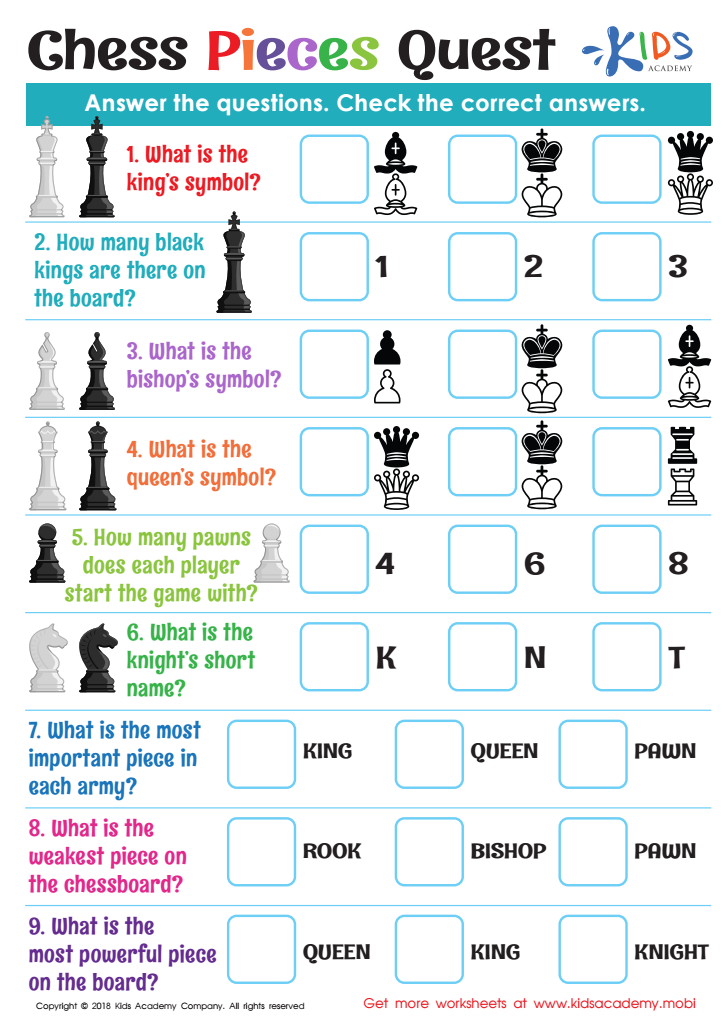
Chess Pieces Quest Worksheet
 Assign to My Students
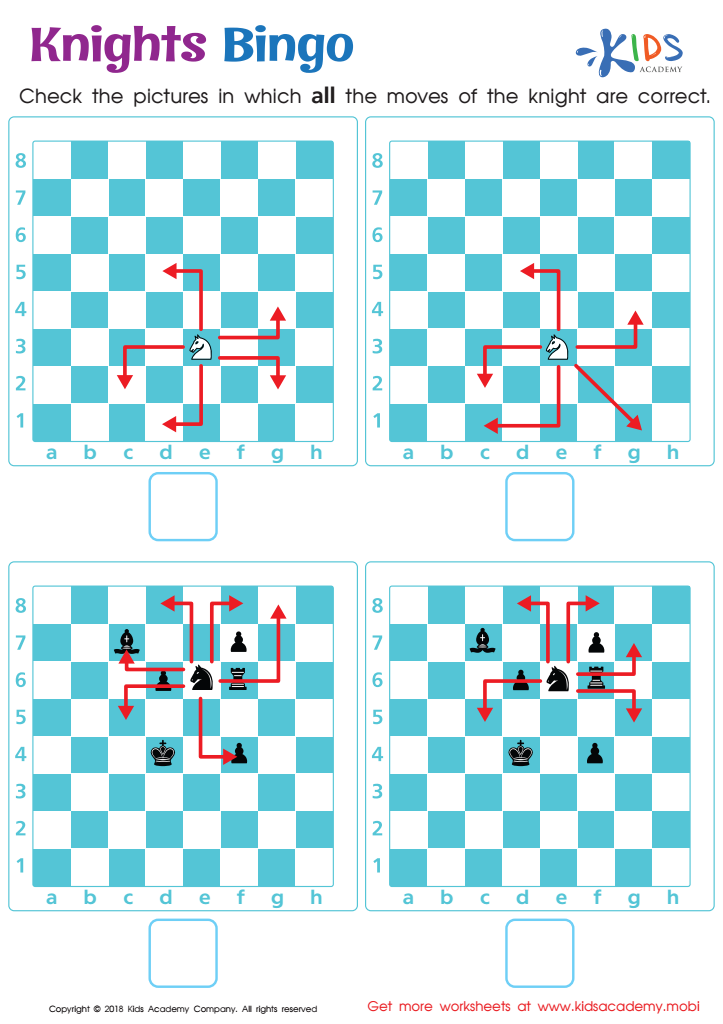
Knights Bingo Worksheet
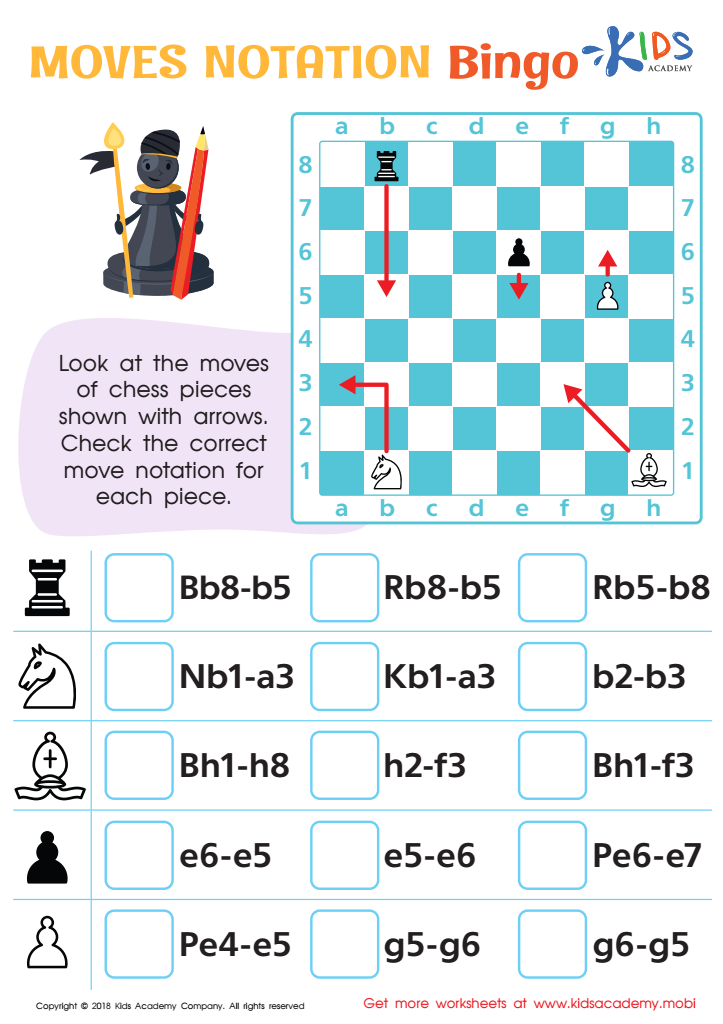
Moves Notation Bingo Worksheet





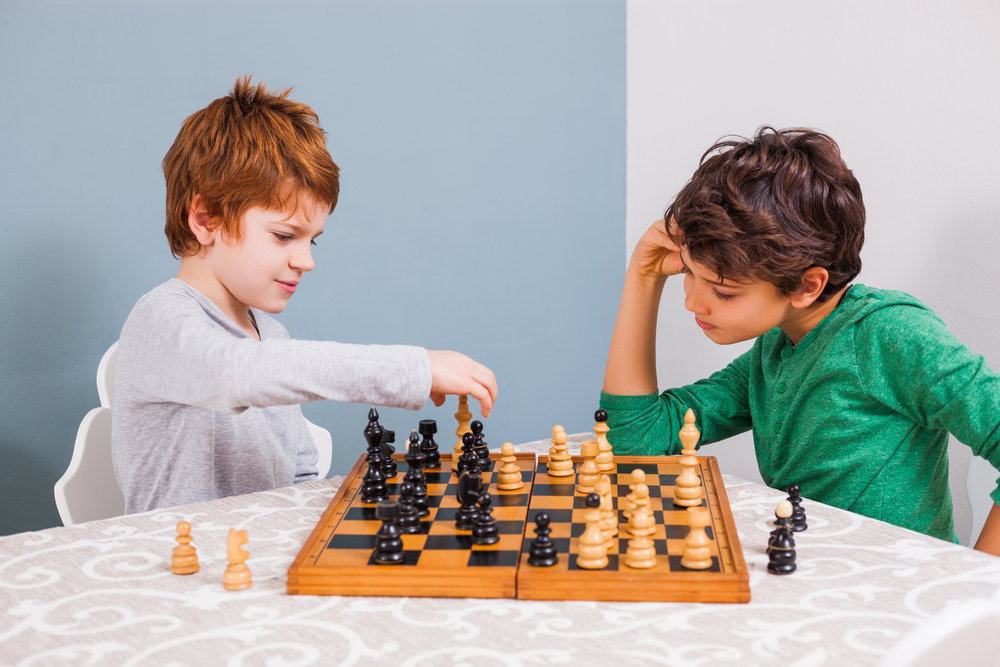

Memory enhancement chess for children aged 6-9 holds immense value for both parents and teachers. At this age, children's cognitive abilities are rapidly developing, and engaging them in chess can significantly enhance their memory skills. Chess encourages children to memorize positions, strategies, and rules, fostering improved recall and retention. This cognitive exercise enhances not only their chess performance but spills over into academic learning, helping kids perform better in subjects like math and reading.
Furthermore, chess promotes critical thinking and problem-solving skills, requiring players to think several moves ahead. This strategic planning encourages focused attention, a vital skill for school success. Additionally, playing chess nurtures social interaction; children learn to take turns, experience wins and losses gracefully, and develop sportsmanship.
Incorporating memory-enhancing chess into young learners' activities fosters discipline and patience. As children practice and improve, they gain confidence in their abilities. Parents and teachers who prioritize such enriching activities help lay a strong foundation for lifelong learning habits, improved cognitive faculties, and enhanced emotional resilience. In today’s rapidly changing world, equipping children with these essential skills through a fun and engaging medium like chess sets them up for future academic and personal success.