Problem-solving abilities Chess Worksheets for Ages 6-9
3 filtered results
-
From - To
Enhance your child’s critical thinking with our Problem-Solving Abilities Chess Worksheets for ages 6-9! These engaging printables are designed to foster essential cognitive skills through fun chess-themed activities. Each worksheet introduces children to basic chess strategies and puzzles, helping them to analyze situations and develop logical reasoning. Our worksheets promote concentration and perseverance while making learning entertaining. Perfect for both home and classroom use, these resources facilitate independent problem-solving in a playful context. Begin your child’s journey into the world of chess and nurture their ability to tackle challenges head-on with our thoughtfully crafted worksheets!
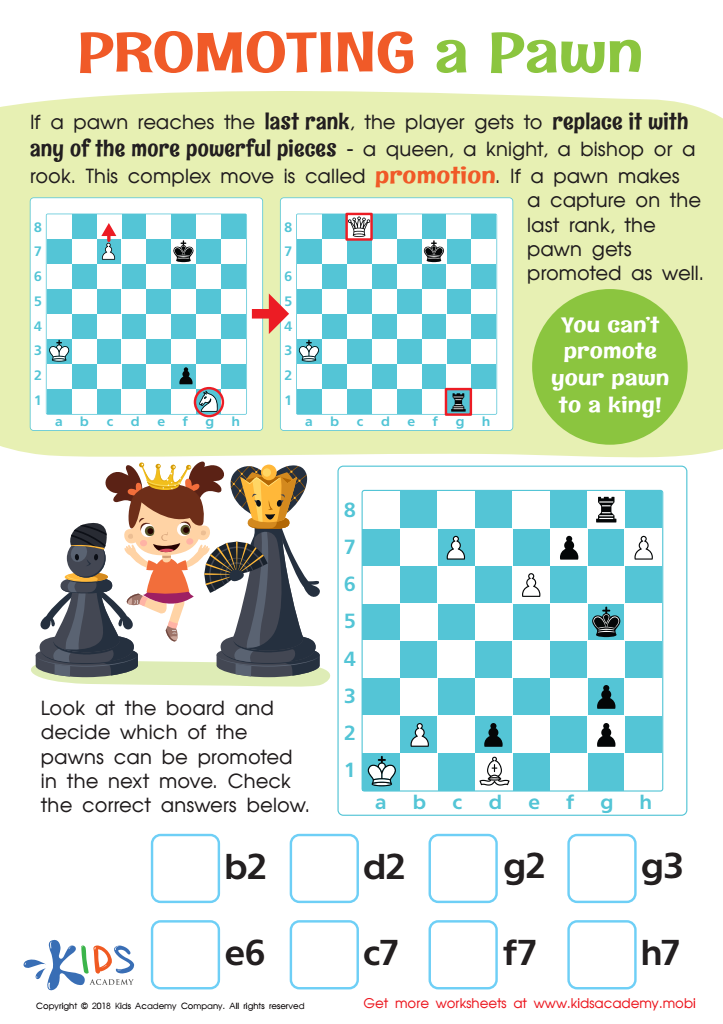
Promoting a Pawn Worksheet
 Assign to My Students
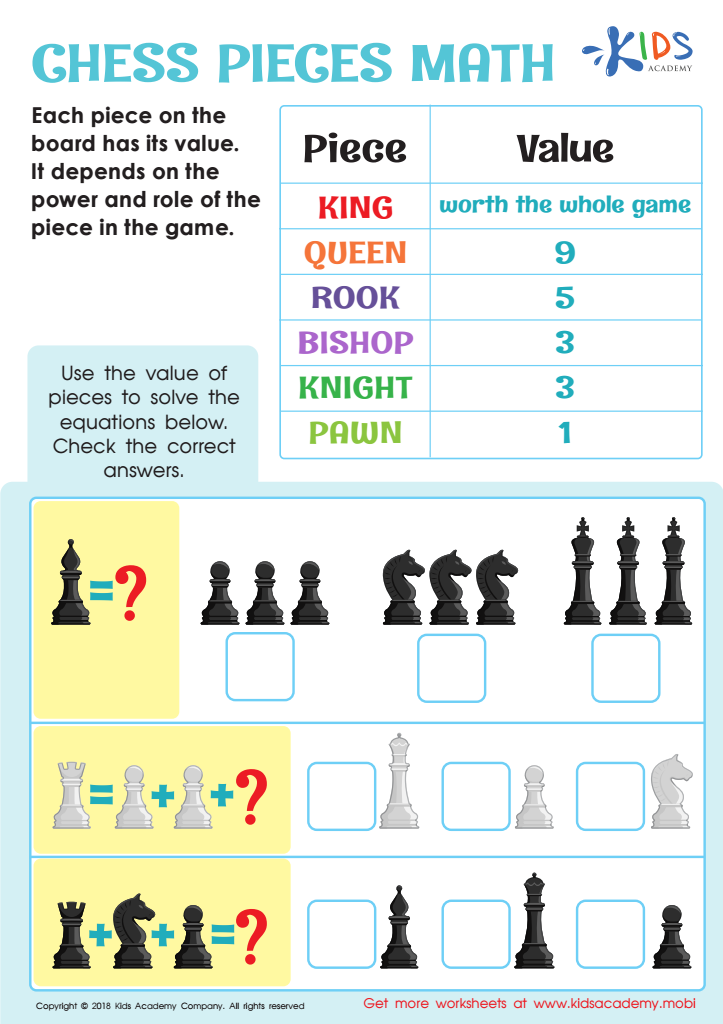
Chess Pieces Math Worksheet
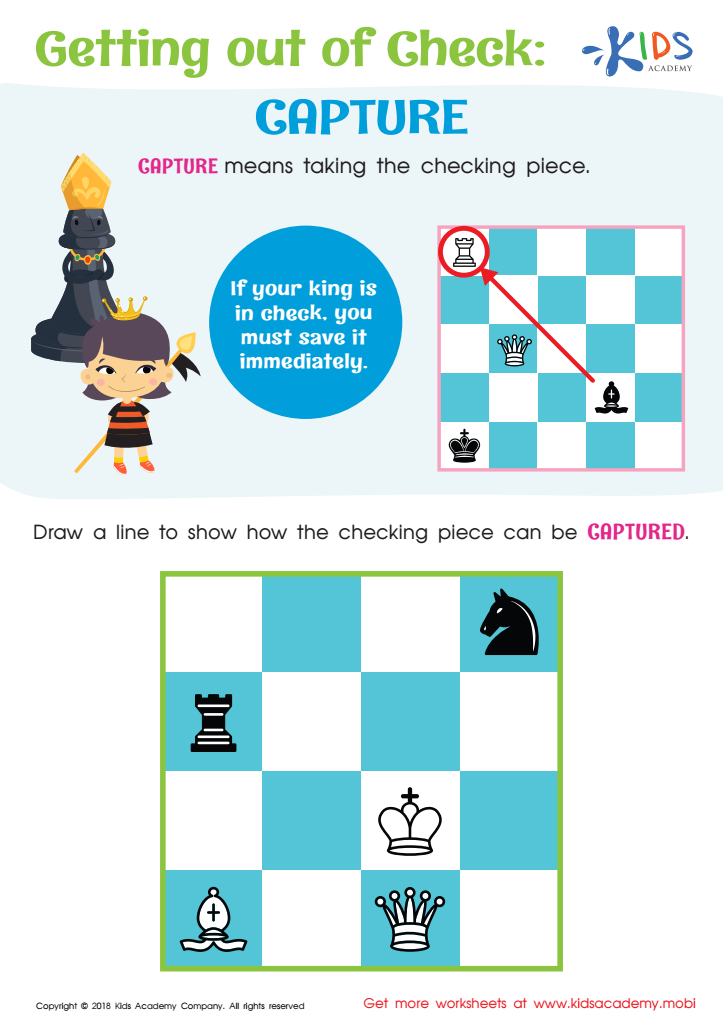
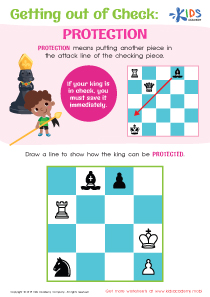
Getting out of Check: Capture





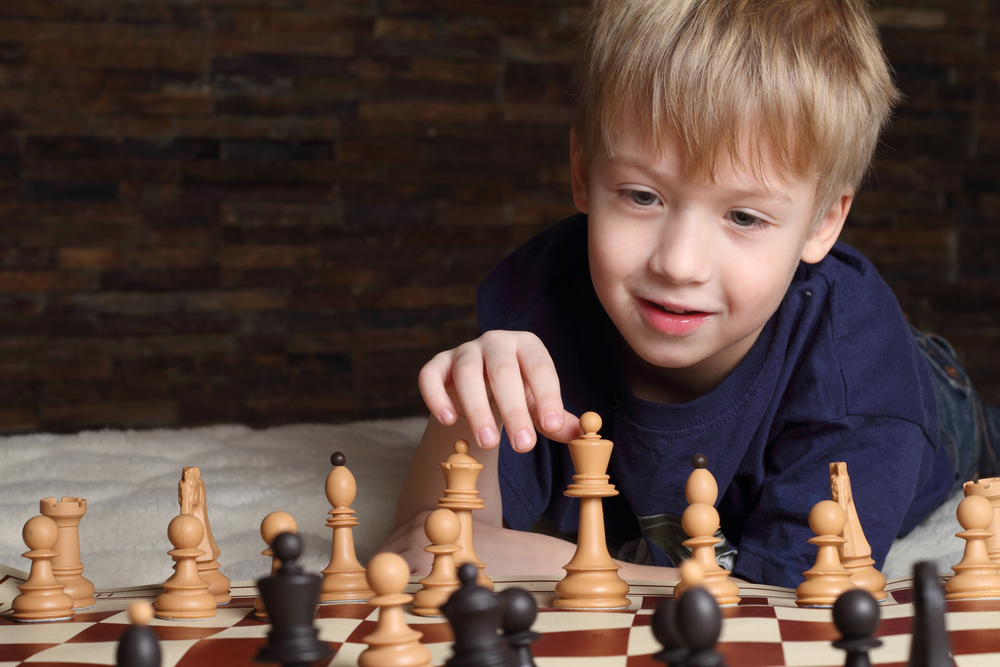
Parents and teachers should prioritize problem-solving skills like chess for children aged 6-9 for several reasons. First, chess is a rich platform for developing critical thinking and strategic planning. As children engage with the game, they learn to evaluate different scenarios, anticipate opponents' moves, and devise effective strategies. This not only enhances cognitive skills but also fosters patience and perseverance.
Moreover, playing chess encourages creativity. Young learners are challenged to visualize outcomes and explore various possibilities, helping them think outside the box and improve their decision-making skills. This cognitive flexibility is vital across multiple subjects, as students tackle complex problems in math, science, and even social interactions.
Additionally, chess promotes important life skills such as sportsmanship and resilience. Children learn to handle wins and losses gracefully, teaching them valuable lessons about effort, commitment, and self-improvement.
Furthermore, introducing chess in educational settings can create a collaborative environment where children work together, fostering teamwork while engaging in healthy competition. Overall, problem-solving abilities gained through chess can significantly contribute to a child's academic success and personal growth, making it an essential component of early education.