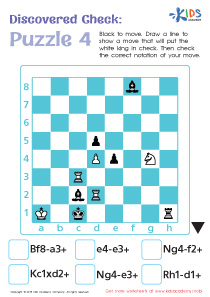
Strategic thinking Chess Worksheets for Ages 6-9
3 filtered results
-
From - To
Unlock your child's potential with our Strategic Thinking Chess Worksheets designed for ages 6-9. These engaging worksheets foster critical thinking, problem-solving, and planning skills through fun and interactive chess challenges. Ideal for beginners, each worksheet introduces key chess concepts while encouraging young minds to think several moves ahead. Perfect for both classroom and home use, our resources help children develop confidence, patience, and the ability to anticipate outcomes. Elevate their learning experience with our expertly crafted activities and watch as your child embraces the joy and intellectual benefits of chess. Empower strategic thinkers with our curated worksheets today!
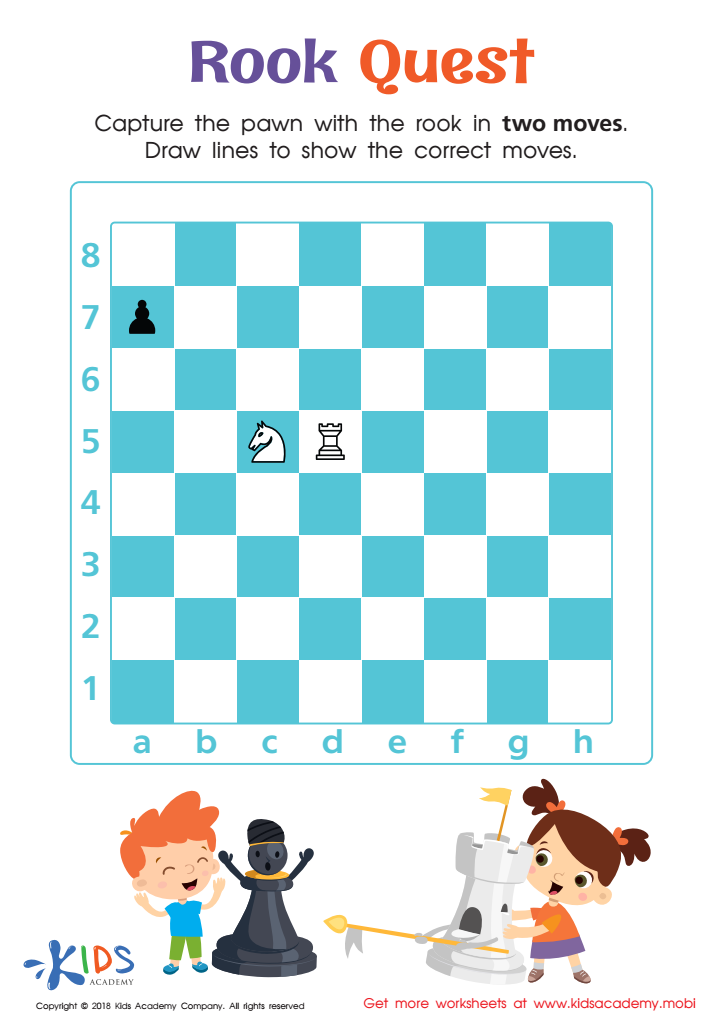
Rook Quest Worksheet
 Assign to My Students
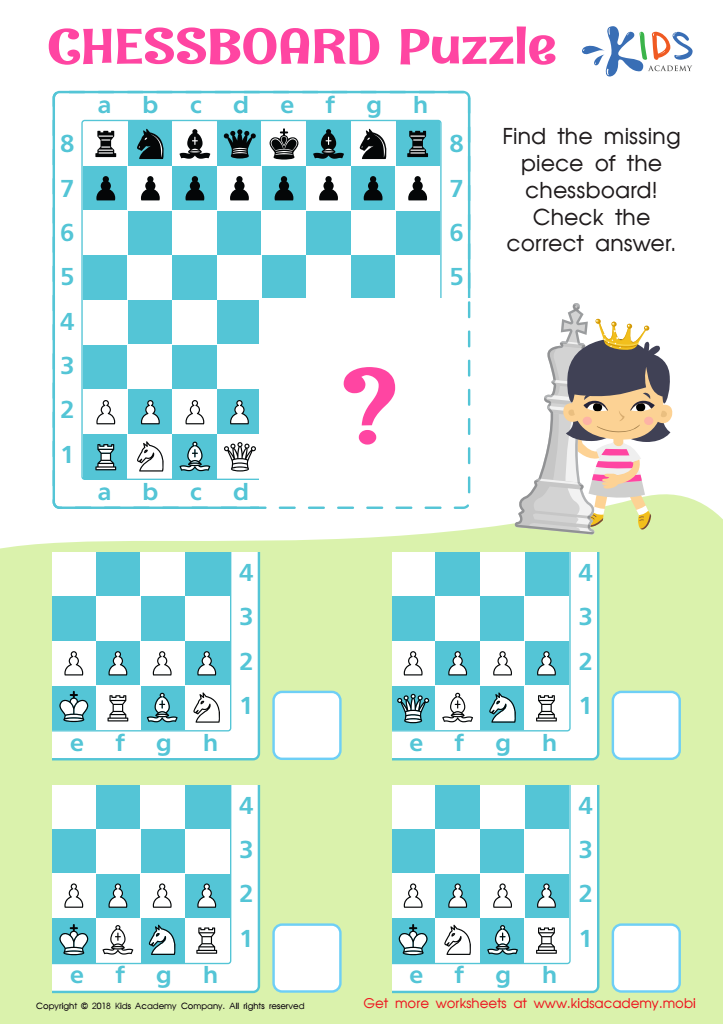
Chessboard Puzzle Worksheet
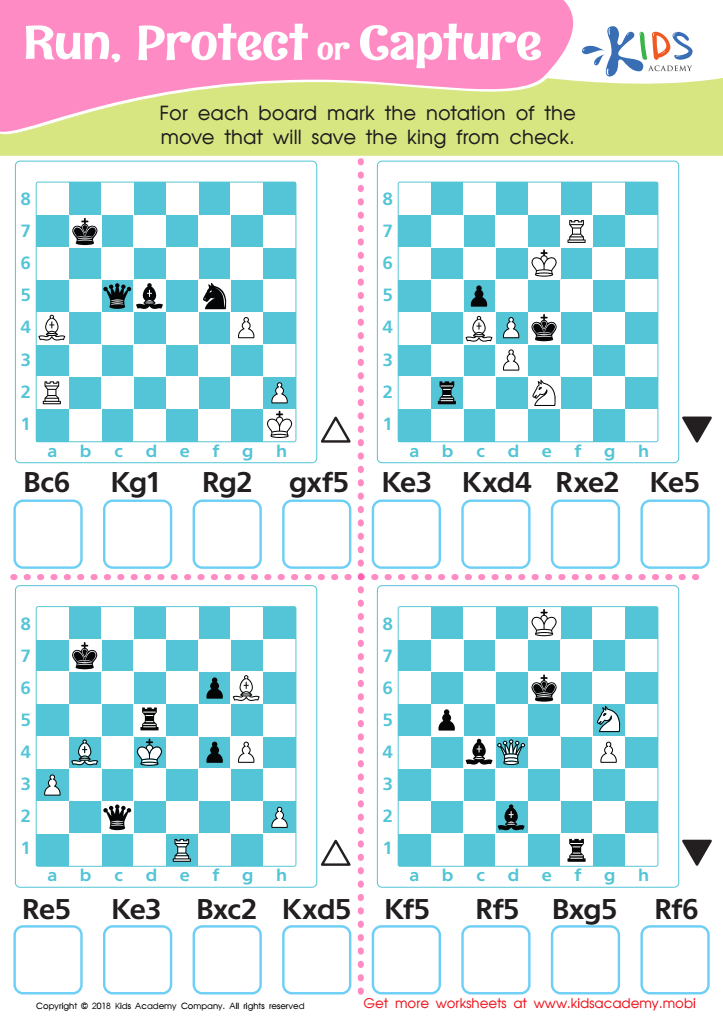
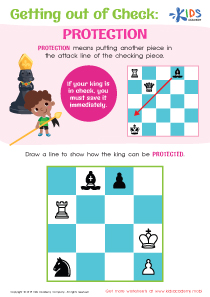
Run, Protect or Capture Worksheet







Strategic thinking chess for children aged 6-9 is highly beneficial and is an excellent tool for sharpening young minds. Firstly, it enhances critical thinking and problem-solving skills. As children anticipate their opponent's moves and weigh potential strategies, they learn to think several steps ahead, fostering foresight and strategic planning. These cognitive skills are transferable to academic subjects, enriching their overall intellectual growth.
Secondly, chess cultivates patience and perseverance. Children understand the value of patience as they carefully plan their moves and react to their opponent's strategy. This focus and persistence can improve their behavioral skills in a classroom setting, encouraging deliberate and thoughtful actions over impulsive ones.
Additionally, chess boosts memory and concentration. Players recall the various piece movements and rule intricacies, which enhances their memory retention. It also requires sustained concentration, teaching kids to focus intently on a task until completion. This concentration is beneficial for their studies and everyday interactions.
Finally, chess promotes social skills and emotional intelligence. When children play together, they learn to respect their peers, handle wins and losses gracefully, and communicate strategies, fostering a sense of camaraderie and sportsmanship.
Incorporating chess into the daily routine of 6- to 9-year-olds can therefore significantly contribute to their cognitive, social, and emotional development, equipping them with vital life skills.