
Alphabet Recognition Worksheets for Ages 6-9
70 filtered results
Difficulty Level
Grade
Age
-
From - To
Subject
Activity
Standards
Explore our engaging alphabet recognition worksheets designed specifically for children aged 6 to 9! These interactive resources are perfect for reinforcing essential literacy skills and fostering a love for reading. Our worksheets feature fun activities that help kids identify, trace, and associate letters with corresponding images, enhancing both recognition and comprehension. Suitable for classrooms or home learning, these worksheets promote essential phonemic awareness while making learning enjoyable. With vibrant illustrations and varied exercises, students will build confidence in their alphabet knowledge. Download our printable worksheets today and watch your child's reading and writing skills flourish!
Favorites
With answer key
Interactive
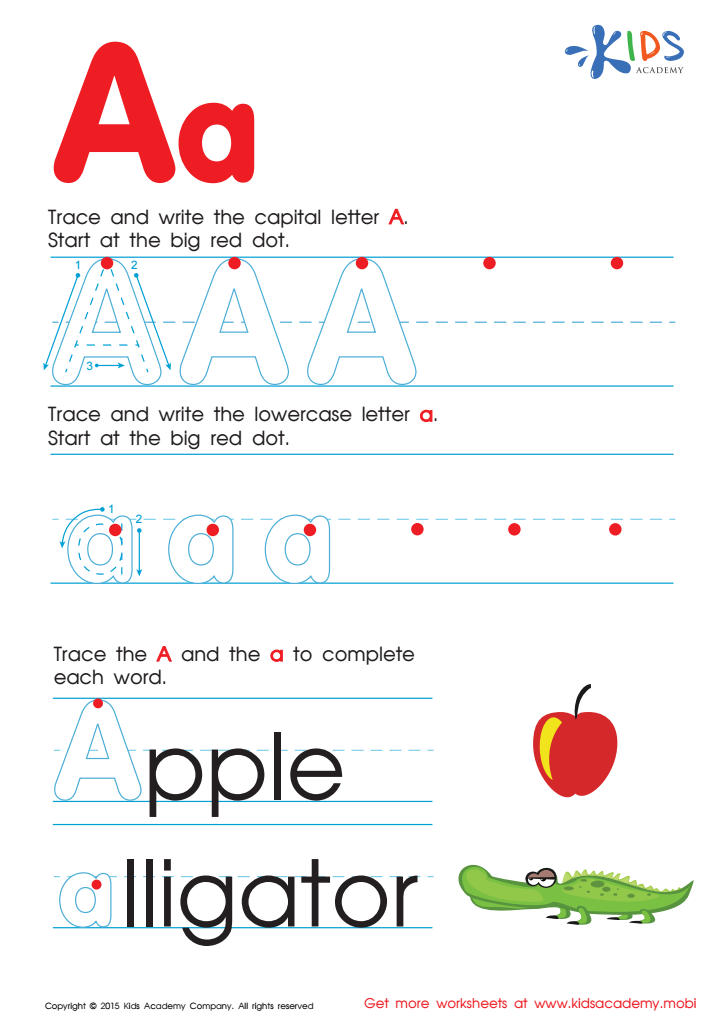
Letter A Tracing Page
Trace and write the letter "A"! Start with the big red dot, then do the capital and lowercase versions. Then write it again with two words - apple and alligator. Download more tracing worksheets at Kids Academy.
Letter A Tracing Page
Worksheet
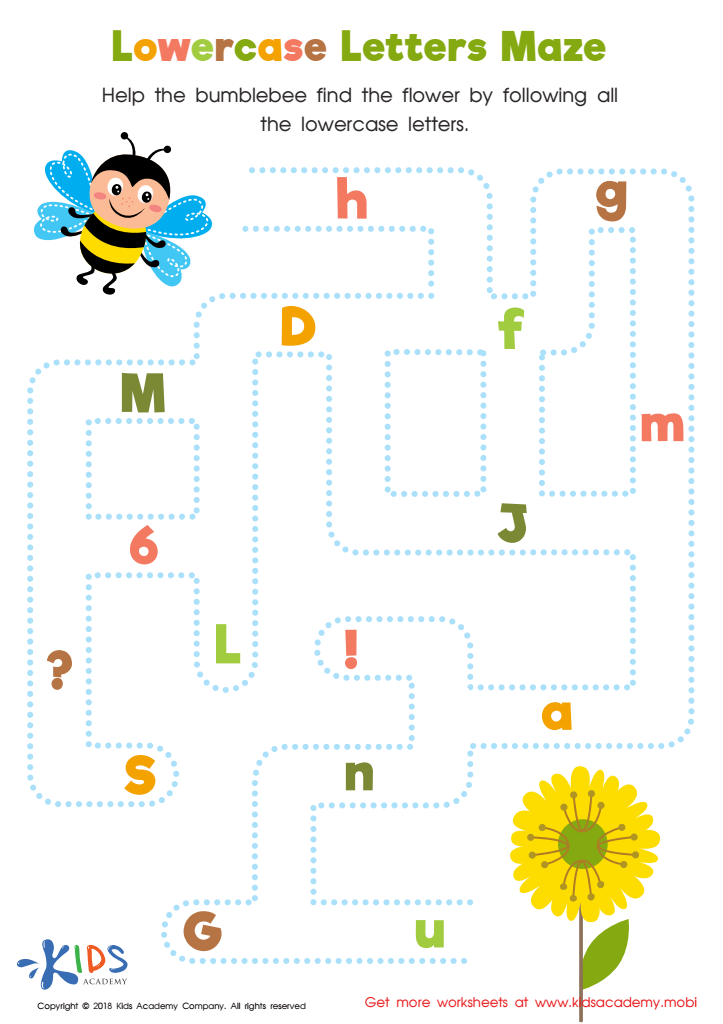
Lowercase Letters Maze Worksheet
Traceable pages can be great learning tools for children. For example, have them trace the path of lowercase letters to help a bumblebee pollinate flowers. Students will quickly learn the difference between uppercase and lowercase letters and numbers, and have fun doing it!
Lowercase Letters Maze Worksheet
Worksheet
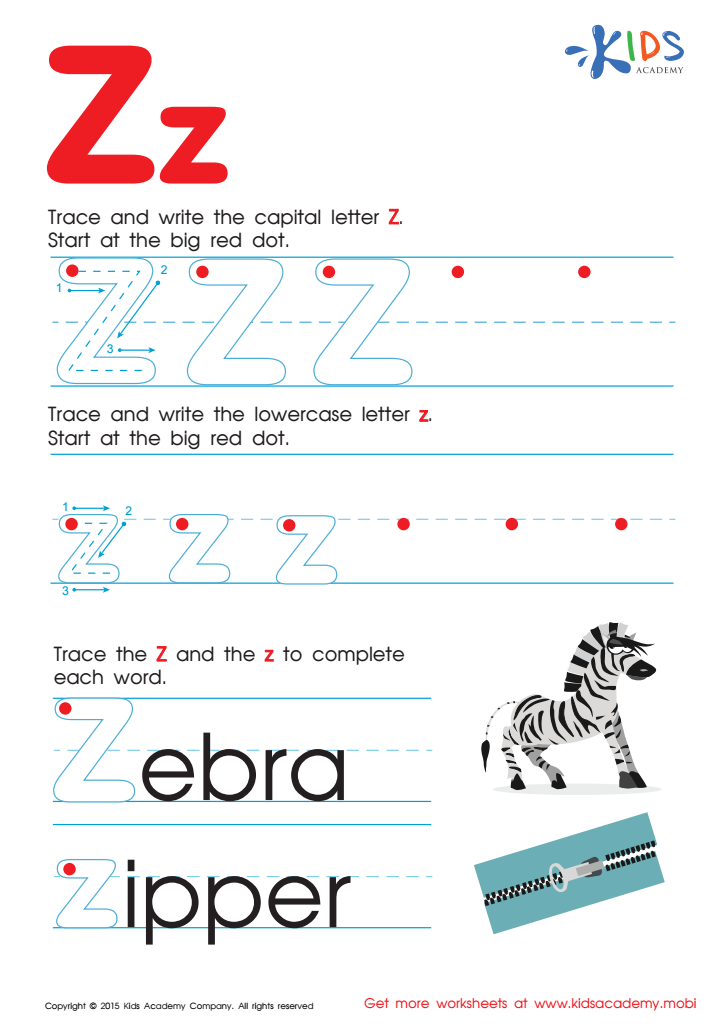
Letter Z Tracing Page
Trace and write capital "Z" and lowercase "z". Complete words "zebra" and "zipper". Be attentive and have fun! (80 words)
Letter Z Tracing Page
Worksheet
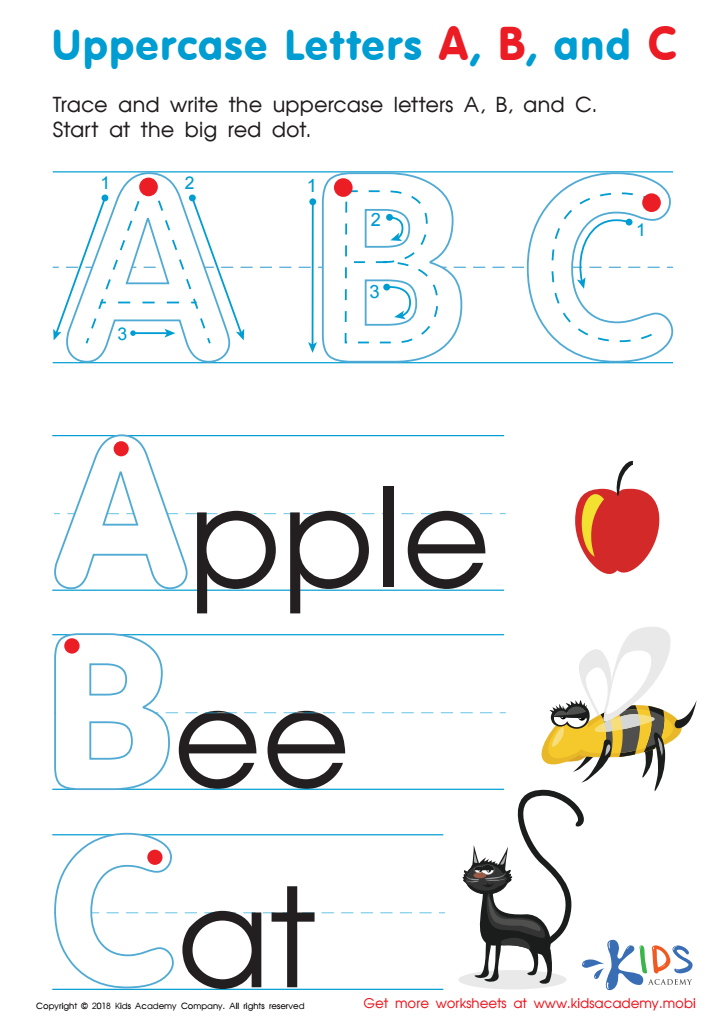
Uppercase Letters A, B, and C Worksheet
See that big red dot? Have your child use it as a guide to trace A, B and C on this fun worksheet. It features lively pictures to help link letter sounds. Have them practice proper pencil strokes on the letters at the top, then write beside each graphic. Let the learning and fun begin! 80 words
Uppercase Letters A, B, and C Worksheet
Worksheet
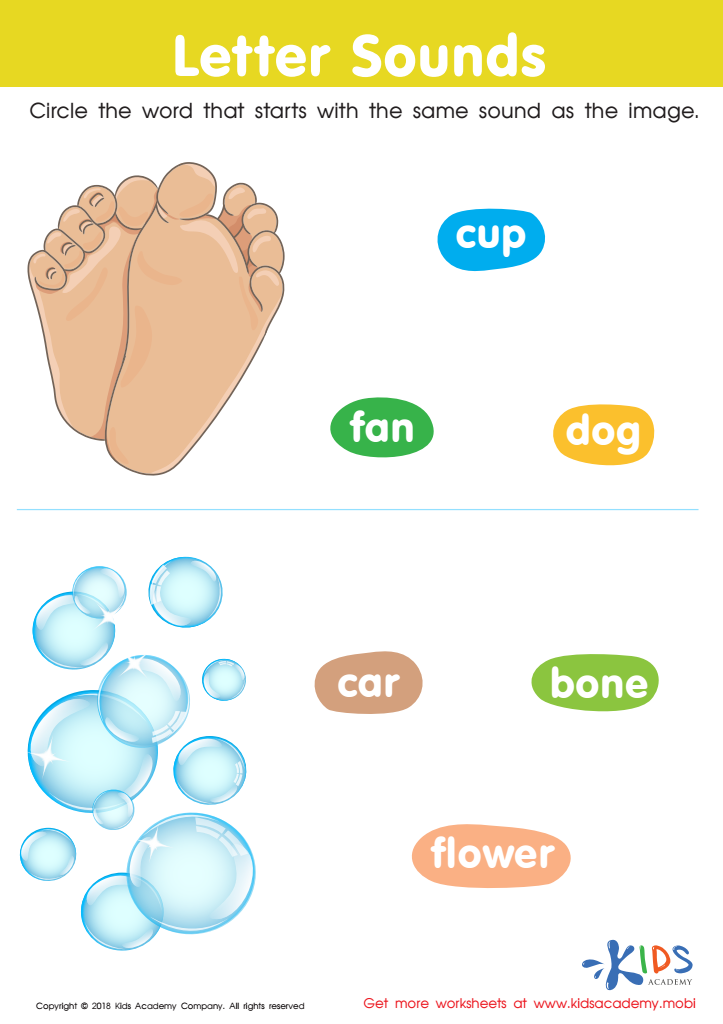
letter sounds Worksheet
Test your child's letter recognition skills with this worksheet. Match words to pictures and challenge them to say each image out loud and sound out the words beside it. Ask: Which word starts with the same letter as the picture? Then let them circle the right answer. Quick and easy!
letter sounds Worksheet
Worksheet
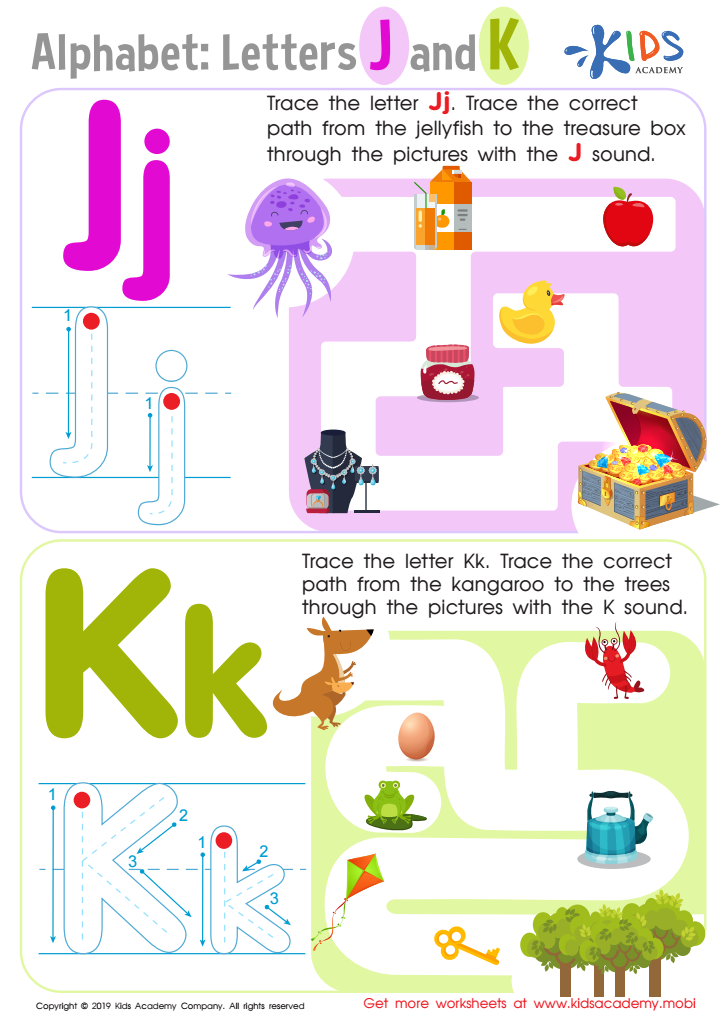
Letters J and K Tracing Worksheet
Tracing the letters «J» and «K» is the first step. Help the jellyfish find a path to the treasure chest with pictures of the «J» sound, and assist the kangaroo in finding a path to the trees with pics of «K». Fun, educational and enjoyable for children!
Letters J and K Tracing Worksheet
Worksheet
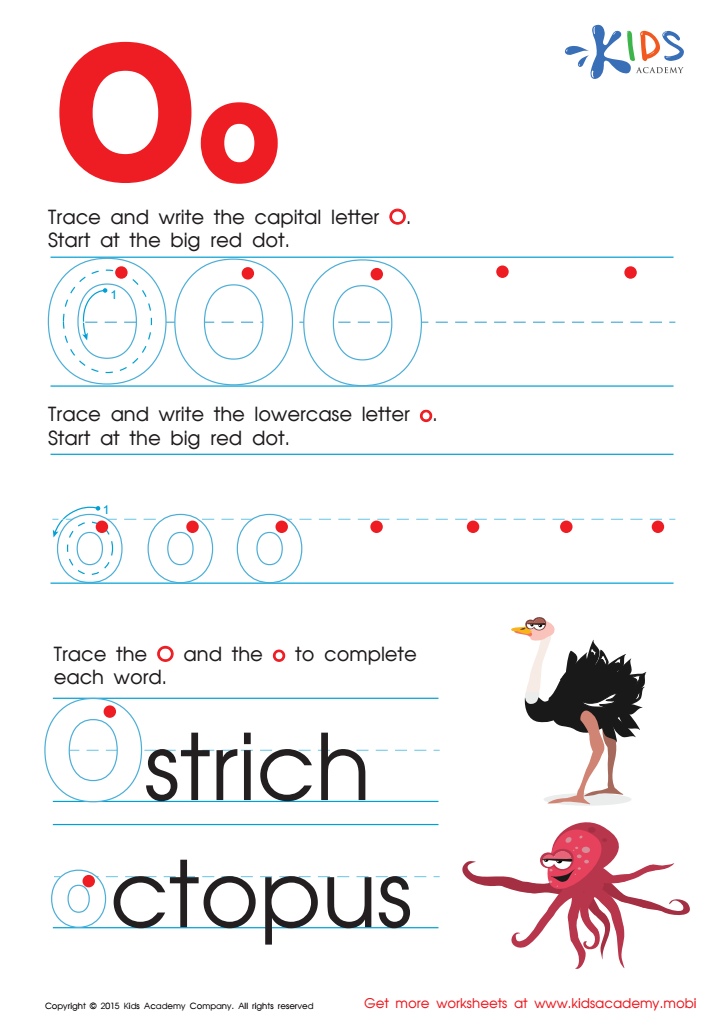
Letter O Tracing Page
Practice writing the letter "O" with our new worksheet. Trace and write the letter several times, starting at the red dot. First do the uppercase letter, then the lowercase. Use the pictures to complete the words "Ostrich" and "octopus". Kids Academy offers more fun alphabet worksheets.
Letter O Tracing Page
Worksheet
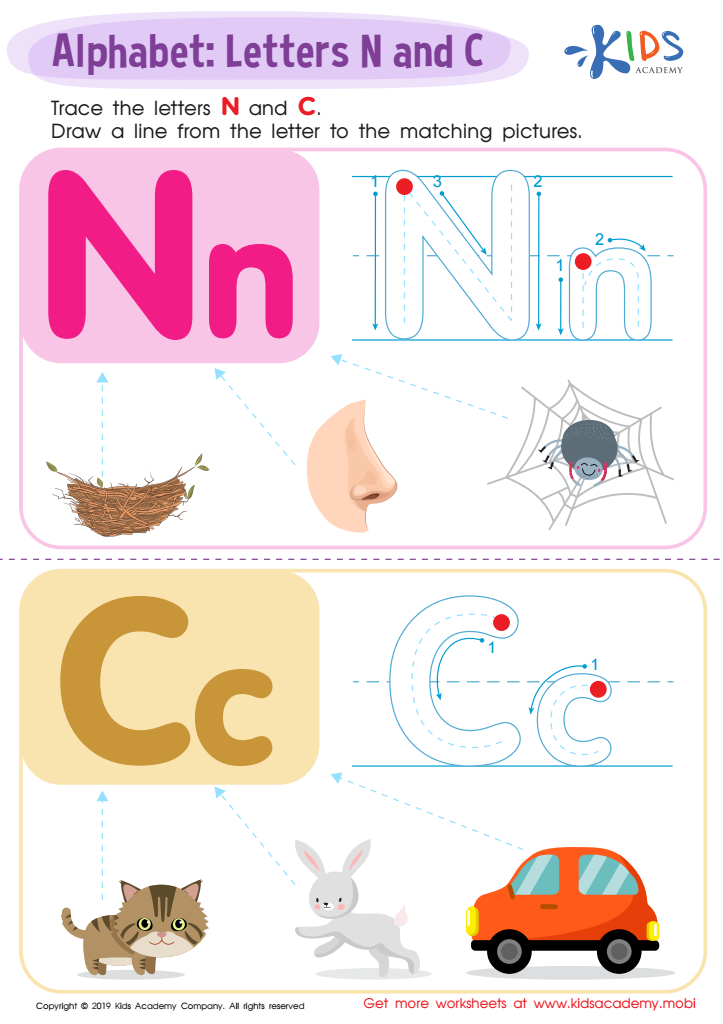
Letter N and C Tracing Worksheet
Kids can trace the letters N and C, then draw a line to the words starting with each letter. This worksheet helps them practice letter writing, distinguish capital and lowercase letters, and match pictures with the right letter. It also teaches essential skills for learning letters efficiently.
Letter N and C Tracing Worksheet
Worksheet
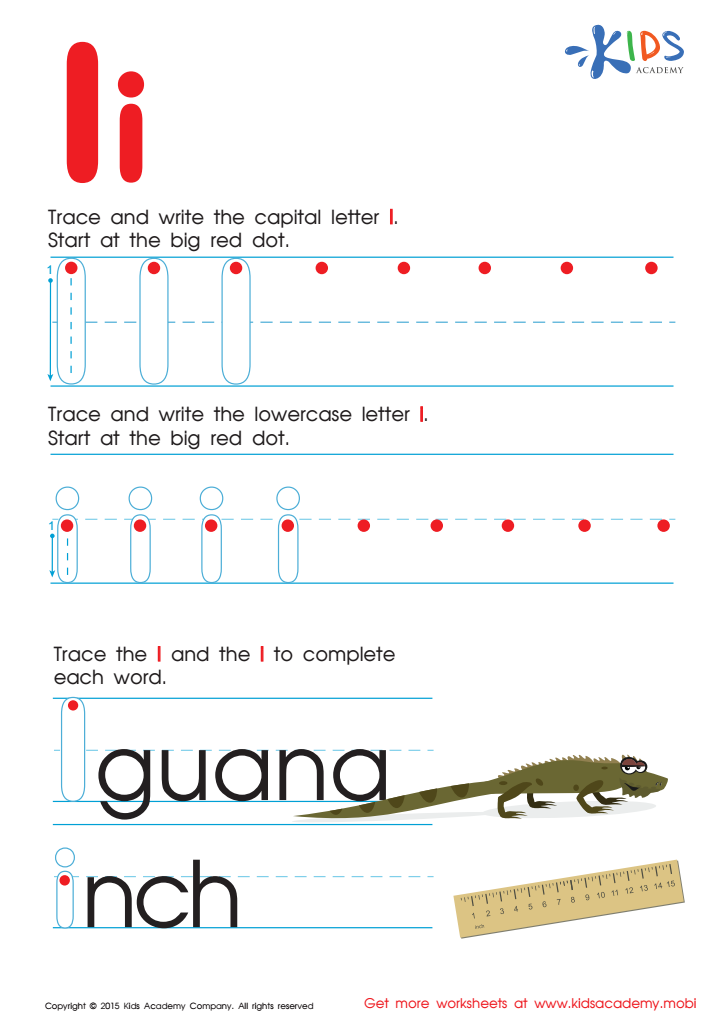
Letter I Tracing Page
Trace and write "I" uppercase and lowercase. An iguana's tail looks like the uppercase "I" and the lowercase "i" is as small as an inch. Make learning fun with Kids Academy worksheets.
Letter I Tracing Page
Worksheet
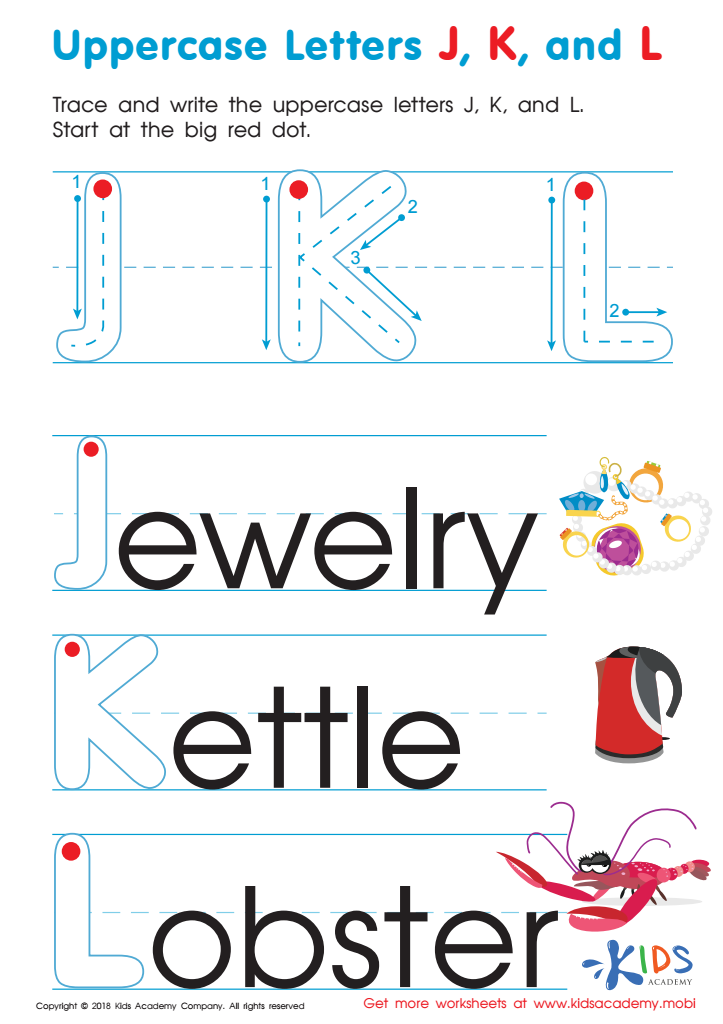
Uppercase Letters J, K, and L Worksheet
Jewelry, kettle and lobster share a common trait: their names start with J, K and L, 3 letter neighbors found in the middle of the alphabet. This traceable worksheet helps kids learn letter sounds and practice writing. Arrows and tracing lines make it easy to form neat pencil strokes. Red dot shows where kids should start. Perfect for preschoolers and kindergarteners!
Uppercase Letters J, K, and L Worksheet
Worksheet
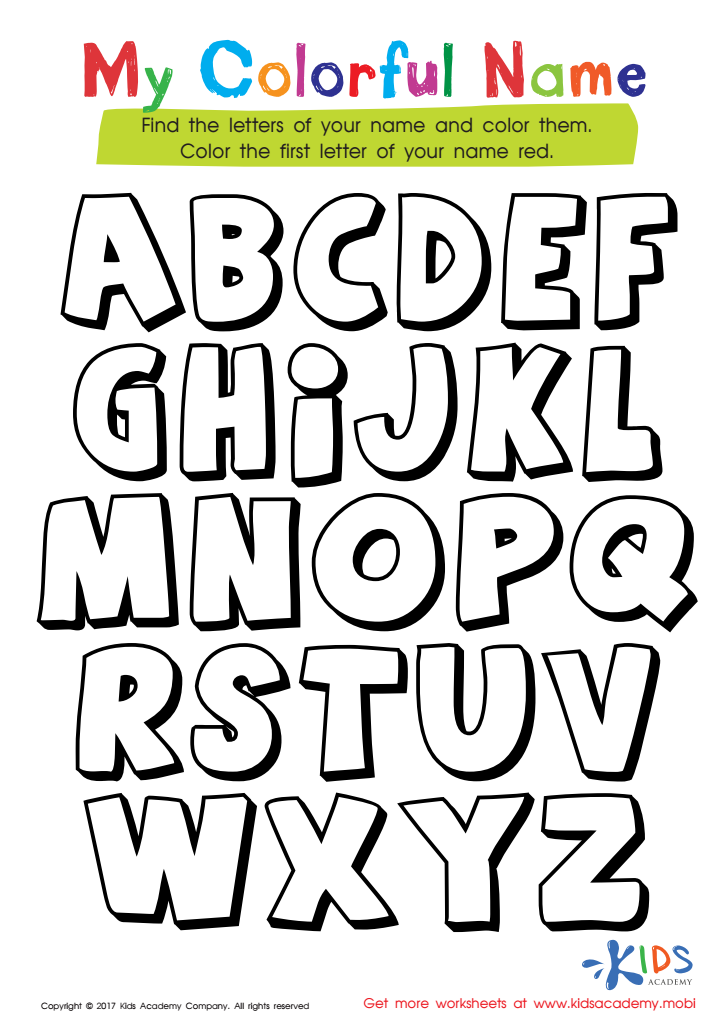
My Colorful Name Worksheet
Writing their names is a milestone for children. With this worksheet, they recall the letters in their name and color the letters one at a time. Spelling and alphabet order are reinforced as they find each letter. Use this fun printable to help kids learn to write their names!
Download (PDF)
 Assign to My Students
Assign to My Students
My Colorful Name Worksheet
Worksheet
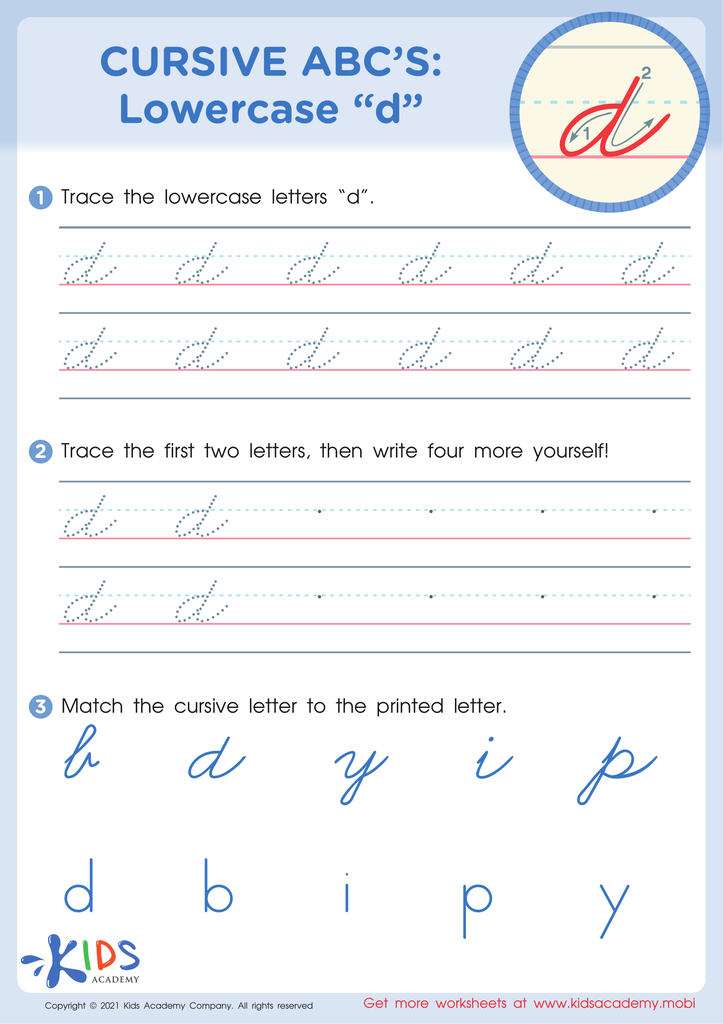
Cursive ABCs: Lowercase d
To make learning fun, introduce colorful worksheets! These help young learners perfect their cursive lowercase 'd'. By the end, they'll be better at writing and identifying the letter. It's an easy and enjoyable exercise for kids!
Cursive ABCs: Lowercase d
Worksheet
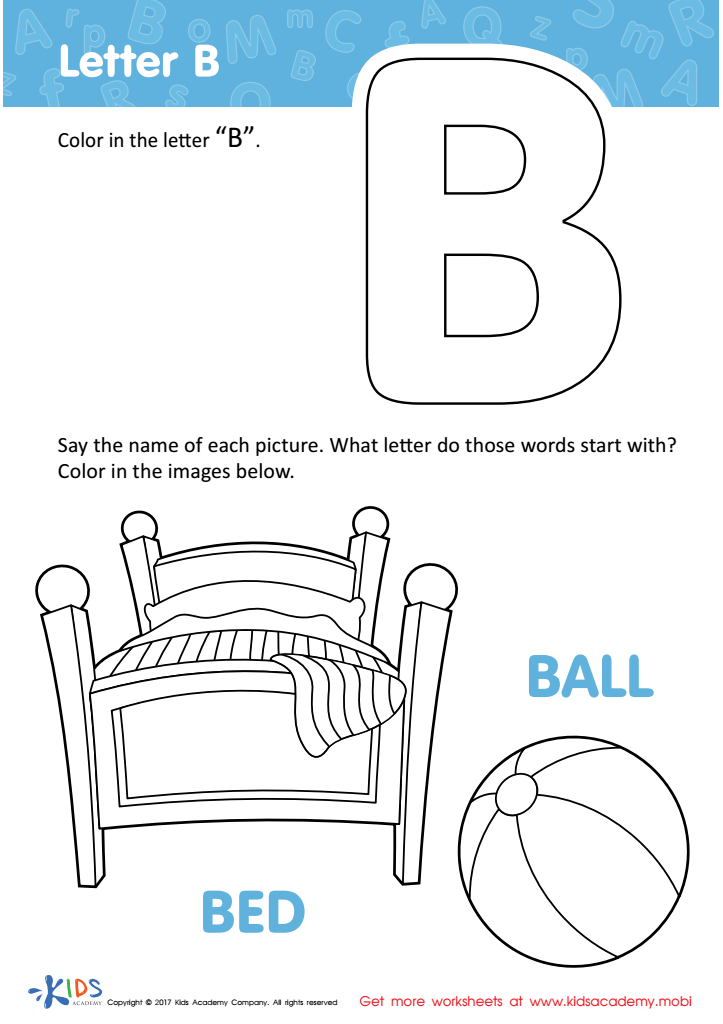
Letter B Coloring Sheet
Kids will love coloring this page that features things they like - balls, bubbles, bugs and bedtime - all words starting with "B"! It's a great way to introduce the alphabet and increase their exposure to letters and sounds. Let them have fun and learn at the same time!
Download (PDF)
Assign to My Students
Assign to My Students
Letter B Coloring Sheet
Worksheet
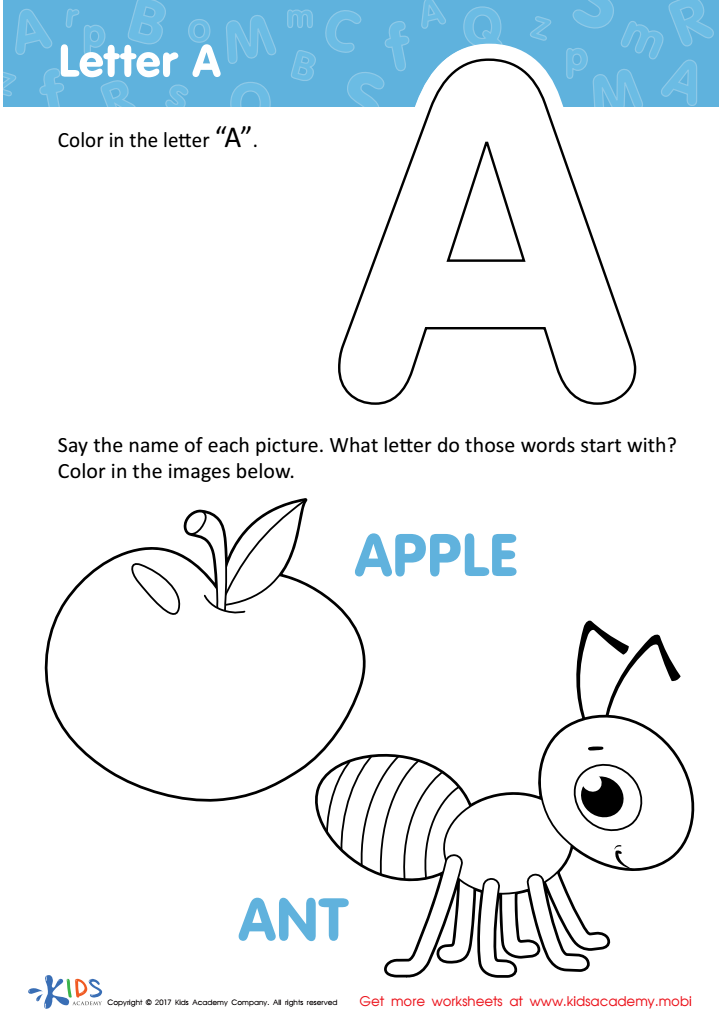
Letter A Coloring Sheet
This letter "A" coloring page is great for introducing kids to the alphabet! Let them exercise their creativity while they learn to recognize letters and sounds - it's a fun and easy way to help them get started.
Download (PDF)
Assign to My Students
Assign to My Students
Letter A Coloring Sheet
Worksheet
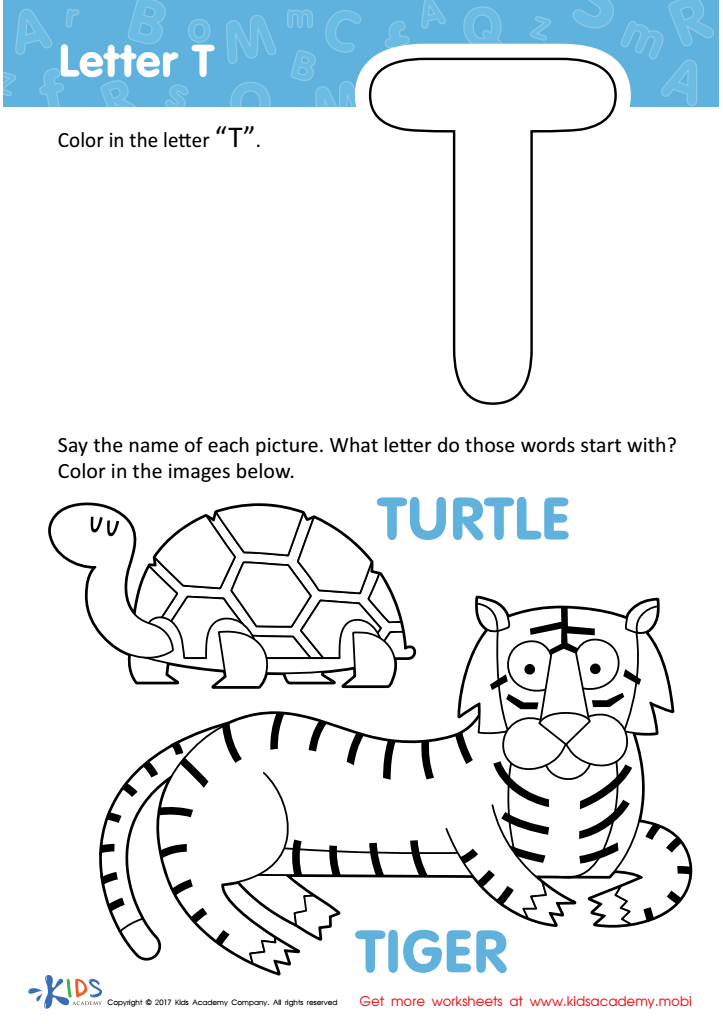
Letter T Coloring Sheet
Introduce your child to the letter "T" and its animals – turtles and tigers! With this coloring page, you can stimulate your child's imagination and creativity, while helping them recognize the letter "T". Have fun with your child and get coloring!
Download (PDF)
Assign to My Students
Assign to My Students
Letter T Coloring Sheet
Worksheet
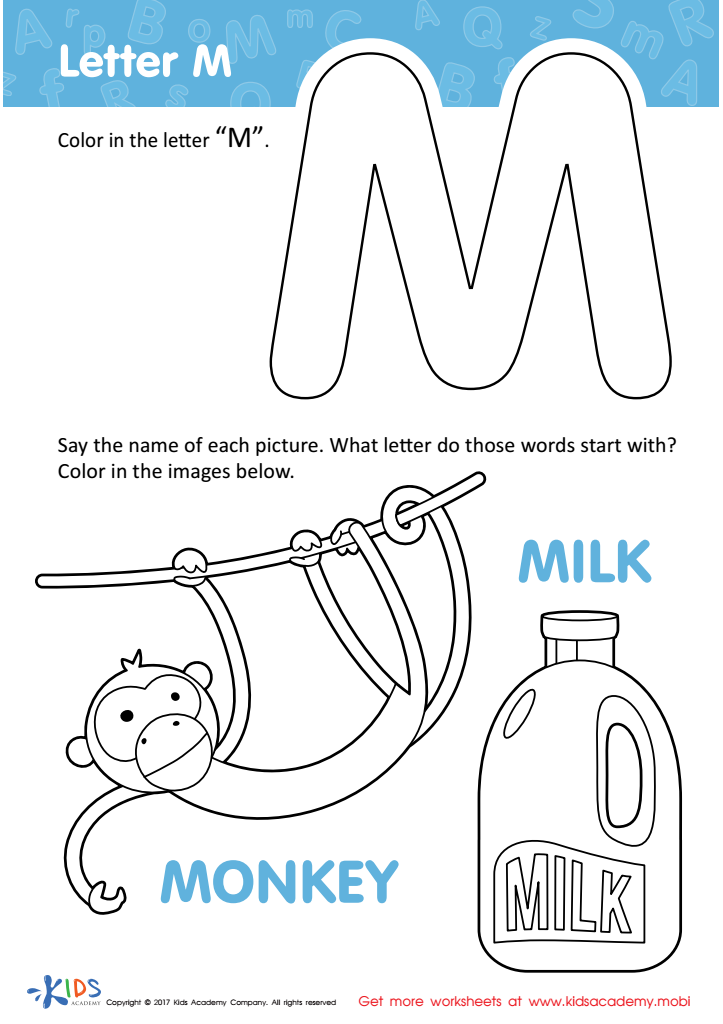
Letter M Coloring Sheet
Coloring this "M" page is fun and educational! Kids will enjoy the funny monkey and milk jug images, while learning to recognize the letter and all the words it makes.
Download (PDF)
Assign to My Students
Assign to My Students
Letter M Coloring Sheet
Worksheet
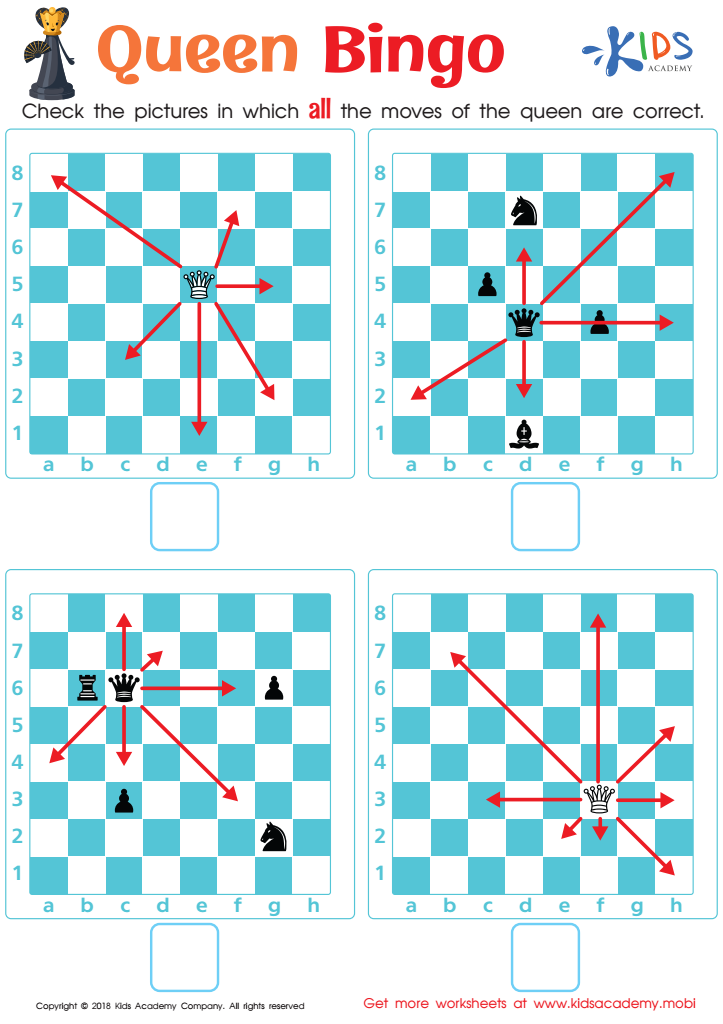
Queen Bingo Worksheet
Test your child's knowledge of chess rules and moves with this free worksheet! Kids look at four pictures and must decide if the queen moves are correct. This exercise helps hone your little one's chess skills!
Queen Bingo Worksheet
Worksheet
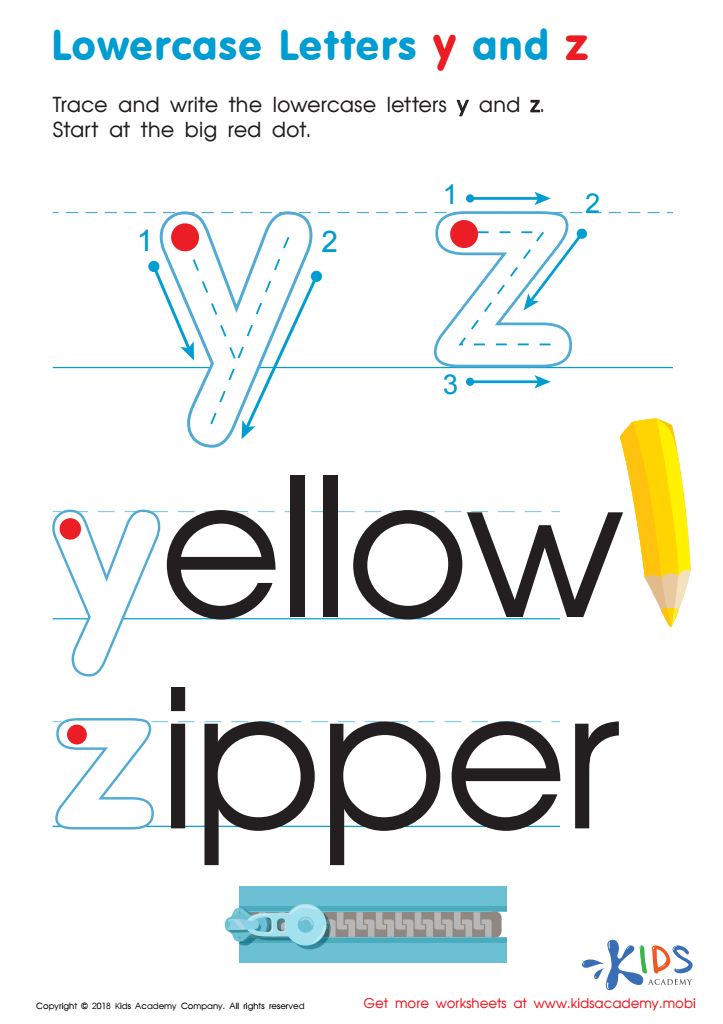
Lowercase Letters y z Worksheet
Help your child get a good start in writing and reading by tracing and writing the lowercase letters y and z. With this activity, they will learn the alphabet, which is essential for literacy success. Guide them through the worksheet and make sure they form the letters correctly. This will help them learn the basics needed to write and read fluently.
Lowercase Letters y z Worksheet
Worksheet
Cursive ABCs: Uppercase E
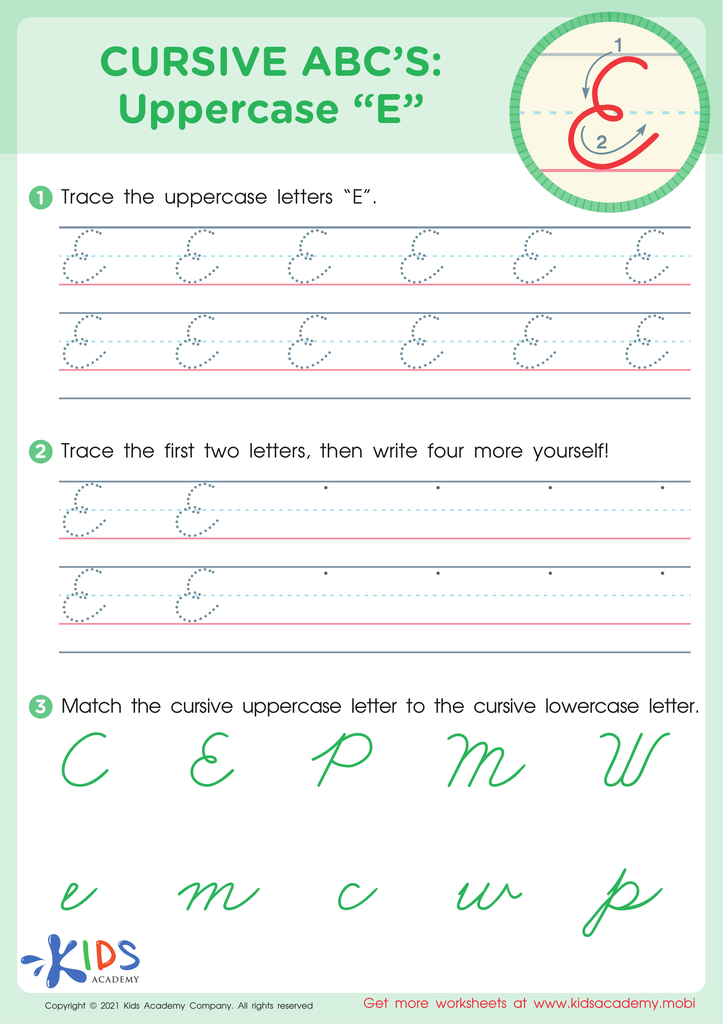
Ask your child if they can identify the letter 'E' and give examples. Each letter is unique, so provide coaching. Have them trace cursive 'E' to become familiar and boost confidence. Then, ask them to write it on their own.
Cursive ABCs: Uppercase E
Worksheet
Letter L Coloring Sheet
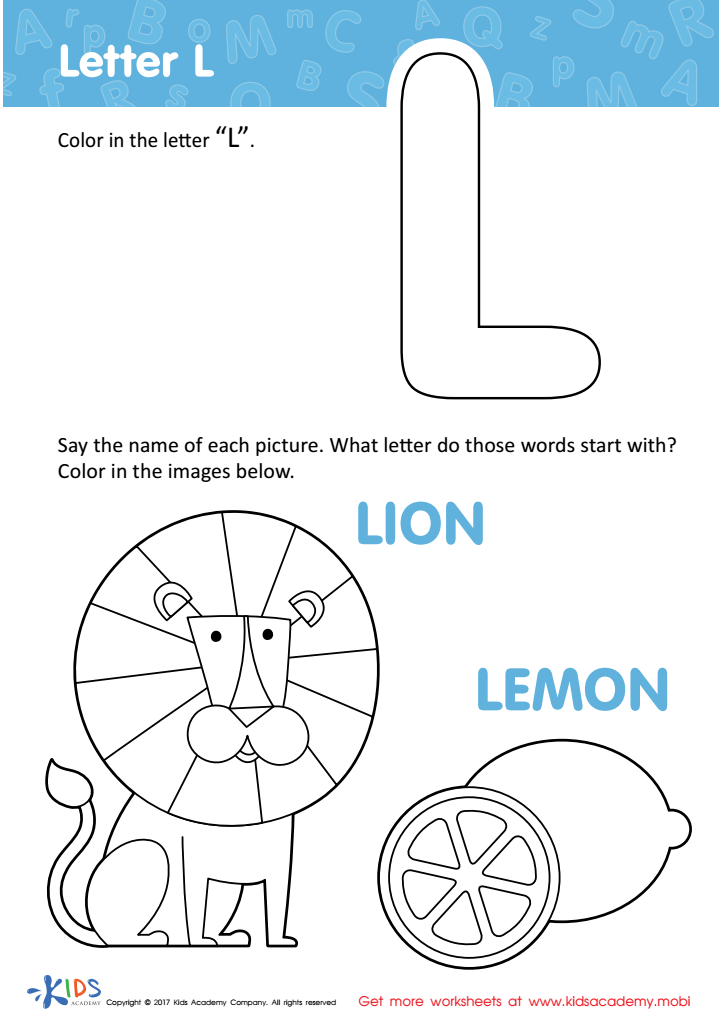
Kids often struggle to say "L" and love it because so many things they love start with it! This coloring page combines the letter and fun images like a lemon and lion to teach and entertain!
Download (PDF)
Assign to My Students
Assign to My Students
Letter L Coloring Sheet
Worksheet
Letter C Tracing Page
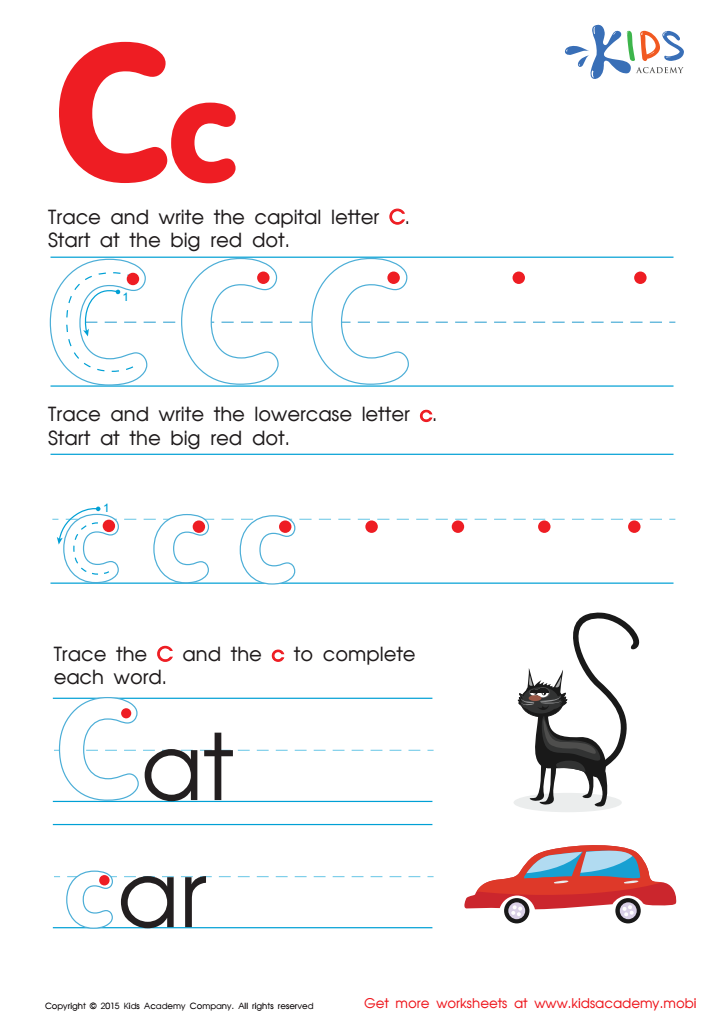
Trace and write the letter 'C'! Put the pencil at the red dot then follow the lines – the capital letter first then the lowercase one. Cats love it and so will you! Get more free printables to practice tracing and writing.
Letter C Tracing Page
Worksheet
Join Kids Academy for Free
Who is primarily going to use this learning content?


.jpg)


.jpg)


Alphabet recognition is a fundamental skill for children ages 6-9, forming the foundation for literacy and successful communication. Parents and teachers should care about this skill for several key reasons. First, recognizing letters is the gateway to reading; it equips children with the ability to decode words, leading to improved reading fluency and comprehension. As children learn to read, they also develop a richer vocabulary, essential for effective expression and critical thinking.
Further, alphabet recognition enhances spelling skills, allowing children to understand the sound-letter relationships that are vital for writing. In an increasingly digital age, where communication relies heavily on text, strong alphabet recognition ensures that children are not left behind in a world centered around literacy.
Moreover, this skill contributes to overall cognitive development. Engaging with letters and words can foster curiosity, creativity, and problem-solving abilities in young learners. Through fun games and interactive activities focused on letters, both parents and teachers can cultivate a positive learning environment that reinforces a child's confidence and enthusiasm for reading and writing.
In summary, nurturing alphabet recognition in early learners is crucial for their academic success and personal growth, making it a priority for both parents and educators.








