
Alphabetical order understanding Worksheets for Ages 6-9
6 filtered results
Difficulty Level
Grade
Age
-
From - To
Subject
Activity
Standards
Unlock your child’s potential with our engaging Alphabetical Order Understanding Worksheets designed specifically for ages 6-9. These comprehensive resources empower young learners to grasp the concept of alphabetical ordering through fun activities and exercises. Each worksheet encourages kids to practice arranging words, enhancing their vocabulary and spelling skills along the way. Perfect for classroom use or home learning, these worksheets are tailored to keep children motivated while building foundational language skills. Dive into an interactive learning experience that supports critical thinking while fostering a love for reading and writing. Start your child’s alphabetical adventure today!
Favorites
With answer key
Interactive
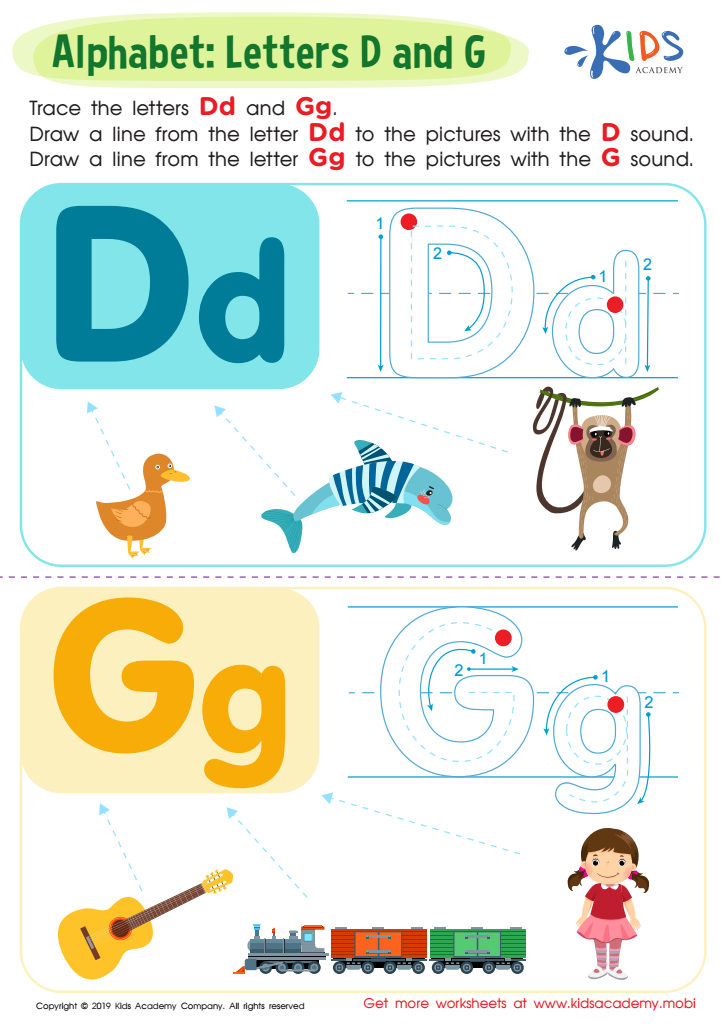
Letter D and G Tracing Worksheet
Kids can explore their imagination with the 'Alphabet: Letters D and G' worksheet! They'll trace capital and lowercase "D" and "G" and trace a line from the words. Colorful animals and objects make the task more fun and entertaining!
Letter D and G Tracing Worksheet
Worksheet
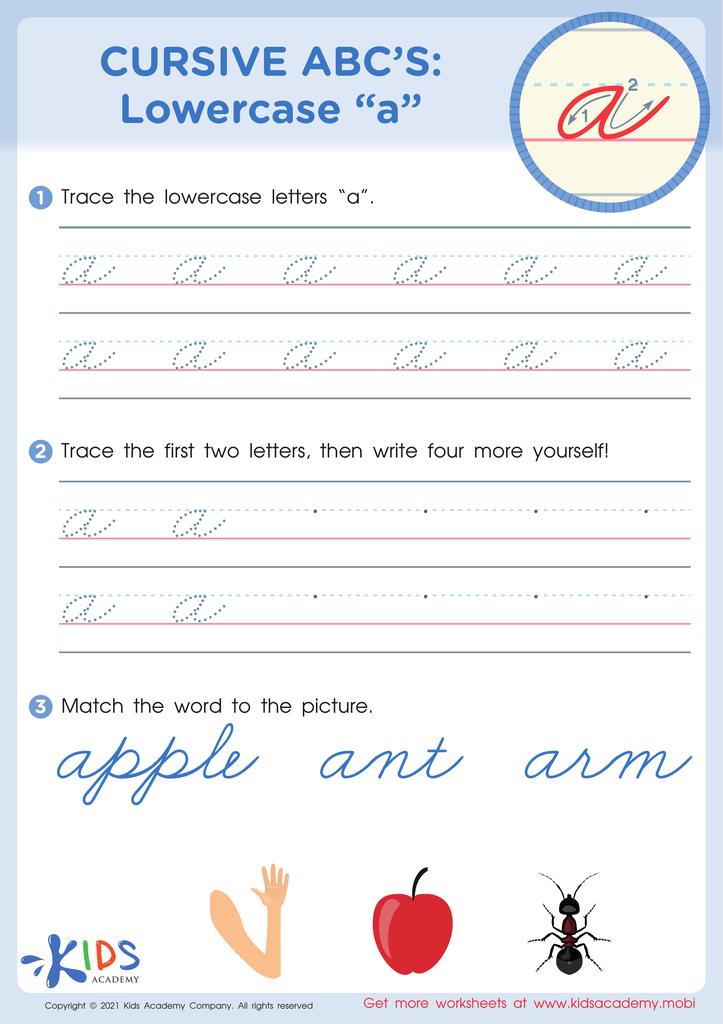
Cursive ABCs: Lowercase a
Help your children learn to write cursive letters with these free tracing sheets. They'll practice their handwriting, develop printing skills and build vocabulary. By tracing the lowercase letter “a” multiple times, they'll learn how it's formed and be ready to write it on their own. The colorful pictures at the bottom of each page also offer new words beginning with the letter 'a'.
Cursive ABCs: Lowercase a
Worksheet
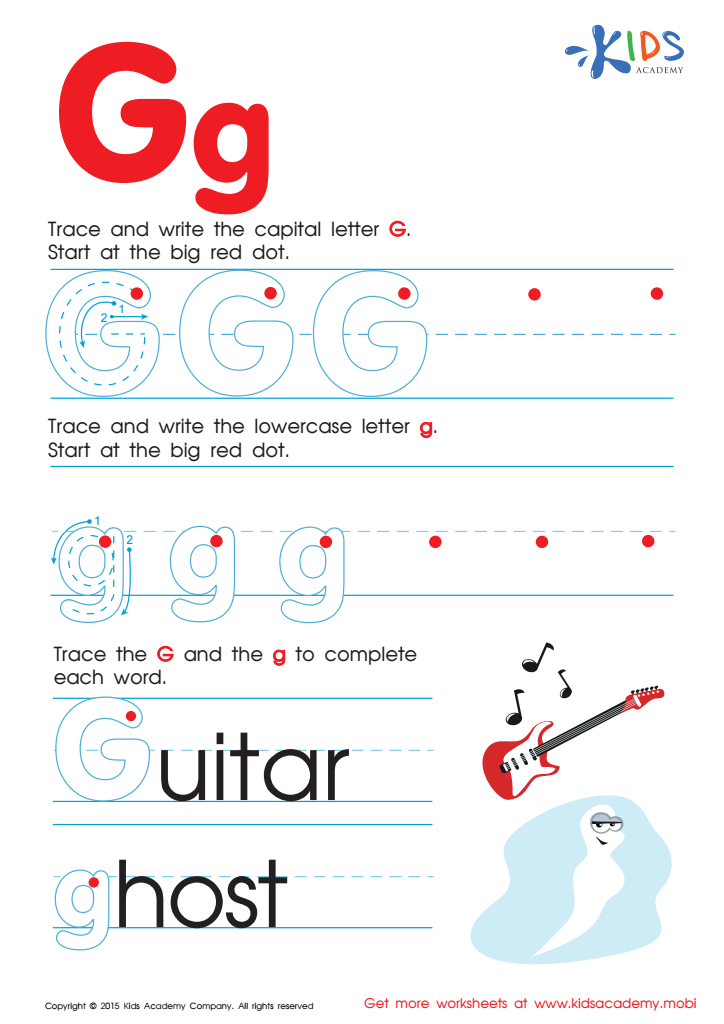
Letter G Tracing Page
Get ready to trace the letter "G" – with a big red spot as the starting point, trace the lines and watch the letter appear. Uppercase and lowercase letters are both easy and fun to write. Give it a go and finish the word "go". Play the guitar and say "hello" to a funny ghost!
Letter G Tracing Page
Worksheet
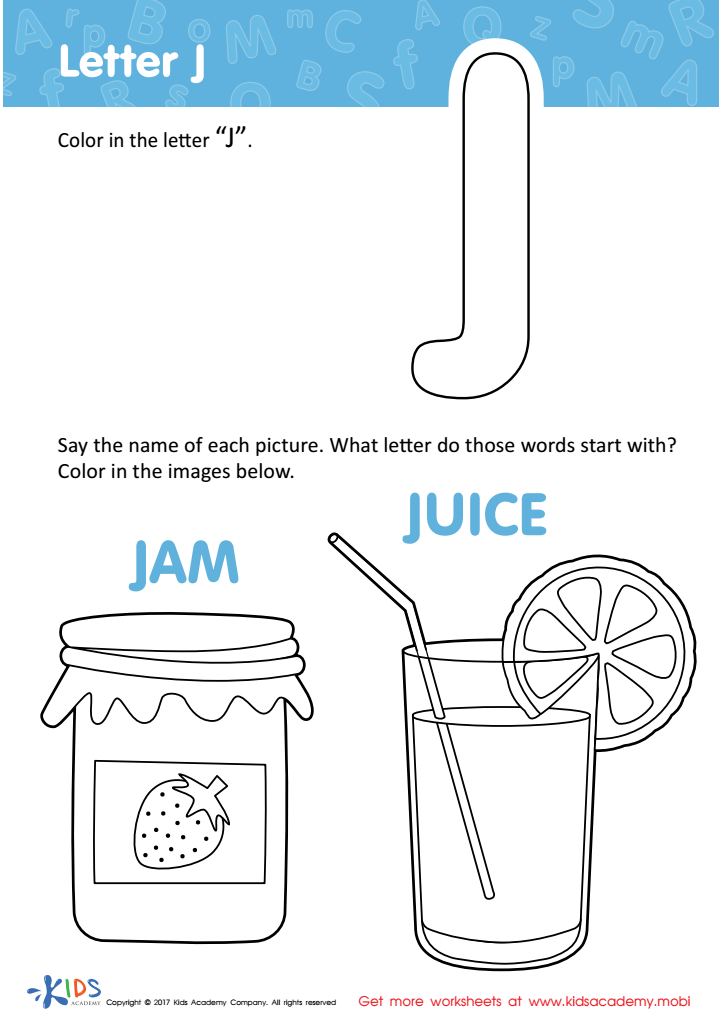
Letter J Coloring Sheet
Practice the letter 'J' with your little one with this fun coloring page! Pictures of jar, juice, jam and jelly make it an enjoyable experience for kids. Learning the letter and coloring is fun for even the youngest learners.
Download (PDF)
 Assign to My Students
Assign to My Students
Letter J Coloring Sheet
Worksheet
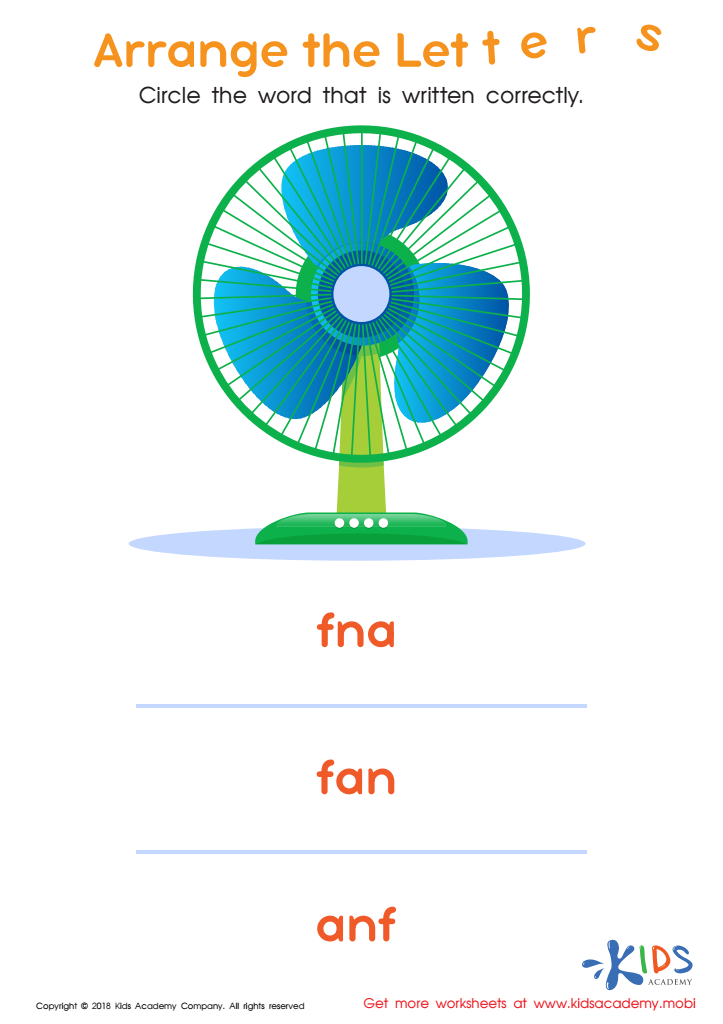
Arrange the Letters Worksheet
Test your kids' spelling skills with this worksheet! Show them the picture and ask what it stands for. Then, have them choose the correct spelling from the options given. Check their answer by circling the right one.
Arrange the Letters Worksheet
Worksheet
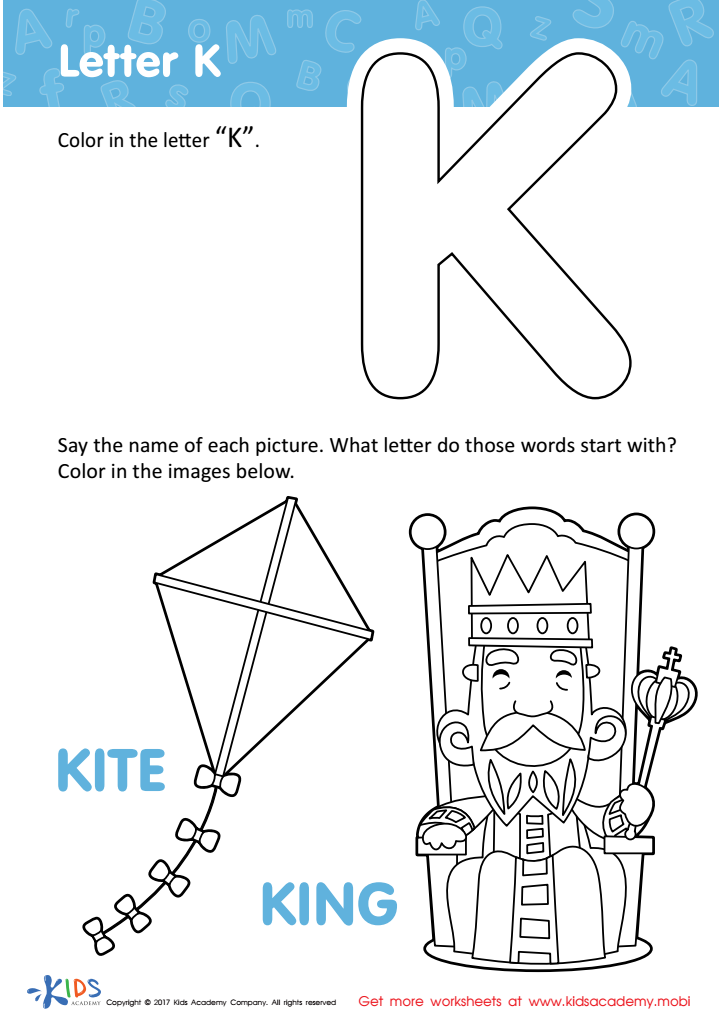
Letter K Coloring Sheet
This letter K coloring page captivates your child's creativity while learning the letter! Showcasing a king and kite, common words for their age group, it's sure to spark their imagination.
Download (PDF)
Assign to My Students
Assign to My Students
Letter K Coloring Sheet
Worksheet
Join Kids Academy for Free
Who is primarily going to use this learning content?







Understanding alphabetical order is crucial for children aged 6-9 as it forms the foundation for effective reading, writing, and organizational skills. At this stage of development, children are becoming more independent readers and writers, often engaging with a wider range of texts. Familiarity with alphabetical order helps them efficiently locate information in books, dictionaries, and digital content.
Moreover, this skill contributes to language development; as children learn to arrange words alphabetically, they enhance their vocabulary and spelling. It encourages critical thinking, as students must actively categorize and sort words. Furthermore, grasping alphabetical order fosters self-esteem and confidence when students find and use resources independently, setting the stage for lifelong learning.
In addition, mastering alphabetical order lays the groundwork for understanding more complex systems, such as filing documents, using libraries, and referencing information. For teachers and parents, reinforcing this concept through engaging activities can transform learning into a fun experience, solidifying retention. Games, songs, and puzzles not only motivate children but also create a positive home or classroom environment. Ultimately, advocacy for teaching alphabetical order at this young age ensures students develop essential skills that benefit their overall academic journey.








