Boost critical thinking Worksheets for Ages 6-9
5 filtered results
-
From - To
Discover our “Boost Critical Thinking Worksheets” designed specifically for ages 6-9! These engaging, age-appropriate resources cultivate your child’s analytical skills through fun activities that promote problem-solving, logical reasoning, and creative thinking. Each worksheet includes enjoyable puzzles, riddles, and scenarios that challenge young minds, encouraging them to think independently and make connections. With a variety of themes and difficulty levels, your child will love exploring the world of critical thinking while honing essential skills for their academic journey. Perfect for home learning or classroom use, these worksheets are an excellent way to make learning interactive and effective. Start boosting your child’s critical thinking today!

 Assign to My Students

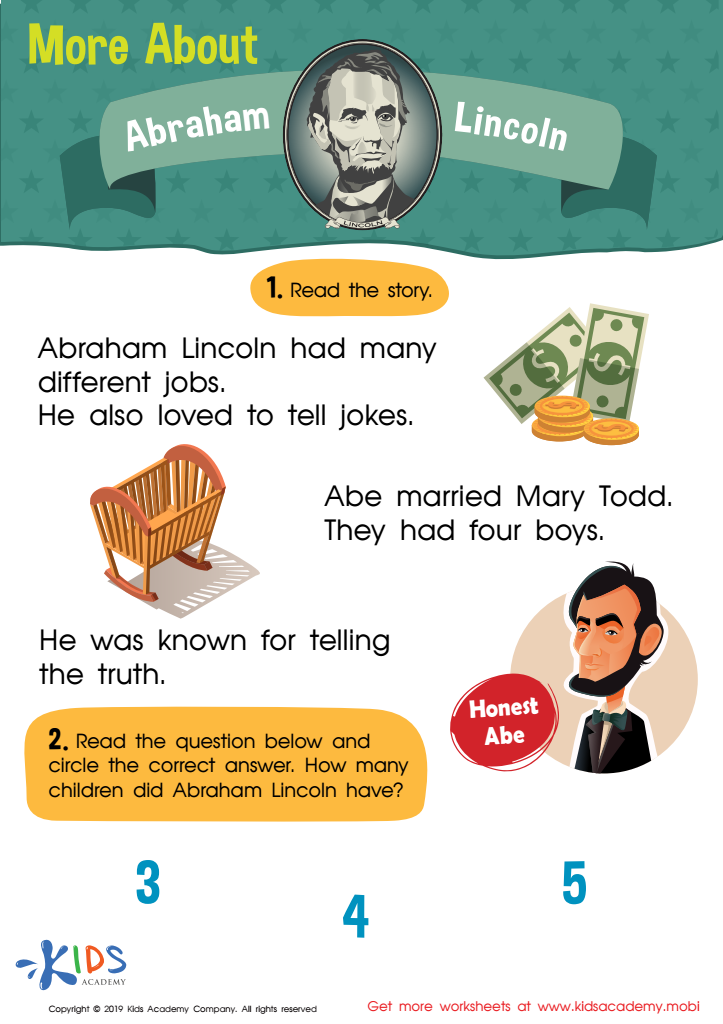
More About Abraham Lincoln Worksheet








.jpg)
Boosting critical thinking in children aged 6 to 9 is vital for their overall development and future success. At this stage, children are naturally curious, and fostering critical thinking enhances their ability to analyze information, solve problems, and make informed decisions. Parents and teachers should prioritize this development to encourage independent thinking and creativity, skills that are crucial for educational achievement and personal growth.
Enhancing critical thinking equips children with the ability to question assumptions and approach challenges constructively. This age is formative; developing these skills early helps them become confident learners and fosters resilience. By encouraging debates, discussions, and creative problem-solving activities, adults can model and nurture inquisitiveness, teaching children to explore diverse perspectives.
Involving children in decision-making processes and allowing them to express their thoughts strengthens their reasoning abilities and cultivates emotional intelligence. The benefits extend beyond academics—critical thinkers are better equipped to navigate social situations and understand complex issues in the world around them.
Ultimately, parents and teachers who emphasize critical thinking contribute positively to their children's lifelong learning, equipping them with the skills necessary to adapt to an ever-changing society, thrive in diverse environments, and engage meaningfully with the world.








