Building vocabulary Worksheets for Ages 6-9
6 filtered results
-
From - To
Enhance your child's language skills with our engaging Building Vocabulary Worksheets for Ages 6-9. These expertly designed activities make learning new words fun and interactive, supporting your child’s reading and writing development. Each worksheet encourages young learners to explore synonyms, antonyms, word meanings, and context usage, ensuring a comprehensive vocabulary expansion. Perfect for use at home or in the classroom, our resources foster critical thinking and communication skills. Make vocabulary building an enjoyable experience for your child with these printable worksheets from Kids Academy. Start exploring today and help your child build a strong language foundation for future success!
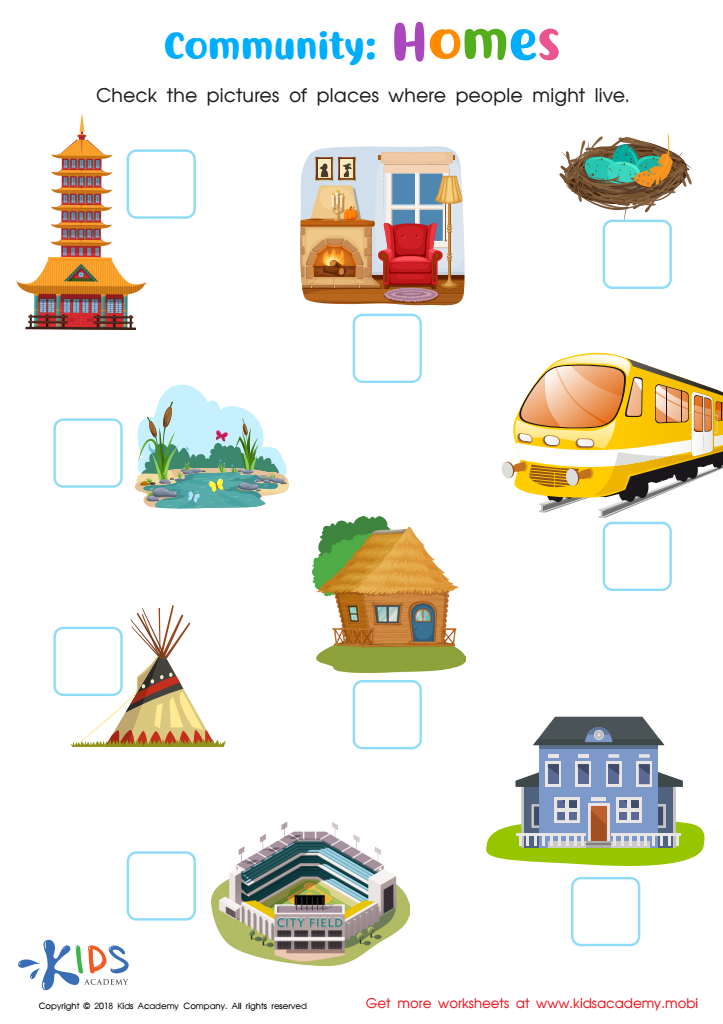
Community: Homes Worksheet
 Assign to My Students
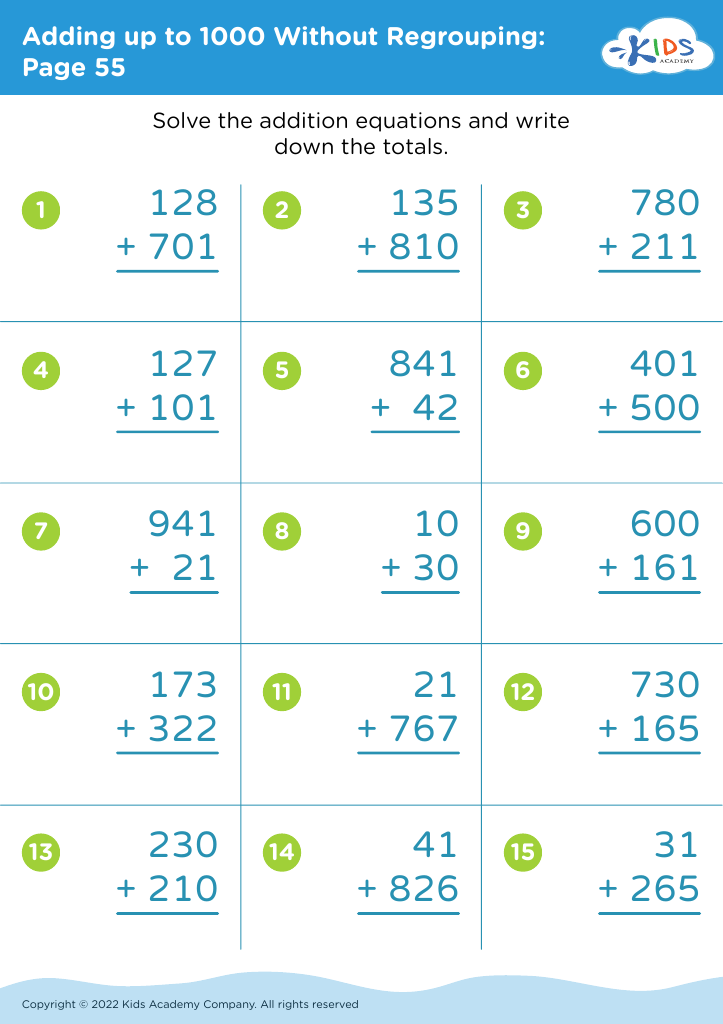
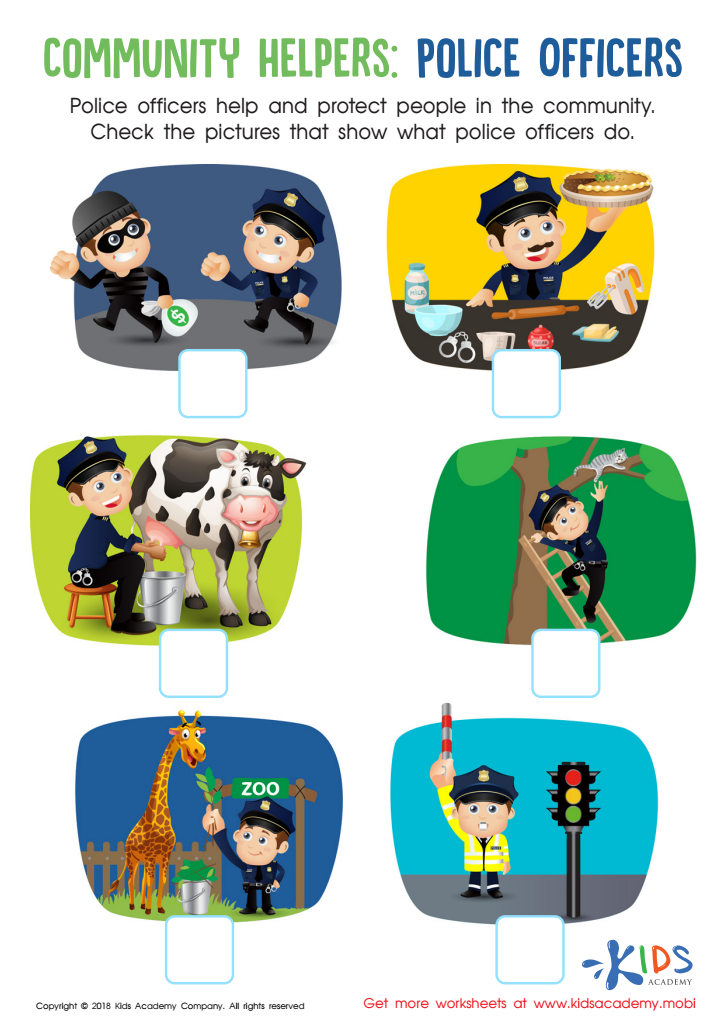
Police Officers Community Helpers Worksheet
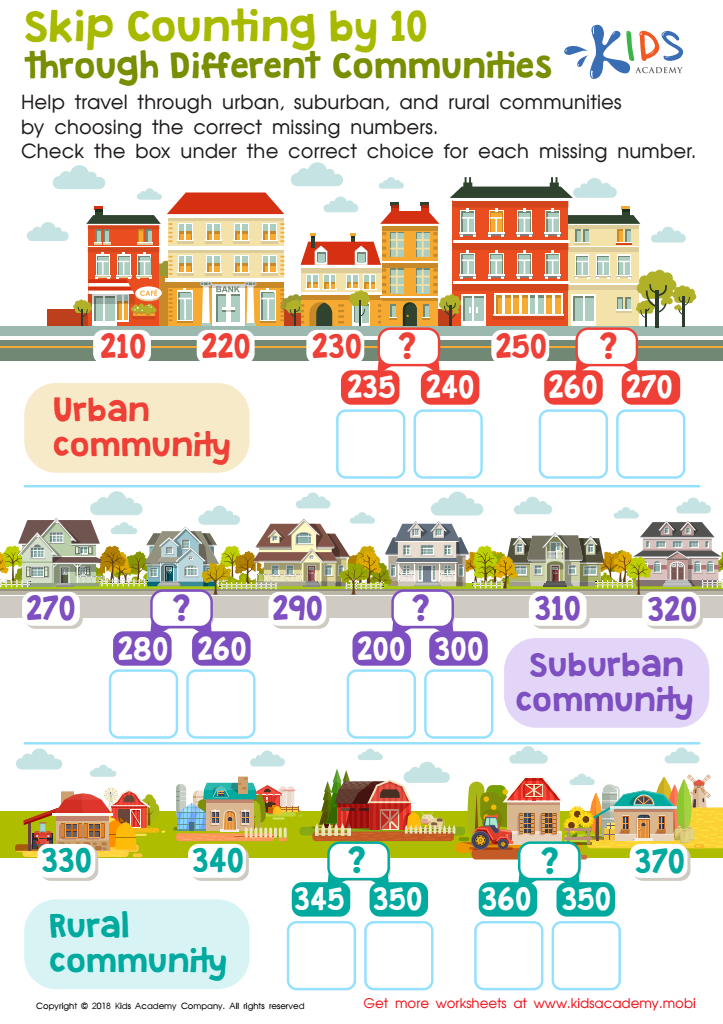
Skip Counting by 10 through Different Communities Worksheet
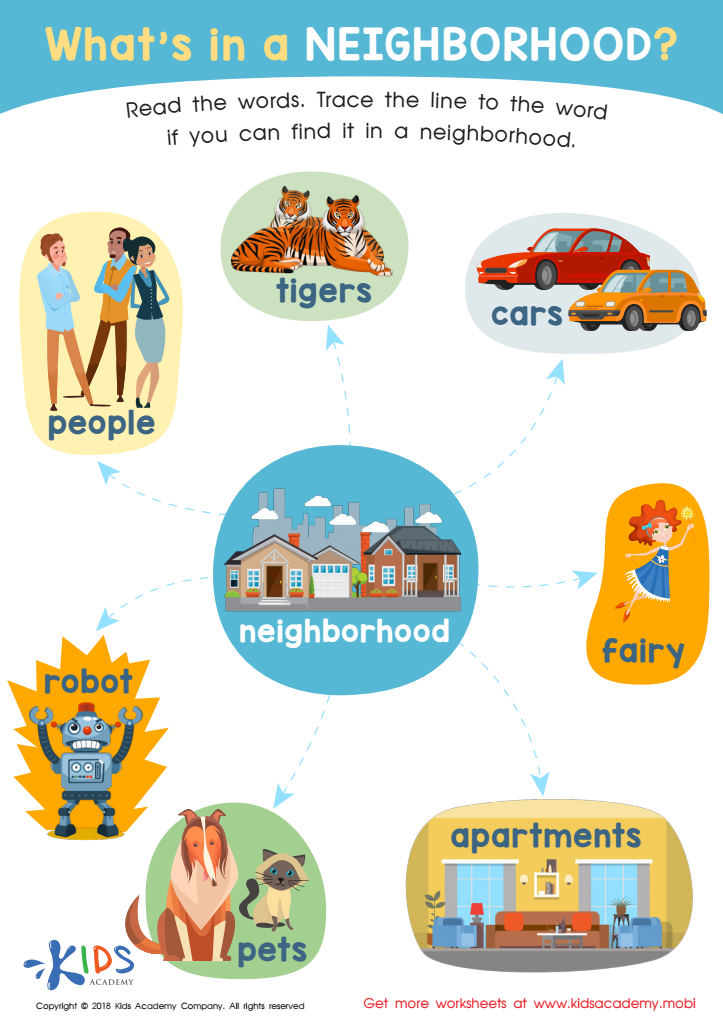
What's in a Neighborhood? Worksheet







Building vocabulary for children aged 6-9 is crucial for their academic and personal development. At this formative stage, children transition from learning to read to reading to learn. A robust vocabulary underpins their reading comprehension, enabling them to understand and engage with diverse subjects across the curriculum. When kids have a rich vocabulary, they can grasp more complex concepts and express themselves more clearly and effectively.
Additionally, vocabulary growth is closely linked to overall cognitive development. Children with a stronger vocabulary tend to have better problem-solving skills and are more adept at critical thinking. It provides them with the tools to turn thoughts into words, enhancing communication and social interaction.
On a personal level, a rich vocabulary empowers children, boosting their confidence in both academic and social contexts. It aids in forming friendships, participating in class discussions, and developing empathy by understanding different perspectives.
For parents and teachers, investing time and effort in expanding a child's vocabulary isn't just about academic success but fostering a lifelong love of learning. Engaging storytelling, conversations, and exposure to various reading materials can enrich a child's word bank, laying a strong foundation for their future educational and personal endeavors.








