Categorization skills Worksheets for Ages 6-9 - Page 2
25 filtered results
-
From - To
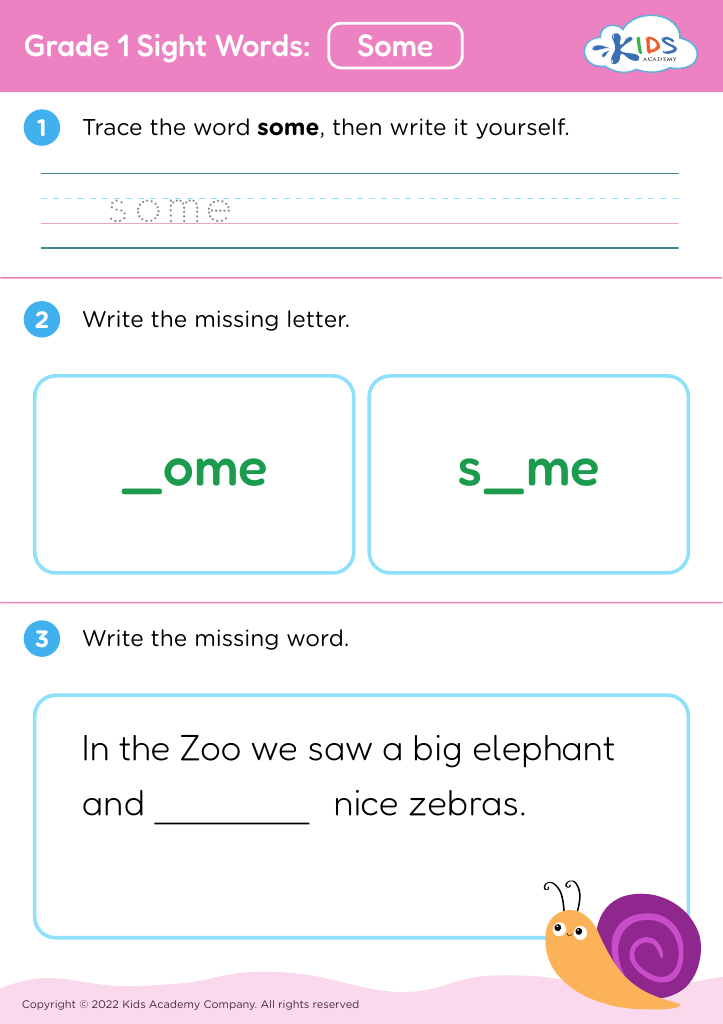








Categorization skills are fundamental for children aged 6-9 as they form the bedrock for advanced cognitive development and learning. At this stage, children are transitioning from concrete to more abstract forms of thinking. The ability to categorize enables them to organize information, enhancing memory retention and retrieval. Categorization supports vocabulary development by helping children understand and group similar objects, concepts, or words, fostering more effective communication.
Moreover, these skills underpin critical thinking and problem-solving. When children identify patterns and make connections between different categories, they strengthen their logical reasoning and analytical abilities. For example, sorting objects by shape or color is not just a fun activity; it nurtures mathematical thinking and prepares them for subjects like science and literacy, where categorizing information is crucial.
In social contexts, categorization aids in recognizing social cues and norms, which are essential for collaborative play and building friendships. Educators and parents who actively engage children in categorization activities—such as sorting, classifying, and grouping—contribute to a child's holistic development. They prepare them for more complex tasks at school and in everyday life, thereby providing a strong foundation for lifelong learning and adaptation skills.








