Character recognition Worksheets for Ages 6-9
3 filtered results
-
From - To
Explore our engaging Character Recognition Worksheets designed specifically for children aged 6-9. These worksheets are perfect for helping young learners enhance their reading and writing skills by identifying letters, numbers, and familiar characters. Our fun, interactive activities encourage kids to recognize various characters through tracing, coloring, and matching exercises, fostering essential cognitive development. Parents and educators can easily access and print these resources, making learning enjoyable and effective. Promote early literacy and boost confidence in young readers with our thoughtfully crafted character recognition activities today! Visit our website to download the worksheets and support your child's educational journey.
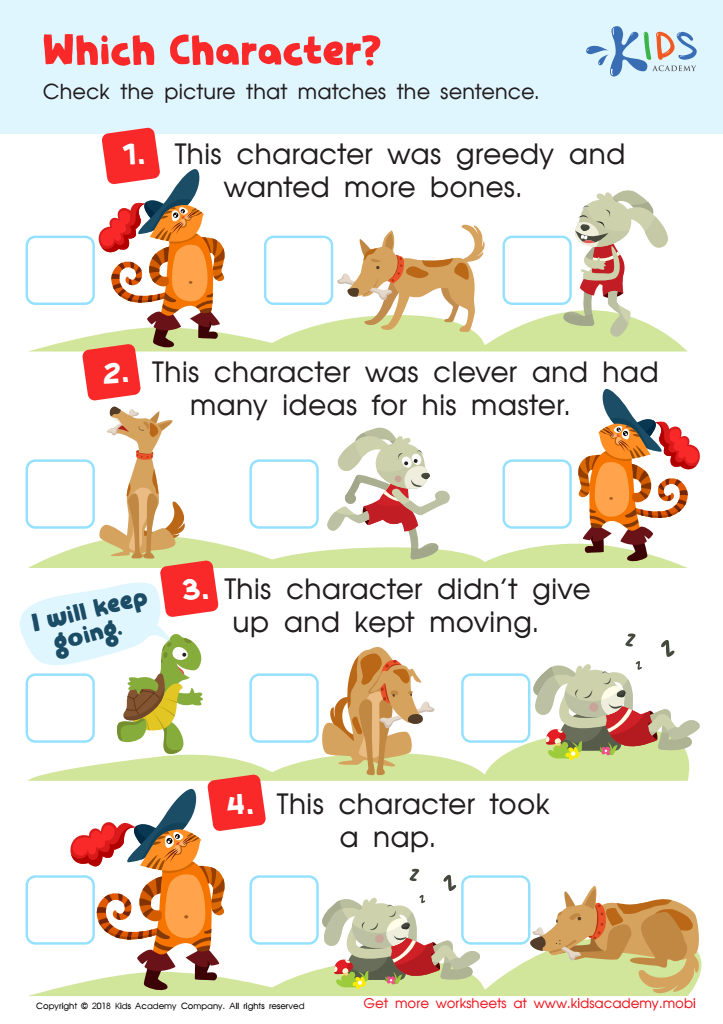
Which Character Worksheet
 Assign to My Students
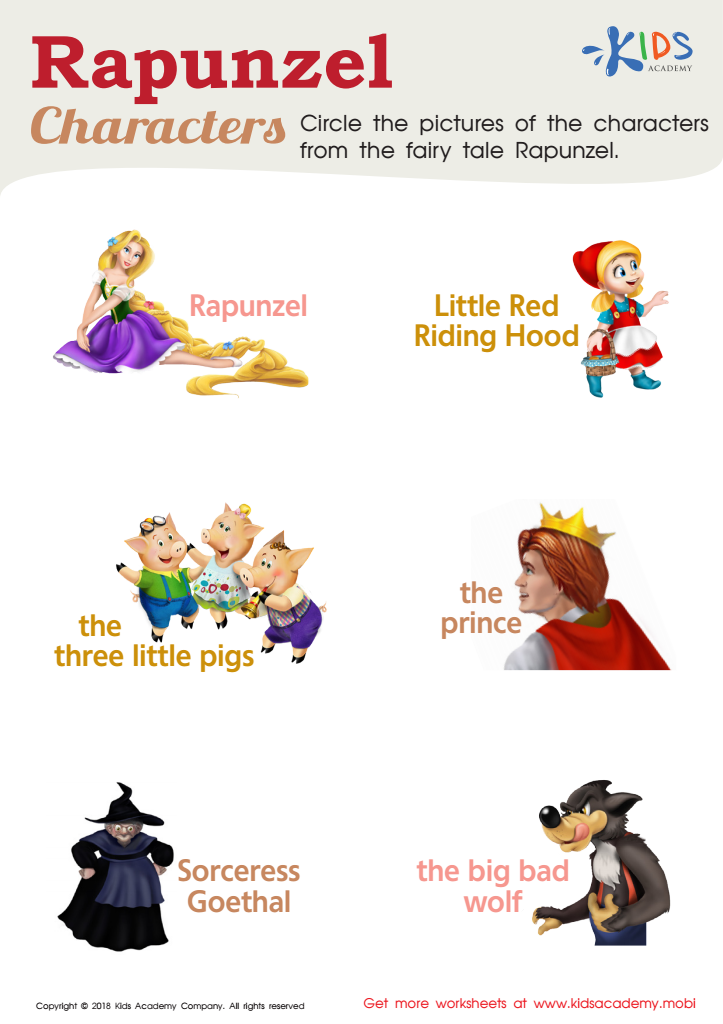
Rapunzel Characters Worksheet
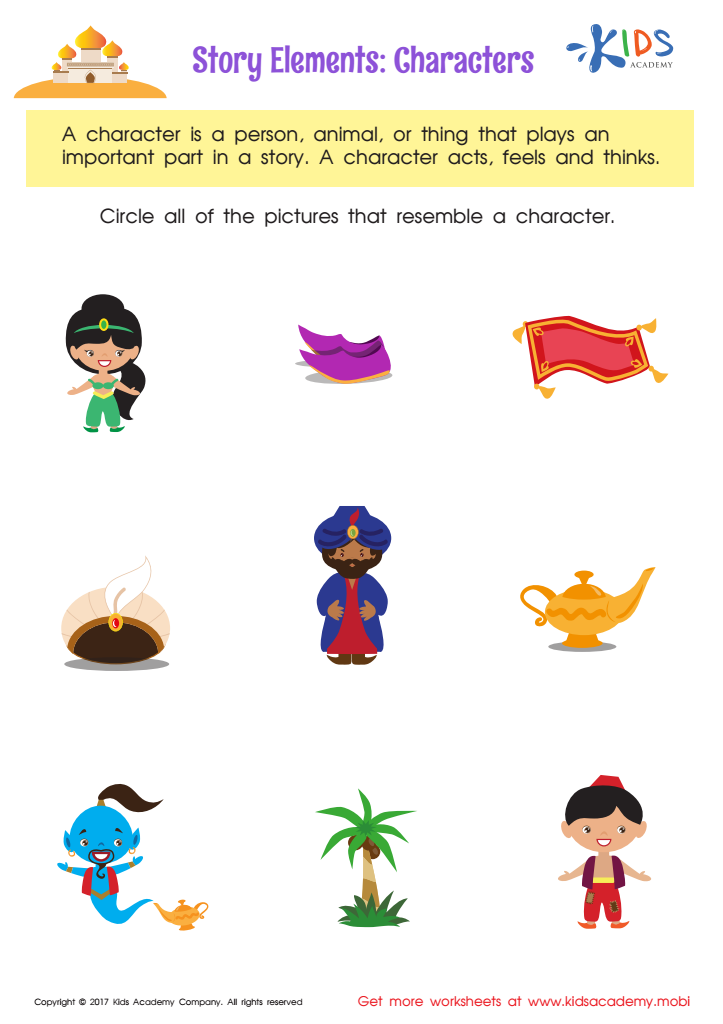
Story Elements Printable



.jpg)




Character recognition is a fundamental literacy skill for children aged 6-9, forming the cornerstone of their reading and writing abilities. During this critical developmental stage, children are learning to connect letters with sounds, and recognizing characters—be they letters or shapes—helps facilitate this process. Understanding and identifying characters lays the groundwork for fluent reading, which in turn boosts comprehension and overall academic success.
For parents and teachers, fostering character recognition is essential because it not only supports cognitive development but also builds confidence in young learners. As children master this skill, they feel accomplished and motivated to engage with written text, promoting a lifelong love for reading.
Additionally, character recognition is intertwined with other essential skills, such as phonemic awareness and vocabulary acquisition. By focusing on this skill, educators and parents can create a more enriching learning environment. Using interactive activities like games, flashcards, and storytelling can make this learning enjoyable.
Moreover, in an increasingly digital world, where typing and digital literacy are crucial, understanding character recognition continues to hold relevance. Ultimately, supporting character recognition during these formative years empowers children, setting them on a path to success in their academic journeys and beyond.








