
Chess knowledge Worksheets for Ages 6-9
5 filtered results
Difficulty Level
Grade
Age
-
From - To
Subject
Activity
Standards
Unlock young minds with our engaging "Chess Knowledge Worksheets for Ages 6-9." Designed to introduce elementary students to the exciting world of chess, these printable worksheets promote critical thinking, strategy development, and problem-solving skills. Created with colorful, fun graphics, each worksheet simplifies chess concepts, making them accessible and enjoyable. Perfect for home or classroom use, they'll help kids learn the fundamentals of chess, including piece movements, rules, and basic tactics. Inspire a love of chess while building essential cognitive skills with our expertly crafted and child-friendly worksheets. Download, print, and watch your students thrive!
Favorites
With answer key
Interactive
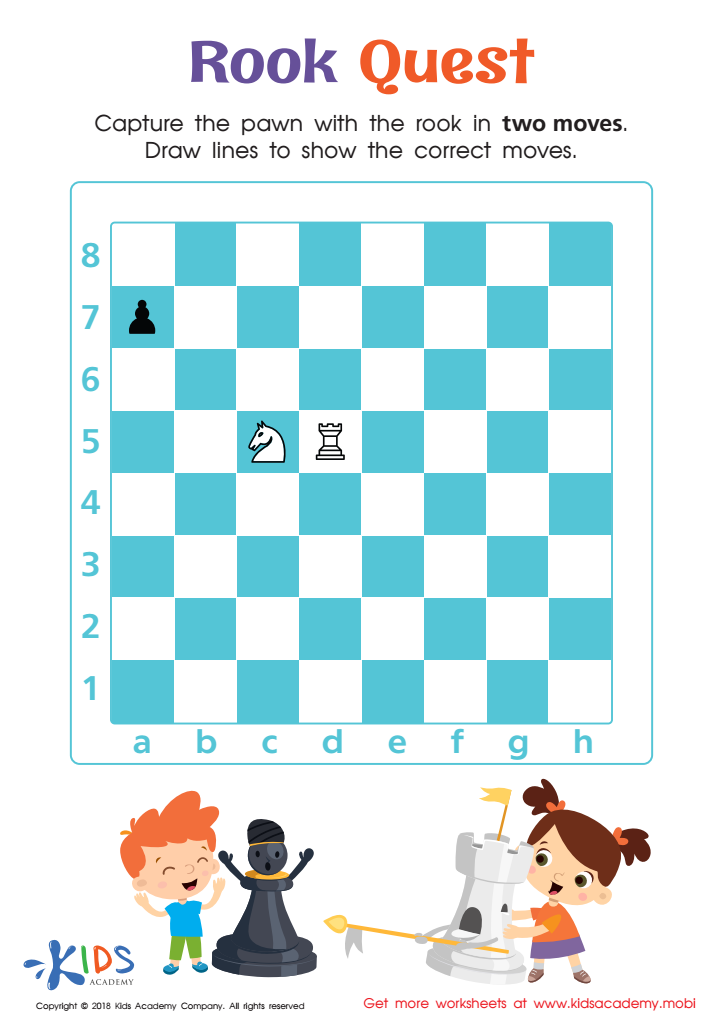
Rook Quest Worksheet
Is your child a chess whiz? Check their progress with this rook quest: get the enemy's pawn piece in just two moves. Have them draw the lines for the moves they'll make. See how quickly they master it!
 Assign to My Students
Rook Quest Worksheet
Worksheet
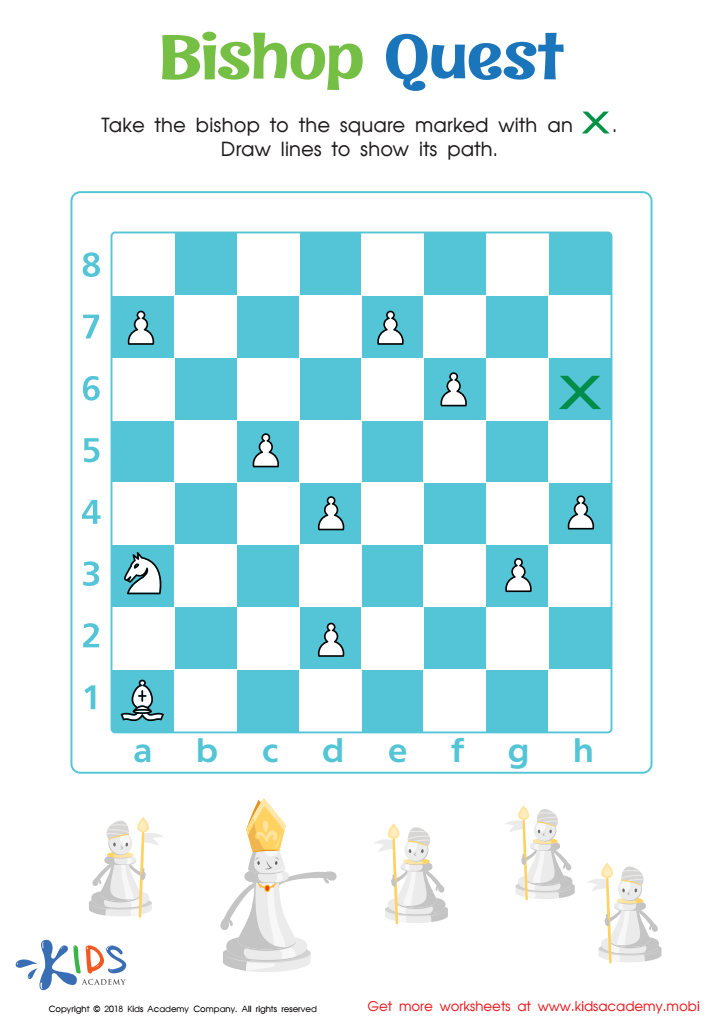
Bishop Quest Worksheet
Show kids the board and ask them to identify the bishop. Then ask them to move it to the square marked 'x', drawing lines to show its path. This worksheet helps teach kids how to move the bishop on a chessboard.
Bishop Quest Worksheet
Worksheet
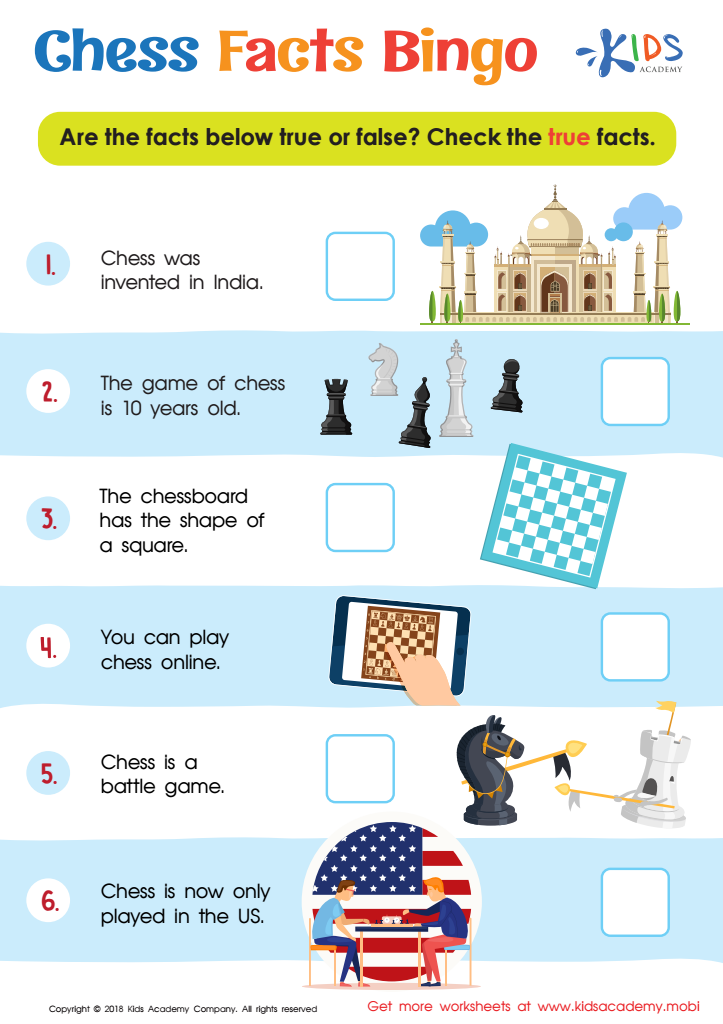
Chess Facts Bingo Worksheet
Help your child assess their knowledge of chess with our simple worksheet. It contains six questions; read them to your child and ask them if the statements are true or false. Once they check the boxes for the true statements, you'll have a better understanding of their understanding of the game.
Chess Facts Bingo Worksheet
Worksheet
Join Kids Academy for Free
Who is primarily going to use this learning content?







Parents and teachers should care about introducing chess to children aged 6-9 because it fosters essential cognitive skills and character development in a fun and engaging way. Chess promotes critical thinking by encouraging kids to analyze situations, anticipate consequences, and make strategic decisions. These skills are fundamental to academic success and problem-solving in real-life scenarios.
Playing chess also improves concentration and focus. Young children learn to pay attention, plan ahead, and manage their time wisely during a game, which can translate to better performance in traditional academics and other activities. Additionally, chess teaches children patience and persistence. Understanding that progress often requires thoughtful effort can help cultivate a growth mindset, where children learn from failures and strive continuously to improve.
Socially, chess can bolster confidence and resilience. Winning can boost self-esteem, while resolving challenges and occasional losses can teach humility and perseverance. Chess is also inclusive, capable of transcending language and cultural barriers, promoting diverse interactions among peers.
Overall, encouraging chess knowledge lays a foundation that benefits young minds in myriad ways, enhancing both intellectual growth and emotional maturity. Parents and teachers who support chess learning offer children invaluable tools to thrive academically, socially, and emotionally.








