Chess piece identification Worksheets for Ages 6-9
3 filtered results
-
From - To
Unlock the world of chess with our engaging Chess Piece Identification Worksheets, designed specifically for children aged 6-9! These fun, interactive sheets help young learners familiarize themselves with the essential chess pieces—king, queen, rook, bishop, knight, and pawn. Each worksheet incorporates vibrant visuals and easy-to-follow activities that promote both recognition and understanding of each piece's unique role on the board. Perfect for classroom or home use, our resources aim to enhance critical thinking skills and strategic planning. Start your child's chess journey today and watch them develop a passion for this timeless game while boosting cognitive abilities!
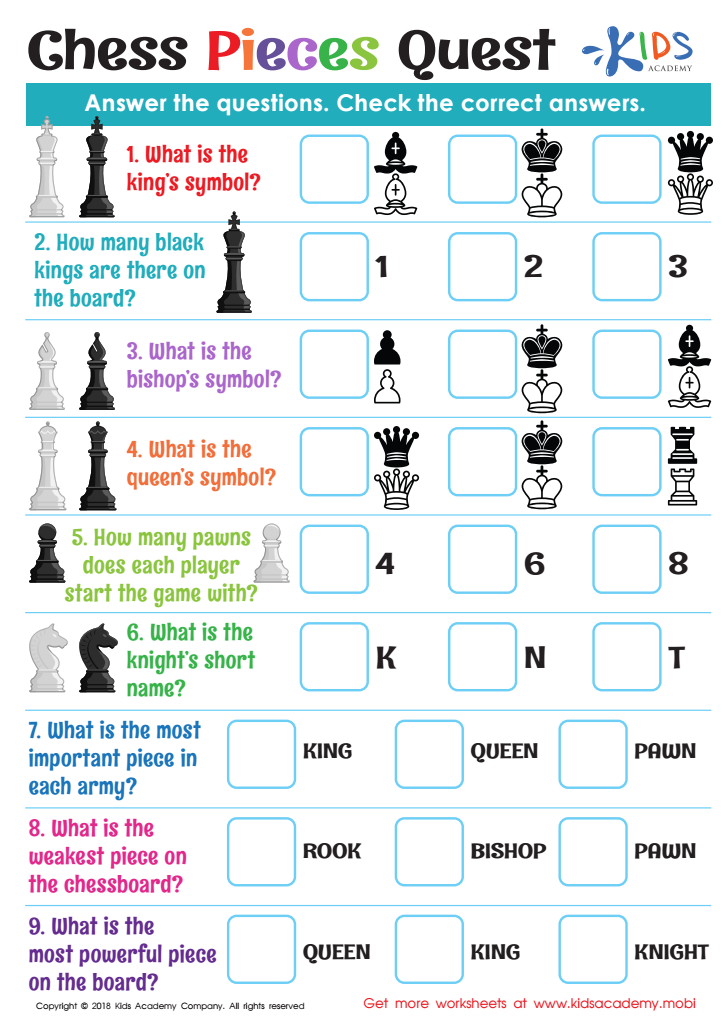
Chess Pieces Quest Worksheet
 Assign to My Students
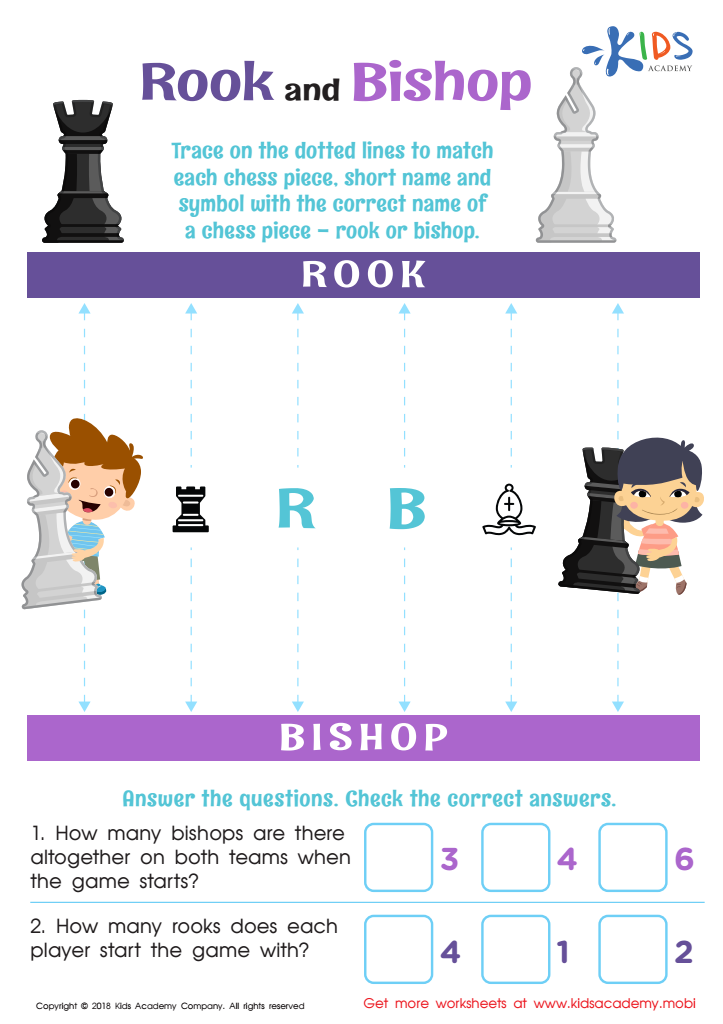
Rook and Bishop Worksheet







Chess piece identification is crucial for children aged 6-9 as it lays the foundation for their understanding of the game and its strategic elements. At this developmental stage, children are honing their cognitive skills, such as critical thinking, problem-solving, and concentration. Introducing them to the different chess pieces—their names, movements, and values—promotes cognitive growth in a fun and engaging way.
Understanding chess piece identification encourages children to engage in strategic planning and decision-making. It provides an opportunity for parents and teachers to bond over a shared activity that fosters an interest in games and learning. As they identify pieces and discuss their roles, they also practice important social skills like communication and sportsmanship.
Additionally, chess can significantly enhance a child's academic skills. Research has shown that activities like chess can improve mathematical abilities and reading comprehension by encouraging logical reasoning and patience. Parents and teachers should view chess piece identification not merely as a game, but as an educational tool that helps develop well-rounded individuals. By fostering these skills early on, we empower children to face challenges with confidence and creativity, setting them up for success both on and off the chessboard.








