Community awareness Worksheets for Ages 6-9
5 filtered results
-
From - To
Develop critical life skills with our "Community Awareness Worksheets for Ages 6-9". These engaging printables foster understanding and appreciation of one's community, including safety, environment, and essential services. Perfect for young learners, they combine fun activities with informative content, helping children to identify community helpers, learn about safety rules, and comprehend environmental stewardship. Boost your child's knowledge and sense of responsibility with our thoughtfully designed worksheets. Perfect for classroom and home use, these resources are ideal to help kids become informed, caring citizens. Start your child's community awareness journey today!
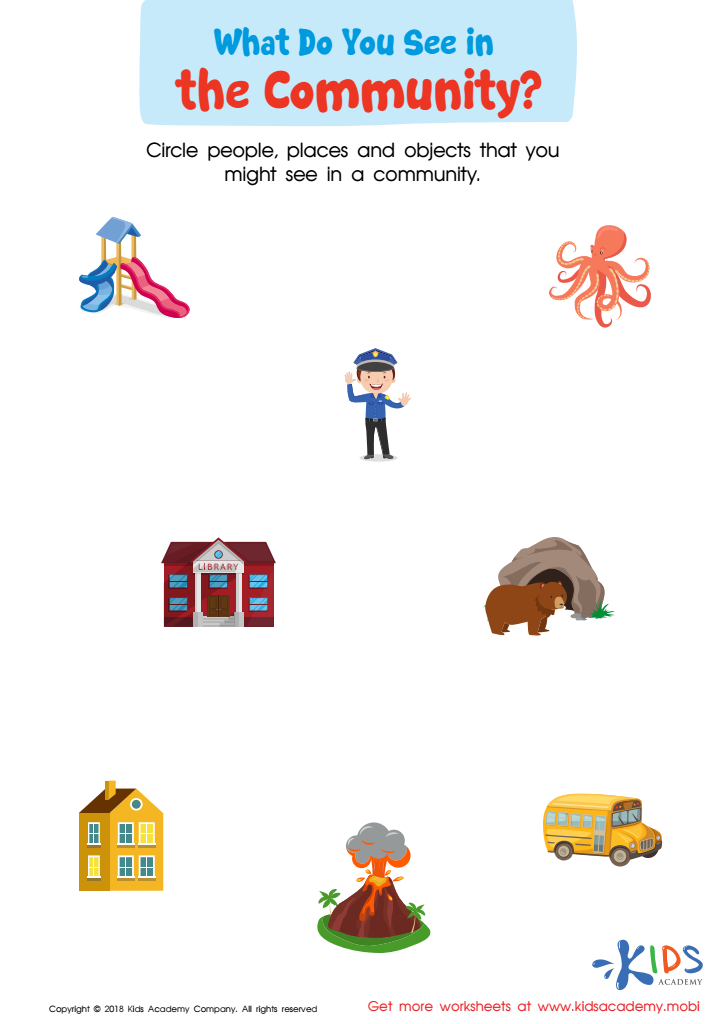
What Do You See in the Community Worksheet
 Assign to My Students
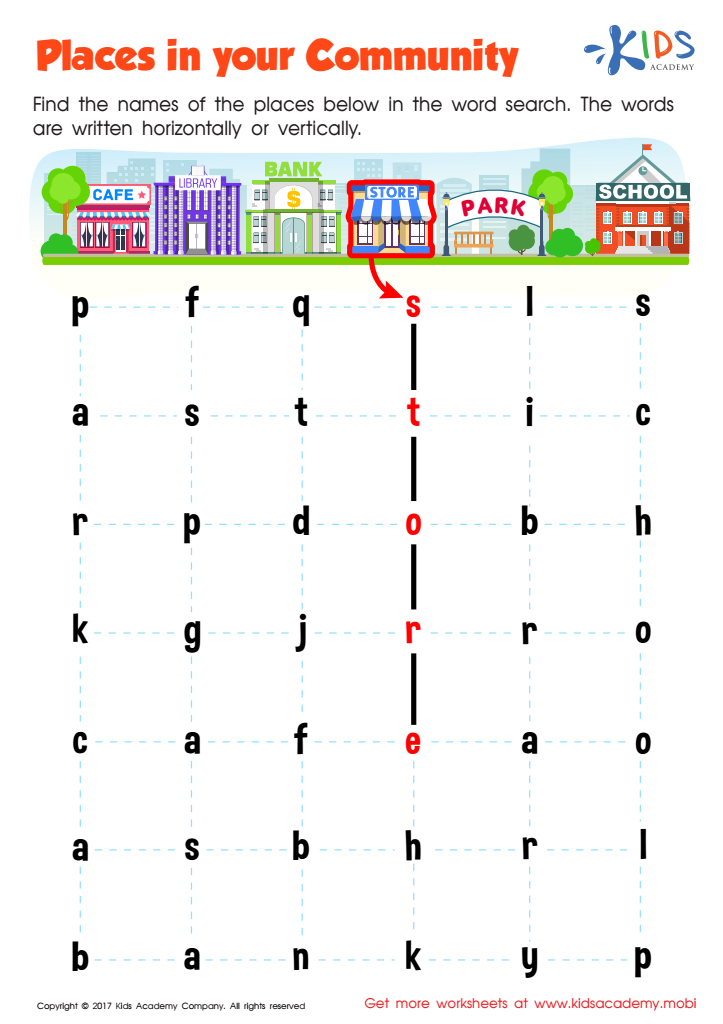
Places in Your Community Worksheet
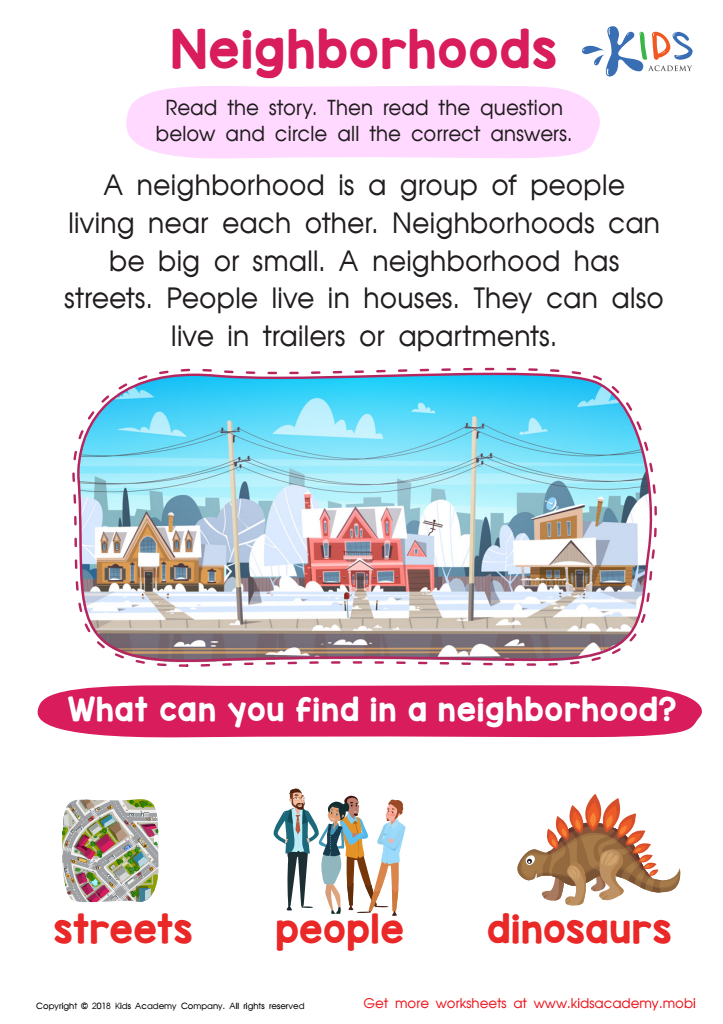
Neighborhoods Worksheet
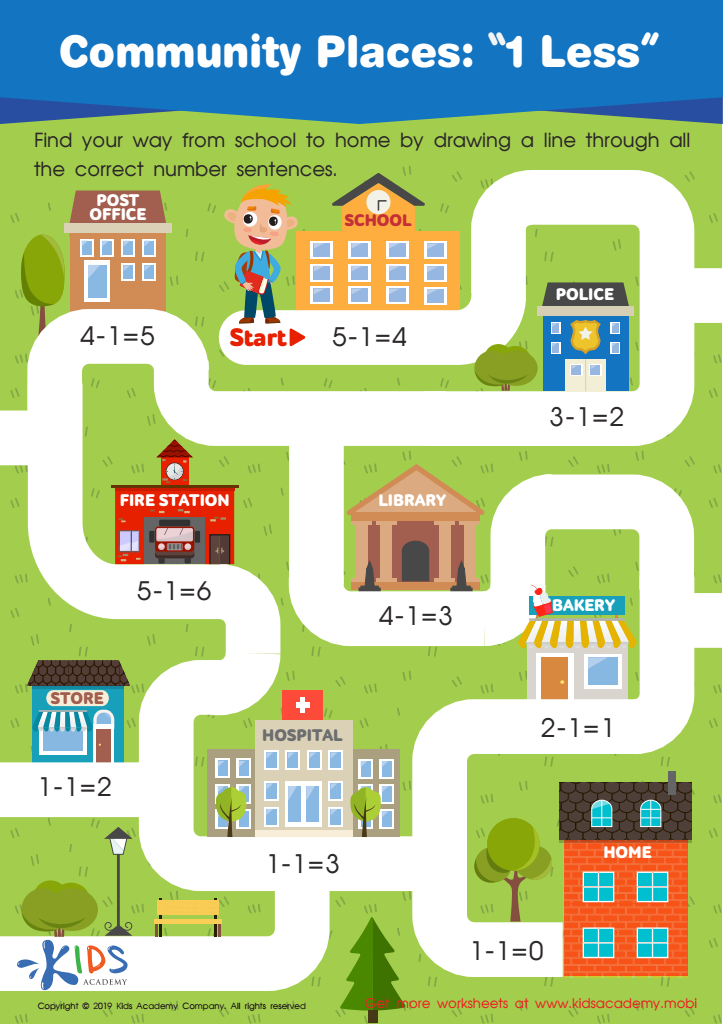
Community Places: 1 Less Worksheet
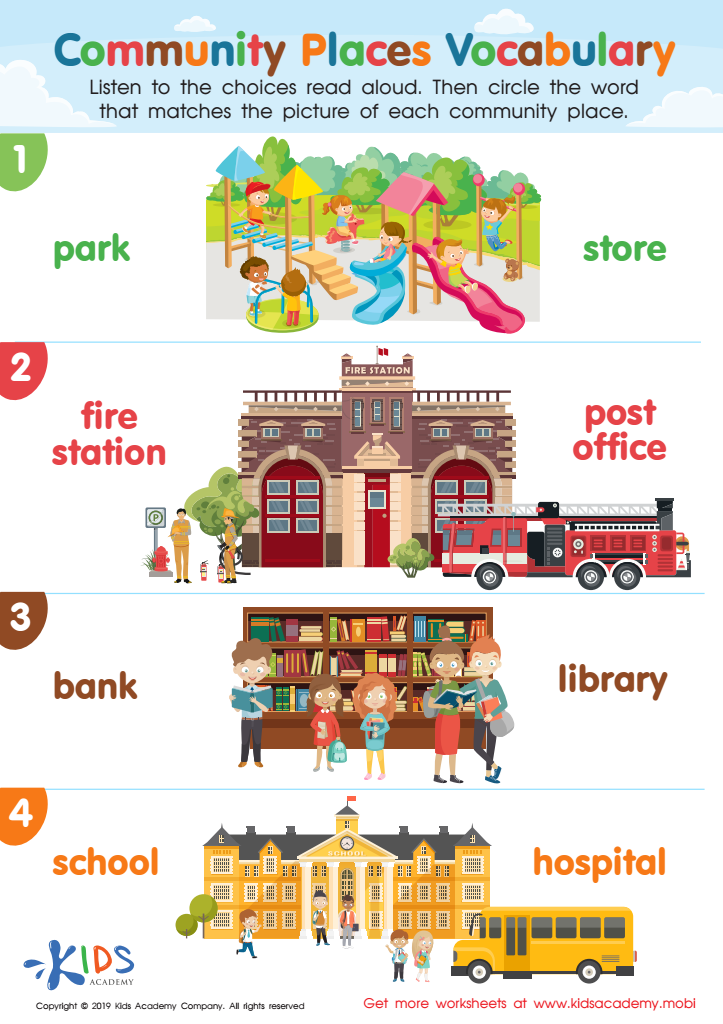
Community Places Vocabulary Worksheet







Community awareness is crucial for children aged 6-9 because this developmental stage is foundational for shaping their values, social skills, and understanding of the world. At this age, children's minds are highly impressionable, and learning about their community helps them foster a sense of belonging and responsibility.
When parents and teachers emphasize community awareness, children begin to recognize the importance of working together, sharing resources, and helping others. They learn about the diverse roles people play within their community, such as firefighters, teachers, doctors, and librarians. This not only broadens their perspective but also inspires respect for different professions and practices found within their neighborhoods.
Additionally, instilling community awareness helps children develop empathy and understand societal norms and values. Activities like community clean-ups, visiting local farms, or participating in local events teach kids about unity and active participation. These experiences contribute to their social and emotional development, making them better equipped to engage positively with others.
Moreover, raising community-conscious children prepares them to become responsible, well-informed citizens. Parents and teachers nurturing these values ensure that kids appreciate their environment, adhere to collective ideals, and are motivated to contribute to a more inclusive, supportive society. Such awareness lays the groundwork for a compassionate, engaged, and proactive future generation.








