Data analysis Worksheets for Ages 6-9
4 filtered results
-
From - To
Discover our engaging and educational Data Analysis Worksheets for Ages 6-9! Developed by educators and designed for young learners, these worksheets introduce fundamental data analysis concepts in a fun and interactive way. Children will explore graphing, sorting, categorizing, and comparing data through a variety of activities that boost critical thinking and mathematical skills. Perfect for classroom or at-home learning, each worksheet aligns with curriculum standards to ensure your child is on track. Spark curiosity and enhance your child's understanding of data analysis with our printable resources. Visit Kid’s Academy to get started today!
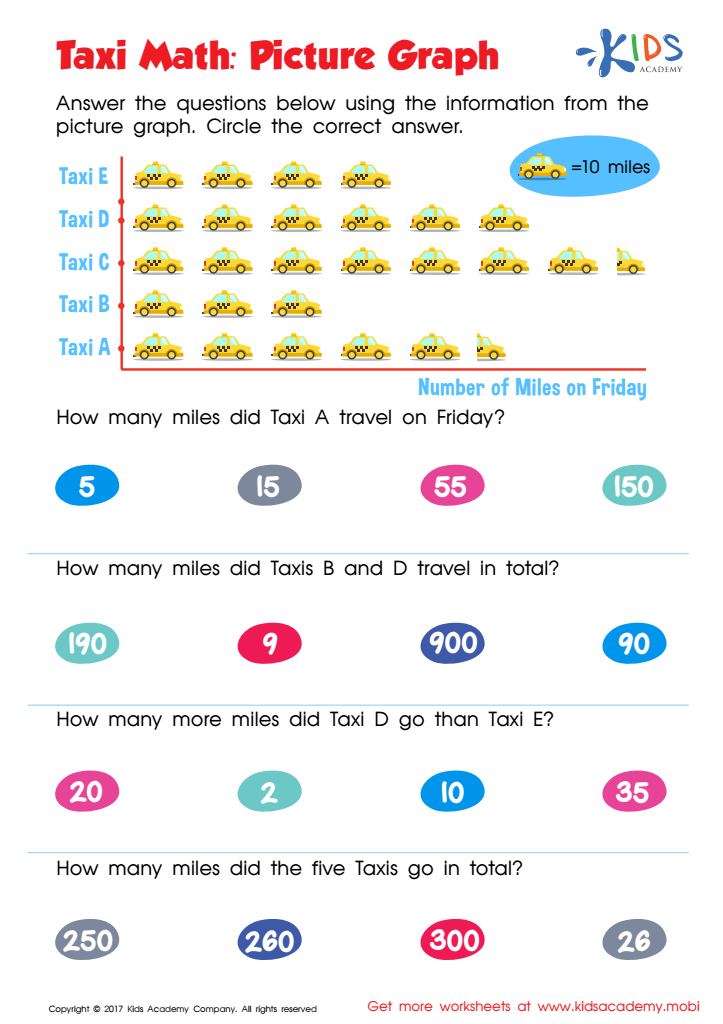
Taxi Math Worksheet
 Assign to My Students
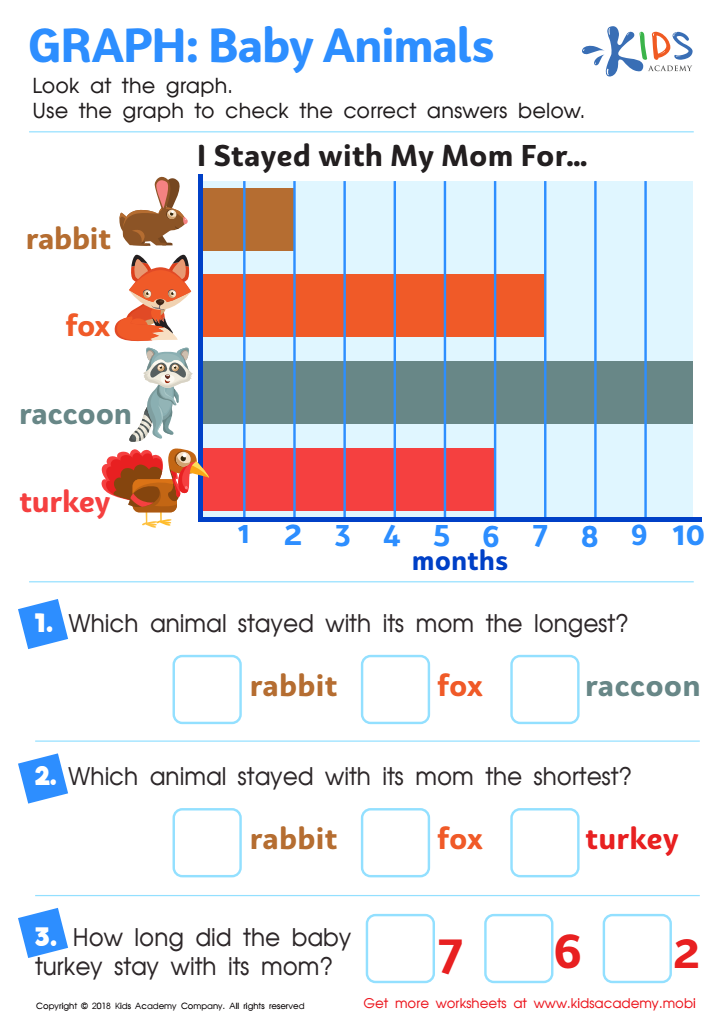
Graph: Baby Animals Worksheet
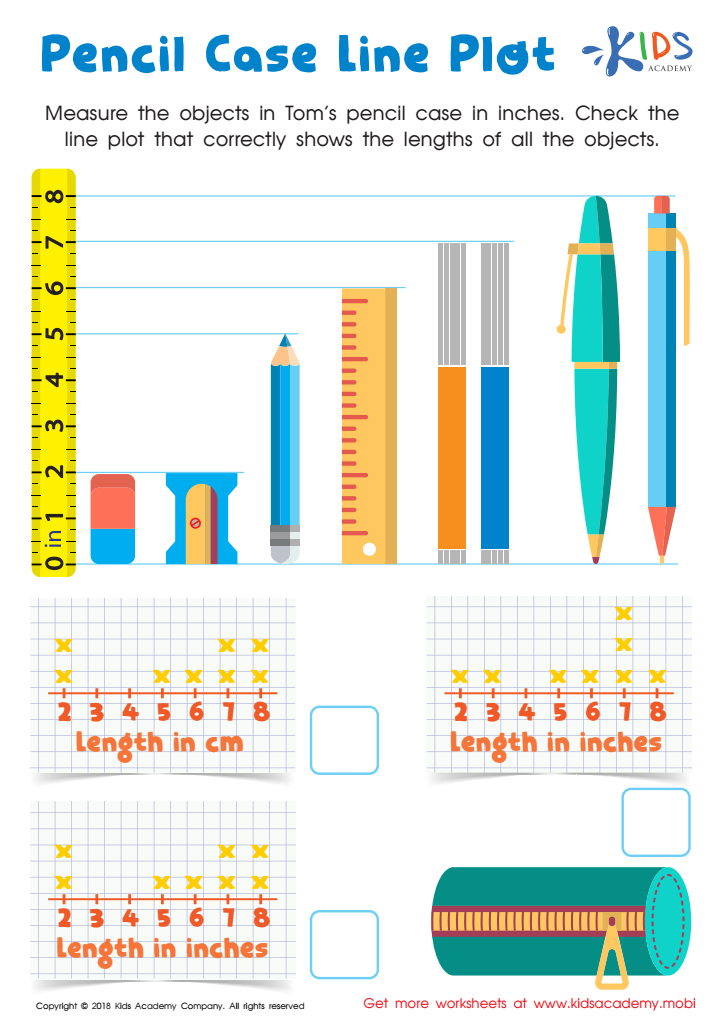
Pencil Case Line Plot Worksheet
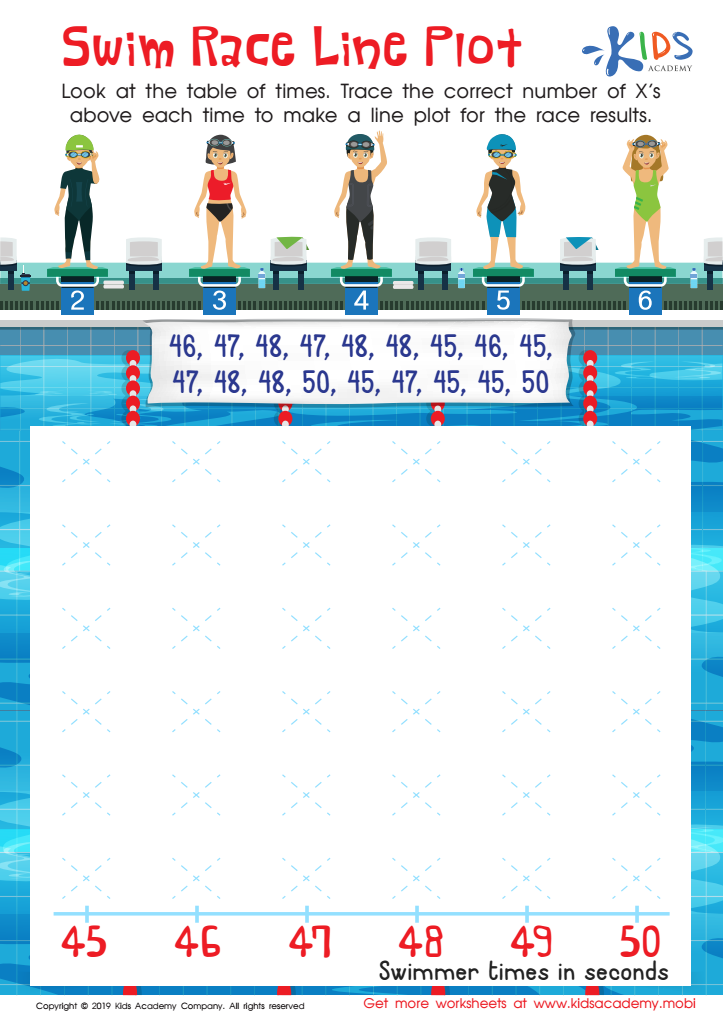
Swim Race Line Plot Worksheet



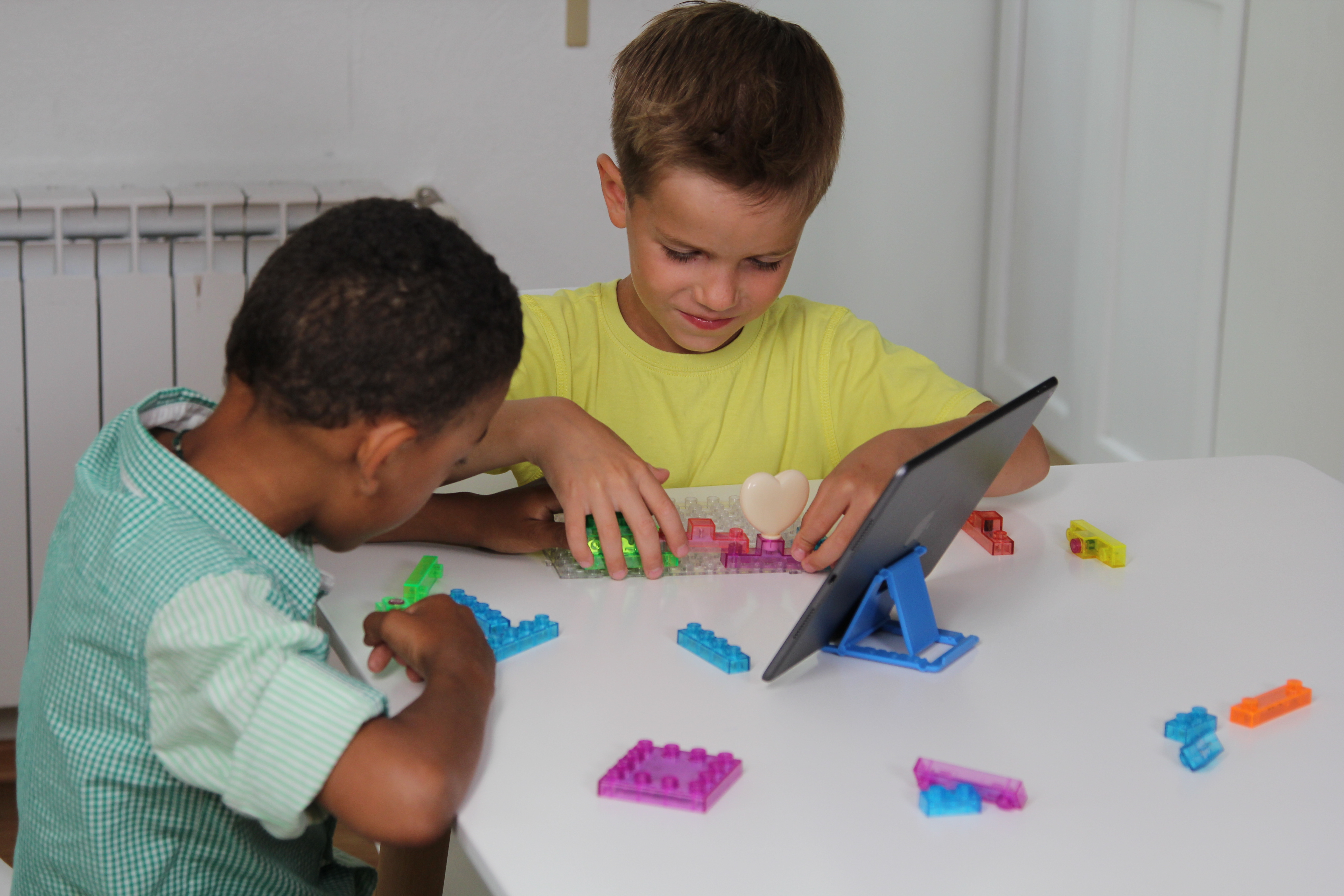




Understanding data analysis is crucial for young children aged 6-9 because it lays the groundwork for essential cognitive and life skills. For parents and teachers, fostering an early interest in data analysis can cultivate critical thinking, problem-solving, and decision-making abilities in children. At this developmental stage, children are naturally curious and keen to make sense of the world around them. Introducing them to basic concepts of data analysis, such as sorting, counting, and recognizing patterns, harnesses their curiosity and directs it toward logical reasoning.
Moreover, with the increasing reliance on data in everyday life and future job markets, early exposure ensures that children are not just passive users but active interpreters of the vast information they encounter daily. This sets the stage for future academic success, especially in subjects such as math and science where data literacy is crucial.
Parents and teachers can use engaging tools like charts, simple graphs, and interactive projects to teach these skills without overwhelming the children. This also turns abstract numbers into tangible, relatable activities. By prioritizing data analysis education, they equip children with the ability to critically evaluate information, fostering a generation of thinkers and informed citizens who can navigate our data-rich world confidently.








