Developing observational skills Worksheets for Ages 6-9
3 filtered results
-
From - To
Enhance your child’s perceptual abilities with our "Developing Observational Skills Worksheets for Ages 6-9." Designed by experts, these engaging worksheets help young learners sharpen their attention to detail, improve critical thinking, and boost cognitive development. Each activity encourages noticing differences and similarities, sorting objects, and recognizing patterns to build a solid foundation for academic success. Perfect for classroom use or home practice, our fun, colorful sheets inspire curiosity and imagination. Watch your child master the art of observation, promoting lifelong learning skills. Discover the joy of learning with these essential tools at Kids Academy!
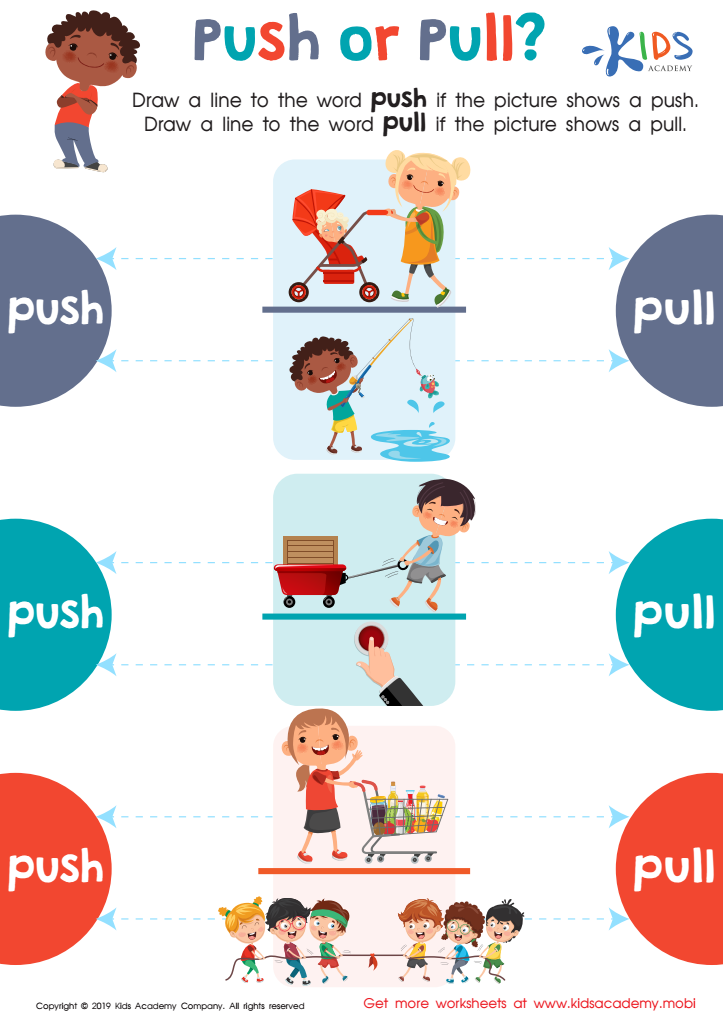
Push or Pull? Worksheet
 Assign to My Students
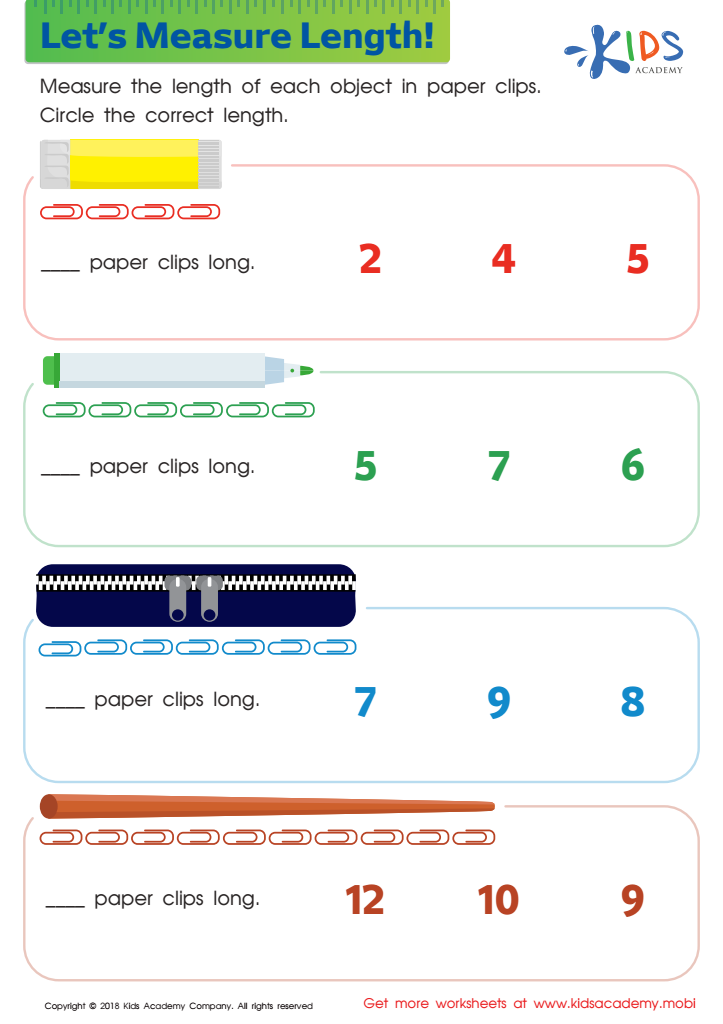
Lets Measure Length Worksheet








Developing observational skills in children aged 6-9 is crucial for their cognitive, social, and emotional development. At this age, children's brains are highly receptive to learning from their surrounding environment, making it an ideal time to cultivate these skills. Observational skills foster attention to detail, critical thinking, and curiosity—traits that are fundamental for academic success. When children observe closely, they learn to notice patterns, make connections, and draw informed conclusions, which are essential skills for subjects like math, science, and reading comprehension.
Socially, strong observational skills help children better understand non-verbal cues and body language, aiding in the development of empathy and effective communication. Being observant enables children to recognize the feelings and reactions of others, fostering healthier relationships with peers and adults.
Emotionally, these skills help children to be more self-aware and reflective. By observing their own feelings and reactions in various situations, they gain better control over their emotions and behavior.
For parents and teachers, nurturing observational skills can be simple yet effective, involving activities like nature walks, "I Spy" games, and detailed discussions about everyday objects and events. Such activities make learning engaging and interactive, paving the way for well-rounded development.








