
Develops fine motor skills Worksheets for Ages 6-9
6 filtered results
Difficulty Level
Grade
Age
-
From - To
Subject
Activity
Standards
Welcome to our collection of engaging fine motor skills worksheets designed specifically for children aged 6 to 9! These interactive worksheets are crafted to enhance essential hand-eye coordination, dexterity, and precision through fun activities like tracing, cutting, and coloring. Ideal for both home and classroom use, our exercises promote focused practice while fostering creativity and confidence in young learners. Parents and educators can easily integrate these printable resources into lessons or after-school activities, ensuring that children develop vital skills necessary for writing, drawing, and everyday tasks. Encourage your child’s growth today with our thoughtfully designed fine motor skills worksheets!
Favorites
With answer key
Interactive
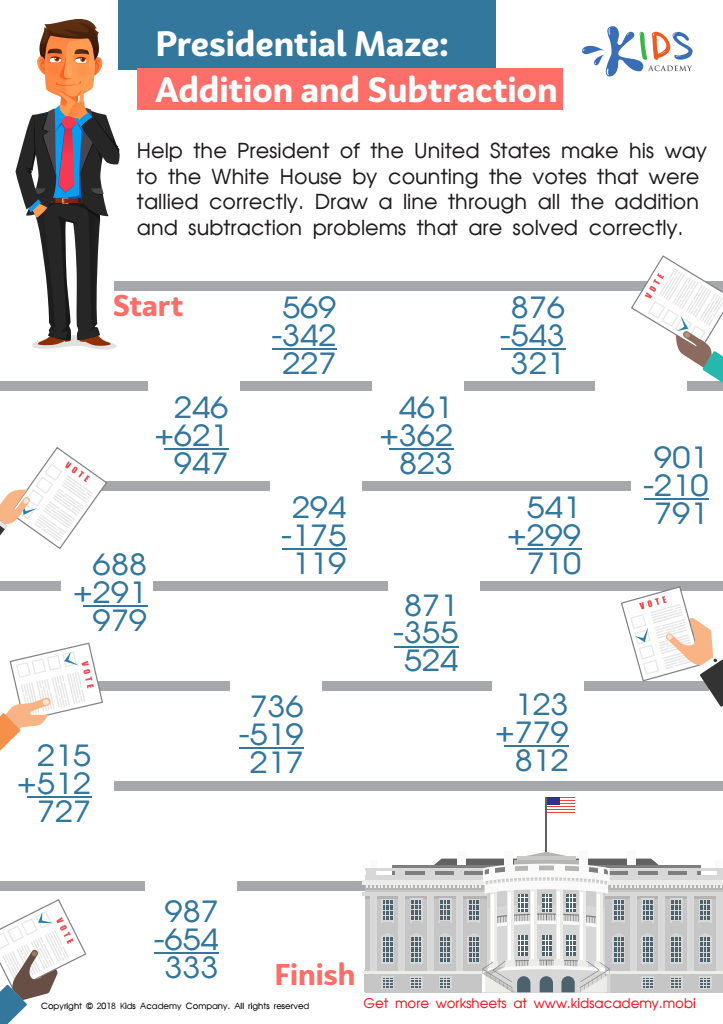
Presidential Maze: Addition and Subtraction Worksheet
Help the President get elected by counting the votes on this fun addition and subtraction worksheet from Kids Academy! Guide learners to go through each problem, drawing a line through any that are completed correctly and leaving incorrect answers alone. Get voting and have a blast!
Presidential Maze: Addition and Subtraction Worksheet
Worksheet
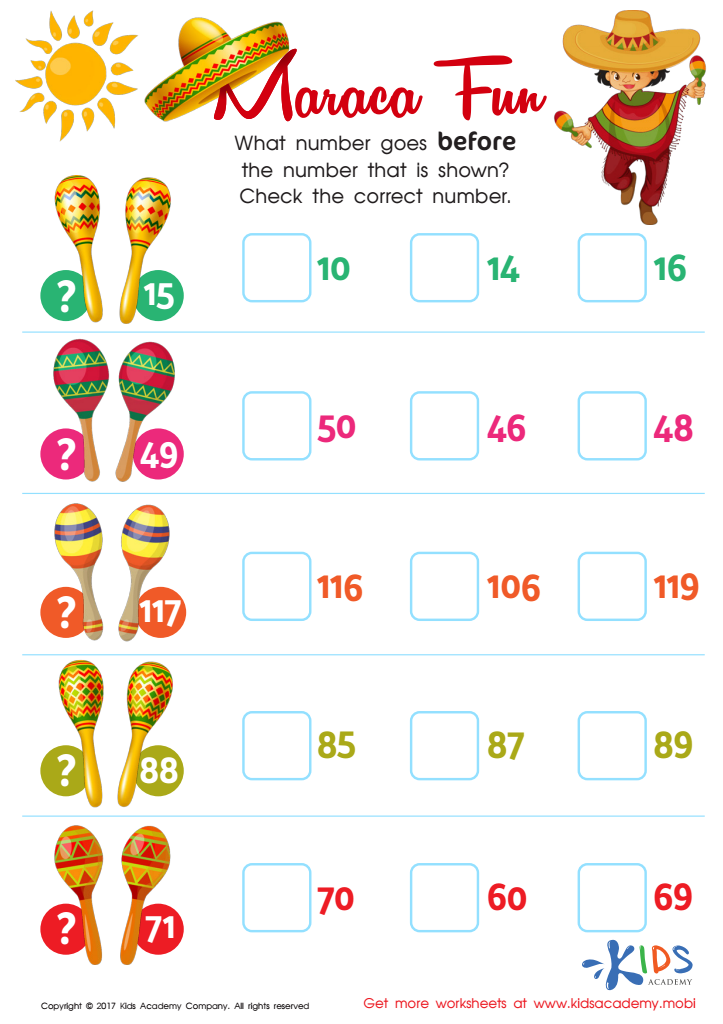
Counting: Maraca Fun Worksheet
Let your child add some Maraca fun to their math lessons by using this printable worksheet! They must figure out the numbers that come before the ones shown. Answers are provided on the other side; all your child needs to do is check the boxes with the correct numbers. Help them improve their counting and have fun along the way!
Counting: Maraca Fun Worksheet
Worksheet
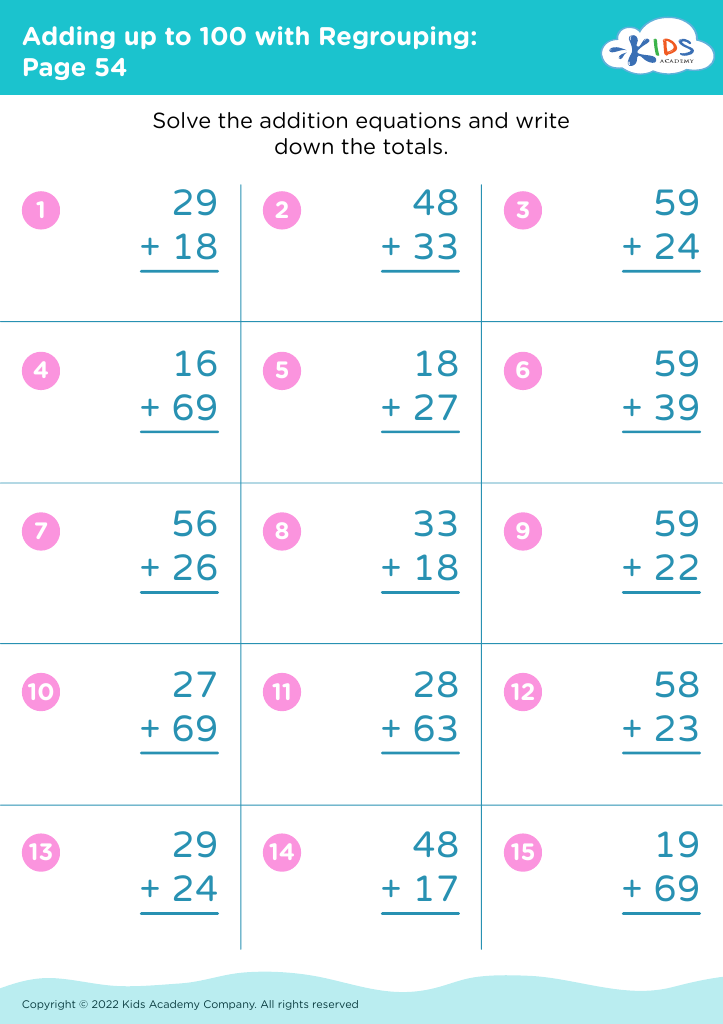
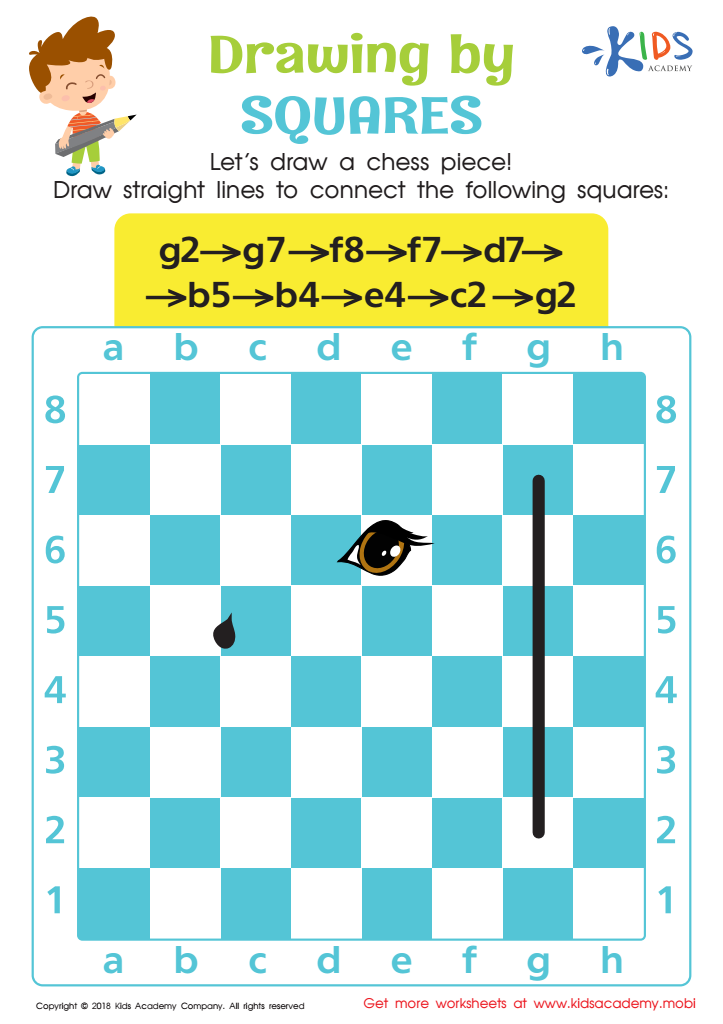
Drawing by Squares Worksheet
Test your child's chess skills and ability to name squares with this worksheet. Have them draw a chess piece from the squares at the top of the chessboard in the picture. Guide them to draw lines between the given squares for the correct outline of a chess piece.
Drawing by Squares Worksheet
Worksheet
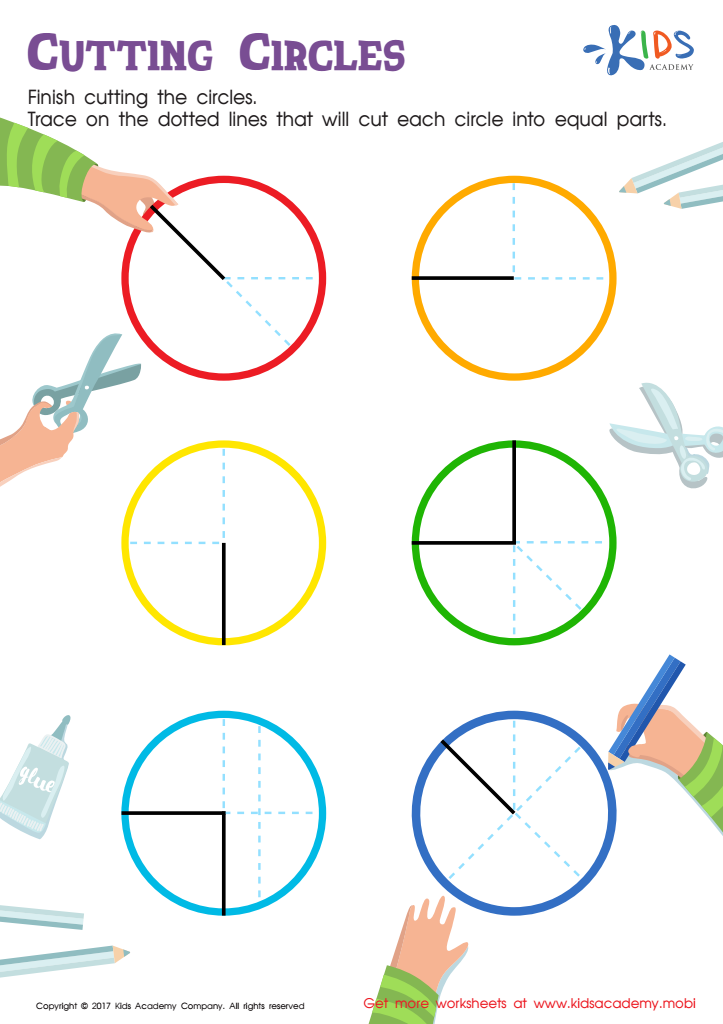
Cutting Circles Worksheet
Allow your child to refresh their memory by asking them what two equal halves, four equal parts and three equal parts are called. Then, look at the picture pdf with them. Challenge them to cut up the circles into equal parts, by tracing the dotted lines. This exercise will help them with their math skills!
Cutting Circles Worksheet
Worksheet
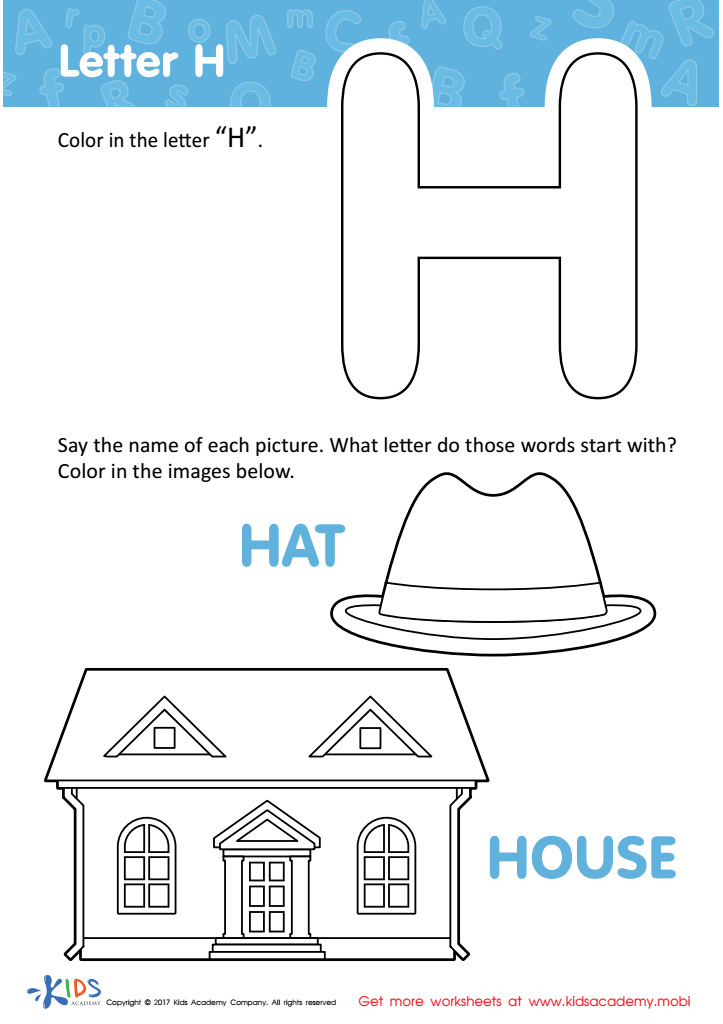
Letter H Coloring Sheet
This fun "H" coloring page will help your child recognize the letter and sound of "H"! With a hat and house to color, your little learner will have a blast picking colors and creating designs, all while learning about the letter "H"!
Download (PDF)
 Assign to My Students
Assign to My Students
Letter H Coloring Sheet
Worksheet
Join Kids Academy for Free
Who is primarily going to use this learning content?





.jpg)

Developing fine motor skills in children aged 6-9 is crucial for their overall growth and development. At this age, children are refining their hand-eye coordination and hand strength, which are fundamental for tasks like writing, drawing, and manipulating small objects. Parents and teachers should care about fostering these skills, as they directly impact academic performance and self-confidence. Strong fine motor skills enhance a child's ability to participate actively in classroom activities, boosting their engagement and enthusiasm for learning.
Moreover, fine motor development contributes to essential everyday tasks, such as buttoning clothes, tying shoelaces, and using utensils, promoting independence. Encouraging activities like cutting with scissors, building with blocks, or engaging in arts and crafts can be both enjoyable and educational, helping to lay a strong foundation for future skills in STEM (science, technology, engineering, and mathematics).
Furthermore, fine motor skills are closely linked to cognitive development. Tasks requiring precision encourage problem-solving and critical thinking, vital traits for lifelong learning. In fostering these skills, parents and teachers play a pivotal role in shaping confident, capable, and resilient learners prepared for future academic and social challenges. Thus, nurturing fine motor skills in this age group should be a priority for both educators and parents.








