Lowercase identification Worksheets for Ages 6-9
5 filtered results
-
From - To
Discover engaging Lowercase Identification Worksheets specifically designed for children aged 6-9! These worksheets promote essential literacy skills by helping young learners recognize and differentiate between lowercase letters. Featuring fun activities and colorful visuals, our resources aim to make learning enjoyable and effective. Perfect for classroom settings or at-home practice, these worksheets support early reading development and boost letter recognition confidence. Each sheet is crafted to encourage creativity and critical thinking while reinforcing foundational skills necessary for successful reading. Spark your child’s interest in literacy with our thoughtfully designed worksheets, and watch them thrive as they master lowercase letters!
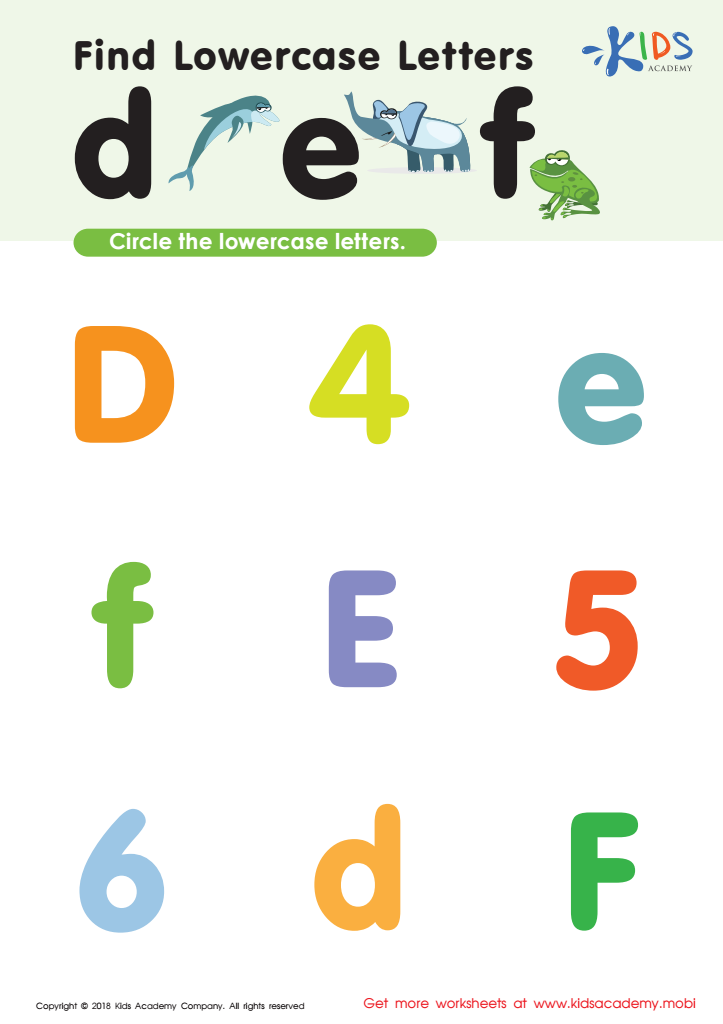
Find Lowercase Letters d e f Worksheet
 Assign to My Students
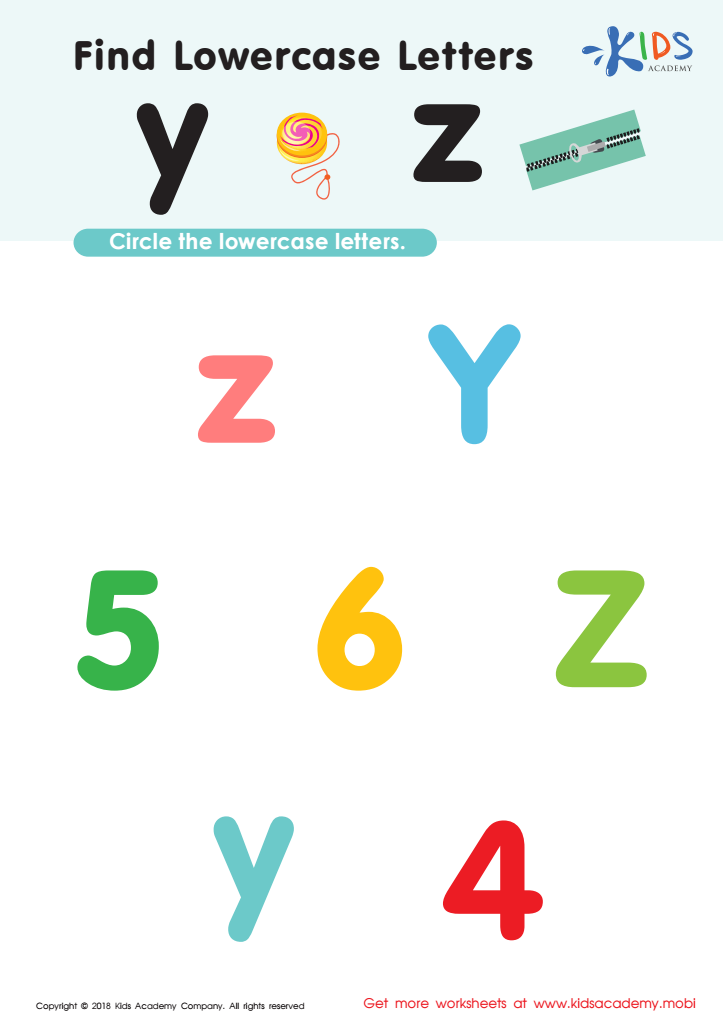
Find Lowercase Letters y z Worksheet
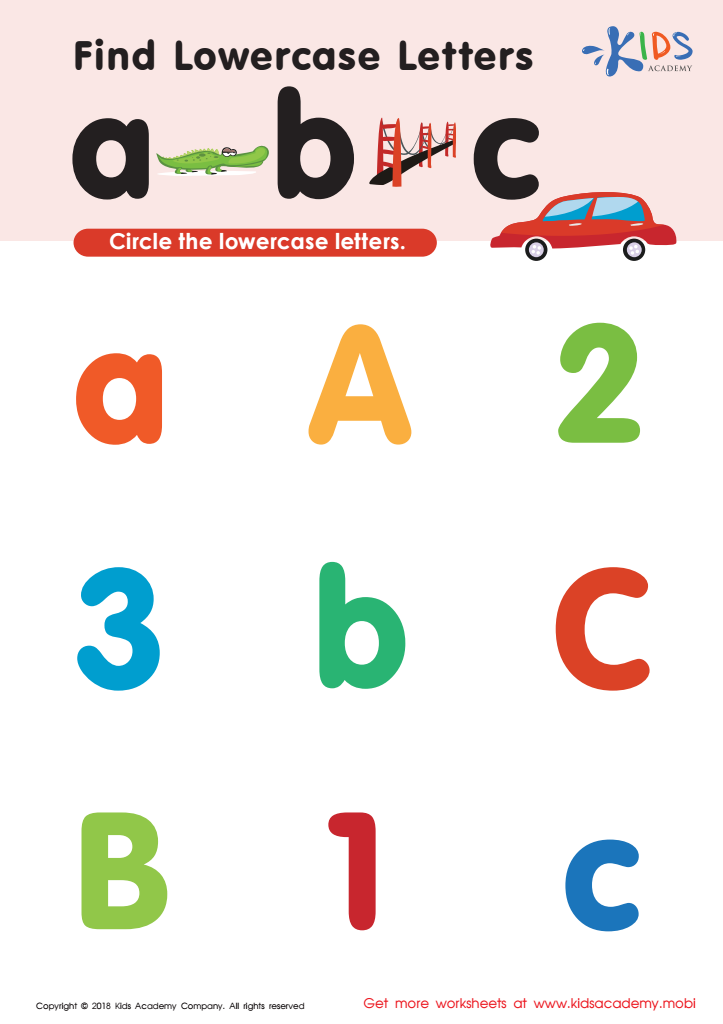
Find lowercase letters a b c Worksheet
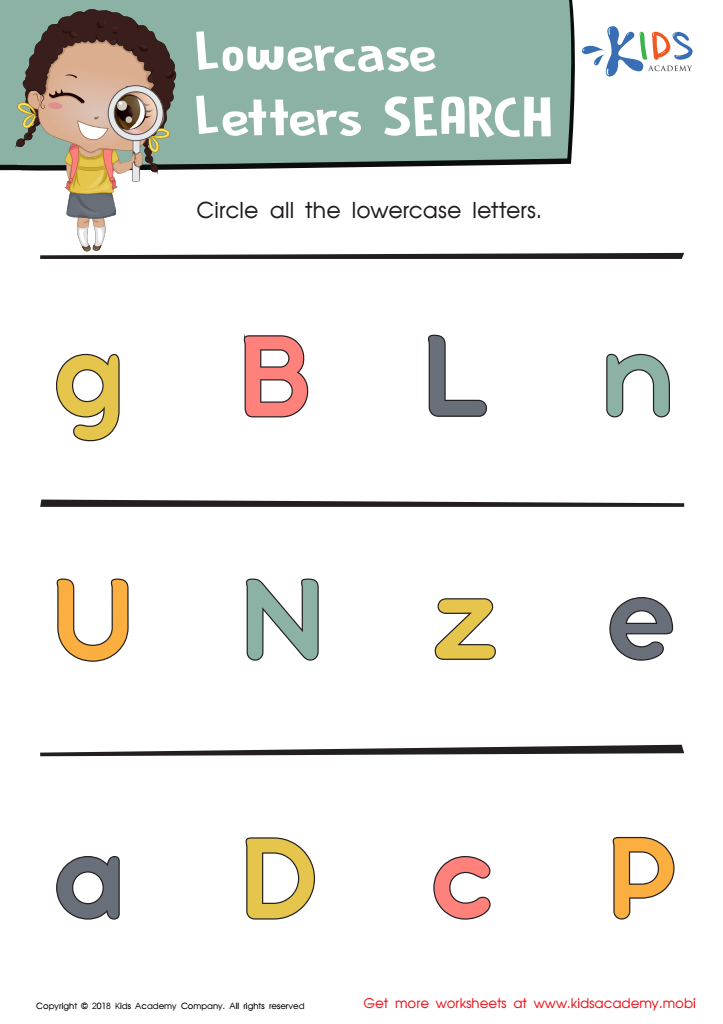
Lowercase Letters Search: Assessment Worksheet
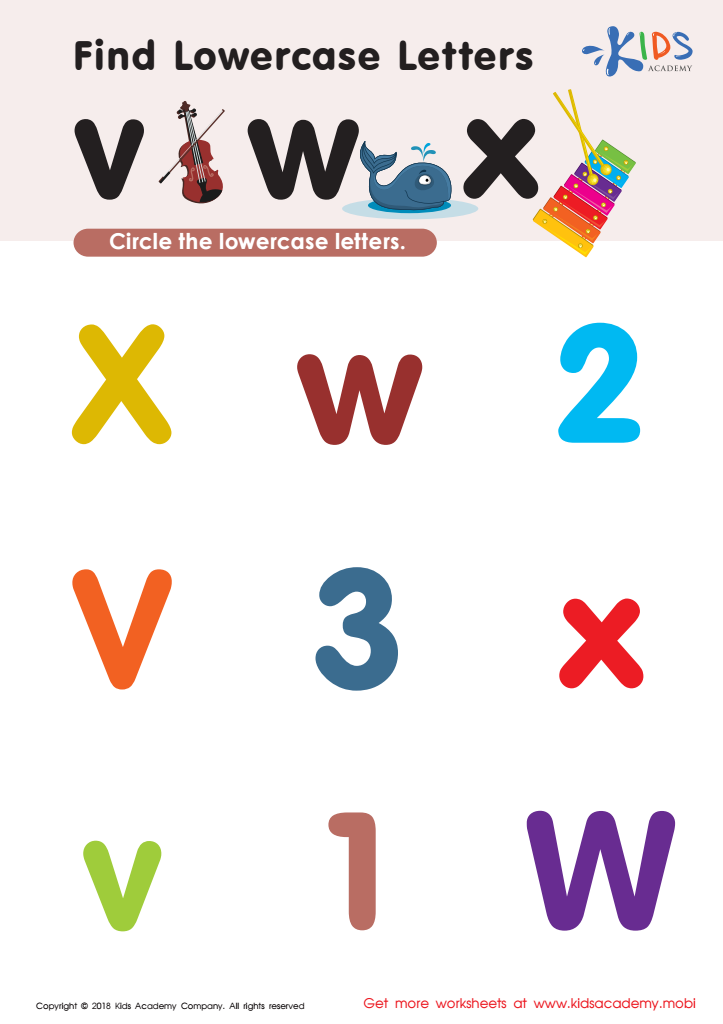
Find Lowercase Letters v w x Worksheet








Lowercase letter identification is crucial for children ages 6-9 as it forms the foundation of their reading and writing skills. At this age, students are transitioning from learning to read to reading to learn, making it essential to recognize and understand the nuances of lowercase letters. This understanding impacts their ability to decode words efficiently, facilitate comprehension, and develop fluency.
When children can identify lowercase letters, they become more confident in their reading abilities. Lowercase letters appear more frequently in texts than uppercase letters, so familiarity with them is vital for comprehension. Additionally, recognizing and writing lowercase letters enhances their spelling and literacy skills, allowing them to communicate effectively through writing.
Teachers and parents should prioritize lowercase letter identification as it directly supports literacy development. Encouraging activities that involve tracing, identifying, and utilizing lowercase letters can create a positive environment for learning. By integrating games, reading exercises, and interactive lessons, adults can make the process engaging, ensuring that children grasp these essential skills.
Ultimately, a focus on lowercase letter identification not only aids in early literacy development but also boosts children's overall confidence and enthusiasm for reading, setting the stage for lifelong learning.








