Mathematical Comprehension Worksheets for Ages 6-9
3 filtered results
-
From - To
Discover a treasure trove of Mathematical Comprehension Worksheets designed for children aged 6 to 9! Our engaging and interactive worksheets help young learners develop essential math skills through fun, age-appropriate activities. From basic addition and subtraction to shape identification and word problems, these resources cater to diverse learning styles, making math enjoyable and accessible. Each worksheet encourages critical thinking and problem-solving, empowering kids to explore math concepts confidently. Perfect for home practice or classroom use, our worksheets provide the foundation for lifelong mathematical understanding. Help your child master essential math skills today with our comprehensive collection of worksheets!
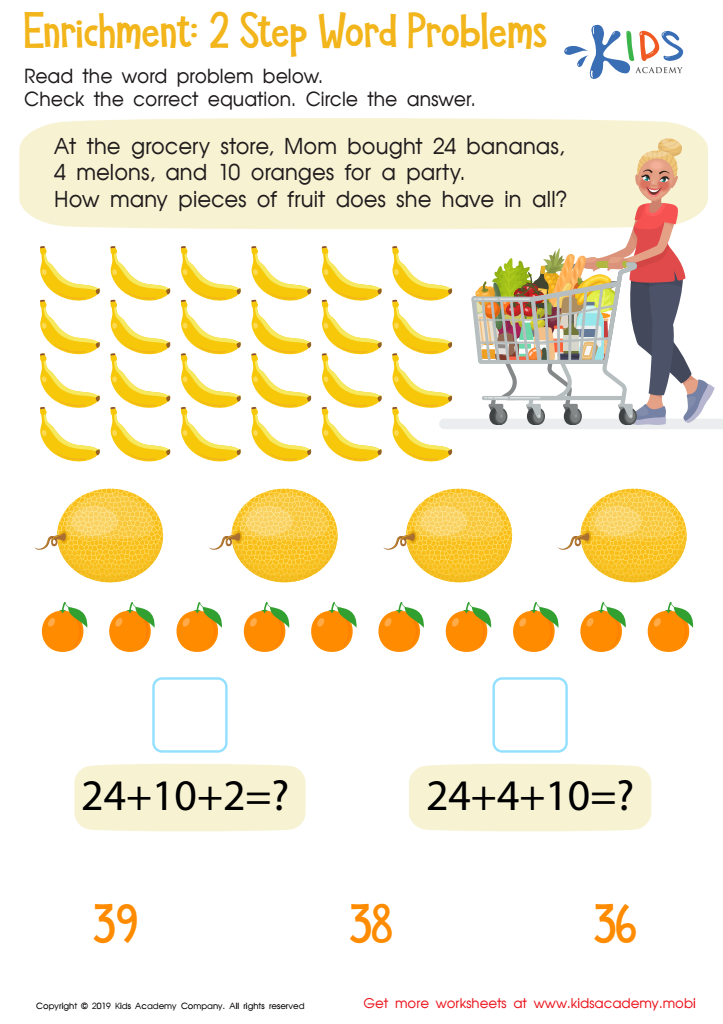
Enrichment -2 Step Word Problems Worksheet
 Assign to My Students
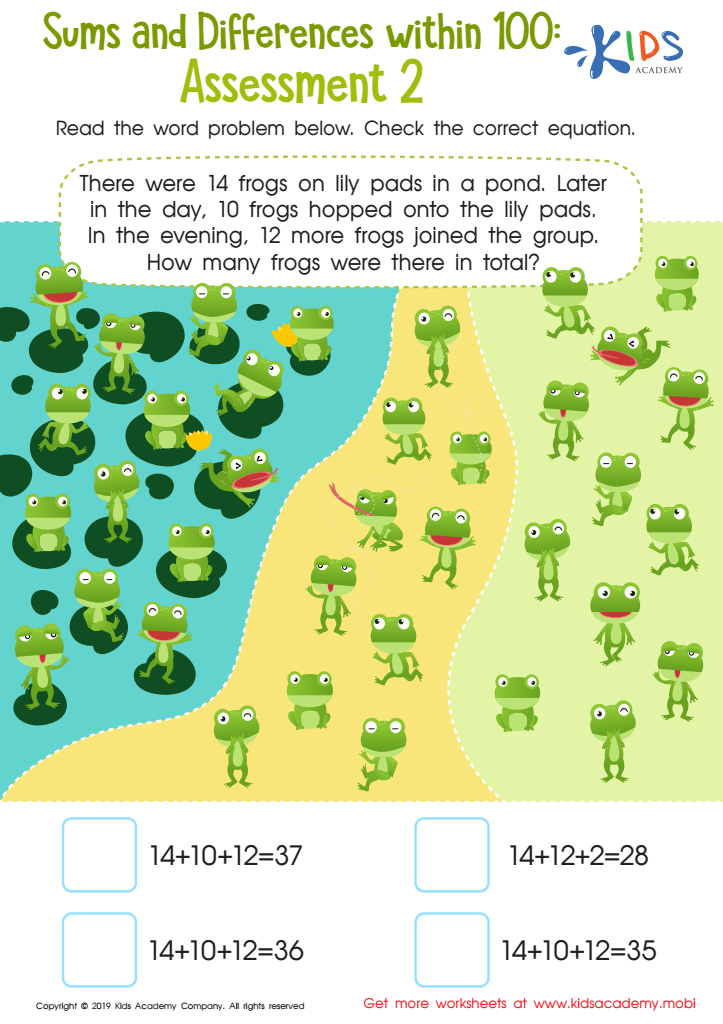
Sums and Differences Within 1 - Assessment 2 Worksheet
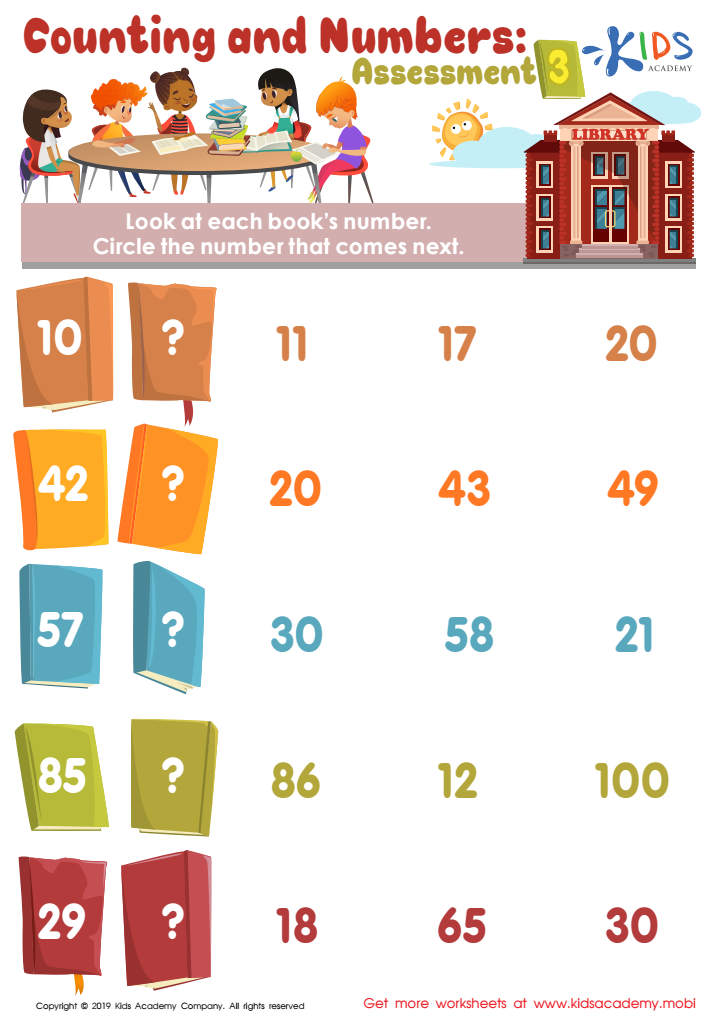
Counting and Numbers: Assessment Worksheet








Mathematical comprehension for children aged 6 to 9 is crucial for several reasons that merit the attention of parents and teachers. Firstly, this period marks a significant phase in cognitive development where children transition from concrete to abstract thinking. A solid grasp of mathematical concepts lays the foundation for future learning, enabling children to tackle more complex topics as they progress through school.
Additionally, strong mathematical skills enhance problem-solving abilities. Children learn to analyze situations, recognize patterns, and apply logic, skills that are essential not only in academic settings but also in everyday life. Engaging with math at this age also fosters a positive attitude toward the subject, reducing math anxiety and building self-confidence.
Moreover, math comprehension is linked to success in both reading and science; it promotes critical thinking and improves overall academic performance. Parents and teachers play a vital role in nurturing this comprehension through supportive interactions, encouraging exploration, and providing diverse experiences with mathematical concepts.
Investing in a child's mathematical understanding during these formative years sets the stage for lifelong learning, equipping them with vital skills for future challenges in their educational and personal endeavors. As such, fostering mathematical comprehension should be a priority for caregivers and educators alike.








