
Mathematical understanding Worksheets for Ages 6-9
3 filtered results
Difficulty Level
Grade
Age
-
From - To
Subject
Activity
Standards
Welcome to our Mathematical Understanding Worksheets for Ages 6-9! Designed to engage young learners, these worksheets are perfect for children working on foundational math skills. With a variety of fun and interactive activities, students will explore essential concepts like addition, subtraction, patterns, and simple geometry. Our worksheets encourage critical thinking and problem-solving, helping to build a strong mathematical foundation. Each activity is age-appropriate and thoughtfully crafted to enhance learning while keeping it enjoyable. Dive into our collection and watch your child's confidence in math soar as they practice essential skills in a supportive and engaging environment!
Favorites
With answer key
Interactive
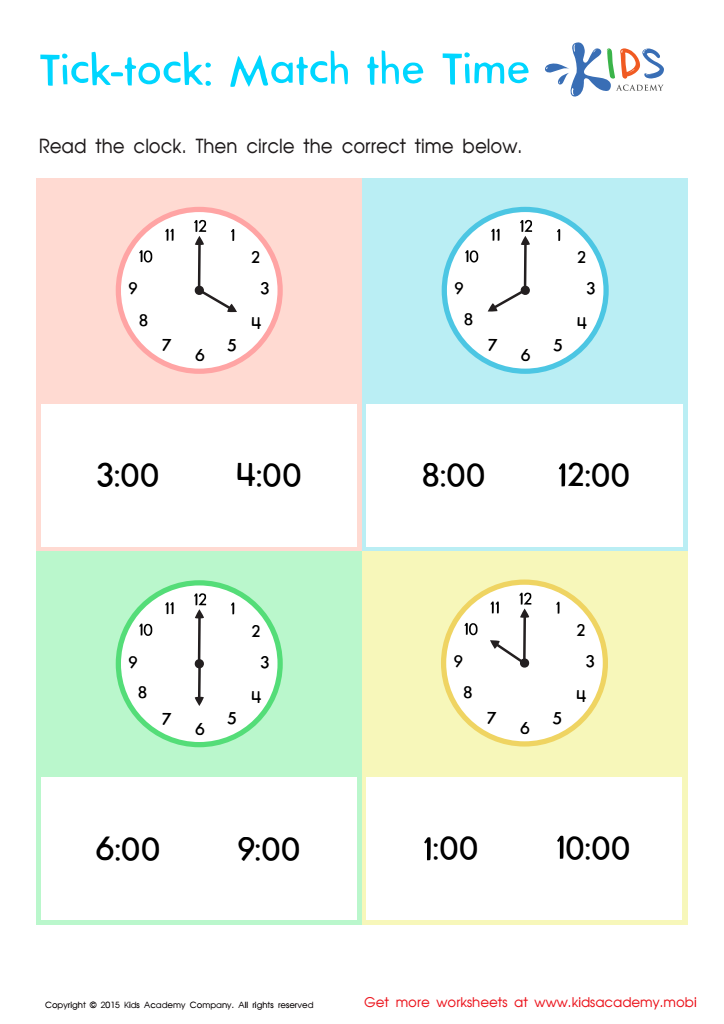
Telling The Time Worksheet: Part 4
Test your skills in telling the time! Circle the right time on 4 analog clock faces.
 Assign to My Students
Telling The Time Worksheet: Part 4
Worksheet
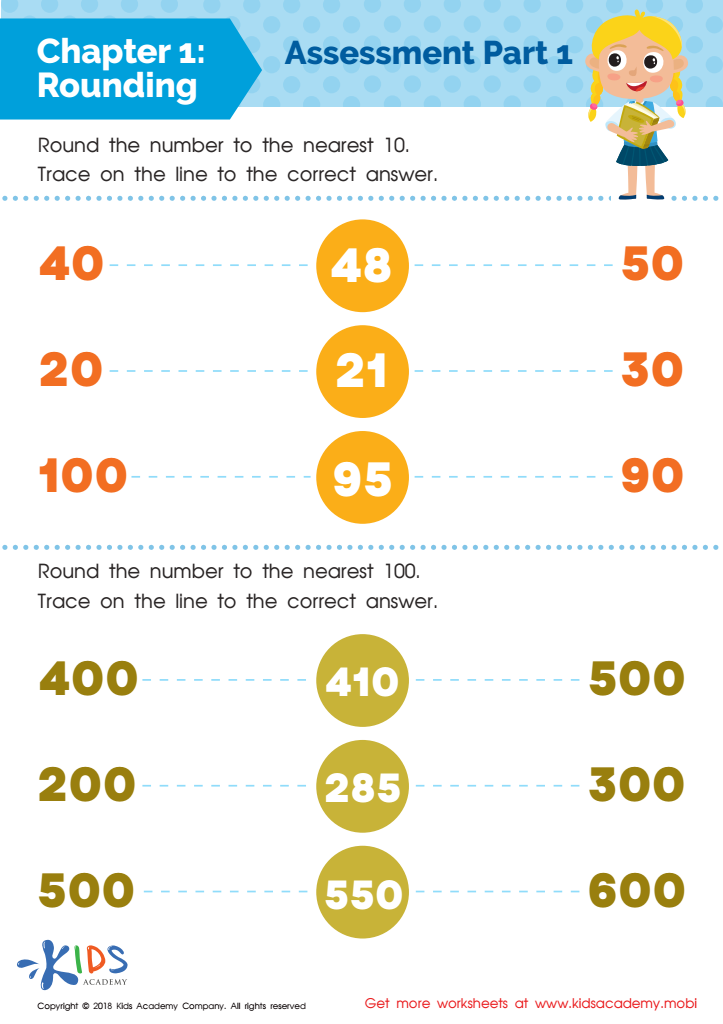
Rounding Worksheet 3rd Grade
Practice and refresh your child's 3rd grade rounding skills with this quick worksheet! Have them round each set of numbers to the nearest 10s or 100s. This simple exercise will help maintain math fluency.
Rounding Worksheet 3rd Grade
Worksheet
Join Kids Academy for Free
Who is primarily going to use this learning content?





.jpg)

Mathematical understanding is crucial for children aged 6 to 9, as it lays the foundation for future learning and everyday problem-solving skills. During these formative years, children are developing critical thinking and reasoning abilities that are essential in various aspects of life. Strong mathematical skills promote logical thinking and help children make connections between concepts, enhancing their cognitive development.
Parents and teachers play an essential role in nurturing this understanding. Engaging children in mathematical activities not only boosts their confidence but also ignites their curiosity about the world around them. By introducing concepts such as addition, subtraction, and basic geometry through interactive games and hands-on experiences, adults can foster a love for mathematics and eliminate the fear often associated with the subject.
Furthermore, strong mathematical skills are linked to academic success, as they are vital in subjects like science and technology. In today’s increasingly complex world, where data and algorithms dominate, a solid mathematical foundation is more important than ever. By supporting children’s mathematical development, parents and teachers contribute to their overall educational journey, preparing them for challenges in school and beyond, and helping them build a resilient mindset essential for lifelong learning.








