Number counting Worksheets for Ages 6-9
3 filtered results
-
From - To
Enhance your child's math skills with our Number Counting Worksheets for ages 6-9, brought to you by Kids Academy. Our comprehensive collection of engaging and interactive worksheets is designed to make learning fun and effective. From basic counting and number recognition to more advanced concepts like skip counting and number patterns, these activities cater to various learning levels. Perfect for classroom use or at-home practice, our printable worksheets help build a solid numerical foundation for your child. Download now to support your young learner's journey in mastering the fundamental building blocks of math!
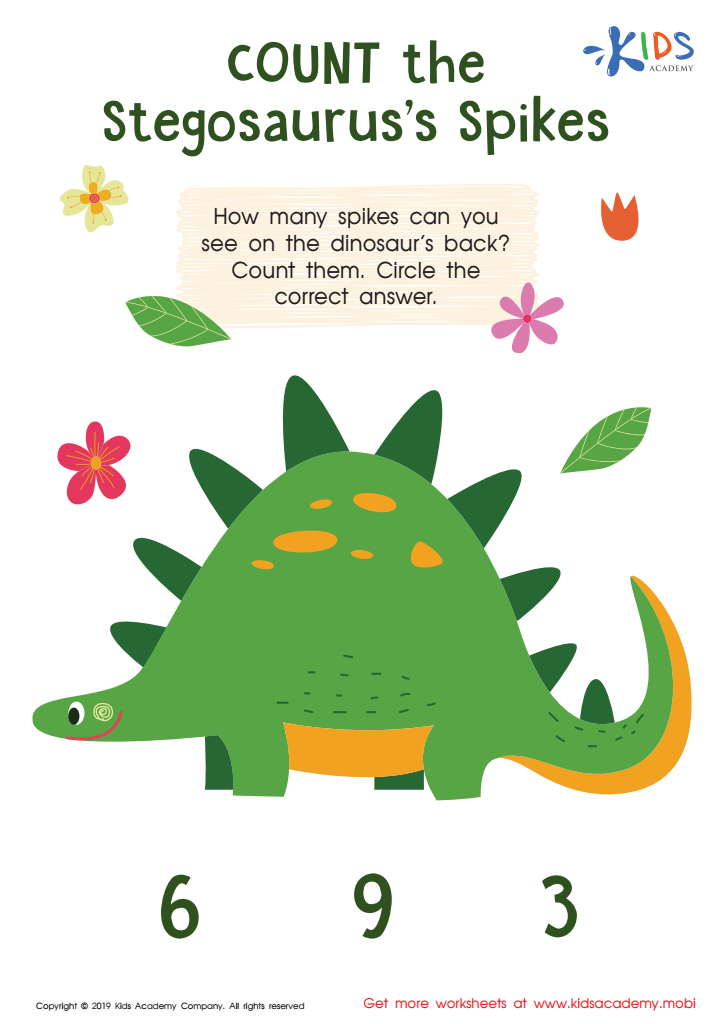
Count the Stegosaurus's Spikes Worksheet
 Assign to My Students
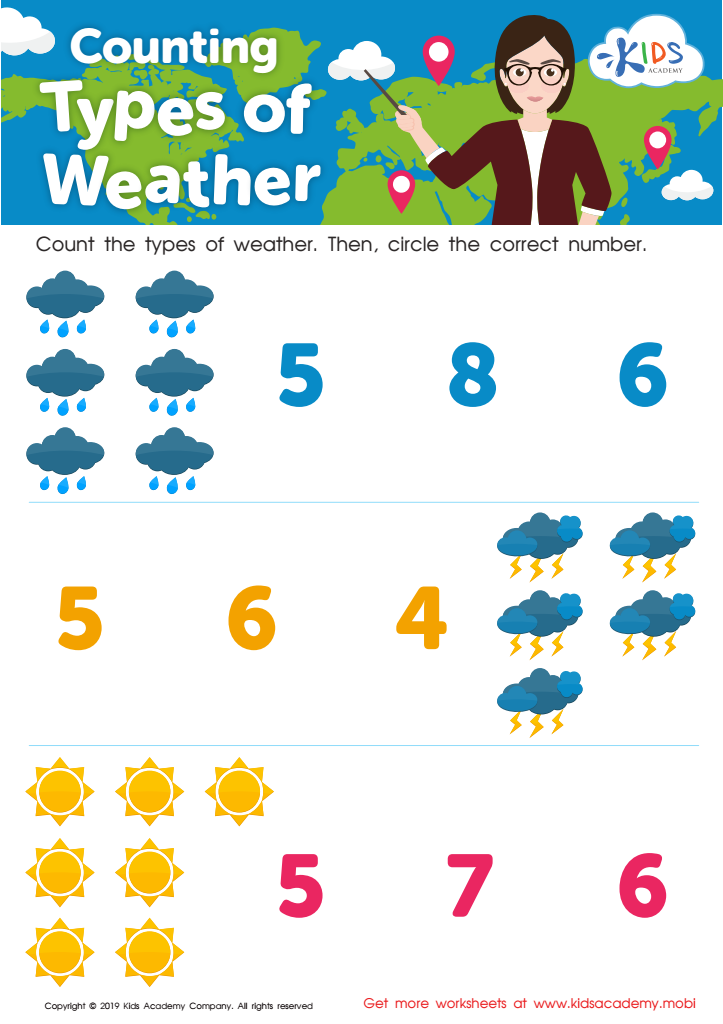
Counting Types of Weather Worksheet







Number counting for ages 6-9 is foundational because it sets the stage for all later mathematical learning and everyday life skills. At these ages, children's brains are exceptionally receptive to learning new concepts. Introducing them to number counting hones their ability to understand and manipulate numbers, which is essential for more complex mathematical operations such as addition, subtraction, multiplication, and division.
Furthermore, counting reinforces core cognitive skills like pattern recognition, memory, and logical thinking. It helps children develop a sense of order, sequence, and the ability to make connections between quantities and symbols. These capabilities also extend to real-life situations, such as telling time, handling money, and measuring objects, thereby improving their overall problem-solving skills and functional efficiency.
For parents and teachers, focusing on number counting also offers direct benefits. It provides an opportunity to recognize and address any learning difficulties early on, ensuring that each child receives the support they need. Moreover, the positive reinforcement of correctly counting and recognizing numbers builds a child's confidence and enthusiasm for learning, fostering a more positive attitude toward education as a whole. Therefore, investing time and effort into mastering number counting during these formative years is crucial for both short-term academic success and long-term cognitive development.








