
Number tracing Worksheets for Ages 6-9
4 filtered results
Difficulty Level
Grade
Age
-
From - To
Subject
Activity
Standards
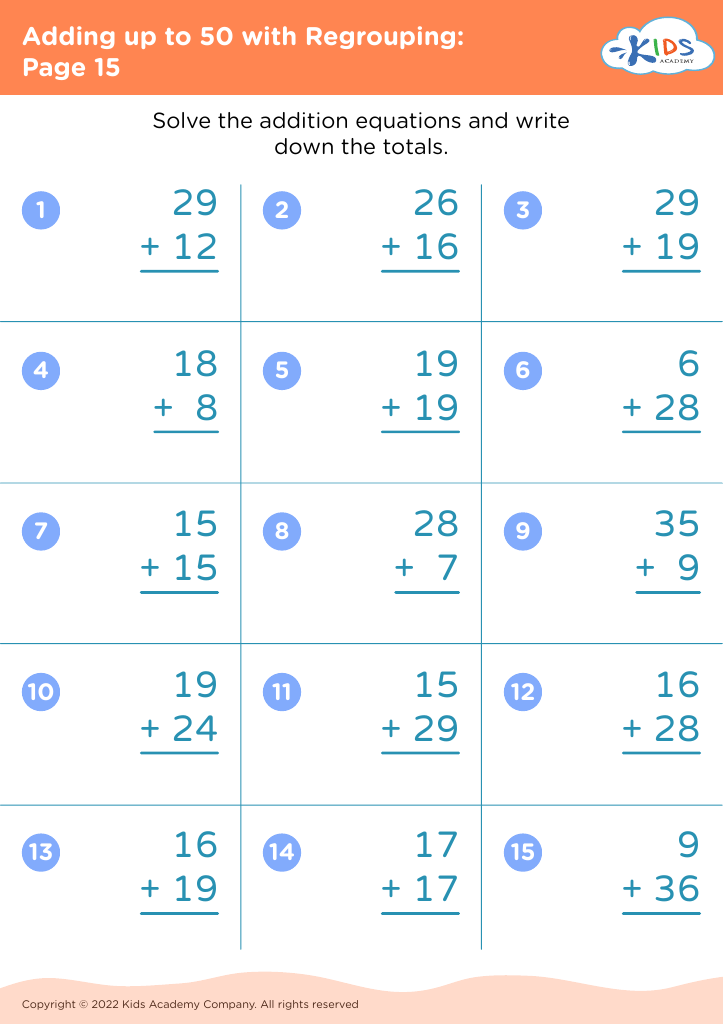
Discover our engaging number tracing worksheets designed specifically for children ages 6-9. These printable worksheets offer an interactive way to strengthen foundational math skills through guided tracing. With vibrant, kid-friendly designs, your child will enjoy practicing number formation while improving their handwriting. Our worksheets cater to various learning styles, providing clear instructions and plenty of opportunities for repetition. As children trace each number, they enhance their fine motor skills and boost confidence in their ability to work with numbers. Perfect for home learning or classroom activities, our number tracing worksheets inspire young learners to embrace math with enthusiasm!
Favorites
With answer key
Interactive
 Assign to My Students
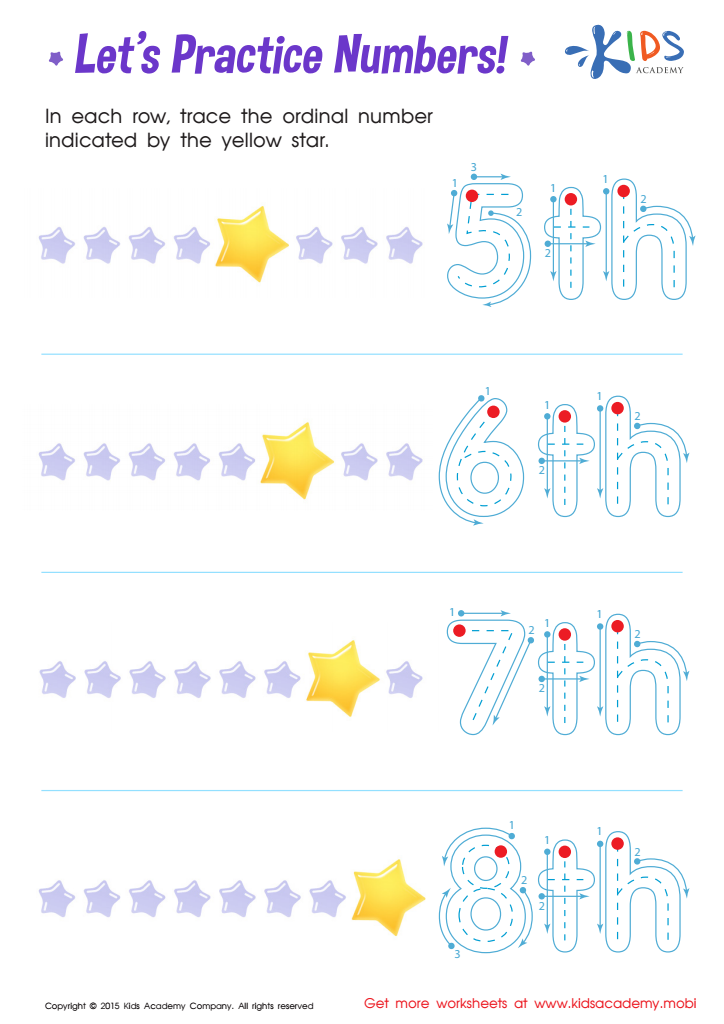
Ordinal Numbers: Let's Practice Numbers Printable
Worksheet
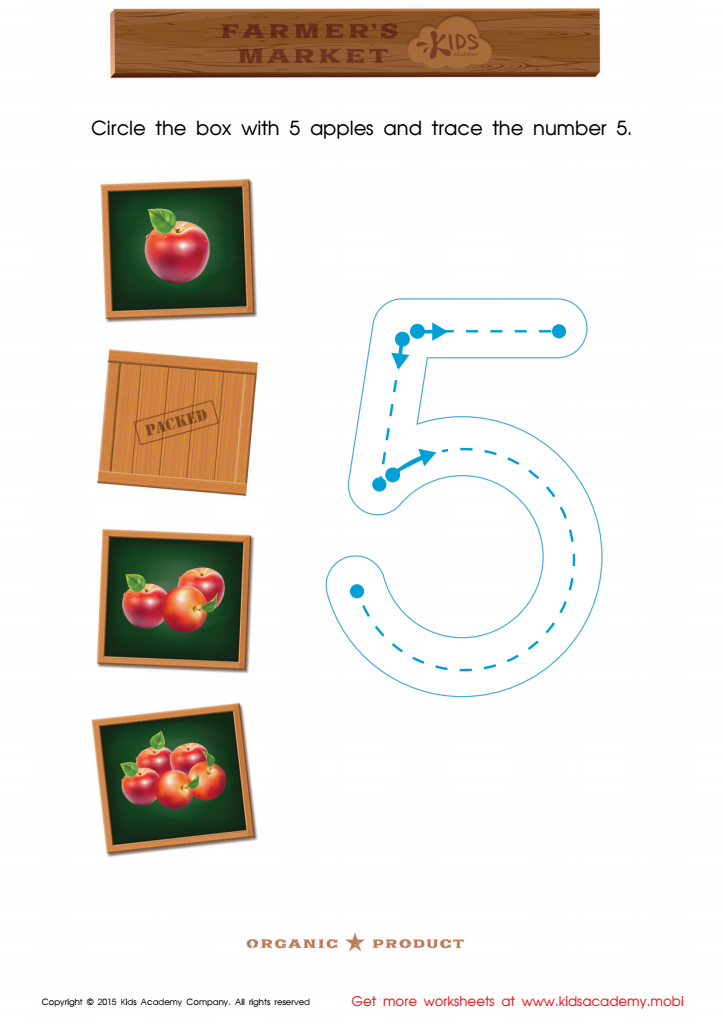
Count the Apples and Trace the Number 5 Printable
Count the juicy apples in each box, find the one with 5 and trace the number 5 following the arrows. Practice makes perfect! Print and get your little mathematician counting.
Count the Apples and Trace the Number 5 Printable
Worksheet
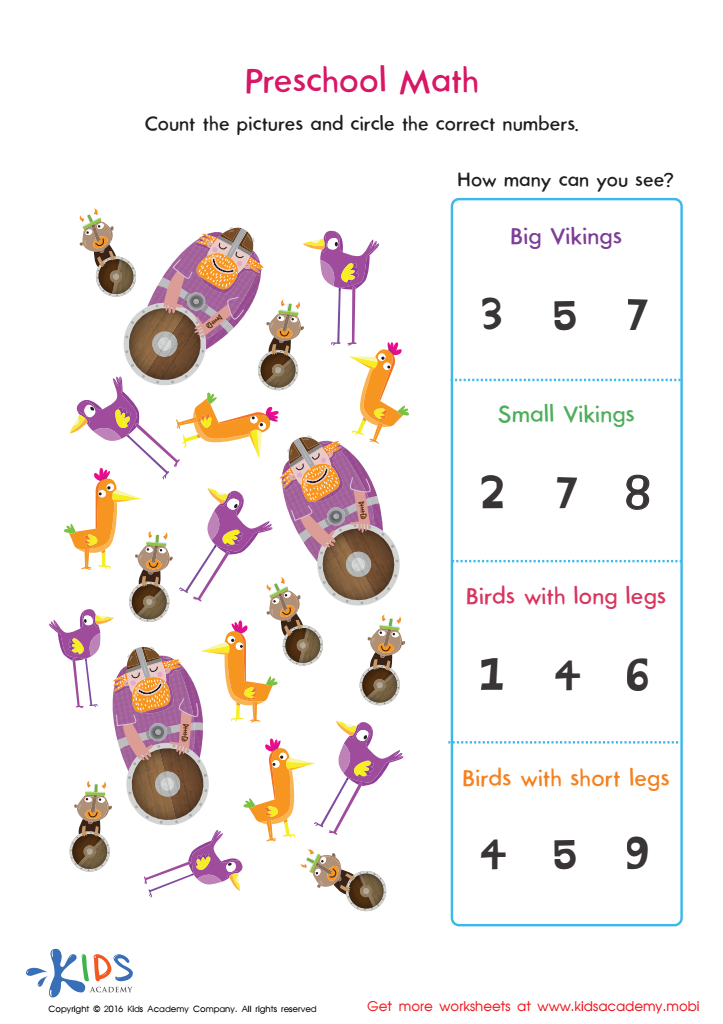
Counting Worksheet: Preschool Math
Worksheet
Join Kids Academy for Free
Who is primarily going to use this learning content?








Number tracing is a fundamental skill for children aged 6-9, serving as a foundational building block in their early mathematical development. Firstly, this activity enhances fine motor skills, helping youngsters learn to control their hand movements—a crucial aspect for writing and other manual tasks. Practicing number tracing reinforces numerical recognition, as children visualize and replicate numbers, deepening their understanding of how numbers are formed and structured.
Additionally, tracing numbers promotes cognitive development by encouraging children to engage with mathematical concepts. As they trace, they can associate each digit with its quantity, paving the way for more complex mathematical operations, such as addition and subtraction. It also helps children develop concentration and patience, valuable traits for their overall learning journey.
Moreover, parents and teachers can facilitate a sense of accomplishment through number tracing. As children improve their tracing skills, their confidence boosts, motivating them to embrace new numerical challenges. In essence, number tracing is not just a writing exercise; it is a multifaceted tool that complements motor skill development, cognitive growth, and emotional well-being. By supporting number tracing, parents and teachers play an integral role in fostering a lifelong appreciation for math and learning.








