Punctuation usage Worksheets for Ages 6-9
3 filtered results
-
From - To
Enhance your child's punctuation skills with our engaging worksheets specifically designed for ages 6-9! Our user-friendly resources facilitate learning by introducing essential punctuation marks such as commas, periods, exclamation points, and question marks. Each worksheet is crafted to foster creativity and understanding, featuring fun exercises like fill-in-the-blanks and matching activities that reinforce proper punctuation usage in sentences. Boost your child's confidence in writing while making learning enjoyable—all at home! Explore our printable worksheets to help your young learners practice vital punctuation skills, setting a strong foundation for effective communication. Unlock their potential today and watch them thrive in their literacy journey!
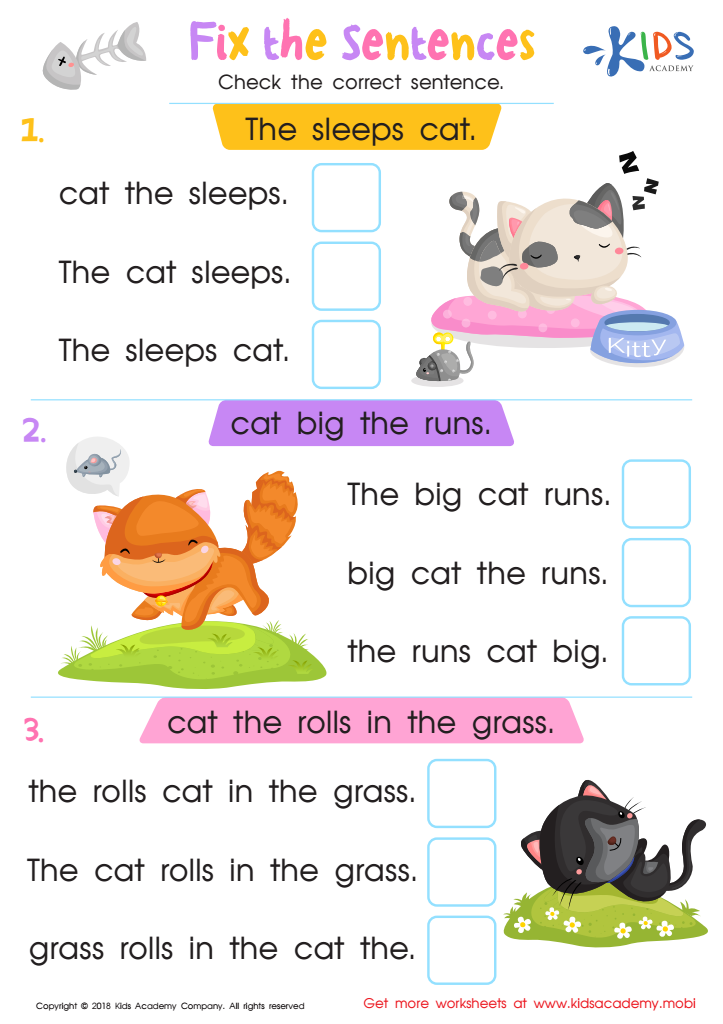
Fix the Sentences Worksheet
 Assign to My Students
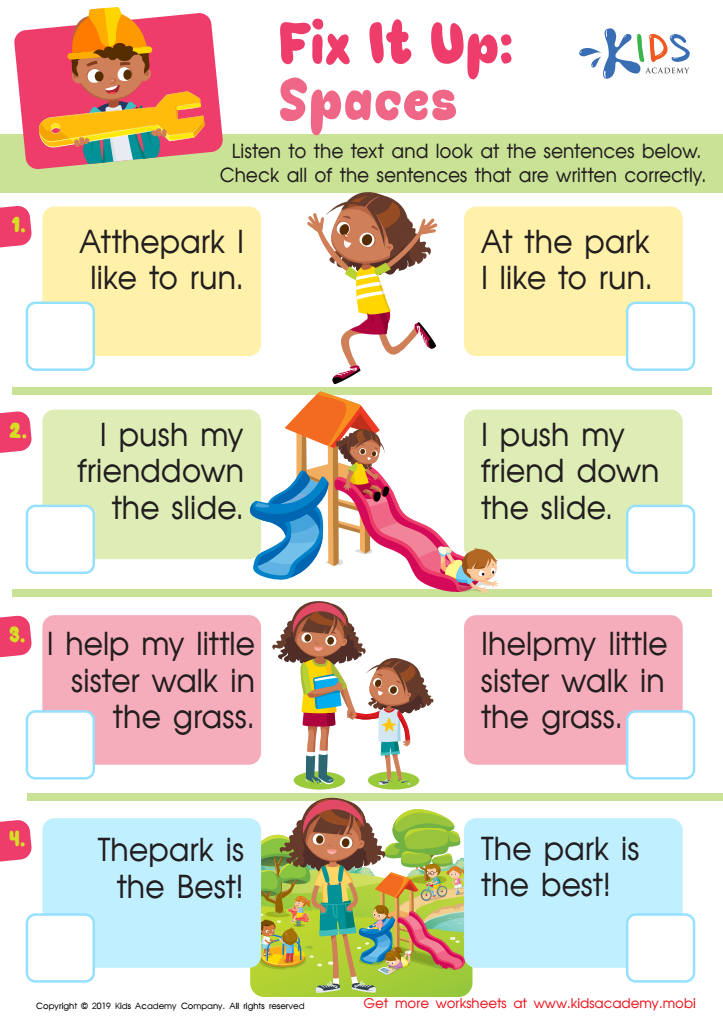
Fix Spaces Worksheet
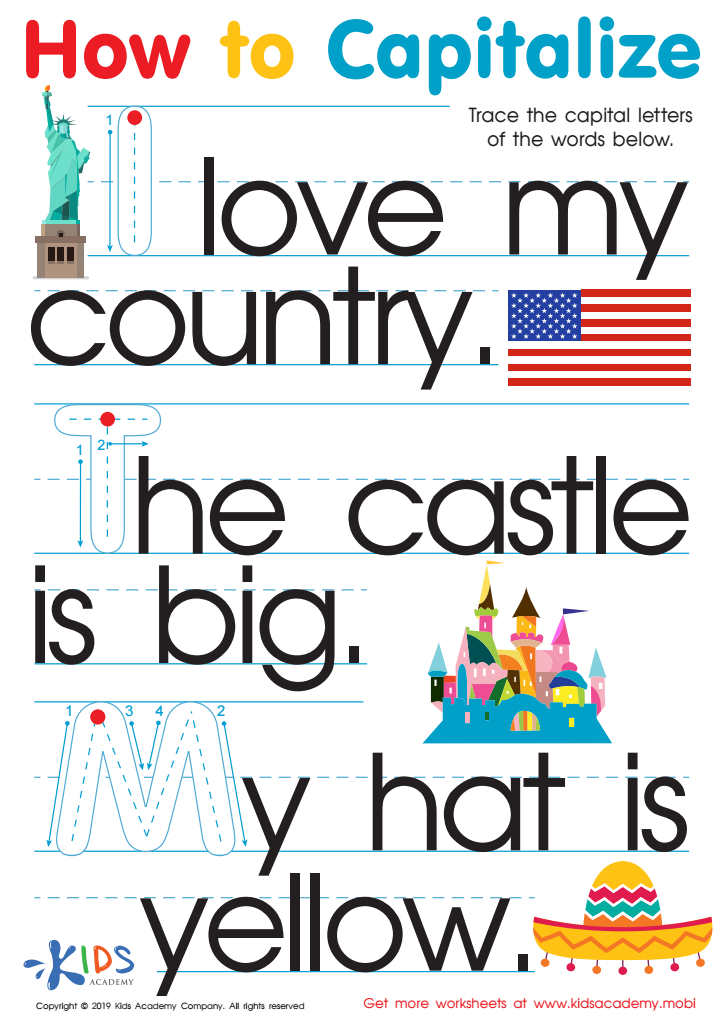
How to Capitalize Worksheet








Punctuation is a fundamental aspect of written communication that significantly impacts a child's literacy development. For children aged 6-9, understanding punctuation aids in the clarity and effectiveness of their writing. It helps them convey meaning accurately, differentiate statements from questions, and express emotions. For example, the difference between "Let’s eat, Grandma!" and "Let’s eat Grandma!" highlights the importance of punctuation in preventing misunderstandings.
Parents and teachers should prioritize punctuation education because it fosters essential skills in reading and writing. Using periods, commas, question marks, and exclamation points helps children grasp the rhythm and flow of sentences, making reading more enjoyable and understandable. Moreover, mastery of punctuation boosts children's confidence as they progress to more complex writing tasks.
Recognizing punctuation also helps in reading comprehension; knowing where pauses and emphasis belong aids children in interpreting text better. As young learners navigate social and academic settings, strong punctuation skills equip them to communicate their ideas clearly. Encouraging practice at home and in school creates a supportive environment where children can explore writing creatively, leading to improved literacy and critical thinking skills that are vital for their overall academic success.








