
Real-world application Worksheets for Ages 6-9
6 filtered results
Difficulty Level
Grade
Age
-
From - To
Subject
Activity
Standards
Discover our engaging Real-World Application Worksheets for children aged 6 to 9! Designed to connect classroom learning with everyday experiences, these worksheets encourage critical thinking and problem-solving skills. Young learners will explore math concepts through real-life scenarios, develop reading comprehension by interpreting practical situations, and enhance their creativity with fun, hands-on activities. Each worksheet is crafted to make learning relevant and exciting, helping children understand how their skills apply beyond the classroom. Perfect for homeschooling, classroom use, or extra practice at home, these resources offer a dynamic way for kids to engage with the world around them while building essential foundational skills!
Favorites
With answer key
Interactive
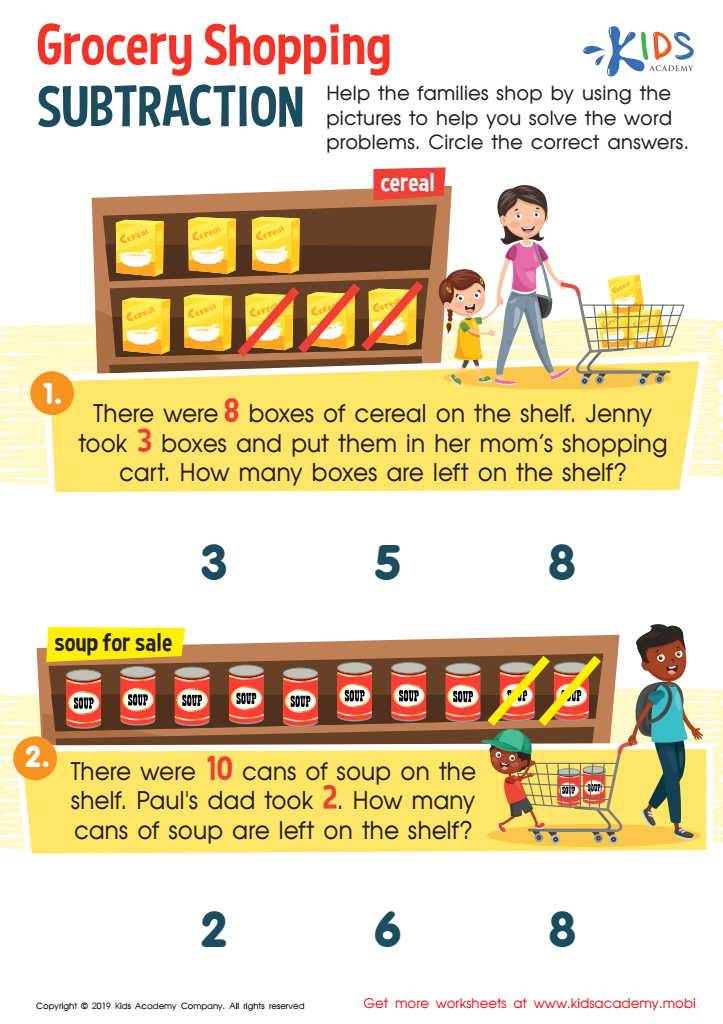
Grocery Shopping Subtraction Worksheet
Take your kids on a virtual grocery trip with this worksheet! Help them read the two word problems and use the pictures to solve them. Then, have them circle the correct answers. It's an easy, fun way to get kids comfortable with math while also getting them excited about grocery shopping!
 Assign to My Students
Grocery Shopping Subtraction Worksheet
Worksheet
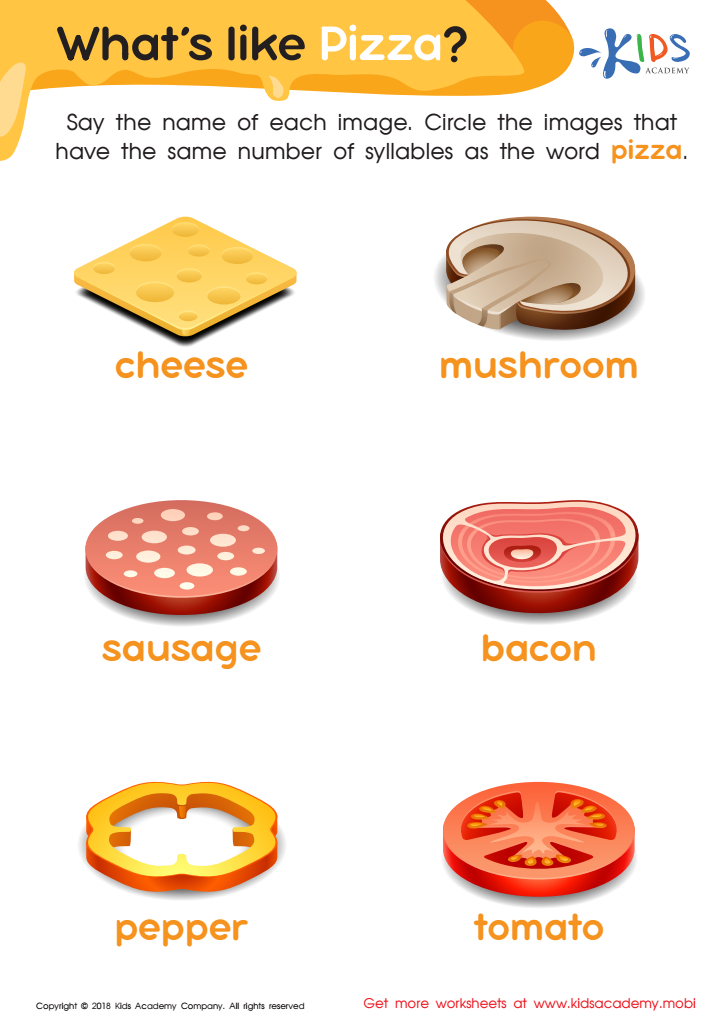
What's Like Pizza? Worksheet
Encourage your kids to exercise their minds with this pizza worksheet! Ask them to name the ingredients they like on their favourite pizzas. Then, help them circle the images that have the same number of syllables as 'pizza'. They'll have fun while learning too!
What's Like Pizza? Worksheet
Worksheet
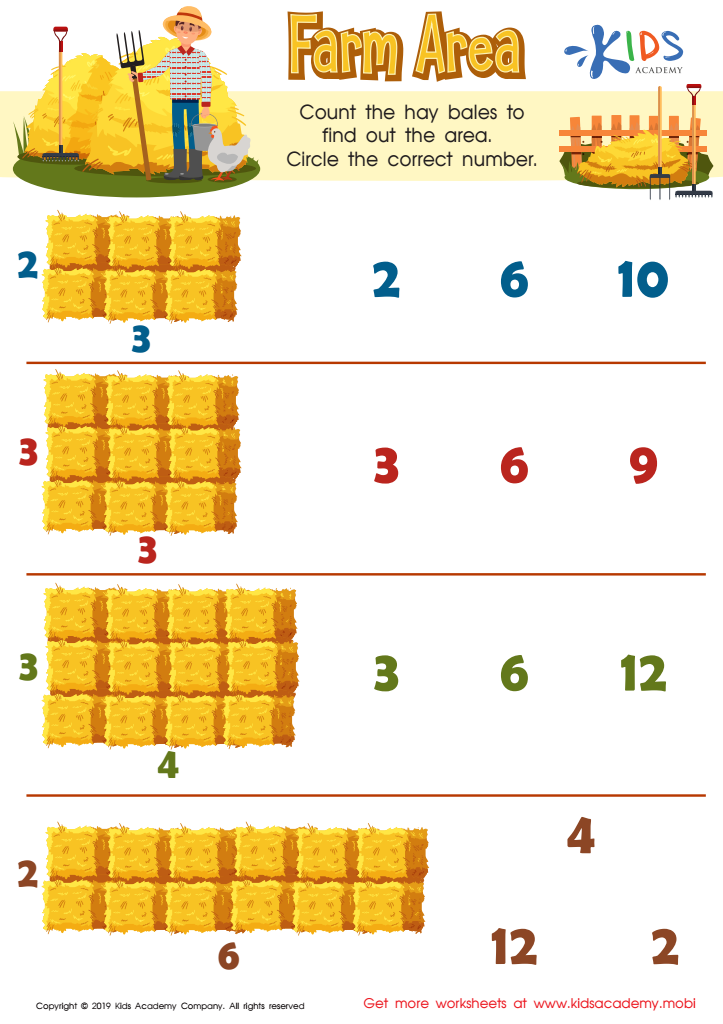
Farm Area Worksheet
Take your kids to a farm and ask them what their favorite part was! Show them this picture with hay bales and have them count them. Find the area then circle the correct number. It's a fun way to learn math and experience a farm!
Farm Area Worksheet
Worksheet
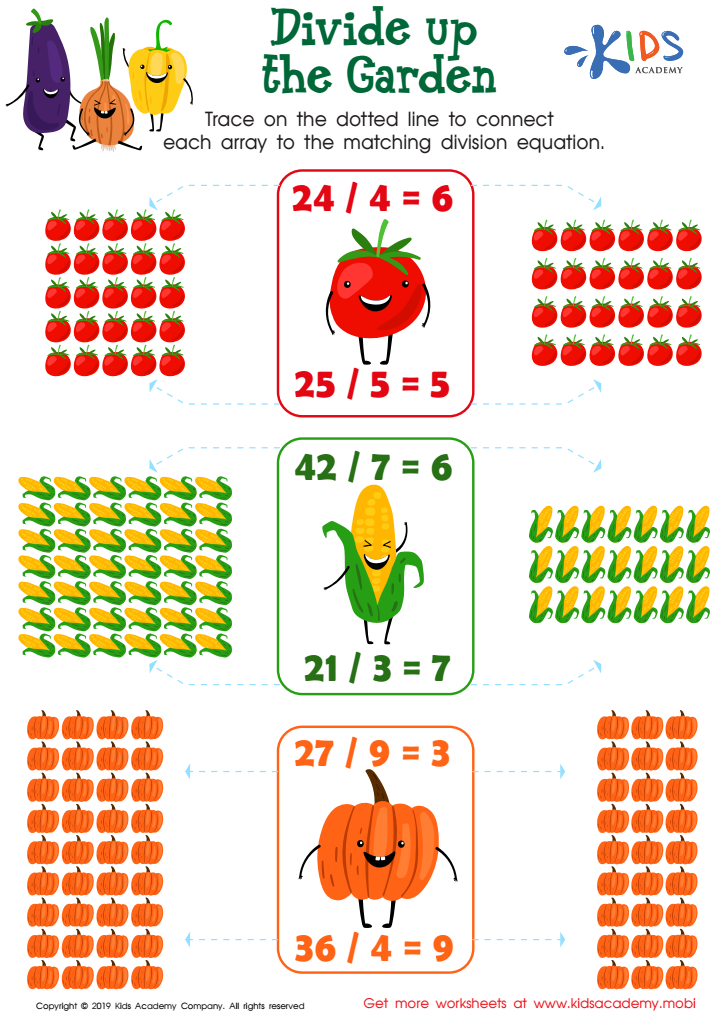
Divide up the Garden Worksheet
Dividing is simply grouping items into equal sets. This worksheet helps kids see division problems in array form. They'll match each equation with a picture group, using the lines provided. It's a great way for beginners to understand division more concretely.
Divide up the Garden Worksheet
Worksheet
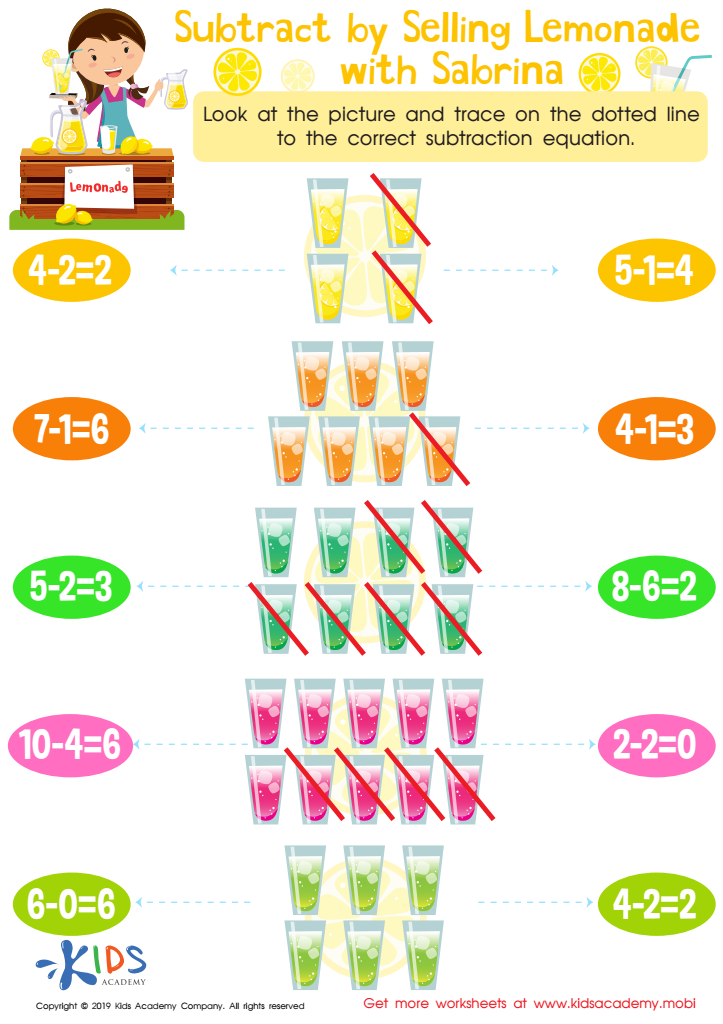
Subtract by Selling Lemonade with Sabrina Worksheet
Kids love running a lemonade stand! Help Sabrina serve up delicious lemonade while working on basic subtraction skills. Look at each picture and use the traceable lines to link them to the correct equations. Download this fun, easy PDF to help kids practice basic computation with success.
Subtract by Selling Lemonade with Sabrina Worksheet
Worksheet
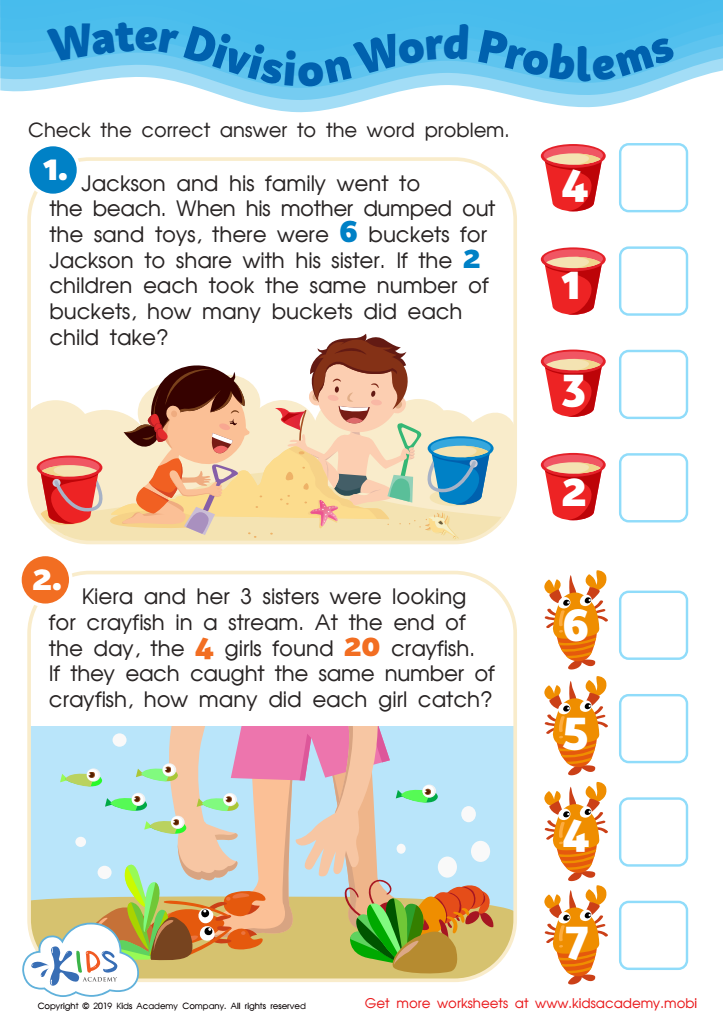
Water Division Word Problems Worksheet
Kids can sharpen their math skills with this fun PDF! They'll see pictures of friends at the beach, plus bold numbers and colorful pictures. All they need to do is read and understand the problem to find the answer - without even realizing they're doing division. A great way to make math enjoyable!
Water Division Word Problems Worksheet
Worksheet
Join Kids Academy for Free
Who is primarily going to use this learning content?







Parents and teachers should prioritize real-world applications for children ages 6-9 to enhance their learning and foster a deeper understanding of concepts. At this stage, children are naturally curious and eager to connect their education with everyday experiences. When learning is linked to real-life situations, students can see the relevance of subjects like math, science, and language arts, making the material more engaging and memorable.
Real-world applications encourage critical thinking and problem-solving skills. For instance, using shopping scenarios to teach addition and subtraction helps children understand budgeting and financial literacy. Similarly, conducting simple science experiments at home or outdoors teaches them to observe, hypothesize, and test.
Furthermore, engaging children in projects that involve their communities promotes social awareness and teamwork. They learn to collaborate with peers and understand different perspectives, key skills for their future.
Ultimately, real-world applications nurture a love for learning, showing children that education extends beyond the classroom. By embedding these practical examples into their daily learning, parents and teachers help children build a strong foundation, preparing them not only academically but also socially and emotionally for the world they will navigate as they grow.








