
Recognize shapes Worksheets for Ages 6-9
11 filtered results
Difficulty Level
Grade
Age
-
From - To
Subject
Activity
Standards
Our "Recognize Shapes" worksheets for ages 6-9 provide engaging and interactive activities tailored to help young learners identify and differentiate between various geometric shapes. Through fun puzzles, matching games, and creative exercises, children enhance their visual-spatial skills and lay a strong foundation in geometry. Ideal for classroom use or at-home practice, these worksheets are expertly designed to support and challenge children as they develop essential learning skills. Explore our extensive collection to make shape recognition an exciting part of your child's educational journey and inspire a love for learning and discovery!
Favorites
With answer key
Interactive
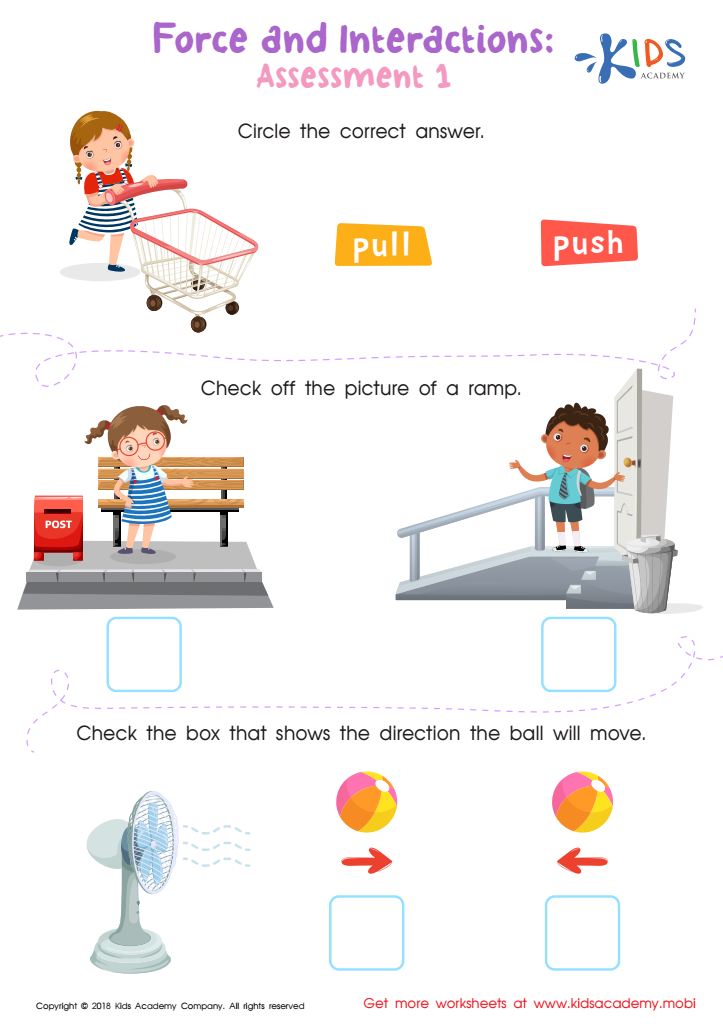
Force and Interactions: Assessment 1 Worksheet
Test your students' knowledge of pushing, pulling, ramps and wind with this worksheet. The first task requires them to identify push or pull pictures. The second asks them to identify a ramp and the third to explain which direction a ball will move when exposed to wind.
 Assign to My Students
Force and Interactions: Assessment 1 Worksheet
Worksheet
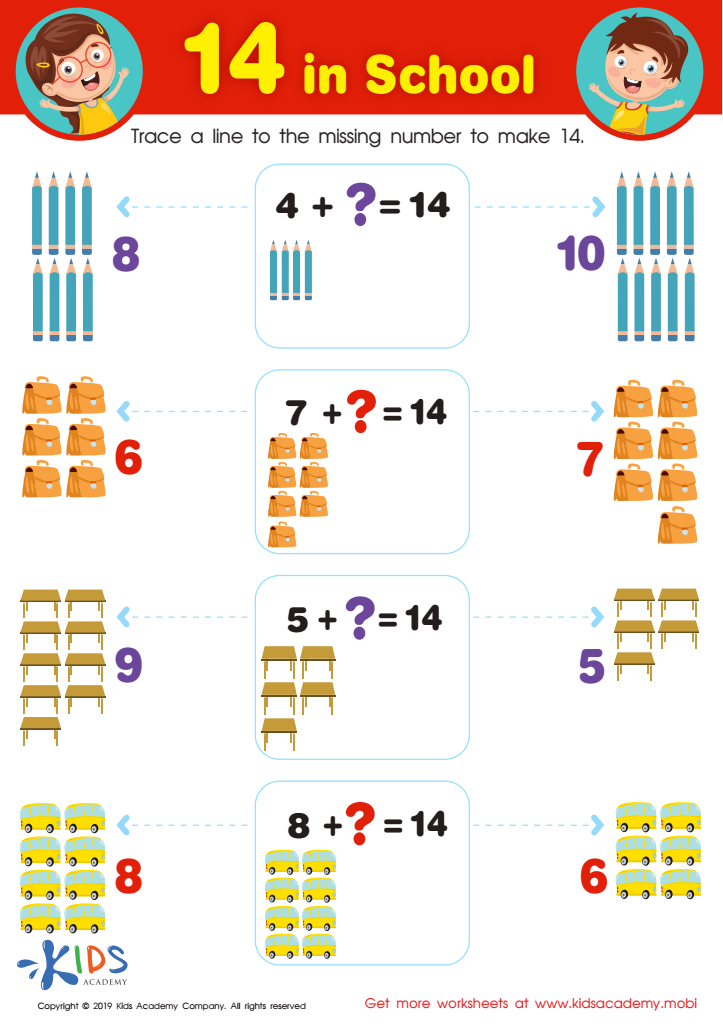
14 in School Worksheet
Remind your kids that adding different sets of numbers can give the same total (e.g. 2+3=5, 4+1=5). Ask them for more examples. Afterwards, work through the exercise. Help them count the objects and trace a line to the missing number that makes the total 14.
14 in School Worksheet
Worksheet
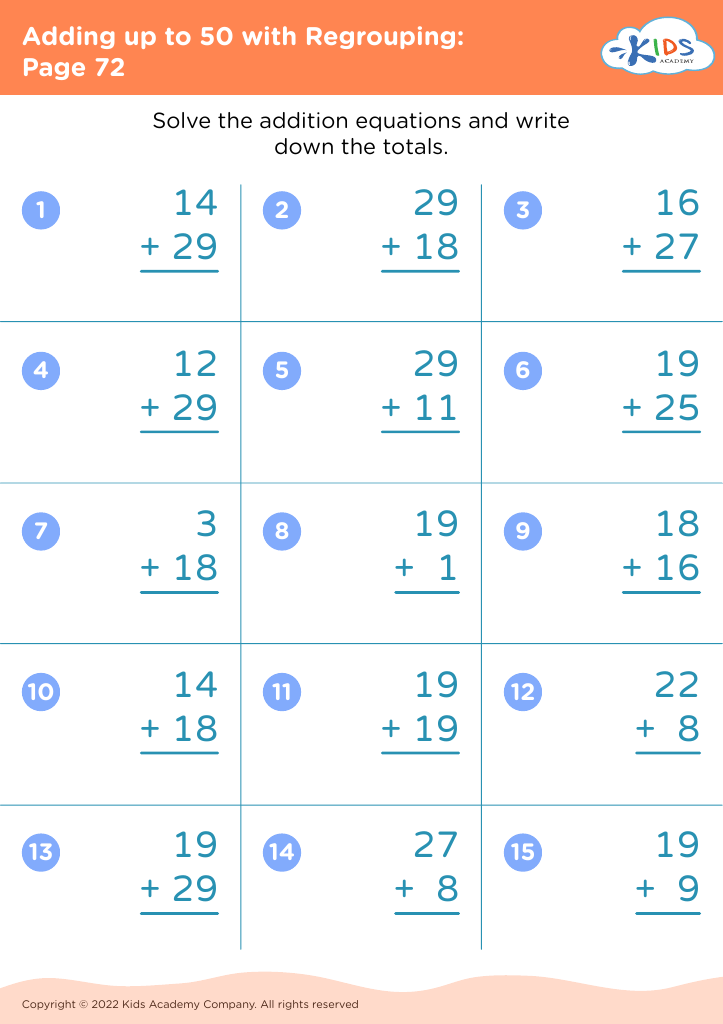
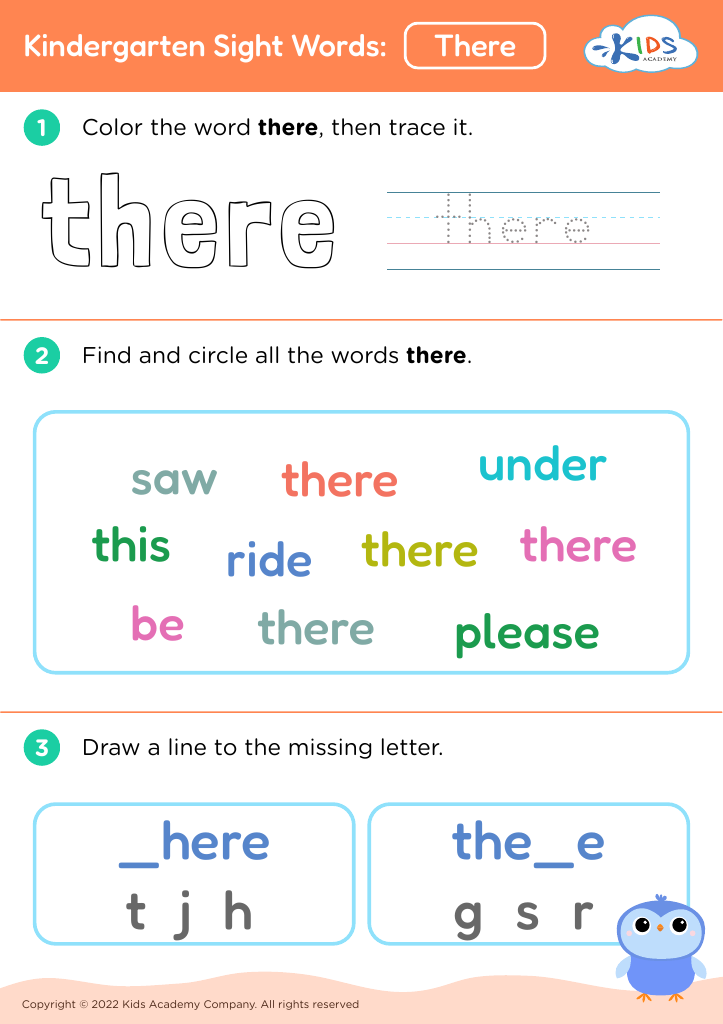
Join Kids Academy for Free
Who is primarily going to use this learning content?








Recognizing shapes is a crucial skill for children aged 6-9, and both parents and teachers play a significant role in fostering this ability. This skill is foundational for early mathematics, helping children understand geometry, spatial awareness, and problem-solving. For instance, identifying and differentiating between shapes aids in spatial reasoning, allowing children to grasp concepts of size, position, direction, and movement. Such understanding is not only vital for math but also has practical applications in everyday life.
Additionally, recognizing shapes is linked to language development. As children learn the names and properties of shapes, they expand their vocabulary and improve their descriptive communication. This cognitive skill is essential for effective learning across subjects, fostering clear and precise thinking.
Engaging children with shapes also enhances fine motor skills through activities like drawing, cutting, and molding shapes. These activities help develop hand-eye coordination, an important aspect for tasks such as writing and using tools.
Moreover, understanding shapes lays the groundwork for future learning in science, technology, engineering, and mathematics (STEM) fields. Encouraging early competence and confidence in shape recognition sets a solid foundation, making advanced concepts more approachable later on. Parents and teachers thus play a critical part in ensuring well-rounded, early childhood cognitive development by focusing on shape recognition.








