Recognizing equal parts Worksheets for Ages 6-9
3 filtered results
-
From - To
Introducing our engaging "Recognizing Equal Parts Worksheets" designed specifically for children aged 6-9! These worksheets are perfect for young learners to develop their understanding of fractions through interactive activities. With colorful visuals and relatable examples, students will easily grasp the concept of equal parts, improving their math skills in a fun way. Our resources include diverse exercises ranging from identifying equal parts in everyday objects to dividing shapes into fractions. Enhance your child’s confidence in mathematics while fostering a love for learning with these thoughtfully crafted worksheets. Discover the joy of mastering equal parts today! Perfect for home or classroom use!
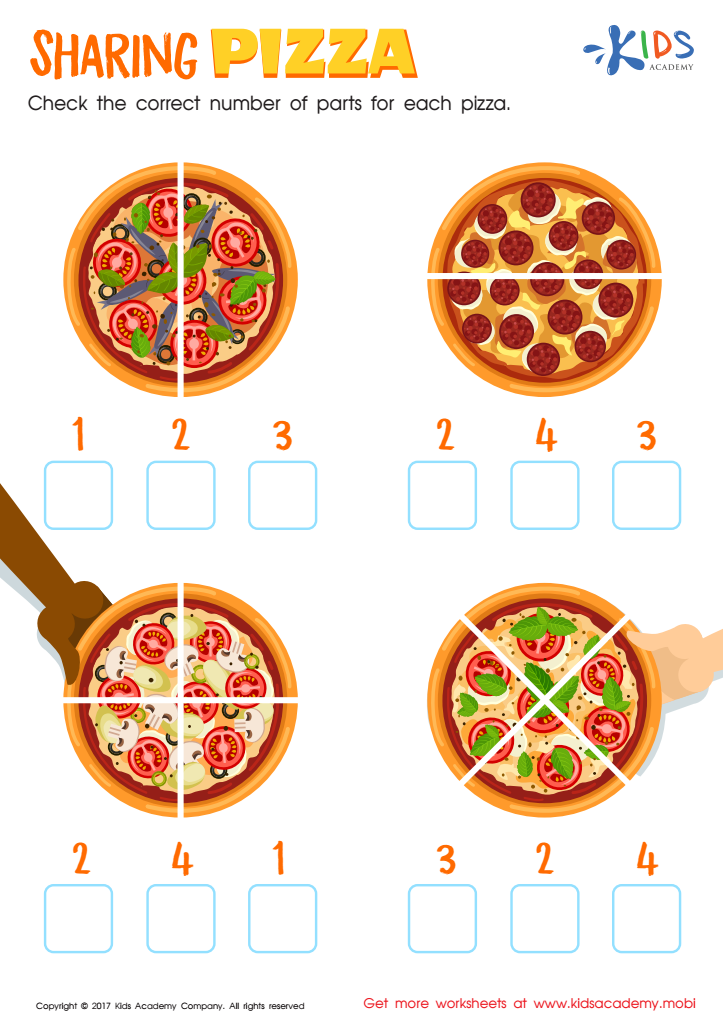
Sharing Pizza Worksheet
 Assign to My Students
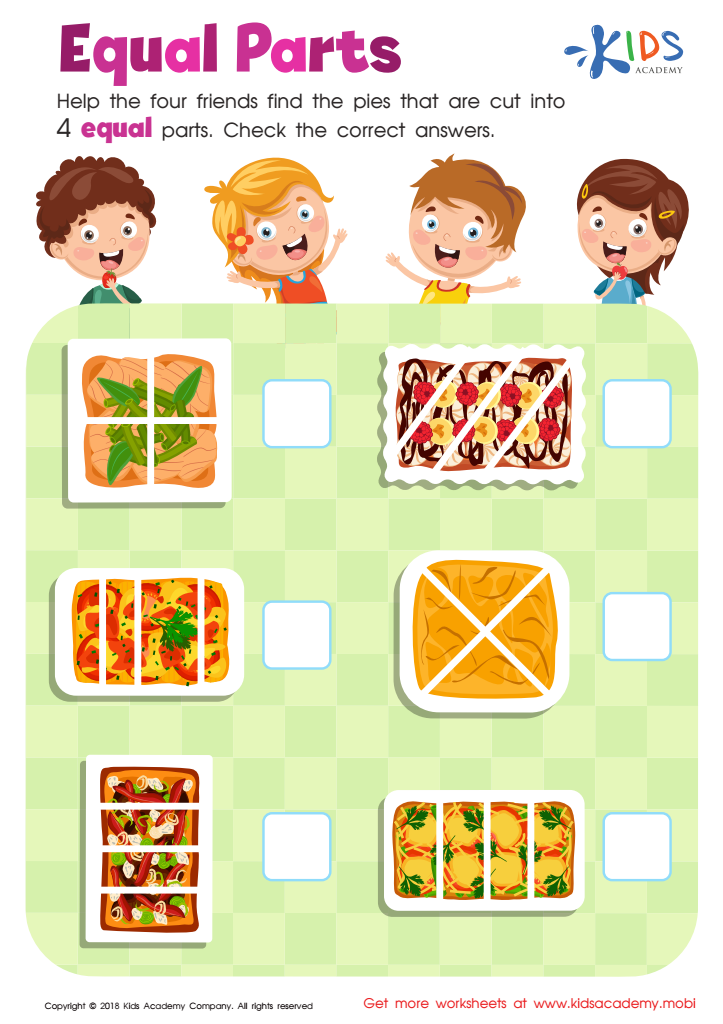
Equal Parts: Food Worksheet




Recognizing equal parts is a foundational concept in mathematics that supports young learners' understanding of fractions and proportional reasoning. For children aged 6-9, grasping the idea of equal parts lays the groundwork for more complex mathematical concepts as they progress through school. Parents and teachers should care about this understanding because it enhances children's problem-solving skills and their ability to make sense of the world around them.
When children learn to recognize equal parts, they also develop critical thinking skills that extend beyond math. They begin to make connections between fractions and everyday experiences, such as sharing food or dividing toys. These hands-on opportunities make learning engaging and meaningful, fostering a positive attitude towards math.
Moreover, a strong grasp of equal parts promotes collaboration and communication among peers, as children work together to solve problems. This cooperative play is essential for social development.
Lastly, recognizing equal parts encourages foundational literacy in math, equipping students with the language and concepts needed for more advanced studies. By prioritizing this essential skill, parents and teachers create a nurturing environment that increases students' confidence and lays the foundation for future academic success.








